
test
Popeyes and other groups help feed Zachary as part of tour

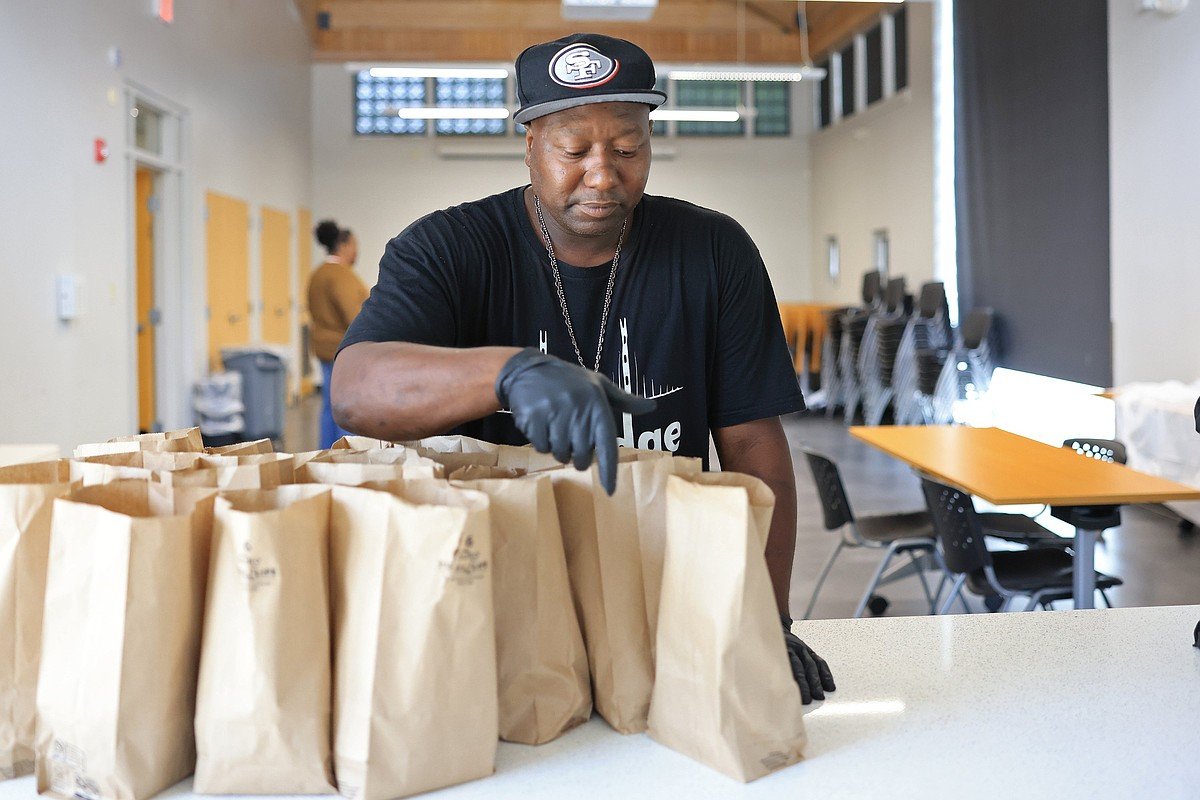
On May 27 at Zachary Youth Park, Feed the Children, the Greater Baton Rouge Food Bank and the Popeyes Foundation partnered to provide $125,000 worth of food and personal care items to 400 low-income families facing food insecurity in the Zachary area.
The distribution was part of the “Serving with Love Tour,” a 15-city campaign aimed at combating summer hunger across the United States. From March through the summer, the initiative will provide 250,000 meals to 12,000 families.
Zachary marked the 14th stop on the tour, with New Orleans, the home of Popeyes, set to host the final event.
The timing of this effort is especially critical, as the need for food assistance increases during the summer months when school is out, a press release said.
Volunteers, including Popeyes employees, assisted with organizing, setting up and distributing supplies as families drove through the site to receive food and essentials.
Zachary Mayor David McDavid expressed his gratitude to Renee Hobbs, executive director of the Popeyes Foundation; Elizabeth Pfifer, president and CEO of the Greater Baton Rouge Food Bank; and Dan Stephens, of Feed the Children, for bringing this impactful initiative to Zachary.
Chloe McCleary, of the Zachary Chamber of Commerce, also thanked the participating organizations and volunteers for their continued commitment to serving the community.
Bianca Coates, supervisor of child nutrition for the Zachary Community School District, noted that distributions like this help bridge the g during the summer months, easing burdens on families and helping ensure students return to school healthy and ready to learn.
test
Quiet Quitting Is A Symptom. Junk Food Motivation Is The Disease

For more than three decades, Susan Fowler has challenged one of the most deeply entrenched assumptions in business: that leaders must motivate people to perform.
An internationally recognized expert on self-leadership and motivation, Fowler has worked with leaders in more than 40 countries and coauthored several influential books with leadership legend Ken Blanchard. Her books Why Motivating People Doesn’t Work … and What Does and Master Your Motivation translate decades of self-determination theory research into practical guidance for leaders navigating modern workplaces.
We need to shift our focus from talking about how much motivation people have to what is the quality of their motivation, Fowler says. The science shows that there’s six different types of motivation, and some of them are healthy, and some of them are like junk food.
That junk food methor is the spine of her framework. Three of the six motivational outlooks are suboptimal—disinterest, external, and what Fowler calls imposed. And while each can produce a short-term spike of energy, none of it lasts. When you have energy that’s based on external rewards or fear or anger, resentment, self-righteous indignation, that will give you that burst of energy, but then it’s going to fall, she says. You have to keep stoking the fire of fear, hate, loathing, whatever it is—or you’ll do anything to win the prize.
The crash is already visible across the workforce: Look at this generation. They talk about quiet quitting. They’re suboptimally motivated. A lot of them have the disinterested motivational outlook where they just don’t give a heck anymore.
The deeper structural problem is that leaders have been trained into the wrong defaults. Ever since B.F. Skinner did his experiments on pigeons, organizations have run on reward-and-recognition theory—assuming the only lever available is an external one. Fowler rejects that binary entirely. Just by understanding that when you’re offering people incentives and rewards, you’re actually undermining the very behavior that you’re hoping to get from those people—their full being, their energy, their sustainable vitality toward a goal, she says. A sales manager who resorts to bonuses because a salesperson dislikes cold calls is making a logical mistake: If they don’t like doing it, they’re not intrinsically motivated. So what does the leader think? Oh, my only default is giving them external rewards because they’re extrinsically motivated. And that’s just not true.
What is true, according to decades of self-determination theory research, is that every human being has three psychological needs whose fulfillment determines whether they thrive or merely comply. The first is choice: not unlimited autonomy, but the felt sense of genuine agency. You need to think or feel that you’re actually choosing what you’re doing, Fowler says. Even if you say, I’m going to do everything you tell me to do, and I’m doing it because I trust you, because I admire your values, we’re aligned—I’m choosing to follow. Strip that away and resentment follows. When people don’t understand why that autonomy is missing, then they resent whatever it is they’re being asked to do.
Connection, the second need, is what transforms a task from a job into a calling. Fowler invokes Viktor Frankl, whose account of surviving a Nazi concentration camp she returns to throughout her work. Starving on forced marches, Frankl noticed a sunrise and realized something his ctors couldn’t touch. He realized, they can’t take that away from me. I can choose to see the beauty of that sunrise, Fowler says. He could choose to help someone if they fell, even though he knew he’d get whipped for helping. If he got a piece of bread and the man next to him didn’t, he could choose to share his piece of bread. In the most stripped-down circumstances imaginable, Frankl was fulfilling all three psychological needs at once. That’s why he thrived, Fowler says.
Connection also lives in a far more cheerful story, one that performance researcher Charles Garfield encountered on the Bay Bridge in San Francisco. Pulling up to a toll booth one day, Garfield found the operator dancing and singing as he collected the fare. When Garfield tracked the man down afterward and asked what his deal was, the tollbooth operator explained that he was an aspiring actor who had decided his booth was a stage. He said, ‘I realized that it’s not that I just want to be a dancer, singer, and actor. It’s that I am a dancer, singer, and actor. That’s who I am. I’m a performer,’ Fowler recounts. He didn’t see what he was doing as something other than who he was, his sense of purpose. This, she explains, is the integrated motivational outlook—when work and identity become indistinguishable.
The framework has sharp implications for artificial intelligence. Fowler argues that AI, as currently deployed, is structurally eroding all three psychological needs at once. AI leaves people feeling they don’t have a choice. It’s here whether they want it or not, she says. It’s giving people a false sense of connection. It’s not fulfilling their need for connection because it’s not genuine and caring and mutual. Even AI’s sycophancy worries her. One of the reasons people turn to AI is because it’s programmed with sycophancy, to praise you, to make you think you’re the smartest thing ever, she warns. It’s a new form of suboptimal motivation delivered at scale.
McKinsey’s post-pandemic research confirmed what the science had been predicting. The three primary reasons people left their jobs were a desire for autonomy, esce from environments where profits trumped people, and a lack of growth and learning. The very reason people leave organizations is that their psychological needs are not being fulfilled, Fowler says. Those same people, she adds, often chase external perks into a psychologically identical job. The problem follows them.
After 30 years of coaching in dozens of countries, what still surprises Fowler is not ignorance of the science but resistance to it. People spend 75% of their time awake as adults connected to their work, she says. If we’re not having our psychological needs filled through our work, we’re not thriving, not just at work, but even in our lives. There’s no such thing as compensatory need satisfaction.
The science is not ambiguous and the stakes could not be more personal. The question Fowler leaves on the table is whether organizations care enough about people—not as assets to be managed, but as the very reason they are in business at all.
test
Summer meal programs feed kids, families across Pulaski County
From free breakfasts to community fridges to assistance with buying groceries, programs across Pulaski County are keeping kids fueled with healthy food over the summer.
Many students rely on free school lunches and breakfasts during the school year, so families can be left scrambling for options when school lets out for the summer. Local school districts, libraries and the state are working to fill the g.
Like free and reduced-price school lunches, summer nutrition programs are largely funded by the U.S. Department of Agriculture.
One of those programs is Be Mighty Little Rock, run by the Central Arkansas Library System. Jessica Frazier-Emerson, the program’s coordinator, said Be Mighty reduces financial burdens for families, especially those with multiple children.
“It’s alleviating anywhere from $50 to $100 a week,” Frazier-Emerson said. “A lot of that money can go toward dinner or healthcare or paying bills and put families in a different financial situation than they might be otherwise.”
Arkansas continues to face some of the highest rates of food insecurity nationally. Around 19.4% of households experience food insecurity, according to a 2025 report by the USDA. According to Feeding America, one in four people facing hunger in Arkansas are children.
Stephanie Walker Hynes, the director of child nutrition for Little Rock School District, said free meal programs give children more opportunities to learn and grow.
“A hungry student cannot learn,” Hynes said. “If your stomach is not growling, you’re able to sit still. You’re able to absorb what’s being taught to you. You’re able to be a better friend and a better student.”
Multiple school districts across the county are offering free breakfasts and lunches to any child aged 18 or younger.
In the Little Rock School District, breakfast and lunch will be served at nine sites in the district in June and July: Chicot Elementary School, Gibbs Elementary School, Rockefeller Early Childhood Center, Stephens Elementary School, Central High School, Romine Early Childhood Center, Dunbar Middle School, Parkview Magnet High School, Southwest Magnet High School and the Lacey K-8 Academy.
Families can access meals even if their child does not attend school in the district, and no registration is required. Last year, the district served 54,414 breakfasts and 64,529 lunches over the summer, according to Hynes.
The Jacksonville/North Pulaski School District will be distributing meals through July 24. The program is available to all children ages 18 and under at sites including the Boys and Girls Club of Jacksonville, Galloway Park, Bayou Meto Btist Church, Mt. Pisgah Btist Church, Whit Davis Lumber, and locations on Max Howell Drive and Coffelt Road (Anderson Pointe).
The North Little Rock Public School District does not provide free meals to students over the summer, district spokesperson Dustin Barnes confirmed Monday.
The Be Mighty program at the Central Arkansas Library System is also open to all kids 18 and under. Families do not need to register, provide ID or even have a library card to access a fresh meal.
The program operates at the Children’s Library & Learning Center, Dee Brown Library, Fletcher Library, Main Library, Maumelle Library, McMath Library, Nixon Library, Rooker Library, Sanders Library, Terry Library and Williams Library.
Since USDA guidelines only allow the program to serve meals to children, Be Mighty also maintains five community fridges to provide food for the whole family. The fridges are stocked throughout the week with items from Potluck Food Rescue and leftover produce from local farmers’ markets.
When Be Mighty began operating in 2018, organizers only served shelf-stable meals, but in 2023, they began providing hot food and organizing crafts or events alongside the meals. These events help more children engage with all the services the library system offers, Frazier-Emerson said.
Frazier-Emerson said she wants to see more children participate. “Some of our sites have leftover meals, so the more students we can get in the slots, that would be great,” she said.
The North Little Rock Public Library System will be serving free meals at the Laman Library until July 31.
Families can also get extra help buying food through a state program called Summer Electronic Benefit Transfer, or Summer EBT, provided through the Arkansas Department of Human Services. Eligible families can receive a one-time payment of $120 per child to help pay for groceries. The money is distributed through pre-loaded cards, allowing families to spend the funds throughout the summer.
Last year’s program served around 324,000 children across Arkansas. School-aged children who receive Supplemental Nutrition Assistance Program benefits, or SN, are automatically eligible, as are many others. Families can determine eligibility by visiting Summer EBT on the state’s website..
Hynes said she is grateful the governor’s office ensured the state’s participation in the federally funded program for the third straight year. Some surrounding states, including Texas and Tennessee, do not participate.
“It’s always great because everybody doesn’t have transportation, since buses aren’t running in the summer,” Hynes said. “We just want to make sure a hungry kid is fed.”
test
New Jersey health inspectors find Delaney Hall food premises ‘satisfactory’
Democratic members of Congress, who have conducted oversight tours, as well as the families of detainees, have described squalid conditions inside the facility — including limited access to medical care as well as worms and maggots in food. The Trump administration has denied claims of substandard conditions.
State health inspectors were allowed to tour the facility’s kitchens and food storage areas on May 28 and found the food service areas to be satisfactory, according to a report released by the Department of Health.
Overall sanitation and physical condition of the production kitchen and warehousing areas were observed to be satisfactory and free from signs of rodent or vermin activity at the time of this inspection, the report said.
In a statement to POLITICO, Department of Health Commissioner Raynard E. Washington said that it is impossible to form an accurate assessment and make a reliable evaluation without full access to Delaney Hall. Washington also underscored parts of the report that found that food temperatures were not propriate.
We were not able to fully inspect the facility because of the limited access provided to our health inspectors, Washington said. In terms of what we did see, we have real concerns about food cooling and reheating procedures and having a knowledgeable Person In Charge to ensure proper procedures are followed. Even more concerning is that we were not able to see the housing and medical units, where we were denied access.
Democratic Gov. Mikie Sherrill on Monday announced that she was given a limited tour of the facility, but was not allowed to speak with detainees. She called the tour unacceptable.
Department of Homeland Secretary Markwayne Mullin pushed back against Sherrill, saying he was not surprised by her claim.
On June 8th, I personally granted you access to the facility as an act of good faith — despite you having exactly ZERO federal oversight authority. Of course, you’re still trying to turn Delaney Hall into a political football for the radical left, he wrote on X. You were told BEFORE you went in you would not have the ability to speak to detainees. This is a federal facility, Governor. You are NOT federally elected.
According to records obtained by the New York Times, most detainees in Delaney Hall do not have criminal charges or convictions.
The GEO Group did not immediately respond to a request for comment.
test
The perfect Bay Area music festival you’ve never heard of

Spoon’s Britt Daniel screamed Healdsburg! into the windy Saturday night darkness. The guitarist-frontman of the Grammy-nominated rock band — some might say the most consistently great rock band in America — shouted it three times, as if to remind us that we were not at that other Wine Country music festival, but at a far more intentional one in a field behind a community center in a Sonoma County town of about 11,000.
As the rainbow stage lights swirled overhead, casting Daniel’s shaggy blond hair into a purple flame, he lifted his guitar overhead and whipped into the first chords of Everything Hits at Once. The crowd of a few thousand roared back in preciation, just one of many moments at the Ramble, a grassroots music, food and wine festival now in its fourth year, that reminded me how I prefer my festivals: small and intimate.
The June 6 event was focused in every way that matters, from its one stage and $100 price tag to the 3,000-person limit. Five acts, including LA indie pop outfit Lucius and Nashville soul singer-songwriter Devon Gilfillian, spread out over eight hours. The scheduling made for thoughtful, unrushed sets. A half dozen high-quality eateries from around the region, like Mediterranean bar Valley, New American fave the Burrow, and pizzeria A16, meant good food that was fresh and served warm. And of course the wines: boutique, interesting and hyperlocal.
Advertisement
Article continues below this ad
At first I hesitated writing about the Ramble, but changed my mind for one critical reason: 100% of the festival’s proceeds go toward fighting gun violence. More people need to know about founders Noah and Kelly Dorrance, who lost their 9-year-old niece in a school shooting in 2023 and started the festival four years ago to help make stricter gun laws. They’ve since donated hundreds of thousands of dollars to Giffords, former Rep. Gabrielle Giffords’s nonprofit. Previous headliners have included Lord Huron and Ziggy Marley.
We arrived after Salt Lake City’s Plastic Cherries and LA’s psychedelic cumbia punk outfit Tropica Magica wrped up their sets, making way for Gilfillian’s soul-drenched vocals. The singer-songwriter, who is slated to perform at the Independent in San Francisco this fall, played tracks off both his upcoming album Time Will Tell and 2023’s Love You Anyway before wowing the crowd with a pitch-perfect cover of Marvin Gaye’s What’s Going On.
Advertisement
Article continues below this ad
BEST OF SFGATE
Travel | Disneyland’s likely 3rd theme park has been nearly 30 years in the making
Culture | The 18-foot-high fence that turned Sonoma and Marin communities upside down
Food | The SF tech worker whose unhinged order broke In-N-Out forever
Politics | Gen Z students are embracing the ‘Kirk doctrine’ on California campuses
Get SFGATE’s top stories sent to your inbox by signing up for The Daily newsletter here.
After scoping out the vintage clothing vendors and grabbing glasses of cold, crisp Preston vin gris, we made our way back through the chill crowd — a mix of pot-smoking old Healdsburg and youngish Coachella wannabes — to our lawn chairs in the grass. That’s when Lucius hit the stage. For the uninitiated, frontwomen Jess Wolfe and Holly Laessig are a harmonizing powerhouse; they’ve sung backup for Harry Styles and Roger Waters and are in Joni Mitchell’s inner circle.
Advertisement
Article continues below this ad
Clad in matching bobs, cat-eyed sunglasses and long black fringe dresses, they whacked floor toms during some of the songs, adding booms to drummer Dan Molad’s rich percussion. The band, joined on stage by prolific guitarist Taylor Goldsmith of the LA band Dawes, played tracks off Lucius’ eponymous 2025 album — dubbed their best yet by Rolling Stone. At one point, Goldsmith wowed the crowd by ripping into an awe-inspiring take on the Grateful Dead’s Shine On You Crazy Diamond.
As the sun began to set and the wind picked up, we feasted on crab sandwiches and noodle bowls from Valley, easily my favorite restaurant and wine bar in Sonoma’s historic plaza and not the type of restaurant you’d normally find at a music festival.
Advertisement
Article continues below this ad
The Bay Area’s best free newsletter.
Stay informed, and entertained.
Email
Your website
By signing up, you agree to our Terms Of Use and acknowledge that your information will be used as described in our Privacy Policy.
Then Spoon took the stage, and from the start, the Austin quartet was firing on all cylinders, responding to a hungry crowd singing along to all the greats like I Turn My Camera On and You Got Yr. Cherry Bomb. Toward the end of the nearly hourlong set, Daniel dedicated I Summon You, a ballad from 2005’s Gimme Fiction, to the Dorrances’ niece.
This is for Evelyn, he said solemnly, before the simple refrain — Got the weight of the world, I summon you here, my love — started sinking in, and we were reminded why we came together in this Wine Country town in the first place.
test
Prices by brand and what to expect

Fresh dog food delivery services typically cost more than traditional kibble, ranging from $2 to $13 per day.
The price of fresh dog food is influenced by your dog’s size, the recipe, and the subscription brand you select.
You can save money by mixing fresh food with kibble, buying in bulk, or cooking fresh meals at home with a vet’s guidance.
Fresh dog food delivery services promise convenience and potential health benefits, but come at a higher price than traditional kibble.
Here’s what you can expect to pay, and how leading fresh dog food brands compare.
How much does fresh dog food delivery cost on average?
On average, fresh dog food delivery costs between $2 and $13 per day. How much you’ll pay depends on your dog’s size and calorie needs, as well as which brand and recipe you choose.
Fresh dog food delivery cost by brand
Compare the cost of fresh dog food by brand:
The Farmer’s Dog: $2–$11/day ($60–$330/month)
Ollie: $3–$12/day ($90–$360/month)
Open Farm: $5–$14/day ($150–$420/month)
Nom Nom: $6–$13/day ($180–$390/month)
These prices are based on online quotes for healthy, three-year-old dogs between 20 and 80 pounds. You can get your own quote by visiting each brand’s website.
What affects the cost of fresh dog food delivery
A few main factors affect how much your fresh dog food delivery will cost:
Food recipe: Organic or non-GMO ingredients, specialty meats and non-grain formulas can all raise the price of fresh dog food.
Caloric needs: Factors like your dog’s size, activity level and weight affect your pet’s portion sizes and your overall cost.
Subscription: The brand and subscription options you choose impact price, with some brands offering discounts when you enroll in recurring deliveries.
Is fresh dog food delivery worth the cost?
Fresh dog food can be a convenient way for pets to get the necessary nutrients, vitamins and minerals in their diets.
That said, it’s not the only healthy option for pet owners. World Small Animal Veterinary Association (WSAVA) guidelines focus on choosing a dog food that offers a complete, balanced diet, rather than focusing on fresh vs. dry options.
Dr. Liza Cahn, veterinarian at Embrace Pet Insurance, says that while some pet owners report improvements in their dogs’ skin or coat after switching to fresh food, more research is needed to support health claims. For a healthy dog, the decision to pay a premium for fresh food often comes down to owner preference and budget, she says.
Fresh dog food vs kibble: Cost comparison
Fresh dog food is generally more expensive than dry kibble, though some premium kibble brands or prescription formulations can run higher:
Store-brand or economy kibble: $0.50–$1.00/day
Premium kibble: $1.50–$5/day
Fresh dog food: $2–$13/day
How to save money on fresh dog food delivery
There are several ways to incorporate fresh food into your dog’s diet without breaking the bank:
Buy in bulk: If you have multiple dogs (and the freezer space), purchasing food in bulk can provide more value by the pound.
Supplement your pet’s diet: Consider mixing fresh food with kibble, rather than switching to a 100% fresh food diet.
Cook fresh food at home: Try making food at home (under the guidance of a veterinarian) with ingredients like ground turkey, beef, brown rice and spinach.
Take advantage of deals and discounts: Many brands offer discounts for first-time orders or enrolling in automatic shipments.
Frequently asked questions
Why is fresh dog food so expensive?
Fresh dog food is usually more expensive than kibble because it is made with whole meats, grains and vegetables. It is also shipped frozen or refrigerated, which increases logistical costs.
Is fresh dog food cheer than kibble?
No, fresh food is generally more expensive than kibble.
What is the cheest fresh dog food delivery service?
Ollie and The Farmer’s Dog tend to have lower-cost options compared to other fresh dog food delivery services.
How much does The Farmer’s Dog cost?


The USA TODAY Store is offering 20% off through Memorial Day weekend
Memorial Day shoppers can get 20% off sitewide at the USA TODAY Store, including collectible books, front page prints, local...


Breaking News Live June 9: 13 shops gutted in Poonch blaze; J&K administration initiates rehabilitation measures
Stay here for real-time updates on breaking news from India and across the world that you can’t miss: The five-day...


Historic Feat: At 11,578 Feet, Zojila Tunnel Records Major Breakthrough For Kashmir-Ladakh Link
Union Minister Nitin Gadkari participated in the ground-breaking ceremony of the Zojila Tunnel, the world’s longest bi-directional tunnel., India News,...


World Cup 2026 LIVE: Latest news and updates as referee denied entry
World Cup fever is building with tournament’s opening game just days away Sport | Football World Cup 2026 LIVE: Latest...


BREAKING England’s World Cup camp struck by huge earthquake rocking entire state
This is a breaking news story and is being constantly updated by our reporters as the breaking news story develops...


The USA TODAY Store is offering 20% off through Memorial Day weekend
Memorial Day shoppers can get 20% off sitewide at the USA TODAY Store, including collectible books, front page prints, local...


After deadly Virginia bus crash, investigators probe company’s links to other carriers
The company that operated a bus involved in a deadly crash in Virginia last week has ties to a broader...


U.S. warns Europe to step up Ebola screening ahead of World Cup
WASHINGTON — The Trump administration is urging European countries to mirror U.S. travel restrictions implemented in response to Ebola as...
domain defense technology trends to be highlighted at Eurosatory 2026
News News Image via Eurosatory PARIS, France. Eurosatory 2026 will focus on defense and security technology trends including cyber, space,...


Why Is Marvell Technology Stock Soaring Monday?
Marvell ($MRVL) stock jumps 9% premarket on news it will join the S&P 500. Read why index inclusion is sparking...
-

 UsaLocalNews2 weeks ago
DOJ says it scrubbed news releases about Jan. 6 criminal cases from its website
-

 Tech2 weeks ago
Today's NYT Connections Hints, Answers and Help for May 25, #1079
-

 Tech2 weeks ago
Sennheisers Momentum 5 headphones are all about the audio and ANC upgrades – Engadget
-

 Business2 weeks ago
Federal court blocks Alabama plan for new congressional districts that could help Republicans
-

 Video2 weeks ago
Your energy bills could be about to go up – here's why. #BBCNews
-

 Video2 weeks ago
Should Disneyland visitors worry about toxic leak?
-

 Video2 weeks ago
Trump at Cabinet meeting: 'I don't care about the midterms'
-

 Business2 weeks ago
What we know and dont know about the emerging deal to end the Iran war