Connect with us

LifestyleNews

Why house cats have snake-like eyes but tigers or lions don’t

 ​Learn how cats’ vertical pupils help them hunt, control light, and see in the dark (Source: Unsplash). Cats have long fascinated us with their slitted, narrow pupils that resemble those of snakes. But beyond their dramatic appearance, these eyes serve a clear evolutionary purpose. So why exactly do cats have vertical, slit-shaped pupils while humans and many other animals have round ones?. According to the National Wildlife Federation and research published in the journal Science Advances, cats have vertical slit pupils because of the way they hunt and the environments they live in. Domestic cats are ambush predators, meaning they rely on stealth and sudden bursts of speed to catch prey. Vertical pupils allow them to judge distance with greater precision, especially in low light.. When light levels are high (like in the daytime), these slits can contract into narrow lines, dramatically reducing the amount of light entering the eye, much more effectively than round pupils. At night or in dim conditions, these pupils open wide into large circles, maximising the light intake. This gives cats excellent night vision, which is vital for their crepuscular (active at dawn and dusk) hunting style.. Another reason cats evolved vertical pupils is to help them better estimate the distance to their target. According to researchers at the University of California, Berkeley, vertical slits help enhance depth perception at short distances, exactly what a predator needs when pouncing on a mouse or bird. It allows their brains to process spatial information quickly and accurately, a crucial advantage when precision timing is everything.. Interestingly, vertical slit pupils are common in small cats, like your domestic tabby or a lynx, but not in big cats like lions or tigers (file). Interestingly, vertical slit pupils are common in small cats, like your domestic tabby or a lynx, but not in big cats like lions or tigers. That’s because bigger cats typically hunt during the day and rely more on ambush or group hunting strategies, where such precise depth perception isn’t as critical. Their round pupils offer sufficient control for their hunting style and environment.. While both cats and snakes have slit-like pupils, the similarity ends there. It’s a case of convergent evolution, different species developing similar features independently because they face similar survival challenges. In snakes, vertical pupils help with depth perception and camouflage in low-light hunting conditions, just like in cats.. So next time your cat gives you that slow blink with those mesmerising slits, know that you’re looking at one of nature’s most perfectly designed little predators — that have now been domesticated.. 📣 For more lifestyle news, click here to join our WhatsApp Channel and also follow us on Instagram. © IE Online Media Services Pvt Ltd  

Continue Reading
Click to comment

Leave a Reply

Your email address will not be published. Required fields are marked *

LifestyleNews

‘Ghar me dal, chawal, mom, dad, wife and children…’: Suniel Shetty draws contrast between khush dikhna and rehna

 ​On a recent episode of the Raj Shamani Podcast, Suniel Shetty reflected on how social media has quietly reshaped our idea of happiness, turning it into something to be displayed rather than experienced.. He shared on the podcast, “We believe that in social media apne aap ko khus dekhnae ke liye humko ye ye karne ke zaroorat hai. Lekin sachhai mei woh nahi hai. Main humesha kehta hu khush rehne ke liye ghar me dal chawal achar aur mom dad wife children around, and it’s bliss. But khush dikhne ke liye sahi restaurant chahiye, uska photo chahiye…aur jab khaane lagte ho khaana thanda hai…khush dihkane ke liye papad belne padte hein, khush rehne ke liye kuch zyada nahi karna padtha.”. His observation reflects a larger psychological shift. According to Dr Pavitra Shankar, “social media platforms act like a stage where people present an edited version of their lives.” Over time, she explains, external validation, likes, comments, shares get tied to self-worth, making happiness feel like something that must be performed.. DISCLAIMER: This article is based on information from the public domain and/or the experts we spoke to.. View this post on Instagram. The mental health cost of performative happiness. Constantly projecting happiness online can create a disconnect between real emotions and the persona one maintains. “When individuals suppress their authentic feelings to protect an online image, it can lead to emotional exhaustion, anxiety, and even depressive symptoms,” says Dr Shankar.. She also points to the “comparison trap,” where users measure their lives against curated versions of others. “People begin to believe that others are happier than they are, which reduces their own life satisfaction,” she notes. Over time, this perceived gap can chip away at self-esteem and increase feelings of inadequacy.. Why simple moments feel less meaningful. If a quiet meal at home feels less exciting than a night out, there’s a psychological reason behind it. “The human brain is naturally drawn to novelty and social recognition,” explains Dr Shankar. Experiences that are visually appealing and widely shared online, like travel or dining out, receive more validation, making them appear more meaningful.. However, she emphasises that this perception is misleading. “Research consistently shows that long-term happiness is more closely linked to stable relationships, emotional security, and everyday comfort than to extraordinary experiences,” she says. In other words, the dal-chawal moments may not trend online—but they sustain real well-being.. Story continues below this ad. Moving from ‘khush dikhna’ to ‘khush rehna’. Shifting from performative to genuine happiness requires a conscious change in focus. “It begins with emotional awareness—acknowledging your feelings without the need to present them in a certain way,” says Dr Shankar.. She recommends practising gratitude for small, everyday experiences and investing in  

Continue Reading

LifestyleNews

We asked AI for 10 active listening techniques; here is what it said

 ​With a fleeting attention span due to social media, people often forget the “art of listening”. This results in several individuals seeking help from AI bots for both personal and professional problems. In times when ChatGPT has become more like a shrink, we asked the platform to share 10 active-listening techniques for two individuals. Here’s what it said.. We also asked experts to verify each listening technique.. ChatGPT advised putting away distractions like mobile phones and multitasking to focus on the speaker. Dr Murali Krishna, Visiting Consultant – Psychiatry & Counselling Services, Aster RV Hospital, Bangalore, shared the importance of active listening: Effective communication.. “Your constant eye contact and open body language, together with your complete focus on others, create a secure environment because you protect their personal space. The process helps people share more while it establishes trust, which develops throughout the relationship,” he stated.. 2. Show you are listening. According to ChatGPT, one should use small cues, such as “hmmm”, “I see”, or simply nodding to signal that you are listening to the speaker. To verify this technique, Dr Krishna shared that sending cues to the speaker is crucial, as it helps people stay connected while maintaining conversation flow. “People need to show their real selves because mechanical responses and exaggerated replies create fake impressions. The small signals in therapy sessions assist patients to continue speaking about their most sensitive and difficult topics,” he said.. 3. Don’t interrupt. ChatGPT advised people to get hold of their overexcitement, allowing the speaker to finish their thoughts first. Dr Krishnan stressed that allowing someone to complete their speech demonstrates both respect and patience.. “People need time to express their emotions, especially when they experience high levels of stress. The process of emotional processing gets interrupted by disruptions, which leads to people withdrawing from their current situation,” he shared.. Don’t Miss | ‘Throws the body’s internal clock off rhythm’: Study finds link between night-time light exposure and cardiovascular problems, independent of healthy habits such as good diet and sleep. 4. Reflect back. The generative AI chatbot suggests repeating the speaker’s words in one’s own words. Commenting on the technique, Dr Krishnan noted that the ability to transform spoken words into different expressions is a reliable method for assessing comprehension.. Story continues below this ad. “Your listening skills extend beyond word recognition because you process the complete meaning of the spoken content. The process of reflection needs to contain all spoken material together with its emotional context,” he said, adding that, “The speaker establishes a strong connection through their complete understanding of their emotions together with the actual details of the situation.”. 5. As  

Continue Reading

LifestyleNews

Ranbir Kapoor’s advanced pull-up routine is the ultimate guide to upper-body strength
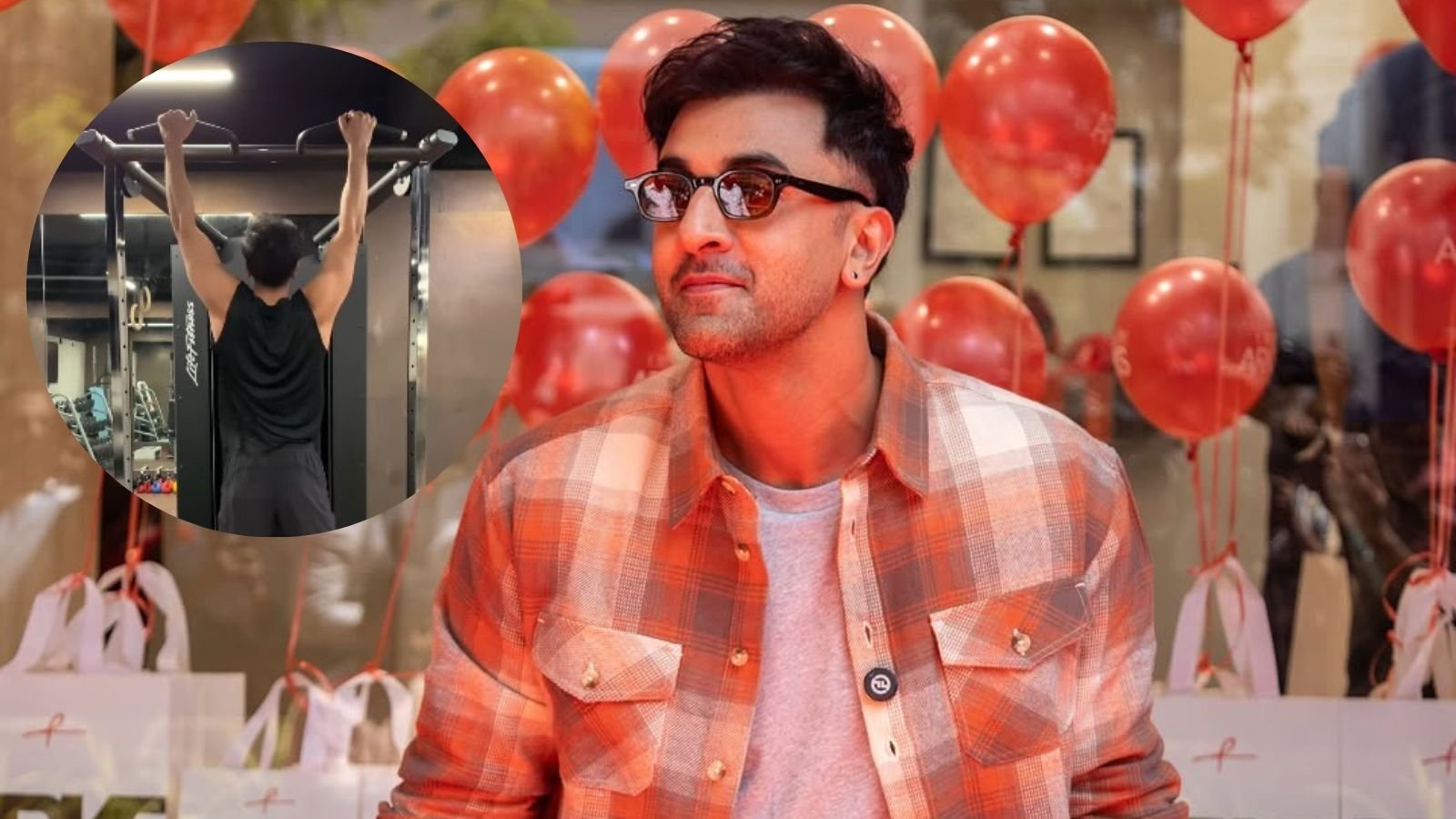
 ​Ranbir Kapoor aces advanced pull ups. (Source: Instagram/@arks, @trainingwithnam). In an Instagram video shared by his fitness trainer Nam, Ranbir Kapoor can be seen pushing through variations of the classic pull-up far beyond his comfort zone. From clapping pull-ups that test upper-body strength to side-to-side pull-ups that demand balance and control, the Brahmastra actor showcases a blend of sheer strength and serious coordination.. According to Sameeran Chetia, a certified fitness trainer, pull-ups help strengthen the back, arm and shoulder muscles. Besides improving grip strength, they also benefit overall body strength and flexibility. “Pull-up is an amazing bodyweight movement that also helps build upper-body strength. It is a compound movement that involves multiple muscle groups, and is one of the best back-strengthening exercises,” said the expert.. Clapping pull-ups train your muscles to generate force quickly, helping improve upper-body power, coordination and overall athletic performance. Side-to-side pull-ups shift the load across your lats and arms, forcing each side to work independently and improving muscular balance. The best way to perform this movement is to hang from a pull-up bar and try to pull yourself up to chin level, added Chetia.. “During movement, try to engage the muscles in your arms and back. When performed correctly, pull-ups help strengthen the biceps, forearms, and core muscles. Another benefit you get from pull-ups is grip strength, which can help in day-to-day activities,” Chetia told indianexpress.com.. View this post on Instagram. Allan Thomas, owner at Zealbox, explained how pull-ups can be a game-changer for both arm and core development.. “As you pull yourself up, your biceps contract, bearing much of the weight. Grip strength is crucial for pull-ups. Holding onto the bar engages the muscles in your forearms, improving overall grip strength.”. Muscles like the deltoids (shoulders) and the latissimus dorsi (lats) in the upper back are heavily engaged during pull-ups, providing significant upper body strength.. “When it comes to your core, to stabilise your body and prevent swinging, your rectus abdominis (the ‘six-pack’ muscles) is engaged when performing this exercise,” Thomas explained, adding that your oblique muscles help to stabilise your torso and maintain proper form. The transverse abdominis is another deep core muscle that helps stabilise the body during the pull-up motion.. Story continues below this ad. Some variations to try. Chetia said all you need is a chair and a bar for the following four exercises:. Pull-up hold: Place a chair on the ground, then stand up to the bar. Jump up, hold the bar for a few seconds in the air, and jump down.. ALSO READ | Brie Larson doing one-arm pull-ups will make you want to hit the gym. Eccentric pull-up: Lower yourself slowly on the chair.. 90-degree pull-up: Without lowering completely to the chair, grab the bar and go up and down.. Story  

Continue Reading

LifestyleNews

‘Why do I continue to bleed after my period, and why is the blood dark brown?’
 ​Hormonal fluctuations are another common reason behind irregular bleeding patterns (Image: Freepik). Menstrual cycles can vary from person to person, and sometimes unexpected symptoms can cause concern. One issue that often worries people is noticing dark brown bleeding even after their period seems to have ended. A similar question recently caught our eye on Quora, where a user asked: Why do I continue to bleed after my period, and why is the blood dark brown?. To understand the possible reasons, we spoke to Dr Sujata Uday Rajput, Consultant Obstetrician and Gynaecologist at Motherhood Hospitals, Pune.. Why does dark brown bleeding happen after a period?. According to the expert, this type of discharge often occurs when old menstrual blood leaves the body slowly at the end of a cycle.. “Dark brown bleeding after periods usually happens due to old blood slowly leaving the uterus, which can occur when the flow is light or delayed.”. DISCLAIMER: This article is based on information from the public domain and/or the experts we spoke to. Always consult your health practitioner before starting any routine.. When blood remains in the uterus longer, it oxidises and appears darker before leaving the body.. The expert adds that several other factors may also influence this pattern. “It may also be linked to hormonal imbalance, ovulation changes, or conditions like fibroids or PCOS.”. Story continues below this ad. Is brown bleeding after menstruation normal?. In many cases, brown spotting toward the end of a period is completely normal.. “Dark brown bleeding after menstruation is often normal and usually represents old blood leaving the uterus at the end of the cycle.”. However, doctors recommend paying attention if it starts happening frequently or appears with other symptoms.. “If it occurs frequently or is associated with pain, foul smell, or heavy bleeding, it may indicate an underlying health issue and should be evaluated by a doctor.”. Story continues below this ad. Dark brown bleeding after menstruation is often normal and usually represents old blood leaving the uterus at the end of the cycle (Image: Pexels). How long can spotting last?. Mild spotting after a period can happen as the body clears remaining menstrual blood. “Post-period spotting can normally last 1–2 days as the body clears leftover menstrual blood.”. But if it continues longer than expected or begins occurring regularly between cycles, it is advisable to consult a doctor. “If spotting continues beyond 3–4 days or happens regularly between cycles, it is advisable to consult a gynaecologist.”. Also Read | ‘If my period comes every two months instead of one, should I be concerned?’. Can hormones or stress affect bleeding patterns?. Hormonal fluctuations are another common reason behind irregular bleeding patterns.. “Hormonal imbalances, stress, and certain birth control methods can disrupt the menstrual cycle and lead to spotting or brown discharge af  

Continue Reading

LifestyleNews

Nakuul Mehta shares 5 toxic things parents should ‘never ever’ say to their children: From ‘nangu-pangu’ to ‘be a good girl’


 ​Nakuul Mehta, along with his wife Jankee, recently spoke about everyday parenting language on their podcast, The Indian Parent Pod. During the conversation, the couple highlighted several common phrases they believe parents should avoid saying to children.. Among the examples they discussed were statements like “boys don’t cry”, playful phrases such as “nangu-pangu” or “shame shame”, asking children to exchange hugs for treats, forcing them to share toys without considering their feelings, and repeatedly telling them to “be a good boy” or “good girl”.. While many of these expressions are used casually in households, psychologists say the words adults use around children can shape how they understand emotions, their bodies, and personal boundaries.. According to Dr Munia Bhattacharya, Senior Consultant in Clinical Psychology at Marengo Asia Hospitals, Gurugram, conversations around parenting language are useful, but they also need to be viewed realistically.. View this post on Instagram. Parenting does not have to be perfect. Dr Bhattacharya notes that parents often try to follow ideal parenting advice while juggling multiple responsibilities. “I think conversations like these are useful because they bring attention to children’s emotional well-being,” said Dr Bhattacharya. “At the same time, everyday parenting happens in the middle of work pressure, household responsibilities, and family expectations.”. Because of these pressures, many parents already feel overwhelmed by the idea of doing everything “right”. “In my experience as a psychologist, parenting does not have to be perfect to be effective,” she said. “What matters more is awareness. Even small changes in how parents speak to their children about emotions, boundaries, and self-worth can make a meaningful difference.”. She adds that children primarily need emotional safety at home. “Children do not need perfect parents. What they really need is an emotionally safe environment where they feel heard, respected, and accepted,” Dr Bhattacharya explained.. ALSO READ | Nakuul Mehta opens up about the ‘pain of being the second preferred parent’; ways to rebuild bond. Why telling boys not to cry can affect emotional health. One of the most common messages boys hear growing up is that they should not cry or show vulnerability. Dr Bhattacharya says this messaging is widespread and often comes from well-meaning parents who want their sons to appear strong.. Story continues below this ad. “Many boys grow up hearing phrases like ‘don’t cry’, ‘be strong’, or ‘boys don’t show weakness’,” she said. “Usually parents say this with good intentions because they want their sons to be resilient.”. However, the long-term impact can be different. “What actually happens is that boys start learning that certain emotions are not acceptable,” Dr Bhattacharya explained. “Instead of understanding their feelings, they push them down.”. ?  

Continue Reading

Latest News

Politics1 hour ago

AI can aid judiciary but not replace judges: SC Justice Vikram Nath

 Supreme Court judge Justice Vikram Nath said on Sunday that while Artificial Intelligence (AI) can serve as an effective aid...

Politics3 hours ago

PM Modi chairs high-level energy meet, reviews power readiness as Trump warns attack over Hormuz Strait

 Prime Minister Narendra Modi convened a high-level review on Sunday at a time when global oil markets remain volatile, with...

Politics3 hours ago

NIOS finances under scrutiny as govt plans to enrol out-of-school children

 New Delhi: As the Ministry of Education prepares to strengthen the open schooling framework through the National Institute of Open...

Politics5 hours ago

Threatened, held at gunpoint: Shocking claims emerge against Punjab minister in PWC officer suicide case

 The suicide of a senior government officer in Punjab has sent shockwaves across the state. On Friday, Gagandeep Singh Randhawa,...

LifestyleNews5 hours ago

‘Ghar me dal, chawal, mom, dad, wife and children…’: Suniel Shetty draws contrast between khush dikhna and rehna

 ​On a recent episode of the Raj Shamani Podcast, Suniel Shetty reflected on how social media has quietly reshaped our...

Video5 hours ago

Iranian missile strikes near Israeli nuclear site. #Israel #Iran #Dimona #BBCNews 

[embedded content] 

Politics5 hours ago

Manipur: ‘Ice-breaking’ meet marks first Manipur peace outreach in 3 years

 Nearly three years after ethnic violence tore through Manipur, a cautious first step towards reconciliation emerged as chief minister Yumnam...

Theboldnews video5 hours ago

The Invisible Battle He Fights Every Day…वह आँसू जो कोई नहीं देख सकता 

[embedded content]  

Theboldnews video5 hours ago

Clear Vision Shouldn’t Be a Luxury #AccessToHealth #ChildrensWellbeing #Advocacy 

[embedded content]  

Tech5 hours ago

The 9 Best Places to Buy Reading Glasses Online With No Prescription

​If you have difficulty seeing nearby objects or reading up close, you may have a condition called presbyopia. That might...

Trending News

Join Our Newsletter

Stay updated with breaking news and exclusive content.