
India Top Stories Feeds
Asian Games 2026: India finishes fourth with 85 medals, late gold rush seals campaign

The star-studded cricket and hockey teams predictably defended their crowns, but it was 17-year-old archer Kumkum Mohod and golfer Pranavi Urs who scripted unexpected history, adding to the late gold rush that powered India to a creditable fourth place in the Asian Games in Nagoya on Saturday (October 3, 2026).
Also Read: Asian Games 2026 India’s medallists: Full list of winners
The country could not repeat or better the 106 medals claimed in the previous edition, but the haul of 85 is a decent enough performance, although better was expected, especially from shooters and badminton players. In the end, India secured 21 gold, 27 silver and 37 bronze medals.
Eleven of these 21 gold medals came in the last two days and the final positions could still change slightly, as a couple of equestrian competitions are scheduled on Sunday, where India’s nearest competitor, Uzbekistan, is in the fray.
Also Read: Asian Games 2026 Medal Tally: India finishes fourth with 85 medals
But Saturday was a day full of celebrations for the country as familiar stars of cricket and hockey delivered with elan.
The Shreyas Iyer-led cricket team secured a 19-run win over arch-foes Pakistan in Nisshin, the hockey players, led by the redoubtable Harmanpreet Singh, were also clinical in Kakamigahara against Malaysia, beating them 5-1 in the final.
For the hockey side, the gold also secured direct qualification to the 2028 Olympic Games in Los Angeles.
Another gold winner on the day was the very under-stated Olympic bronze-medallist Aman Sehrawat. He picked up top honours in the 57kg category, reaffirming his calibre.
But Pranavi and Kumkum were the standout stories of the day.
While Kumkum became the first Indian woman archer to win an individual recurve gold, Pranavi achieved the same in golf, both displaying tremendous poise under pressure.
Kumkum, in fact, would be heading back home with two gold and a silver medal to her credit in what can only be called a dream debut at the Games. The teenager from Maharashtra also secured an individual quota place for India in the Olympic Games.
Pranavi also managed more than one medal as the Indian women’s golf team finished with a silver, thanks largely to her performance.
The other silver medal on the day came from wrestler Antim Panghal (women’s 53kg), while recurve archer Neeraj Chauhan defeated his higher-rated compatriot Dhiraj Bommadevara to bag the men’s individual bronze.
Archers end on a high
After sweeping the compound team event golds and securing a first-ever women’s team recurve gold, Kumkum’s top finish made it a campaign to remember for the archery contingent.
Kumkum defeated South Korea’s Oh Yejin 6-5 in the final after going past high-quality opponents in the previous two rounds.
She edged reigning world champion Kang Chaeyoung in the quarterfinal before putting it past world championships silver-medallist and former world No. 1 China’s Jingyi Zhu in the semifinal in a campaign to remember.
The men’s run, however, ended on a slightly disappointing note with Dhiraj and Neeraj squaring off for a bronze after failing to move beyond the semifinals.
The archers signed off with nine medals, including five gold medals.
Pranavi’s Golf Gold
Unable to sleep the previous night due to nerves, Pranavi was calmness personified as she held on to a slender one-stroke lead in the final round to achieve a historic women’s individual gold in golf that also helped the country claim the team silver.
The 23-year-old from Mysore sent in three birdies to recover from a horrendous triple bogey on the third hole, which had wiped away her three-stroke overnight lead.
With a final round score of even-par 70, she ended with a total of 15-under 265 for four days, a stroke ahead of the pack.
“I like being the first to do things. People will come along to do more but the first will always be the first,” a jubilant Pranavi said after the historic triumph.
Pranavi’s performance also became a crucial factor in fetching India the team silver, with other members being Aditi Ashok (67 in the final round) and Diksha Dagar (77 in the final round).
Aditi, who had won an individual silver in the last edition of the Games, produced her best performance of the week, slamming in six consecutive birdies against a double bogey and a bogey, to sign off tied 14th individually with a two-over 282 total. Diksha ended tied 23rd on the individual leaderboard with a 12-over total.
The two best scores are taken into account for deciding the team medals and India ended 14-under 546, well behind gold-winners China (22-under 538).
Expected golds in cricket, hockey
Abhishek Sharma was the familiar nemesis upfront, while Tilak Varma became a tormentor towards the end as India lived up to its top billing by defending the Asian Games men’s cricket gold with a 19-run win over Pakistan.
The pitch was a tricky one but eased out later as world’s No. 1 T20I batter Abhishek smashed 61 off 28 balls, studded with seven sixes, and vice-captain Tilak silenced his critics with a top-notch unbeaten 51 off 22 balls.
India posted a mammoth 211 for 6 and even though an unheralded Hasan Nawaz (96 off 51 balls) gave everything he had to make a match of it, the result offered no surprises.
Pakistan were stopped at 192 for 6 in the end and India extended their dominance over the arch-rivals to take the head-to-head from the start of the 2024 T20 World Cup to 6-0.
In between, Nawaz punished the Indian spinners before Jasprit Bumrah’s experience (0/33 in 4 overs) and Washington Sundar’s (2/29 in 4 overs) calmness ensured that there were no surprises in the end.
On the hockey field too, it was India all the way as captain Harmanpreet Singh rose to the occasion with a brace to star in a 5-1 win over Malaysia that didn’t secure gold for the second time but also ensured a ticket to the 2028 Olympics.
The men’s team’s gold came a day after the women defeated higher-ranked defending champions China 1-0 in the final to clinch the title after 44 years and also book an Olympic spot. This is the first time that both the men and women have ended on top in the same edition of the continental showpiece.
Captain Harmanpreet (11th and 57th), Jugraj Singh (23rd), Hardik Singh (42nd) and Shilanand Lakra (54th) scored for India. For Malaysia, Shello Silverius pulled one back in the 14th minute. With his twin strikes, Harmanpreet also ended as the tournament’s top scorer with 12 goals to his credit.
Aman shines on wrestling mat
Aman upgraded his Asian Games bronze to gold, while Antim Panghal’s bid to become only the second Indian woman wrestler to win the continental title ended in disappointment after being outclassed by Japan’s Moe Miyooka in the final.
India signed off with six medals — two gold, two silver and two bronze — in one of the best shows in the event, especially after missing out on top-of-the-podium place in the Hangzhou Games in 2023.
Amanvheld his nerve to beat North Korea’s reigning World Champion Chong Song Han 10-7 in the men’s 57kg final.
This was India’s second wrestling gold after Sujeet Kalkal’s sensational title win on Friday.
India previously won two wrestling gold medals at the Asian Games after the 2018 Jakarta game when Bajrang Punia and Vinesh Phogat had triumphed in their respective men’s and women’s events.
India Top Stories Feeds
Go home: Dressed in all black, UK vigilantes bar Indian students from park

Three Indian students out for a walk in a park in England were confronted by a group of self-styled vigilantes, filmed and told not to return. The group, calling itself the Chelmsley Wood Patriots, was patrolling Meriden Park in Solihull, claiming it wanted to protect women and children.
But a video of the encounter, first reported by British news outlet Metro, showed members questioning the Indian men about their presence in England before ordering them to leave the public space. The video was later deleted from the group’s social media account but continued circulating elsewhere.
‘WHAT MADE YOU COME TO ENGLAND?’
In the video, a member of the group approaches one of the men and asks: “What made you come to England?”
One of the students explains that they usually live in Birmingham and had moved to the area that day. Another says he came to England to pursue a master’s degree and had been in the country for two years.
The exchange then turns into a warning. One of the men tells the students: “What you need to do is stay away from a children’s park. Do not come round here again. Do not be seen here again. This is your final warning.”
“You will not get a warning again, stay away, stay away!”
“Go back to your house yeah and stay away. Take yourself back to where you f****g live. Back to the HMO, go home, go home.”
An HMO, or house in multiple occupation, is a property shared by people who are not all part of the same household. Such accommodation is common among students and other renters in the UK.
VIGILANTES DEFEND NIGHT PATROLS
The group later defended its patrols in a Facebook post, claiming they were prompted by reports of missing children and rapes in the area. It said its members had approached the men after finding them near trees and toilets in the park at night. The group wrote: “Our patriots walked around in silence up behind the man, tapped his shoulder & asked what he was doing in the park.”
“They asked why are they in a park in the dark only to be told they were exploring. This is why we then decided to film these men show you their responses because they all fumbled with very different stories.”
The group claimed it had “politely” asked the men to leave, arguing: “Parks are for children, family units, not three grown men sitting in the dark filming when we have so many uncertainties at present.”
However, local activists challenged the justification for confronting the students and questioned whether their ethnicity had influenced the group’s actions.
ACTIVISTS ALLEGE RACIAL TARGETING
According to local media, Solihull Green Party condemned the incident, saying there was no apparent reason for the approach other than the students’ ethnicity. The party said it was trying to trace the men to check on their welfare.
Green council candidate and community activist Shesh Sheshabhatter also criticised the confrontation in comments to BirminghamLive.
“These young men were doing nothing wrong. Students are allowed to meet and walk outside, and they have every right to do so. We can see no reason they were targeted other than the colour of their skin,” he said.
Meanwhile, West Midlands Police said it was aware of reports about the incident and that an appropriate response was under way. Solihull Police also confirmed it was aware of the group operating in the Chelmsley Wood area and of footage showing men being stopped in Meriden Park, reported local media.
WHY IT MATTERS FOR INDIAN STUDENTS
The UK continues to attract a large number of Indian students, making them one of the country’s biggest international student communities. According to the Higher Education Statistics Agency (HESA), 146,480 Indian students were enrolled at UK universities in the 2024-25 academic year, more than from any other overseas country for the third consecutive year. The figures were published on January 27, 2026.
More recent statistics indicate that India was among the top two countries with sponsored study visa holders in the year ending June 2026, along with China. According to the UK Home Office, 83,000 study visas were issued to Indian applicants during that time period.
– Ends
India Top Stories Feeds
How CBI traced back ‘bribe’, leading to arrest of SMPP CEO Kansal

New Delhi: A late-night hawala cash delivery to a defence Public Sector Undertaking (PSU) official’s Pune home was the CBI’s first lead. They followed the money, which led them not just to an alleged bribery-linked defence contract but also to a high-profile name that had not figured in their initial investigation.
The cash delivery was intercepted, and a total of Rs 1.7 crore was recovered from the scene. As the CBI traced the money backwards through the hawala network to identify its source, it led them to Ashish Kansal, the Chief Executive Officer and director of defence manufacturer SMPP Limited, ThePrint has learnt.
Kansal is a prominent public face, almost a poster boy, of India’s private defence sector, frequently appearing on television shows and at public events. He has been part of the Federation of Indian Chambers of Commerce & Industry’s (FICCI) Defence and Homeland Security Committee, as the co-chair. Kansal has also led delegations to other shores.
The delivery to Anil Kumar, a senior executive director at state-run Munitions India Limited (MIL), led to his arrest and allegedly exposed a bribery trail linked to a Rs 500-crore defence contract and leakage of sensitive information.
According to an agency source, the CBI had received a tip-off about a large hawala payment headed to Kumar’s home. What investigators did not know then was who was at the other end of the transaction. Tracing the payment through a chain of intermediaries led them to Kansal, whose company has been engaged in defence manufacturing for over three decades.
“When we intercepted the hawala money during the search, we did not know it had allegedly been sent by Kansal. The person delivering it gave us one link, which led to another. We followed the trail backwards until we traced the sender,” the source said.
“It was then that we found Kansal had allegedly paid the bribe in connection with a Rs 500-crore project and sensitive information,” the source added.
In its First Information Report, the CBI has alleged that Kansal was in regular contact with Kumar regarding a Rs 500-crore contract awarded to the company to supply ammunition to MIL over a year. Ravit Kumar Tewatia, an SMPP employee, was also in contact with Kumar as part of the alleged conspiracy, the FIR said.
Once this was established the CBI moved to arrest the CEO along with Kumar, the source added.
According to the FIR, a copy of which is with ThePrint, the CBI received information that Kumar, in connivance with certain private contractors and vendors, was demanding and accepting bribes in exchange for “official favours and disclosing sensitive information concerning defence production, procurement and other strategically important activities of MIL”.
The CBI has also alleged that Kumar had been routing and parking substantial portions of the illicit proceeds through his wife, Chetnashri, his brother, Harshvardhan, and other relatives. Harshvardhan has also been arrested.
(Edited by Nardeep Singh Dahiya)
Also Read: CBI arrests top defence PSU official, private firm CEO in bribery case involving sensitive military info
Nine Years, Made Possible by Readers
In 2017, Shekhar Gupta started ThePrint with a simple belief: Indian readers want journalism that asks why and what next, not just what. And that enough of them would be willing to pay for good journalism.
Nine years on, that belief has held.
And, in these nine years, we’ve stayed true to our mission. We’ve been asking the follow-up questions, going beyond the headlines and explaining what’s actually happening. We’ve travelled across the country to bring you in-depth, visually-compelling stories from the ground.
It’s been nine years of readers choosing to make this possible. If you’d like to be one of them:
Support ThePrint
India Top Stories Feeds
American elected fellow of top physics society in US

New Delhi: Kolkata-born Indian-American astrophysicist Sukanya Chakrabarti has been elected a Fellow of the American Physical Society, one of the most prestigious honours of the physics community.
Chakrabarti in a statement said she was deeply honoured by the recognition and that she has been developing new ways to map dark matter by measuring the extraordinarily small accelerations it produces in stars throughout our Galaxy.
“By combining extreme-precision measurements of stars, pulsars and eclipsing binaries, we are aiming to detect dark-matter clumps on increasingly small scales. These clumps carry the fingerprints of dark-matter models and could help us answer one of the most fundamental questions in physics: What is dark matter?” Chakrabarti said in a statement.
Chakrabarti is currently the Pei-Ling Chan Endowed Chair at the College of Science at The University of Alabama in Huntsville (UAH). Her work focuses on developing new approaches to measure the distribution and behaviour of dark matter in the Milky Way. Over the past few years she has combined theoretical astrophysics, observational astronomy, and computational methods of precision measurements. In 2022, she led the discovery of the closest known black hole to the earth, Gaia BH1, located 1,560 light-years from our planet, around a Sun-like star.
One of the aims of Chakrabarti’s research is to study how dark matter, the invisible material that makes up much of the universe, affects the motion of stars. Her research tries to detect the subtle gravitational pull of dark matter and to eventually understand how it shapes galaxies.
“I am tremendously grateful for the support I have had at UAH, that lets me continue carrying out these measurements, which bring together time-domain astronomy and precision measurements,” she said in a university statement.
Also read: India-France satellite TRISHNA to take flight by 2027. How it will improve Earth observation
From Kolkata to the US
Chakrabarti moved to the US with her parents when she was 10 years old. She earned her bachelor’s degree from the North Carolina State University in physics and philosophy. She later pursued physics at the Georgia Institute of Technology and eventually completed her PhD from the University of California, Berkeley, specialising in astrophysics.
Following her PhD she has held several prestigious positions including a postdoctoral fellowship at Harvard University and the Pei-Ling Chan Endowed Chair in the University of Alabama in Huntsville.
“When I was a kid, I wanted to be a detective,” Chakrabarti had told The Telegraph in 2011. However, she eventually studied physics and astronomy, inspired by the work of Carl Sagan, the scientist and science communicator.
Nine Years, Made Possible by Readers
In 2017, Shekhar Gupta started ThePrint with a simple belief: Indian readers want journalism that asks why and what next, not just what. And that enough of them would be willing to pay for good journalism.
Nine years on, that belief has held.
And, in these nine years, we’ve stayed true to our mission. We’ve been asking the follow-up questions, going beyond the headlines and explaining what’s actually happening. We’ve travelled across the country to bring you in-depth, visually-compelling stories from the ground.
It’s been nine years of readers choosing to make this possible. If you’d like to be one of them:
Support ThePrint
India Top Stories Feeds
Father sold apartment, quit job; mother pledged gold: The making of Sahithi Varshini, India’s latest WGM

Sahithi Varshini learning chess from her father Lokeswara Moogi Rao (Special Arrangements)
NEW DELHI: In May 2019, before the pandemic had pressed the pause button on the world, Sagar Shah, already an International Master (IM) and one of the most influential voices in today’s chess fraternity, wrote a line in his ChessBase column: “Just like Humpy (Koneru) and Harika (Dronavalli) have made the world take note of Indian women’s chess over the years, we have a feeling that within a few years Sahithi (Varshini Moogi) and Savitha (Shri Baskar) will also be right up there with the best in women’s chess!”
Sagar Shah wrote it back in 2019.
More than seven years have passed, and the same line reads less like a prediction and more like a question of legacy, much like asking whether Lamine Yamal could become the next Lionel Messi for Barcelona or whether Carlos Alcaraz could carry the torch of Spanish tennis after Rafael Nadal. Both girls are now 19. At the Chess Olympiad in Samarkand last month, Savitha added a team bronze to her growing list of accolades while also becoming the only Indian to win an individual gold medal at the event. Sahithi Varshini, on the other hand, has had a less decorated career so far. The Vizag-born prodigy recently became India’s latest Woman Grandmaster (WGM), a milestone by any measure. But is this the best she can do? “Whatever she has achieved so far, including this one (the WGM title), is not up to her potential. This is just a mere beginning,” Lokeswara Moogi Rao, her father and only coach to date, told TimesofIndia.com in an exclusive interaction.
The title and the three norms behind it
Just last month, Sahithi’s third and final WGM norm came at the IM VII Round Robin in Serbia. The 2007-born player finished second with 6/9, recorded a performance rating of 2408, and gained 23 rating points. That completed the requirements. The first two norms came in Hungary. The first was achieved at the Golden Horse IM Round Robin in September 2025, while the second came at the Kanizsa Open in August 2026, where she defeated GM Yeshaayahu Tzidkiya and recorded a performance rating of 2429.
Sahithi Varshini (Special Arrangements)
On paper, it may look like a clean progression. But the story behind it is much messier. To give a glimpse of how challenging it has been, when Sahithi was six, she caught dengue. She was on a ventilator for a week. She survived, and her family has always seen her recovery as a second life.
What’s in the name?
Long before chess became a part of his life, Lokeswara Moogi Rao, also known as Lokesh in the circuit, had discovered his passion in literature. During his college days, he spent hours immersed in English novels and occasionally tried his hand at writing. Years later, that love for literature would find its way into the name of his second daughter. “Sahithi is similar to Sahitya, which means literature,” Lokesh explained. But the name had another influence, one rooted in music. Lokesh comes from a family with a rich artistic background. His father’s side of the family was involved in theatre, and music was also part of their household. Lokesh himself was a keen singer, winning several prizes at the state level. Among the ragas he particularly admired was Amruthavarshini, whose name he wanted to draw upon for his daughter.
Sahithi Varshini with Gukesh and Divya Deshmukh (Special Arrangements)
His wife, however, felt that literature deserved a place in the name, too. And so, the two influences came together — Sahithi, inspired by literature, and Varshini, drawn from music. “But eventually, she didn’t belong to either of the two and chose the 64 squares,” Lokesh said with a smile. “She made a name for herself in a different domain.” Lokesh was born in a remote village on the edge of Yarada Hills, close enough to the sea that you could see it from the top. But there was no electricity. Before his father secured a job, the family had depended on fishing for a livelihood, as generations on his father’s side had done in a village near Srikakulam district. Walking to the next colony for food took half an hour. He still became a school topper and then a state-ranked student in the engineering entrance. But the family could not afford it. Lokesh’s father had retired, and there was no financial backup. He left the course, took a small job after completing a diploma course, and finished an engineering degree by correspondence. Years later, he joined HPCL as an officer.
How chess made entry
Lokesh was in his early 30s when he started taking chess seriously. He ran a literature club, a small group that exchanged idioms, short stories, and poems by email, trying to sharpen their English in Vizag. One member, Dinesh, a young medical student who lived opposite him, brought a huge chess trophy to the club one day after becoming the Andhra University chess champion. Having learnt that Lokesh had played chess as a child, Dinesh turned up at his house at ten one night with a chessboard. Lokesh’s wife Jaya Sri, however, was left unimpressed, asking the two of them to play the game on the balcony. Lokesh was close to winning the first game and then collapsed. The next day Dinesh won two more. The day after, he won two again, and told Lokesh he had found his weakness. “I took it as a challenge,” Lokesh recalled. “I wanted to win one game against him. That is how it started.” He bought a book from a local shop and began reading in the refinery’s control room, where officers sit around digital boards operating the plant. He would sketch positions on paper, then rub them out and redraw. A senior colleague, VS Prasad, caught him doing it and asked if he played chess. Lokesh begged him not to tell the bosses. Prasad took him home instead, to a shelf of 40 or 50 chess books.
Sahithi Varshini felicitated by Chandrababu Naidu, former chief minister of Andhra Pradesh (Special Arrangements)
One was Max Euwe’s The Road to Chess Mastery. For a man in love with literature, it certainly felt like a heaven. “It was like a Sherlock Holmes novel kind of a thing,” he told this website. Soon, beating Dinesh became a routine. “I won some five to ten games straight away,” he shared. Within three months, he made the HPCL team, and within six months of that he was at the national selections for the Petroleum Sports Promotion Board (PSPB), finishing second. He played for the board for roughly seven years, often captaining HPCL. At tournaments, he shared the hall with grandmasters such as Pentala Harikrishna, Shyam Sundar and Koneru Humpy, among others. He was never the strongest player in those rooms. Nevertheless, what he had was an appetite for classical chess. He would take an opening idea from a book, set up the position, and put it to the GMs. They told him he would one day be one of the finest coaches in the country. “So that was the foundation,” he said, giving us a touch of the philosophy behind Sahithi’s approach today.
A dream that wasn’t a title
The formal coach within Lokesh became active when her daughters started playing. Despite Sahithi showing early promise, he never set himself a target of IM or GM. What he wanted was a particular kind of game. “I always had a very big dream to make her someone like Fischer and Kasparov, not a GM and all,” he noted. “I never thought of making IM, GM and then celebrate it. Those moments are important, definitely, in life to cherish and move forward. But my dream was to make her someone like a legend.” That ambition shows in how she plays. She goes for sacrifices and attacking positions, and her games grabbed early attention.
A younger version of Sahithi Varshini (Special Arrangements)
At 14, she was rated over 2200. Her attacking play drew praise from Scottish Grandmaster, world-famous chess trainer, and author Jacob Aagaard. She also beat women’s world champion Mariya Muzychuk. “She never fears the opponent. She just plays her style,” her coach said. Soon, she had also won a stack of age-group medals, among them Asian and Commonwealth golds.
Three years the game took back
Then came COVID. Sahithi was at her peak, rated highly and seeded at the top of her age groups, and the tournaments stopped. She missed almost three years of competitive chess. “You are playing so well, and suddenly, you don’t have the option of playing continuously,” Lokesh said. “That was really annoying.” Leave from work was a problem even before the pandemic. She qualified for a world youth championship (the Cadets tournament) but could not travel. After the lockdowns, Lokesh took long leave and moved the family abroad, reasoning that a rented apartment would cost less than repeated flights. It was a gamble, and he knew it. It also exposed a different problem. Online chess meant every game she played in open tournaments was published, and opponents could prepare against her at the click of a button. A player who loved to surprise people was suddenly easy to study. She tried switching openings from one day to the next, which backfired against stronger opposition. Playing 2300-rated players, he explained, you cannot get away with half-prepared systems. “It did backfire for almost a year,” he said. But she came out of it understanding more openings than before. And in 2022 she played at the Chess Olympiad in Chennai, a member of India’s C women’s team and among the youngest in the squad. “Playing for India is always a special thing,” Lokesh told this website.
The Indian teams ahead of Olympiad 2022 in Chennai (Special Arrangements)
After the Olympiad, the targets slipped away. Sahithi secured a 13th-place finish at the FIDE Women’s World Rapid Chess Championship 2023 held in Samarkand, Uzbekistan, which also earned praise from former five-time world champion Viswanathan Anand. She was close to 2300 but not there, and the company could not keep granting leave.
It cost Lokesh his job
The trips abroad were expensive. HPCL contributed around Rs 10 lakh to Sahithi’s career, and the Andhra Pradesh government gave a similar amount, but it was not enough. “I had to sell an apartment,” Lokesh revealed. His wife’s gold was pledged. He was running out of options when he reached the most difficult decision almost three years back. “There was only one way. I had to quit my job,” he recalled. He resigned and set up a chess academy, which he admits was harder than it sounded. A start in Hyderabad did not work for about ten months, partly because he was away at tournaments with Sahithi. Then, following a heart attack, he had a bypass operation, the heart surgery that forced him to stop for months and reduced both his income and his strength. Around the same time, relatives pressed him to make Sahithi finish class 10. She took nine months away from chess to do it. “It sets the morale down,” he said of the surgery. “Financially, it also consumes.” Jaya Sri was a rock throughout. “I appreciate my wife more than me to be more braver than myself,” he said. For a woman who was not earning and had no connection to chess, living with selling property, shifting country, and watching her husband leave his job, he considers it a far harder act of faith than his own.
Sahithi Varshini’s family (Special Arrangements)
His elder daughter Falguni, now a FIDE arbiter, helped too, paying her own fees and rent by teaching classes. The decision to open the chess academy turned out better than he feared. Back in Visakhapatnam, the academy grew. His student Ajay santhosh Parvathareddy has amassed two GM norms and is now on the verge of beocoming a grand master. Aarav Sinha has collected four IM norms, and others gained hundreds of rating points within months on the European circuit. More than fifteen players now train with him, and he is writing a book on the 2200 level. “After surgery, I have had bigger achievements compared to pre-surgery,” he remarked.
What comes next
Sahithi was his first student. She remains the one he measures the rest against. But she is not, by his father’s account, in the best place mentally. “She is a little demotivated, to be frank,” Lokesh added. The three lost years still weigh on her. Her advice, however, is the same every time. “How you start is not as important as how you end,” he tells her. “Whatever you missed in those years, no regrets for that. Just look at what opportunities you have.” The plan is to build strength rather than chase a rating. “If you are 2500, you should be able to play like a 2500,” he explained. “It should not merely happen with your rating. You should deserve it.”
There are no big names in this journey. No godfathers. You don’t require big names to make your stamp.
Lokeswara Moogi Rao, Sahithi’s father
The harder obstacle is access. Official events such as the Asian Championships, Commonwealth events and World Juniors come with hotel costs that the family cannot easily meet. Lokesh believes that if Sahithi is given those platforms, results and sponsors will follow. If not, he will keep creating his own opportunities. “I’m optimistic that way, rather than regretting not having big sponsors,” he acknowledged, thanking Pravaha Foundation for currently sponsoring the chess prodigy in her journey.
Join conversation
Share your thoughts in the comments
Be respectful · TOI community guidelines
“There are no big names in this journey. No godfathers. You don’t require big names to make your stamp. It is your willpower, your passion for the game, your determination, and how you sustain in the difficult phases that take you forward.” Perhaps Sagar Shah had got it right all those years ago. Like rice that takes time to cook to perfection over a gentle flame, Sahithi Varshini, too, may need time to come into her own. And when she does, it may well be to carry forward the legacy of those who came before her in chess, sooner rather than later.
End of Article
India Top Stories Feeds
Why is stock market down today? Sensex, Nifty 50 crash – Top 3 factors behind stock market decline explained

The Indian stock market benchmarks, the Sensex and the Nifty 50, suffered significant losses on Monday, 12 October. The Sensex crashed 548 points, or nearly 0.76%, to end at 71,924.68, while the NSE counterpart Nifty 50 dropped 0.70% to settle at 22,363.35. However, the mid and small-cap segments exhibited resilience, as the Nifty Midcap 150 index ended flat, while the Nifty Smallcap 250 jumped 1.13%.
Why are the Sensex and Nifty down today? Key factors explained
The decline in the equity benchmarks can be largely attributed to the following three factors:
1. Selloff in the banking, IT, and other heavyweight stocks
Banking and IT have the most weight in the Sensex and the Nifty 50. So, a selloff in banking and IT stocks dragged the benchmarks lower. The Nifty Bank index declined 0.61%, while the Nifty IT index dropped 0.79% during the session.
However, the losses were not confined to only banking and technology stocks. Most heavyweight stocks witnessed strong profit-booking amid weak global cues and elevated oil prices.
Bharti Airtel, ITC, L&T, Reliance, and SBI were the top drags on the Sensex.
“Global and domestic macroeconomic concerns continued to weigh on sentiment. Although the rupee strengthened following the RBI’s recent measures to curb dollar demand, Brent crude remained elevated in the $102–105 a barrel range, limiting the relief on the inflation front,” Ajit Mishra, SVP – research, Religare Broking, noted.
“Elevated global bond yields, escalating geopolitical tensions and persistent foreign fund outflows continued to act as major headwinds. Investors also remained cautious ahead of key domestic inflation data and the ongoing corporate earnings season, both of which could influence near-term market direction,” said Mishra.
2. Dollar near 18-month high
The dollar index traded near 102.5, an 18-month high, on Monday amid an escalating US-Iran conflict, keeping investors worried about inflation and its impact on the overall economy.
The dollar’s rise is a major negative for emerging-market currencies like the rupee and for overall market sentiment. The dollar index is up 1% so far in October after a 2% jump in September.
When the dollar strengthens, investors tend to prefer US assets over emerging markets such as India. This triggers FPI selling, which puts pressure on the Sensex and Nifty.
3. Massive FPI selling
Massive foreign capital outflows are a major reason for the downtrend in equity benchmarks. As per NSDL, foreign portfolio investors (FPIs) have sold off Indian stocks worth ₹44166 crore in October till Friday. So far in 2026, they have offloaded Indian stock worth ₹3,04,468 crore.
“The massive FPI selling is the primary reason why the Indian market is underperforming this year with negative Nifty returns YTD in 2026,” V K Vijayakumar, Chief Investment Strategist, Geojit Investments, noted.
“FPIs pulling money out of India is rational since the risk-free return from the 10-year US bonds is above 5.2%. So long as the US bond yields remain elevated, FPIs will continue to sell. The scenario will change when the valuations become attractive, and the risk-reward ratio turns favourable for investment. Elevated crude prices and high US bond yields are the two strong headwinds for the market now. So long as these headwinds remain strong, the market will remain under pressure,” said Vijayakumar.
Nifty 50 technical outlook
Shrikant Chouhan, the head of equity research at Kotak Neo, said that the intraday market formation is weak, and if the Nifty slips below 22,300, selling pressure may accelerate.
“Below 22,300, the market could retest 22,200–22,150. 22,400 is an immediate resistance zone for the bulls. A move above this level could trigger a bounce toward 22,500–22,640. The current market texture is volatile and non-directional; therefore, level-based trading would be the ideal strategy for day traders,” said Chouhan.
According to Nagaraj Shetti, Senior Technical Research Analyst at HDFC Securities, Nifty formed a long bear candle on the daily chart. The market appears to be poised to revisit the recent swing low of 22180 levels in the short term.
“The underlying trend of Nifty continues to be weak. A decisive slide below the crucial area of 22,200 could trigger sharp weakness down to the 21,700 level in the near term. However, any bounce could find strong overhead resistance around the 22,600 level,” said Shetti.
Read all market-related news here
Read more stories by Nishant Kumar
Disclaimer: This article is for educational purposes only and does not constitute investment advice. The views and recommendations expressed are those of individual analysts or broking firms, not Mint. We advise investors to consult with certified experts before making any investment decisions, as market conditions can change rapidly and circumstances may vary.


Southwest announces major overhaul of loyalty program
Southwest Airlines is overhauling its loyalty program, adding a new top-tier status with unlimited Companion Pass trips and giving travelers...


Esther McGregor and Emilio Sakraya reportedly set to star in ‘Fourth Wing’ TV series
Esther McGregor and Emilio Sakraya are set to star in the small-screen adaptation of Rebecca Yarros’ hit romantasy novel “Fourth...


Elon Musk reveals ‘world’s first flying car’ at Tesla event
Elon Musk has revealed Tesla’s latest model, which he claims will be the world’s first flying car, using technology from...


Ukraine resuming strikes on Russian oil sites is a ‘disgrace’
President Donald Trump has labeled Ukraine’s resumption of strikes on Russian oil refineries a “disgrace,” the latest salvo in his...


The Surface Laptop Ultra delivers on most of Microsoft’s promises
Microsoft promises one machine for dev, AI, and gaming, and mostly gets there. Nick Indge – Oct 16, 2026 8:00...


Jennifer Meyer speaks out on ex-husband Tobey Maguire officiating her wedding to Geoffrey Ogunlesi
Jennifer Meyer gushed about her “unconventional” wedding to Geoffrey Ogunlesi — and having her ex-husband, Tobey Maguire, officiate. “I genuinely...


What The Sit-To-Stand Test Reveals About How Well You’re Aging
LOADINGERROR LOADING What does it mean to be healthy? Lab work results, body mass index and even the ability to...


New York City Council to question SpaceX official over AI safety
The Indian Computer Emergency Response Team (CERT-In) announced that AI models under testing broke into the live systems of Indian...


Tesla’s new Roadster makes a flying debut, hitting 60 MPH in under a second
Tesla unveiled its long-anticipated Roadster on Thursday during a dramatic event in which the vehicle used compressed-air thrusters to fly...


Blue Origin is going all in on the New Glenn rocket
Blue Origin announced a major expansion of its already considerable Florida launch facilities on Friday morning with the intent of...
-

 Entertainment2 weeks ago
‘Verity’ Posts $4.5M Previews, ‘Digger’ $1.2M
-

 Entertainment2 weeks ago
Rick Devens Wins In Season 28 Finale
-

 Business2 weeks ago
Tesla Cybercab pressure to expand after rocky first month in Austin
-

 Business2 weeks ago
OpenAI safety employee resigns, claiming the company’s ‘culture is broken’
-
 Business2 weeks ago
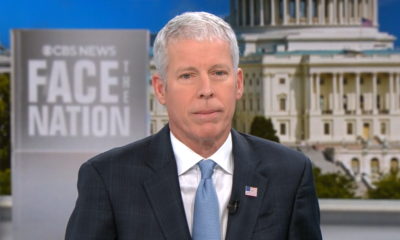
Energy Secretary Chris Wright says Trump was “well aware of the risks to energy flows” before launching Iran war
-

 Entertainment2 weeks ago
Disney pays $115 million for Yamaha’s Orange County headquarters
-
Business2 weeks ago
Leaked Anthropic IPO prospectus: The US government could hurt our business
-

 HealthNews1 week ago
Des Moines clinics stumped by unidentified virus