
PM office canada
Carney, Smith say new West Coast pipeline could get oil companies building again
It’s been a relatively quiet decade in Alberta’s oilsands, but the federal and provincial governments believe a new West Coast pipeline coupled with policy shifts might help turn up the volume.
Prime Minister Mark Carney was in Fort McMurray, Alta., this week to announce the first proposal to be deemed in the national interest under legislation passed last year: the million-barrel-per-day Pacific Link pipeline from Alberta to a tanker export terminal in southern B.C.
The designation means the proposal will be subject to a streamlined review process, shepherded by the Calgary-based major projects office.
The pipeline’s economic fate hinges on oilsands companies being willing to spend on expanding their output. At a news conference, Carney was asked whether he expected a return to boom times in the northeastern Alberta oilsands hub city.
“I wouldn’t use the term ‘boom,”‘ he replied. “I would use ‘sustained growth.”‘
The last boom from the mid-2000s to mid-2010s came with the side-effects of cost inflation, labour scarcity and housing shortages. Carney and Alberta Premier Danielle Smith say that if oilsands companies start building again — as they hope — it will be different this time around.
Oilsands companies have for years shied away from the multibillion-dollar megaprojects of more than a decade ago. The last mine to be built from scratch was Fort Hills, operated by Suncor Energy Inc.
From when it got the final go-ahead decision in 2013 to its startup in 2018, its cost ballooned to more than $17 billion from $13.5 billion.
Lately, instead of so-called “green field” projects, companies have opted to instead tweak their existing operations to squeeze out more bitumen or add to their existing footprints.
Executives have cited a dearth of pipeline capacity, a convoluted regulatory regime and onerous environmental regulations for the chill on large-scale growth projects.
[Companies] have managed to find a way to increase production without having the kind of dramatic pressure that we saw in the past of a large number of people moving here, not able to find homes.- Danielle Smith, Alberta premier
But also around the time investment fell off a decade ago, global crude prices cratered amid a supply glut and didn’t have much of a chance to recover before the COVID-19 pandemic virtually obliterated demand.
Fast forward to 2026, and the Mideast war has laid bare the vulnerability of global energy supply chains and left countries clamouring for stable providers.
A host of Trudeau-era energy policies loathed by oilpatch players have been undone and Pacific Link has taken a big step forward to becoming a reality, potentially enabling more oilsands crude to reach lucrative Asian markets.
“We learned lessons from the past in building infrastructure,” Carney told reporters on Thursday.
He said local mayors are thinking ahead for what their communities need and early participation from First Nations leaders means “a much broader spread of the economic benefits.”
He also cited “another phase of technical innovation” in the industry that didn’t exist previously.
More mature oil sector
At the news conference, Smith noted the autonomous oilsands haul trucks in the backdrop.
Previously, human drivers for those gargantuan vehicles would have received six-figure salaries and might have been flown in and out of the site from elsewhere in Canada, living in work camps, for a week or two at a time.
“[Companies] have managed to find a way to increase production without having the kind of dramatic pressure that we saw in the past of a large number of people moving here, not able to find homes,” Smith said.
The premier said she’s also talked to local municipal leaders about the bridge and road infrastructure that might be needed if production ramps up.
She mentioned upgrades to Highway 881, the road that winds through several steam-driven oilsands sites south of Fort McMurray.
“There’s lots of ways that we can partner with the federal government to make sure those key infrastructure projects get built, so we build on a pace that allows us to keep up,” she said.
Andrew Botterill, who leads Deloitte Canada’s oil, gas and chemicals practice, said the Alberta oilpatch has matured since the last boom.
“What we have is a more efficient, far more aligned group of producers up there than maybe what it was 10, 15 years ago,” he said.
“They’ve come together as an alliance and really recognize that ‘We’ve got to share labour, we’ve got to be less competitive, we’ve got to find ways that we can do things together and not just drive up costs.”‘
Oilsands properties are concentrated in fewer hands than had been the case a decade or more ago. Erstwhile producers including Husky and MEG Energy have been bought out and international players like Shell and Total have exited or sharply reduced their holdings.
Lance Mortlock, managing partner at EY Canada, flagged a bigger-picture concern: With multiple major projects in the works — not just the Pacific Link pipeline and new oilsands projects, but potentially mines, transmission lines and hydro dams — will there be enough workers?
“We’re going to need tens of thousands of workers across the country to build this stuff: engineers, professionals, welders, pipefitters. I’m not sure where all these people are going to come from if we do half the projects that we have the desire to construct,” he said.
“So I’m hoping that there’s going to be more conversation about the workforce and more conversation about how do we sequence these things so we optimize the system from a labour force perspective.”
PM office canada
As Stelco rejects demand to halt layoffs, NDP leaders call on Carney to nationalize steelmaker
Federal NDP Leader Avi Lewis and Ontario NDP Leader Marit Stiles are calling on the federal government to nationalize Hamilton-based steelmaker Stelco, amid layoffs Industry Minister Mélanie Joly says violate the company’s agreement under the Investment Canada Act.
In a release Tuesday, Lewis said the federal government should take “immediate action” after Stelco’s American owner Cleveland-Cliffs broke its commitment to maintain the same number of unionized workers and similar numbers of non-union workers for five years when it bought the company in 2024.
Joly has vowed to take Cleveland-Cliffs to court, saying Saturday in a post on X that “all options are on the table” as government lawyers consider next steps. But Lewis said Tuesday that going through the courts will take too long to save those whose jobs are in the crosshairs.
“Canada cannot afford to lose its steel industry,” he said. “If we’re serious about saving these jobs and the Canadian steel industry, we need immediate action.”
Lewis noted that the United Kingdom nationalized British Steel in July, saying the move protected “thousands of jobs.” In September, the U.K. government announced plans for the public takeover of another steelmaker, Specialty Steel.
Lewis also jabbed at Cleveland-Cliffs CEO Lourenco Goncalves, who has expressed support for the U.S. tariffs on foreign steel that led to these layoffs, saying they “are designed to deindustrialize our economy and destroy our manufacturing base.”
Goncalves maintains the company is within the law to conduct layoffs because they are temporary, until Canada and the United States reach a trade deal.
“There is no provision in the contract that I have to keep employment at a certain level every single day of the five years,” Goncalves told CBC’s Rosemary Barton Live on Sunday.
“If that was an imposition of the Canadian government, I would not have accepted.”
Ontario NDP says Ford should offer steel industry relief
Speaking at Queen’s Park on Tuesday, Stiles pushed for Ontario Premier Doug Ford to “work with the federal government to push Cleveland-Cliffs to give up their ownership interest in Stelco and establish public ownership and Canadian management.”
“The cost of not doing this is thousands of jobs. It’s spinoffs. It’s the whole community of Hamilton that is impacted,” she said. “The industry will lose out if we let Stelco go under.”
In a release issued the same day, Stiles and her Ontario NDP colleagues from Hamilton — MPPs Sandy Shaw and Robin Lennox — also said Ford should “get back to work and deliver a tariff relief package for the steel industry,” as well as a “Buy Ontario First” procurement strategy. The Ontario government remains on a 21-week summer break that ends Oct. 27.
CBC Hamilton asked Ford’s office for a response to the calls for nationalization but did not hear back by the time of publication.
When asked last week whether his government would consider such an action, Prime Minister Mark Carney said he would wait to hear Cleveland-Cliffs’ response to Joly’s letter demanding the jobs be reinstated, and then he would “take appropriate action.”
The company has since declined to reverse the layoffs.
Time now to consider public ownership, prof says
Nicolas Lamp, associate professor at the faculty of law and school of policy studies at Queen’s University, told CBC Hamilton last week he thinks the government should step in and take public ownership before Canada’s steel expertise is lost.
“At the moment when Canada is trying to build a lot of infrastructure, major plants, major projects, it’s really a question of whether Canada should just let all that expertise kind of die,” he said.
Lamp pointed to the purchase of the Trans Mountain pipeline from Kinder Morgan in 2018 as an example of the federal government taking on major infrastructure from a private company.
“I’m not saying we should definitely nationalize it,” he said.
“I would say that the Canadian government really has to look very closely at what the reasons for these layoffs are and whether a company that was more sympathetic — that had the Canadian workers and also the Canadian national interest in mind — would act similarly.”
Last week, federal Conservative Leader Pierre Poilievre said he supports the government taking legal action against Stelco. He reiterated that Tuesday, but said the best way to fix this problem would be getting a deal to remove the tariffs.
“Our message to the prime minister is get back to the table and get a tariff-free deal,” he said in Windsor on Tuesday.
“The workers at Stelco, Stellantis, Ford and every other trade-dependent company in this country are relying on the PM to keep his word and get a deal.”
PM office canada
Mark Carney to attend ‘Forever Canadian’ rallies ahead of Alberta referendum

Prime Minister Mark Carney is set to attend two Forever Canadian rallies in Alberta this week, just ahead of the province’s referendum.
On Oct. 19, Albertans will vote on the whether to stay in Canada or hold a future separation referendum. There are also nine other questions involving constitutional and immigration issues.
The “Forever Canadian” campaign, launched by Alberta’s former deputy premier Thomas Lukaszuk, seeks to encourage Albertans to vote to stay in Canada.
The organization’s website says Carney was invited to one rally in Calgary on Oct. 15 and another in Edmonton on Oct. 16. The Prime Minister’s Office confirmed Carney will attend both.
“We want the country’s leader to see what we see every day: Albertans from every walk of life standing up for a united Canada,” says the Forever Canadian website.
Carney, who grew up in Alberta, focused his Thanksgiving Day message on Alberta’s upcoming separation referendum, saying Canada is “worth fighting for.”
“This year, Thanksgiving is a bit different,” he said in a video message posted Monday and filmed at his old high school in Edmonton.
“A week from today, Albertans will have the opportunity to make an important decision about their future: whether to remain part of Canada or begin a long and uncertain process through which Alberta could separate from Canada.”
Carney said the federal government is building “big things” in Alberta — including a planned new pipeline to the West Coast — but Canada can’t achieve those goals if the country is divided.
“You can’t build big things on fault lines,” he said.
Carney also said Canadians are “stronger together” as they face down threats to their economy, security and culture.
“Generations of Albertans helped build this country. It’s yours, it’s ours, and it’s worth fighting for,” he said.
Conservative Leader Pierre Poilievre is expected to deliver his own speech supporting Canadian unity in Calgary on Friday.
Poilievre is set to speak during the Canada Strong and Free Network conference on Oct. 16 in Calgary. His speech is expected to be followed by an address from Alberta Premier Danielle Smith.
— With files from David Baxter and Anja Karadeglija, The Canadian Press
PM office canada
Unacceptable that government offices use banned Chinese cameras: Joly

Article content
OTTAWA — Industry Minister Mélanie Joly says it is “unacceptable” that some federal government organizations continue using Hikvision cameras that she declared banned from Canada last year.
THIS CONTENT IS RESERVED FOR SUBSCRIBERS
Enjoy the latest local, national and international news.
Exclusive articles by Conrad Black, Barbara Kay and others. Plus, special edition NP Platformed and First Reading newsletters and virtual events.
Unlimited online access to National Post.
National Post ePaper, an electronic replica of the print edition to view on any device, share and comment on.
Daily puzzles including the New York Times Crossword.
Support local journalism.
SUBSCRIBE FOR MORE ARTICLES
Enjoy the latest local, national and international news.
Exclusive articles by Conrad Black, Barbara Kay and others. Plus, special edition NP Platformed and First Reading newsletters and virtual events.
Unlimited online access to National Post.
National Post ePaper, an electronic replica of the print edition to view on any device, share and comment on.
Daily puzzles including the New York Times Crossword.
Support local journalism.
REGISTER / SIGN IN TO UNLOCK MORE ARTICLES
Create an account or sign in to continue with your reading experience.
Access articles from across Canada with one account.
Share your thoughts and join the conversation in the comments.
Enjoy additional articles per month.
Get email updates from your favourite authors.
THIS ARTICLE IS FREE TO READ REGISTER TO UNLOCK.
Create an account or sign in to continue with your reading experience.
Access articles from across Canada with one account
Share your thoughts and join the conversation in the comments
Enjoy additional articles per month
Get email updates from your favourite authors
Sign In or Create an Account
Email Address
or
Article content
Last week, National Post reported that despite gear from Chinese surveillance camera giant Hikvision being banned from federal properties in June 2025 on national security grounds, at least two agencies — the National Research Council and the Windsor-Detroit Bridge Authority — continue to use them.
Article content
We apologize, but this video has failed to load.
Try refreshing your browser, or
tap here to see other videos from our team.
Joly says it’s ‘unacceptable’ that government offices continue to use banned Chinese cameras Back to video
We apologize, but this video has failed to load.
Try refreshing your browser, or
tap here to see other videos from our team.
Article content
It also reported that the partly Chinese state-owned company operated “illegally” for nearly one decade in Canada despite growing security concerns within and outside of government about the security of Hikvision products.
Article content
Political Hack
Political Hack gets at what’s really going on behind the scenes on Parliament Hill. Wednesdays and Fridays.
Article content
The National Research Council told National Post last week that the organization removed all Hikvision gear from its security systems in 2025, but continues to use them to monitor “non-sensitive experiments and work areas.” A spokesperson confirmed that the remaining Hikvision cameras would be removed from operation by the end of the year.
Article content
“This is unacceptable,” Joly responded in a statement provided by her office. In addition, she said she had told her department — which oversees the National Research Council — “that these cameras need to be removed.”
Article content
In a new statement on Tuesday afternoon, NRC spokesperson Pamela Pilon confirmed that “all remaining cameras have been removed as planned.”
Article content
Housing and Infrastructure Minister Gregor Robertson, who oversees the Windsor-Detroit Bridge Authority, was far less categorical.
Article content
The bridge authority, which oversees the crucial Gordie Howe International Bridge linking Canada and the U.S., confirmed to National Post that it still used Hikvision cameras in a community meeting space and would do so until November.
Article content
Advertisement 2
Story continues below
This advertisement has not loaded yet, but your article continues below.
Article content
In a statement, Robertson’s spokesperson Jenna Ghassabeh touted “significant progress” in removing existing Hikvision equipment on government-owned and -leased properties.
Article content
Read More
Article content
“The office where legacy products exist and are being removed is one where only public non confidential information is managed,” Ghassabeh wrote. “To reduce risk exposure during replacement, interim mitigation measures, including the disconnection of internet connectivity and remote access capabilities have been explored at all sites.”
Article content
Following National Post’s reporting, Bloc Québécois leader Yves-François Blanchet accused Prime Minister Mark Carney of ignoring the plight of Chinese minorities (Hikvision is reportedly involved in mass surveillance of Uyghurs in China.)
Article content
“Meanwhile, as everyone tries to grasp the extent of China’s obvious intrusion into the affairs of Canada — and, to a lesser extent, Quebec —Prime Minister Carney is fixated solely on China’s financial clout and his desire to forge closer ties with the country,” Blanchet wrote on X.
PM office canada
Billions more for defence, but Canada’s military still faces an old budget squeeze
The Canadian military is on the verge of another round of internal belt-tightening, despite an enormous influx of cash from the federal government, CBC News has learned.
It appears to be a combination of past and current budget initiatives colliding with the expectations and demands associated with the gush of defence spending.
The Department of National Defence has been told to focus its billions of extra dollars on priority areas, including the purchase of much-needed new combat equipment.
At the same time, it is still subject to the demand for operations and maintenance reductions announced by the Trudeau government in 2023 and enacted in the 2024 federal budget.
Those cuts — described at the time as internal reallocation by former defence minister Bill Blair — saw an $810-million reduction in the year they were introduced and planned for $908-million cuts each following year. A federal official, who spoke on background, said that schedule is unchanged and the previous government’s budget directive has not been rescinded.
To that end, the federal Treasury Board Secretariat, which directs day-to-day government spending, is examining defence operational spending with an eye to reducing expenses by 10 per cent, said two confidential sources who were not authorized to speak publicly.
Defence is getting more money overall, just not as much as may have been expected. Experts warn care needs to be taken with how and where the internal cuts are made and expenses reined in.
Military readiness has suffered over the years because of an absence of operations and maintenance funding. According to the latest federal budget, the current operational readiness of the military overall hovers around 61.3 per cent.
A little over three weeks ago, the vice-chief of the defence staff, who manages day-to-day activities within the military, delivered the news that internal savings needed to be found and that the military’s aggressive growth plans will also have to be tempered, said a third source, with knowledge of the presentation.
In 2025, when Prime Minister Mark Carney’s government came in, it imposed its own sweeping expenditure review process across the whole of the federal government, but largely exempted the Department of National Defence (DND).
DND has been told to take serious steps to reduce outside consultants, like the rest of the federal government.
As part of meeting Canada’s NATO defence spending commitment, tens of billions of fresh dollars have been poured into the military over the last year along with plans to spend more in the coming decade. But a lot of that cash is being chewed up by a bevy of promises made by the Liberal government and the wage increase given to members of the Forces.
A spokesperson for Finance Minister François-Philippe Champagne said the new government’s intention is to protect the Defence Department as much as possible.
“We have however asked DND, as with every other department, to reorient its spending such that it prioritizes capital expenditures — mechanisms that grow and modernize the [Canadian Armed Forces], improve its readiness in an increasingly dangerous world and render it more competitive — and spends less on operating expenditures,” said John Fragos, Champagne’s press secretary, in a written statement.
“We want results and our plan to spend less on operations and more on capital expenditure is central to that work and in keeping with our plan to rearm the CAF, grow the economy all while balancing operating expenses by 2027-28.”
New dollars already earmarked
Dave Perry, president of the Canadian Global Affairs Institute and one of the country’s leading experts on defence finances, said in the past when there’s been internal belt-tightening it has meant a straight cut, rather than internal reallocation of funds to higher priority areas.
There’s been a lot of fanfare around the enormous increase in defence spending and Perry said that has led to a lot of high expectations within the military about what’s possible.
“I think it’s created this impression that there’s gazillions of dollars that could be allocated to any number of new initiatives in the near-term window,” Perry said. “And I think that’s not really the case.”
He said he believes there’s not nearly as much “available, investable and disposable cash” as people have been led to believe.
Defence spending is set to rise from the current $75 billion annually to $95.6 billion by 2030, the Parliamentary Budget Office recently reported. Perry said the Defence Department and the military are discovering that much of that cash is already spoken for.
Sources say there’s also legacy equipment that Defence continues to pay for and plans that have been made which — if stopped — could generate internal savings. One area mentioned was several IT projects that were planned with the thought that the money will come but are now deemed as unaffordable.
There are also expensive, outdated pieces of equipment with hefty maintenance bills that, if retired, could produce savings. The Victoria-class submarines are an often cited internal example at the Defence Department.
Only one of the four boats are operational. There are both deep maintenance and modernization plans extending to 2038.
It is conceivable, now that the government has initiated the process of replacing the submarines, that some of those projects could be scaled back.
In 2011, retired lieutenant-general Andrew Leslie was asked to conduct a landmark study of DND that recommended cutting over $1 billion annually by slashing headquarters staff and shifting resources to front-line combat units. It recommended moving or eliminating thousands of civilian and military personnel, primarily concentrated at National Defence Headquarters in Ottawa.
The report also advocated for streamlining structures, including reducing the number of reservists, cutting back on outside contractors and consultants and reorganizing command levels to maximize efficiency.
Leslie’s blunt recommendations faced significant political and bureaucratic resistance. Only a portion of the sweeping cuts he recommended were implemented.
In a recent interview, Leslie said he had one clear, simple message for the Carney government: “If you have to make budget reductions, reduce the Department of National Defence. Don’t touch the Canadian Armed Forces.”
With the threat of war in Europe and elsewhere, he said there’s some funding that needs to be protected at all costs.
“Whatever you do, do not cut operations, training and maintenance because that is the lifeblood of the military,” Leslie said. “In the final analysis, the people who get the money first are the troops. Air, land, sea, special forces and coast guard, who actually can go out there and do the work.”
Leslie said the military has less margin for error than when he wrote his report 15 years ago.
“Our side won’t be deciding when the next war or conflict occurs,” Leslie said. “It’ll be Russia, probably. They have to be well equipped, they have to have the right equipment. And the whole purpose of the prime minister’s rearmament for Canada was to make sure that we married together well-trained troops with the right equipment, the right leadership, the right support.”
PM office canada
Stelco pushes back on Ottawa amid threats of legal action over layoffs

Stelco has reportedly pushed back on accusations it breached its agreement with the federal government, saying they are “false,” and it “stands ready to protect its interests.”
This comes as Stelco begins laying off hundreds of workers, and faces threats of legal action from the federal government if those jobs are not preserved.
The Ontario-based steel manufacturer sent a letter responding to Industry Minister Melanie Joly after she sent a letter to Cleveland-Cliffs, the U.S.-based company which acquired Stelco in 2024. She also gave the company five days to respond.
Cleveland-Cliffs told Global News it sent a letter in response to Joly’s office on Oct. 9, although the response was not initially shared publicly.
Stelco’s letter to Joly, which was written by the company’s president and general counsel, Paul Simon, was shared with Global News Monday via a source who asked not to be named.
“Through our regular contact, the government has had significant advance notice of the impact these unprecedented market conditions have had on our business, and in more recent communications dating back to July 2026,” the letter said.
“Our early September meetings with several senior government officials, including representatives from your office, led Stelco to believe that the government understood the market realities confronting Stelco’s Hamilton Works finishing lines.”
Stelco, like Algoma and other Canadian steel manufacturers have been hit hard by U.S. tariffs of 50 per cent on Canadian steel imports, which led to a steep decline in sales to U.S. customers. The company said these market conditions have forced it to layoff up to 500 workers.
Joly responded on social media on Oct. 10 after reportedly receiving the letter from Stelco.
“The Government of Canada continues to expect Stelco to meet its legally binding commitments to employees. These commitments were agreed upon as undertakings under the Investment Canada Act and do not cease to apply because of changing business strategy or market conditions,” said Joly in the statement.
“As our legal team reviews the Stelco letter, all options are on the table.”
Canada gave U.S.-based Cleveland-Cliffs the go-ahead to purchase Stelco back in 2024 under the Investment Canada Act (ICA), which regulates foreign takeovers.
Speaking in the letter to Stelco last week, Joly said Canada’s approval of the deal was contingent on the new owner maintaining the number of union jobs and the majority of non-union positions.
Those conditions don’t expire just because “business strategy or market conditions have changed,” she added.
“This is particularly relevant here, where Cleveland-Cliffs has cited trade disruptions as affecting its operations at Hamilton Works, notwithstanding its chief executive officer’s public support for Section 232 tariff measures,” Joly said.
Stelco pushed back on Joly’s accusations in its letter, and said it “remains in compliance” with the undertakings in the agreement from 2024.
“Stelco submitted its annual report confirming its compliance with the employment undertakings in November 2025. That report highlighted that Stelco was facing significant challenges due to the unforeseen consequences stemming from unprecedented U.S. tariffs and Canada’s failure to advance an effective ‘Fortress North America’ trade regime,” the letter said.
“Your representation that Stelco’s planned layoffs cause it to breach its undertakings is false as the undertakings do not stipulate a commitment to avoid layoffs.”
When the layoffs were first announced last month, Prime Minister Mark Carney said the company “betrayed” Canadian workers and insisted “there’s money on the table” to keep employees on the job.
In an exclusive interview with Global News from Sept. 30, Lourenco Goncalves, the chairman and CEO of Cleveland-Cliffs, said the company’s decision was purely market-driven and that financial incentives could not fix the fundamental issues.
“I’m not shutting down, I’m not dismantling,” Goncalves said during a 10-minute phone call. “There’s no market in Canada for the amount of galvanized steel we produce in Canada. We need to export… to the United States.”
“Until we reestablish that, there’s nothing we can do, nothing.”
The union representing the roughly 500 steel workers facing potential layoffs, USW Local 1005, said it was not consulted nor did it have an opportunity to review those undertakings in the ICA.
“We were assured by both Cleveland Cliff’s and the Federal Government that bargaining unit employment levels would remain the same for 5 years. In other words no layoffs,” said the union’s president Ron Wells in a statement.
“Although we weren’t privileged to the signed agreement between Cliff’s and the Government, the response reeks of desperation as the original explanation of Stelco being victims of Trump’s steel tariffs wasn’t flying.”
Stelco, in the letter to Joly, denied wrongdoing, and based on the information presented to the federal government throughout the trade war, and the government’s own guidelines, the company said:
“In a situation such as this, Stelco should not be responsible for any non-compliance with its undertakings. Stelco stands ready to protect its interests consistent with the Investment Canada Act and its guidelines.”
Global News sent requests for comment to Stelco and Cleveland-Cliffs, but neither responded by publication.
– With files from Global News’ Colin D’Mello and The Canadian Press


Measles cases surge past 150 in Kentucky; big outbreak identified in one county
LAUREL COUNTY, Ky. — Just days after Kentucky’s measles case count hit 100, dozens more have been reported. As of...


Top U.S. banks dropped customers over political and religious views, regulator says
Top U.S. banks have “debanked” customers because of their political or religious views, as well as their business activities, according...


Hilary Swank, 52, announces she’s pregnant with baby No. 3
Hilary Swank is expecting her third child in December. The “Million Dollar Baby” actress, 52, took to Instagram on Wednesday...


Endeavor Health, Rush announce proposed merged healthcare system
Endeavor Health, including its nine Chicago-area hospitals, announced Wednesday it plans to merge under the umbrella of Rush University System...


Netflix Lays Off 4 of Its Top TV Execs
Among the roughly 1,000 Netflix staffers laid off on Wednesday were TV executives Lisa Lang McMullen, James Oh, Carolina Garcia...


Dell stock plunges after Barclays downgrade on enterprise AI
Dell shares plummeted 11% on Wednesday and dragged down other data center equipment names on mounting concerns that enterprise spending...


Chuck Lorre says Anna Faris’ exit from ‘Mom’ confirmed his casting concerns
Chuck Lorre suggested his reservations about Anna Faris starring in “Mom” had been “correct” when she left the show for...


Kaley Cuoco Welcomes Baby No. 2 With Fiancé Tom Pelphrey
Kaley Cuoco and Tom Pelphrey are celebrating their new family member with a big bang. The Flight Attendant star and...


60 Minutes Ratings Nosedive as Dust-Up Grabs Headlines
The latest episode of 60 Minutes came in as the lowest-rated of the season so far, according to final tallies...


Listen to Hayden Panettiere 911 call as Brian Hickerson’s brother desperately tries to save actress’ life
Zach Hickerson’s desperate attempts to save actress Hayden Panettiere’s life have been revealed in a a newly released 911 audio...
-

 Entertainment2 weeks ago
‘Verity’ Posts $4.5M Previews, ‘Digger’ $1.2M
-

 Entertainment2 weeks ago
Rick Devens Wins In Season 28 Finale
-

 Entertainment6 days ago
Travis Barker reveals why he underwent surgery after concerning hospital photos
-

 Business2 weeks ago
Tesla Cybercab pressure to expand after rocky first month in Austin
-

 Business2 weeks ago
OpenAI safety employee resigns, claiming the company’s ‘culture is broken’
-
 Business1 week ago
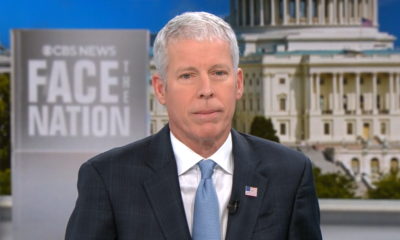
Energy Secretary Chris Wright says Trump was “well aware of the risks to energy flows” before launching Iran war
-
Business2 weeks ago
Leaked Anthropic IPO prospectus: The US government could hurt our business
-

 HealthNews1 week ago
Des Moines clinics stumped by unidentified virus