
Business
CHIPOTLE ANNOUNCES THIRD QUARTER 2026 RESULTS
COMPARABLE RESTAURANT SALES INCREASE 2.1% AS CHIPOTLE DELIVERS A THIRD CONSECUTIVE QUARTER OF POSITIVE TRANSACTION GROWTH
NEWPORT BEACH, Calif., Oct. 28, 2026 /PRNewswire/ — Chipotle Mexican Grill, Inc. (NYSE: CMG) today reported financial results for its third quarter ended September 30, 2026.
Third quarter highlights, year over year:
Total revenue increased 9.6% to $3.3 billion
Comparable restaurant sales increased 2.1%
Operating margin was 13.7%, a decrease from 15.9%
Restaurant level operating margin1 was 23.3%, a decrease from 24.5%
Diluted earnings per share was $0.27, a 6.9% decrease from $0.29
Adjusted diluted earnings per share1 was $0.27, a 6.9% decrease from $0.29
Opened 84 company-owned restaurants, with 53 locations including a Chipotlane. We also opened five international partner-operated restaurants.
“Three consecutive quarters of positive comparable transaction growth demonstrates that our Recipe for Growth strategy is working,” said Scott Boatwright, Chief Executive Officer, Chipotle. “We’re gaining traction with menu and digital innovation, making significant progress on our high-efficiency equipment rollout, and accelerating our global expansion with entry into three new markets this quarter. These achievements reinforce our confidence in the strategy and our ability to execute as we build Chipotle into an iconic global brand.”
Results for the three months ended September 30, 2026:
Total revenue in the third quarter of 2026 was $3.3 billion, an increase of 9.6% compared to the third quarter of 2025. The increase was driven by new restaurant openings and, to a lesser extent, comparable restaurant sales. Comparable restaurant sales increased 2.1%, including a 1.3% increase in average check and a 0.8% increase in transactions. Digital sales represented 38.8% of total food and beverage revenue for the three months ended September 30, 2026, an increase from 36.7% for the three months ended September 30, 2025.
During the third quarter we opened 84 company-owned restaurants, of which 53 included a Chipotlane, and five international partner-operated restaurants. Chipotlanes continue to perform well and are helping enhance guest access and convenience, as well as increase new restaurant sales, margins and returns.
Food, beverage and packaging costs in the third quarter of 2026 were 29.5% of total revenue, a decrease from 30.0% in the third quarter of 2025. The decrease was primarily driven by the benefit of menu price increases, tariff relief, and favorable limited-time offer mix. These benefits were partially offset by inflation, primarily in beef and freight, and higher protein usage.
Labor costs in the third quarter of 2026 were 25.7% of total revenue, an increase from 25.2% in the third quarter of 2025. The increase was primarily driven by lower sales volumes, higher employee compensation, including wage inflation and performance-based bonuses, additional restaurant labor supporting operational execution including promotional activities, and increased insurance costs. These headwinds were partially offset by the benefit from menu price increases.
General and administrative expenses for the third quarter of 2026 were $185.2 million, compared to $146.7 million in the third quarter of 2025. The increase was driven by stock-based compensation, performance bonuses, and outside services related to corporate initiatives. Adjusted general and administrative expenses1 for the third quarter of 2026 were $183.8 million, compared to $138.7 million in the third quarter of 2025.
The effective income tax rate for the third quarter of 2026 was 25.6%, an increase from 23.1% in the third quarter of 2025. The increase was primarily due to an increase in nondeductible expenses and a reduction in tax credits.
Net income for the third quarter of 2026 was $339.9 million, or $0.27 per diluted share, compared to $382.1 million, or $0.29 per diluted share, in the third quarter of 2025. Adjusted net income1 for the third quarter of 2026 was $344.6 million, or $0.27 per adjusted diluted share, compared to $389.9 million, or $0.29 per adjusted diluted share, in the third quarter of 2025.
During the third quarter of 2026 we repurchased $110.0 million of stock at an average price per share of $34.05. As of September 30, 2026, $1.6 billion remained available under share repurchase authorizations from our Board of Directors. The repurchase authorization may be modified, suspended or discontinued at any time.
More information will be available in our Quarterly Report on Form 10-Q, which will be filed with the Securities and Exchange Commission (the “SEC”) in accordance with applicable rules.
Outlook
For 2026, management continues to anticipate the following:
Full year comparable restaurant sales growth in the low single digit range
350 to 370 new restaurant openings, which includes 10 to 15 international partner-operated restaurants. Around 80% of new company-owned restaurants will have a Chipotlane
An estimated underlying full year effective tax rate between 24% and 26% before discrete items
For 2027, management is anticipating the following:
340 to 360 new company-owned restaurant openings in the U.S. and Canada
Around 15 to 25 company-owned and partner-operated restaurants outside the U.S. and Canada.
Definitions
The following definitions apply to these terms as used throughout this release:
Comparable restaurant sales, or sales comps, and comparable restaurant transactions, represent the change in period-over-period total revenue or transactions for company-owned restaurants in operation for at least 13 full calendar months.
Average restaurant sales refers to the average trailing 12-month food and beverage revenue for company-owned restaurants in operation for at least 12 full calendar months.
Restaurant level operating margin represents total revenue less direct restaurant operating costs, expressed as a percent of total revenue.
Digital sales represent food and beverage revenue for company-owned restaurants generated through the Chipotle website, Chipotle app or third-party delivery aggregators. Digital sales include revenue deferrals associated with Chipotle Rewards.
Partner-operated restaurants represent Chipotle restaurants over which Chipotle does not have a controlling financial interest and for which Chipotle does not directly manage day-to-day operations. This includes restaurants operated by third parties pursuant to license or franchise agreements and restaurants in which Chipotle holds a minority, non‑controlling ownership interest.
Conference Call Details and Supplemental Slides
Chipotle will host a conference call on Wednesday, October 28, 2026, at 4:30 PM Eastern time to discuss third quarter 2026 financial results and provide a business update for the fourth quarter to date. In connection with the call, supplemental slides will be available on the company’s website at ir.chipotle.com/presentations.
The conference call can be accessed live over the phone by dialing 1-888-317-6003 or, for international callers, by dialing 1-412-317-6061 and entering code: 6029014. The call will be webcast live on the company’s website at ir.chipotle.com/events. An archived webcast will be available approximately one hour after the end of the call.
Available Information
We use the investor relations section at ir.chipotle.com and newsroom section at newsroom.chipotle.com, as well as other portions of our website (together, our “website”) and our LinkedIn profile as means to routinely distribute important or material, non-public information and for complying with our disclosure obligations under Regulation FD. Accordingly, investors and potential investors are encouraged to consult our website and this social media channel regularly for important information, in addition to following our press releases, filings with the SEC, and public conference calls and webcasts. You may sign up on our website to automatically receive e-mail alerts when we post financial information and issue press releases and to receive information about upcoming events. The information contained on, or that may be accessed through, our website, LinkedIn, and any corresponding applications of those sites, is not incorporated by reference into, and is not a part of, this release.
About Chipotle
Chipotle Mexican Grill, Inc. (NYSE: CMG) is cultivating a better world by serving responsibly sourced, classically-cooked, real food with wholesome ingredients without artificial colors, flavors or preservatives. There are over 4,200 restaurants as of September 30, 2026, in the United States, Canada, the United Kingdom, France, Germany, Mexico, the Middle East, and South Korea. Chipotle is the only restaurant company of its size that owns and operates all its restaurants in the United States, Canada and Europe. With nearly 140,000 employees passionate about providing a great guest experience, Chipotle is a longtime leader and innovator in the food industry. Chipotle is committed to making its food more accessible to everyone while continuing to be a brand with a demonstrated purpose as it leads the way in digital, technology and sustainable business practices. For more information or to place an order online, visit WWW.CHIPOTLE.COM.
Forward-Looking Statements
Certain statements in this press release, in the October 28, 2026, conference call and in the supplemental slides for the call are forward-looking statements as defined in the Private Securities Litigation Reform Act of 1995, including statements under “Outlook,” and about our anticipated full year 2026 comparable restaurant sales growth, the number of new company-owned and international partner-operated restaurant openings in 2026 and 2027, expected number of restaurants with Chipotlanes, and estimated underlying effective 2026 full year tax rate, as well as statements about the expected success of our “Recipe for Growth” strategy overall and its related initiatives, the impacts of pricing and inflation in 2026 and 2027, our future food, beverage, packaging, labor, general and administrative and other costs, future estimated tax rate and future long-term prospects. We use words such as “anticipate”, “believe”, “could”, “should”, “may”, “approximately”, “estimate”, “confident”, “assuming”, “expect”, “intend”, “project”, “target”, “goal” and similar terms and phrases, including references to assumptions, to identify forward-looking statements. The forward-looking statements in this press release are based on currently available operating, financial and competitive information available to us as of the date of this release and speak only as of the date they are made. We assume no obligation to update these forward-looking statements, whether as a result of new information, future events or otherwise, except as may be required by applicable law. These statements are subject to risks and uncertainties that could cause actual results to differ materially from those described in the statements, including but not limited to: wage inflation and state or local regulations mandating higher minimum wages; the competitive labor market, which impacts our ability to attract and retain qualified employees; the impact of any union organizing efforts and our responses to such efforts; increases in ingredient and other operating costs due to inflation, global conflicts, severe weather, our Food with Integrity philosophy, tariffs, or trade restrictions; intermittent supply shortages relating to our Food with Integrity philosophy, rapid expansion, limited time offerings, and supply chain disruptions; risks and impacts of food safety incidents and food-borne illnesses; our reliance on certain information technology systems and potential material failures, interruptions, or outages; risks that our investments in new technology and technological innovations may not generate returns; privacy and cybersecurity risks, including breaches, unauthorized access, theft, modification, destruction, or ransom of guest or employee personal or confidential information stored on our network or the network of third party providers; the impact of competition, including from sources outside the restaurant industry; the impact of government laws and regulations relating to our employees, employment practices, restaurant design and construction, and the sale of food or alcoholic beverages; our ability to achieve our planned growth, such as the costs and availability of suitable new restaurant sites, construction materials, and contractors and restaurant equipment; the expected costs and risks related to our international expansion, including through partner-operated restaurants in the Middle East, South Korea, and Mexico; our ability to achieve expected levels of comparable restaurant sales due to factors such as changes in guests’ perceptions of our brand, including as a result of negative publicity or social media posts and decreased consumer spending or restaurant visits, or the inability to increase menu prices or realize the benefits of menu price increases; failure to meet market expectations for our financial performance or any announced guidance and the impact thereof; the potential impact of activist shareholder actions or tactics; failure to attract or retain key executive talent; the impact of our brand, marketing, promotional, advertising, and pricing strategies, digital platform and menu innovations; our reliance on third-party delivery services and the information technology infrastructure; and enforcement and litigation risks, including possible governmental actions and potential litigation related to food safety incidents, cybersecurity incidents, employment or privacy laws, advertising claims, contract disputes, or other matters. In addition, many of the foregoing risks and uncertainties are, or could be, exacerbated by any worsening of the global business and macroeconomic environment or developments in the rapidly evolving capabilities of artificial intelligence and other advanced technologies. These statements also are subject to other risk factors described from time to time in our SEC reports, including our annual report on Form 10-K and quarterly reports on Form 10-Q, all of which are available on the investor relations page of our website at ir.Chipotle.com.
1 Restaurant level operating margin, adjusted diluted earnings per share, adjusted net income, adjusted general and administrative expenses, and non-GAAP effective income tax rate are non-GAAP financial measures. Reconciliations to GAAP measures and further information are set forth in the table at the end of this press release.
CHIPOTLE MEXICAN GRILL, INC.
RECONCILIATION OF NON-GAAP FINANCIAL MEASURES
Below are definitions of the non-GAAP financial measures in this release. The following tables provide a reconciliation of non-GAAP financial measures presented in this release to the most directly comparable financial measures calculated and presented in accordance with GAAP.
Adjusted net income is net income excluding restaurant asset impairment and stock-based compensation retention.
Adjusted diluted earnings per share is calculated by dividing adjusted net income by the diluted weighted-average number of common shares outstanding.
Adjusted general and administrative expenses are general and administrative expenses excluding expenses related to stock-based compensation expense for specified retention equity awards.
The adjusted effective income tax rate is the effective income tax rate adjusted to reflect the after-tax impact of non-GAAP adjustments.
Restaurant level operating margin is equal to the revenues generated by our restaurants less direct restaurant operating costs, which consist of food, beverage and packaging, labor, occupancy and other operating costs, expressed as a percent of total revenue. This performance measure primarily includes the costs that restaurant level managers can directly control and excludes other costs that are essential to conduct our business. Management uses restaurant level operating margin as a measure of restaurant performance. Management believes restaurant level operating margin is useful because it highlights trends in our core business that may not otherwise be apparent when relying solely on GAAP financial measures.
We present these non-GAAP measures to facilitate a meaningful evaluation of our operating performance across periods. These adjustments are intended to provide greater transparency of underlying performance and to allow investors to evaluate our business on the same basis as management, which uses these non-GAAP measures in evaluating our performance.
Our adjusted net income, adjusted diluted earnings per share, adjusted general and administrative expenses, adjusted effective income tax rate, and restaurant level operating margin measures may not be comparable to other companies’ adjusted measures. These adjustments are not necessarily indicative of what our actual financial performance would have been during the periods presented and should be viewed in addition to, and not as an alternative to, our results prepared in accordance with GAAP. Further details regarding these adjustments are included in the tables below.
SOURCE Chipotle Mexican Grill, Inc.
Business
Inside billionaire Michael Bloomberg and wife Diana Taylor’s very low-key wedding dinner

Michael Bloomberg and Diana Taylor were spotted celebrating tying the knot after more than 25 years with an intimate dinner Monday at luxe Italian restaurant Gabriel’s on Central Park South.
We hear the pair — who were wed earlier in a private ceremony at their home on the Upper East Side — were joined by Bloomberg Philanthropies CEO Patti Harris and her husband Mark Lebow.
Harris also worked for the former three-term mayor during his administration, as deputy mayor and then as New York’s first female first deputy mayor.
A spy tells us the newlyweds “were dressed up and looked happy.”
“At the end they did toasts,” said the witness. “It was a joyous occasion.”
(We hear Bloomberg did not drink any alcohol, but others in the group toasted with bubbly.)
They also got well-wishes from a fellow high-powered patron: former CIA Director George Tenet was spotted congratulating the couple.
Bloomberg, 84, and Taylor, 71, were wed earlier in the day in front of his daughters Emma and Georgina. They also held a lunch with a dozen close friends and family. According to the New York Times, he also popped by his offices.
The pair met 26 years ago after a chance seating arrangement.
“The longtime couple exchanged vows today in a small, private ceremony at their home on the Upper East Side, joined by family, including his daughters, Emma and Georgina,” Bloomberg’s spokesperson announced.
“The two first crossed paths when they sat next to each other at a Citizens Budget Commission meeting while he was first running for mayor.”
Bloomberg has been dodging the question over whether he would pop the question for over two decades.
During a 2011 appearance on “The View,” Joy Behar — who had recently wed Steve Janowitz — teased, “Maybe you’re next,” to which he curtly responded, “Let’s talk about something [else].”
During his failed 2020 presidential run, Taylor told The Washington Post she hated the term “gal pal,” and said, “Nobody’s come up with the language around what we are.”
Ivy Leaguer Taylor — who functioned as NYC’s unofficial First Lady during his administration, attending events and galas — has worked on Wall Street and was superintendent of banking for New York State during the Gov. George E. Pataki administration.
She was approved as chair of the New York City Ballet’s board of directors in 2021. The couple attended this year’s gala at Lincoln Center together.
Bloomberg was previously married to Susan Brown in 1976. They split in 1993.
Taylor was also previously married.
Business
Dow Jones Futures Rise, CoreWave Jumps After Stocks Fall On Nvidia, Surging Treasury Yields

Information in Investor’s Business Daily is for informational and educational purposes only and should not be construed as an offer, recommendation, solicitation, or rating to buy or sell securities. The information has been obtained from sources we believe to be reliable, but we make no guarantee as to its accuracy, timeliness, or suitability, including with respect to information that appears in closed captioning. Historical investment performances are no indication or guarantee of future success or performance. Authors/presenters may own the stocks they discuss. We make no representations or warranties regarding the advisability of investing in any particular securities or utilizing any specific investment strategies. Information is subject to change without notice. For information on use of our services, please see our Terms of Use.
*Real-time prices by Nasdaq Last Sale. Real-time quote and/or trade prices are not sourced from all markets. Ownership data provided by LSEG and Estimate data provided by FactSet.
IBD, IBD Digital, IBD Live, IBD Weekly, Investor’s Business Daily, Leaderboard, MarketDiem, MarketSurge and other marks are trademarks owned by Investor’s Business Daily, LLC.
©2026 Investor’s Business Daily, LLC. All Rights Reserved.
Business
The US military seems to be getting nervous about the launch supply crunch
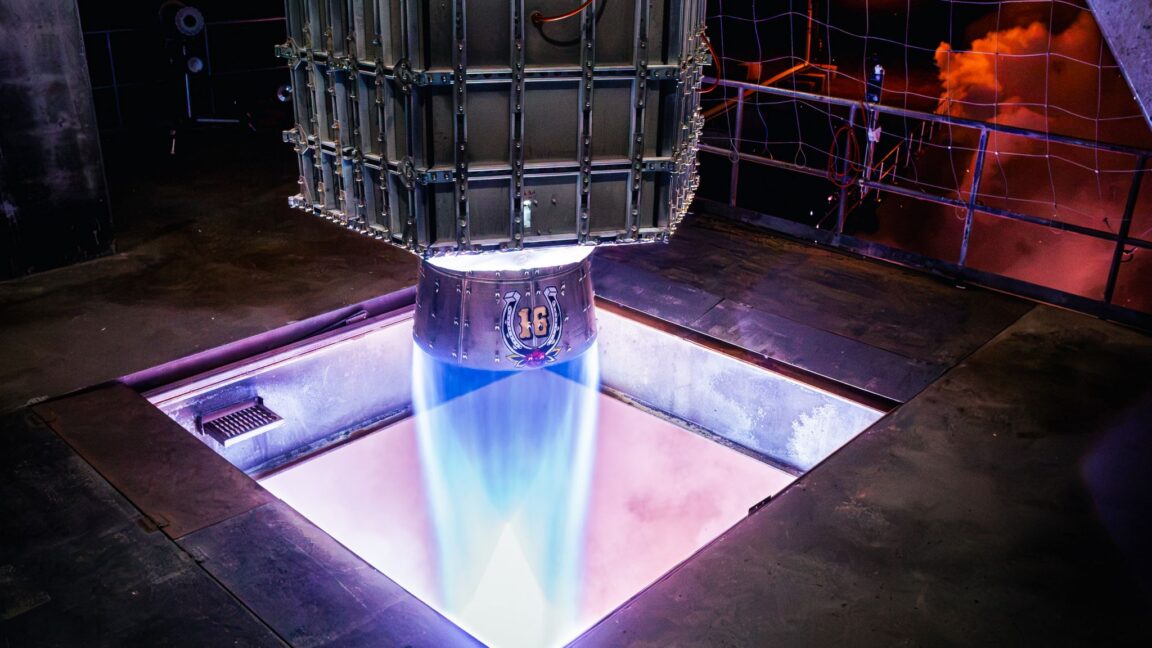
The US military is taking a new approach to prop up commercial launch companies as SpaceX looks to wind down its Falcon rocket program, suggesting defense officials see the workhorse rocket’s retirement as a potential national security risk.
The Pentagon’s Office of Strategic Capital has twice in the last two weeks announced it was sending cash to two of SpaceX’s competitors in the launch business. First, on October 26, the office announced a $150 million conditional loan commitment to Stoke Space. Military officials revealed a second $150 million Pentagon loan Tuesday for Rocket Lab.
Stoke Space and Rocket Lab are the first two launch companies to receive significant support from the Office of Strategic Capital (OSC), an organization established in 2022 to infuse companies developing “vital” national security technologies with capital. OSC has been on a loan spree in recent weeks, committing hundreds of millions of dollars to companies specializing in batteries, drones, and semiconductors. In the space sector, the office also provided a $150 million loan to LeoLabs, a commercial satellite tracking company, for production and deployment of radar units.
SpaceX, the Pentagon’s leading launch provider, has stopped taking commercial orders for Falcon 9 launches after 2028 as the company shifts its focus to the next-generation, super-heavy-lift Starship rocket. Falcon 9 and Falcon Heavy launches for government customers, including NASA and the US Space Force, are expected to continue a while longer. The Space Force’s launch contract with SpaceX allows the military to place Falcon 9 and Falcon Heavy orders through 2029, with the actual launches extending through 2033.
Then, if Starship is fulfilling its promise, SpaceX plans to retire Falcon for good. Starship may eventually be capable of launching national security payloads, but SpaceX’s near-term priority is using the rocket’s massive cargo capacity for its own Starlink Internet satellites and Starmind orbital data centers.
Assuring access to space
Military space officials have held to a policy of assured access to space since the 1990s, with the Pentagon paying to support at least two US rocket programs capable of launching national security satellites. The support previously came in the form of direct subsidies, development funding, and launch contracts at premium prices to give the government technical and financial insight into their launch providers, schedule priority on their launch manifests, and, in some cases, to simply keep them in business.
The Space Force’s mix of launch providers today consists of SpaceX’s Falcon family and United Launch Alliance’s Vulcan rocket, which has been grounded twice in the last two years by problems with its solid rocket boosters. ULA’s woes with Vulcan forced the Space Force to shift several national security missions to SpaceX.
Other launch providers aim to compete for their own slices of the growing pie of Space Force launch contracts. Space Systems Command, which oversees launch procurement for the Space Force, now forecasts the military will require up to 249 medium-to-heavy-lift launches through the early 2030s from its roster of launch contractors, more than double the command’s expectation just two years ago.
Alongside SpaceX and ULA, Space Systems Command has tapped Blue Origin, Rocket Lab, Stoke Space, Relativity Space, and Impulse Space for eligibility to compete for some of those national security launches. Blue Origin is the only company that has flown a rocket that could meet the Space Force’s requirements. Rocket Lab, Stoke Space, and Relativity Space are developing their own medium- and heavy-lift launch vehicles, while Impulse Space is working on in-space propulsion.
The loans from the Pentagon’s Office of Strategic Capital aim to get new medium-class rockets from Stoke Space and Rocket Lab ready to meet the military’s needs.
Stoke Space’s loan is tailored to support the buildout of the company’s second launch pad at Cape Canaveral Space Force Station, Florida. The second launch site would support flights of Stoke Space’s Nova Block 2 rocket, an upgraded version of the company’s fully reusable Nova Pathfinder, which is set to debut sometime next year.
“By supporting the construction of additional launch infrastructure, this commitment would enhance the overall capacity and resilience of the commercial space industrial base,” said Jordan Sebold, senior managing director of investments at OSC.
The loan to Rocket Lab will support the company’s efforts to increase the flight rate of its partially reusable Neutron rocket, which Rocket Lab says is also scheduled to make its first launch next year.
“The proposed loan would support faster vehicle delivery and processing and allow Rocket Lab to expand its fleet of maritime vessels with additional equipment for Neutron recovery and transport,” OSC said in a statement. “It would also enable manufacturing upgrades to increase the production of composite structures and engines, and support infrastructure that would reduce turnaround time between launches once the reusable rocket makes its operational debut.”
Both conditional loans are subject to “various financial, legal, technical, investment, due diligence, and other requirements,” OSC said.
Adam Spice, Rocket Lab’s chief financial officer, said Monday the Pentagon loan is on “very attractive terms” and “underscores the importance” of the military’s appetite for launch capacity.
“We always take it when we can get it,” Spice said in a quarterly earnings call. “It gives us additional capital to scale key parts of our business, Neutron in particular … I think this is a helpful indicator, a very positive indicator, about where everyone sees the demand constraint and how it can be unlocked, and capital is certainly a part of that.”
Rocket Lab also unveiled new pricing for the Neutron rocket—an increase from $55 million to $70 million per launch—in response to what the company said was a surge in bookings for the still-unproven launch vehicle. Rocket Lab said it now has a backlog of 117 launches on contract, including orders for Neutron missions and the company’s smaller Electron rocket.
“Launch is extremely constrained, and that is exactly the situation we predicted,” said Peter Beck, Rocket Lab’s founder and CEO.
Business
House Republicans consider issuing subpoena to Nvidia CEO Jensen Huang

The Republican chair of the House Foreign Affairs Committee, Rep. Brian Mast, told ABC News on Tuesday that he’s prepared to subpoena Nvidia CEO Jensen Huang if he does not respond by Wednesday to a request from several House Republicans for a closed-door briefing on Huang’s reported relationship with an alleged Chinese spy.
Last week, Mast as well as Rick Crawford, the chair of the House Intelligence Committee, and John Moolenaar, the chair of the House China Committee, sent Huang a letter requesting he appear for a “joint, closed-door briefing.”
The focus of the briefing would be on Nvidia’s “security protocols against foreign adversary espionage” after the tech giant on Sunday announced an investigation into its CEO following New York Times’ reporting that he had an affair with an alleged Chinese government agent, identified as Alice Huang, a top executive at Singapore-based data company Megaspeed.
Jensen Huang has not yet responded to the Republicans’ request that he appear for a briefing. Asked by ABC News if he would consider issuing a subpoena to Huang should he not respond, Mast said “absolutely.”
It’s unclear how a potential subpoena of Huang would play out. House Republicans lose control of their committees in January when the chamber turns over to Democrats. The subpoena would likely expire and Democrats would need to issue a new one.
ABC News reached out to Nvidia for comment from Huang for this story.
Congressional Republicans on the Select Committee on China also sent a letter to Huang requesting that he appear for a closed-door briefing Nov. 18 concerning his relationship with Alice Huang. It is not known if Huang will appear before that committee; Nvidia hasn’t publicly responded to the request.
Mast said there is a “lengthy” list of things he wants to hear from the Nvidia CEO including what correspondence he had with the Chinese government. Mast added that he is “100%” worried about the national security implications of Huang’s reported relationship given that he runs the world’s largest computer chip manufacturer.
“They’re American chips. You know. So we thank God that Jensen is an American entrepreneur. You know, it’s an American tech company because they’re the best chips anywhere in the globe,” Mast said. “But that being said, we don’t want China to access them, to use them, to produce them like that.”
Nvidia’s board said they have “no reason to believe that either national security or Nvidia secrets were compromised” by Huang’s affair.
Huang “fully supports the review” and will cooperate with it, the Nvidia statement further said.
Several Democrats have expressed concerns about national security after the report, with House Minority Leader Hakeem Jeffries telling ABC News that there are “real concerns” that need to be addressed.
“We’re going to need a full briefing, specifically as it relates to the Nvidia issue, so we can all get to the bottom of what has happened and what the implications are in terms of America’s national security,” Jeffries said.
On Monday, President Donald Trump said the FBI is investigating the matter. Trump said he spoke with Huang in a phone call on Monday, during which the CEO said that he “didn’t know” he was involved with an alleged Chinese spy.
“He said he had absolutely no idea that the person in question was a spy,” the president told reporters during a press briefing on Monday.
It’s unclear when — if ever — the Trump administration alerted Nvidia that its CEO was the target of an alleged Chinese espionage plot.
The Chinese government has denied the allegations, calling them “baseless and purely slanderous smears against China.”
Neither Alice Huang nor her employer, Megaspeed International, responded to ABC News’ request for comment about the New York Times story on the relationship.
Business
Gas prices fall below $4 a gallon for first time since July

Gasoline prices fell to their lowest level since July on Tuesday, with the national average price slipping below $4 a gallon for the first time in months.
Data from AAA showed that the national average price dropped about 3 cents per gallon from Monday’s report, with the average slipping to $3.97 a gallon on Tuesday.
Gas prices have fallen about 17 cents per gallon over the last week, and roughly 39 cents from a month ago, according to AAA’s data.
CONSUMER INFLATION RISES FASTER THAN EXPECTED IN OCTOBER, CPI REPORT SHOWS
The decline in prices comes as refiners have switched to winter blends of gasoline that typically cost slightly less than summer blends, which can be sold at gas stations starting as early as mid-September.
Winter weather tends to result in fewer drivers on the road, which can reduce demand for fuel and contribute to a downward trend in prices, and AAA noted that gas prices may fall between 10 and 30 cents per gallon during the winter months.
TRUMP ADMIN POURING $480M LOAN INTO GULF OF AMERICA OIL AND GAS PROJECT
Consumers have faced higher gas prices for much of this year during the war in Iran, which has disrupted the flow of oil from the Middle East through the Strait of Hormuz and, in turn, constrained supplies for refiners to convert crude into gasoline.
Gas prices hit a recent peak at $4.50 a gallon May 11, 2026, then declined to a recent low of $3.77 a gallon on July 6, according to data from the Energy Information Administration.
CEO WARNS HIGH DIESEL PRICES COULD TRIGGER A ‘VICIOUS CYCLE’ OF SURGING FOOD PRICES
Ongoing tensions in the Middle East contributed to a rise in gas prices as summer turned to fall, with the national average reaching $4.47 a gallon on Sept. 21, 2026.
The Bureau of Labor Statistics on Tuesday released the October consumer price index, which showed gasoline prices were up 1% last month, a much slower rise that followed monthly jumps of 9.1% in September and 3.9% in August.


Hegseth Impeachment Effort Blocked in Key House Vote
House GOP leaders successfully killed a push to impeach Defense Secretary Pete Hegseth in a surprising show of unity from...


Trump’s private 2021 letter to Biden revealed in upcoming memoir
In his forthcoming book, former President Joe Biden discloses the contents of a 2021 letter written by President Donald Trump...


Scott Colom says tight Mississippi Senate race is almost over
Democratic Mississippi Senate Candidate Scott Colom tells CNN's Jake Tapper and Annie Grayer when he thinks his race will be...


Conveyor belt of storms unloads on Pacific Northwest
The north Pacific is cranking out one storm after another, sending relentless rain and snow into Alaska, British Columbia and...


Hegseth survives, but Dems say more impeachments could follow
House Republicans narrowly blocked an effort to impeach Defense Secretary Pete Hegseth, voting 211-204 to defeat the …


Man who admitted to dismembering wife remains emotionless as guilty verdict is read
A jury found Virginia man Naresh Bhatt guilty of first-degree murder Tuesday, rejecting his claim on the stand that his...


‘Mike Hammer,’ ‘Fat City’ Star Was 85
Stacy Keach, a commanding actor whose work includes movies like “Fat City” and the starring role in “The New Mike...


Shopping sucks. Blame your feed.
Shopping used to be fun. Now it's all microtrends and algorithm-approved outfits. Audie Cornish, Ari Shapiro, and Amy Odell …


California voters reject billionaire tax
Voters in California have rejected a measure to impose a one-time 5% wealth tax on residents with net worth over...


House GOP blocks Hegseth impeachment effort
The House voted to refer the measure to a committee, effectively killing the resolution to impeach Defense Secretary Pete Hegseth...
-

 Entertainment2 weeks ago
‘Baywatch’ Star Erika Eleniak on Track to Hit $1 Million in 1st Year on OnlyFans
-
HealthNews2 weeks ago
The Most Powerful Obesity Drug Yet Has a Hidden Benefit-and It Happens While You Sleep
-

 Business2 weeks ago
Dollar General overcharged millions at checkout for years, FTC and 20 states allege
-

 Business2 weeks ago
In China, the AI bubble has already burst
-

 Entertainment2 weeks ago
Inside Matthew Perry’s ‘struggle’ ahead of the 2021 ‘Friends’ reunion
-
Entertainment2 weeks ago
I’m a Bus Driver at Walt Disney World at 51 Years Old; Great Benefits
-

 Entertainment2 weeks ago
Taylor Swift, Travis Kelce wedding props deemed too expensive, dangerous revealed
-

 HealthNews2 weeks ago
Your Blood Pressure Could Be Higher Than You Think. These 7 Fruits May Help Bring It Down, Say Experts