
Entertainment
Chris Rock slams Woke 1 advocates for forgiveness while likening era to Salem Witch Trials

Chris Rock is getting candid about the importance of forgiveness in a world so quick to cancel others.
During a recent appearance on “The Daily” podcast, the 61-year-old comedian discussed his issues with “wokeness,” saying that while advocating for marginalized people and giving them a voice is great, it needs to come with forgiveness.
“The problem with wokeness is we’re in the Old Testament right now,” he said. “And the Old Testament has no forgiveness. The Old Testament didn’t work. So they had to write a remix called the New Testament.”
Host David Marchese then asked if he thought there was “anything redeeming” that came out of the post-George Floyd era, which he referred to as “woke 1.0,” since Democratic politicians now seem to be straying further from that ideology now.
The “Grown Ups” star reiterated his position that “it’s great to help those that need help,” but noted the problem comes “when you institutionalize it.”
“The Salem witch hunts. I’m sure the first three witches they caught were actually f- – -ing witches,” he said. “But then you open up a witch office and now you’ve got to start lying. Now you’ve gotta f- – – ing make s- – – up because you’ve got overhead. You’ve got to justify the witch hunters f – – -ing pensions and s- – -.”
He explained that just because he advocates for forgiveness, it “doesn’t mean condoning abusive behavior. You can reprimand your friends,” adding that holding them accountable is “also part of friendship.”
“If you’re only friends with your friends when they’re good, they’re not your friends,” he said.
While he admits there is room for improvement when it comes to cancel culture and wokeness, he noted he is “glad that all of this stuff happened,” as it allowed for certain voices to be heard which otherwise may not have been.
Kaivan Shroff — a former Hillary Clinton campaign staffer – disagreed with Rock, telling Fox News Digital the comedian “is oversimplifying this in a way that is pretty self-serving.”
“Sometimes the problem is not that people ‘took a joke out of context.’ Often the context is perfectly clear and the comedian knows exactly who the joke is aimed at, knows a lot of people will find it offensive, and is counting on that discomfort to make the material feel edgy or viral,” Shroff said. “You don’t get to use outrage as part of the act and then act shocked when the outrage follows.”
Rock is currently promoting his new film, “Misty Green,” which he wrote and directed in addition to starring in it.
The film follows an award-winning actress, Misty Green, who is working hard to make a comeback after years of watching her career slowly fade away, with Rock portraying a casting director who once worked with the actress.
“I’m really into expiration dates. I have a lot of friends who are in their 50s or whatever and there’s this thing everybody tells you, ‘You can do art forever.’ And that’s just not true,” he said. “And a lot of show business has, like you’ve got to reach certain plateaus by a certain time or else you’re going to be in trouble. So yeah, Misty is turning 40 and there’s a little bit of an expiration date happening here. I wanted to do a movie about Hollywood. I wanted to do a movie about the expiration dates we all have.”
He said he also wanted to make a movie about Los Angeles, calling it a “tale of two cities,” noting that while there is “sunshine and palm trees,” people are also “constantly walking over homeless people.”
The actor previously spoke about the message he wanted to get across when making the film, telling Variety in September that much of the movie is about Los Angeles, which he called a “complicated place” that “attracts an underbelly that people want to pretend doesn’t exist.”
“A lot of it’s about L.A. L.A. has got very wonky priorities,” he said. “There’s a real estate office on the same street as The Ivy on Robertson, and in the window, there are houses for $30-$40 million. In the window. But there’s a homeless guy sleeping right outside. The movie is about that crazy dichotomy.”
Entertainment
Diversity Now Seen as “Optional”
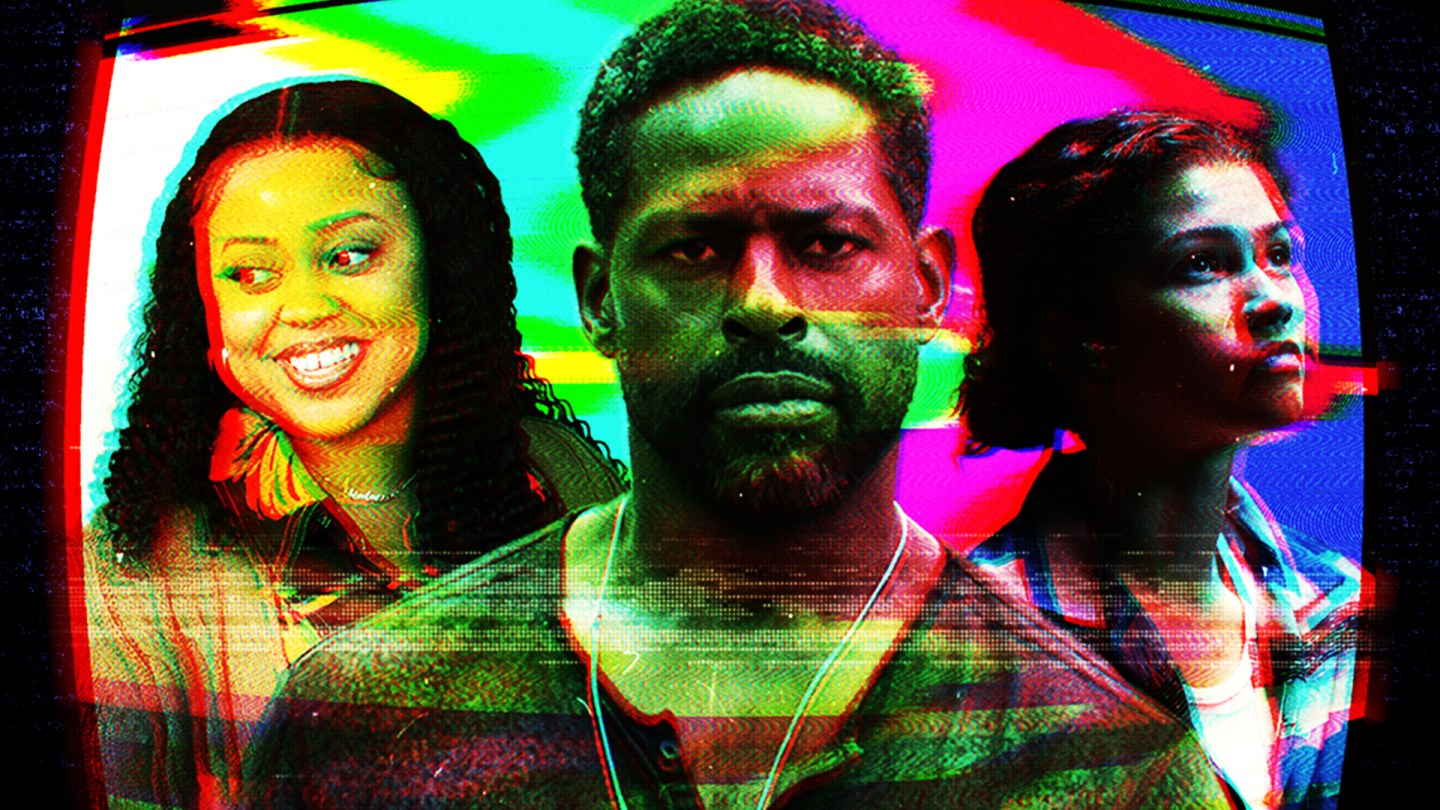
When #Emmyssowhite began trending after white actors swept the lead and supporting acting categories during the Sept. 14 ceremony, it unearthed a reality deeper than the demand for equal acclaim: Actors of color can’t win accolades for roles that don’t exist.
“The Emmys ultimately reflect the work that makes it to our screens, and this year’s results are another reminder that progress is not linear,” Television Academy chair Cris Abrego says in a statement to The Hollywood Reporter. “We have seen meaningful gains in representation across our industry, but we have also seen real regression, and we cannot take progress for granted.”
UCLA documented the backsliding in its Hollywood Diversity Report, released in June, which noted, for the first time in three years, the proportion of lead actors of color on streaming fell below their proportion of the U.S. population, from a high of 51 percent in 2024 to 36 percent in 2025. Streaming films featuring casts with a majority of people of color slipped from 41 percent to 25.8 percent.
“It’s always two steps forward, one step back, but this time it feels like two steps back,” says Gloria Calderón Kellett, creator of the Prime Video series With Love. “It feels like four steps back, if I’m honest.”
When Black Lives Matter protests erupted across America in 2020, Hollywood positioned itself as an ally, and for a short while it appeared the industry had done more than offer lip service regarding its commitment to representing marginalized communities.
Netflix tweeted, “To be silent is to be complicit. Black lives matter. We have a platform, and we have a duty to our Black members, employees, creators and talent to speak up.” Bob Iger wrote in a letter to Disney employees published on the Walt Disney Company website, “While we don’t have all the answers, we resolve to use our compassion, our creative ideas and our collective sense of humanity to ensure we are fostering a culture that acknowledges our people’s feelings and their pain. We also realize that now more than ever is the time for us all to further strengthen our commitment to diversity and inclusion everywhere.”
The Academy of Motion Picture Arts and Sciences took what, arguably, seemed to be the most meaningful step, instituting diversity and inclusion requirements for best picture nominees — more on that come winter when we, inevitably, find ourselves in another #Oscarssowhite race, given the limited frontrunners of color in the earliest nominee predictions.
UCLA’s 2022 Hollywood Diversity Report showed the share of digital scripted series created by people of color increased from 14.7 percent in the 2019-20 season to 25.6 percent in 2020-21 — the largest year-to-year gain seen in the report’s nine-year history. Yet as the writers and actors strikes of 2023 brought an industry still reeling from the financial losses of the pandemic to a halt, a familiar trend emerged. UCLA’s Streaming Television in 2023 report found of the 228 scripted shows analyzed, only 25 (11 percent) had a BIPOC creator. One year later, that portion nominally increased to 12.2 percent.
“It oftentimes happens that diversity, in terms of race or ethnicity, is seen as something that’s optional or something that’s not essential when the research that we’ve done really has shown that it should be woven into all the decisions made because of the fact that audiences are more and more racially and ethnically diverse, and so they are also very much interested in seeing that reflected on screen,” says Ana-Christina Ramón, director of the Entertainment and Media Research Initiative at UCLA and co-author of the Hollywood Diversity reports.
That outlook is how the Emmys went from a year of no winners of color in 2021 to a historic number in 2023 (five out of 12, tying the record set 32 years earlier) and back down to zero in 2026, says Ben Watkins, creator of Prime Video’s Cross and the upcoming Muhammad Ali drama The Greatest. “It’s important for us to acknowledge and say out loud that this isn’t an anomaly, it is a pattern … this is a reflection of a foundational issue.”
According to UCLA’s Ramón, that issue is two-fold. “It is part of a systemic bias that I think exists,” she says comparing the decline in racial parity to the underrepresentation of women in total streaming film actors, writers and directors seen across streaming in the past year, despite women making up the largest demographic of viewers. “There’s this all-across issue of relying on an old mindset and going back to a culture where it’s just this boys club,” she says. (UCLA’s 2020 report found that 92% of the chairs or CEOs of 11 major studios were white; 68% were men.) “A lot of people think, ‘oh, that’s probably long gone because of the advances that have been made,’ but there are stories about this resurgence of being able to be openly misogynistic, openly racist, from what I’ve heard from people behind the scenes.
The day he was sworn into his second term as president on Jan. 20, 2025, Donald Trump issued an executive order that terminated all diversity, equity, inclusion and accessibility offices and programs within federal agencies. Shortly after Trump’s mandate, Disney, in its filing to regulators, removed all references to its Reimagine Tomorrow initiative, launched in 2021 to amplify underrepresented voices; Amazon Studios eliminated policies aimed at increasing diversity in its TV shows and films; Paramount abolished staffing goals tied to race, ethnicity and gender and Warner Bros. Discovery announced that it was dropping the “D” and “E” in its recruitment efforts to now solely focus on inclusion.
“The rollback of DEI exposed how performative the effort always was, as if our opportunity to create was a result of a box being checked,” says Deli Boys creator Abdullah Saeed.
More perplexing is the industry’s retreat despite evidence that diversity is in its economic interest. The Latino Donor Collaborative’s 2024 Latinos in Media Report found that the industry could generate an additional $12 billion to $18 billion a year if it were to achieve proper Latin representation in TV and film.
A study released in January by USC’s Norman Lear Center Latino representation initiative ¡Pa’lante!, found Latinos accounted for only 6 percent of credited characters in the top broadcast series for the 2024-2025 TV season, despite making up 20 percent of the U.S. population. UCLA’s 2026 Hollywood Diversity Report also found streaming films with casts that were 21 percent-30 percent BIPOC had the second-highest median rating across all household and viewer groups and that in 2025, six of the top 10 streaming films and ten of the top 20 streaming films by total household ratings featured casts that were more than 30 percent BIPOC.
It also can’t be overlooked that HBO’s The Pitt, with its notably multi-ethnic cast, led all Emmy nominations this year, with 25, and won best drama for the second year in a row, and Abbott Elementary, the most diverse network Emmy contender, remains one of ABC’s most-watched comedies as it approaches its 100th-episode milestone in its sixth season this fall.
“I feel a fear that I did not feel before,” admits With Love creator Calderón Kellet. “I came into Hollywood and UPN had started and there were more shows that centered stories about people of color, comedies and dramas, and it felt like a very hopeful time. And then certainly when I had One Day at a Time, for a minute there, it was incredible. There was Gentefied and Vida, and we really were seeing this onslaught of all of these Latine-led shows, which was so exciting. And then the graveyard of those shows slowly started filling up.”
After doing some digging, Calderón Kellett found a common denominator. “Our budgets were not the same,” she says, qualifying the latest UCLA data that found fewer than one-fifth of streaming films directed by BIPOC filmmakers had a budget of more than $50 million, compared with slightly more than one-quarter of those directed by white men. “It’s like, oh, there are opportunities and that’s great, but we’re still starting the marathon five miles behind. It’s very difficult to win the race when you’re starting at such a disadvantage.”
When Saeed began shopping his Hulu crime drama centered on two Pakistani American brothers (Asif Ali and Saagar Shaikh), he says, “Deli Boys was passed on by everybody except for Onyx Collective,” Disney’s content brand for creators of color and underrepresented voices launched in 2021. “While I’m very grateful for there being a platform specifically for us, I wish we didn’t live in a world where we needed that separate water fountain and that we just have access to the actual spaces,” he says.
The series, which premiered in March of 2025 aired for two seasons and submitted for 28 Emmy nominations across 22 categories this year — though it ultimately didn’t land any noms — before being canceled in August.
“The saddest thing about Deli Boys’ cancellation is that it eliminates at-bats for Brown creatives in every position, and the decision to end it was not made by Brown people,” says Saeed, who notes he was told viewership was the basis for the decision, though he also noticed a shift in attitude toward his post.
Calderón Kellett has felt that shift, too. “These are the same problems that were here in the ’90s; the difference is I did not feel the fear factor of this moment where suddenly by virtue of being Latina, my identity is political.”
The Paramount Warner Bros. merger harkens another reality of the ‘90s, considered the golden age of Black television before CBS and Warner Bros. Entertainment merged UPN and The WB to form The CW, dropping many of the predominately Black shows that aired on UPN with its founding. Earlier this year, Paramount phased out BET’s streaming platform BET+ and merged its content onto the Paramount+ app after buying out Tyler Perry Studios’ equity stake. The cable channel could also face divestiture if Paramount violates key terms of its settlement during the Warner Bros. Discovery acquisition.
Bleak realities aside, creators of color remain focused on the bigger issues #Emmyssowhite brought into view and hopeful of a tide that will once again turn in their favor. “Times like this is when actually we got to get to work,” says Kellet. “This is when we have to reflect society. This is when we do have to tell the stories of what’s happening in our communities. This is when we should be challenging things that are keeping us down or atrocities that we’re seeing. I want to find a way to continue to do that and also support the next generation to do that. Everything is storytelling: the stories we tell ourselves, the stories we tell each other, the stories that politicians tell us, we need to become masters of it so that we can use it for good.”
With his upcoming Muhammad Ali sports drama, The Greatest, launching Nov. 4, Watkins is hopeful more studios will pay greater attention to internal metrics than fluctuating external political attitudes when making content decisions. “[Prime Video] having confidence in me as a storyteller, combined with the success of Cross, made their decision on The Greatest, I think, easier. And I’ve seen that in other pockets too,” he says.
Adds Saeed, “We are inevitable. Just by nature of diffusion, we are going to end up in the positions of power. We are going to end up with the microphone, with the platform. Resistance to diversity and storytelling is a fool’s errand because storytelling is an uncontrollable river of energy, and you can’t constrain that. We’ve seen what happens to art and creativity when you restrain it; it ceases to be art and creativity. I believe that we are in that transitional time, not just in the business, but our whole world is making that shift, and we just have to be patient and hold onto each other and get through it,” says Saeed. “The golden age for the Browns is coming.”
Entertainment
Taylor Swift to Perform at Academy Museum Gala

Taylor Swift is set to perform at the upcoming Academy Museum Gala.
The evening, taking place on Oct. 17, serves as a fundraiser for and takes place at the Academy Museum of Motion Pictures in Los Angeles.
While details are still under wraps, it would surprise no one if Taylor performs “I Knew It, I Knew You,” her “Toy Story 5” single that could earn the singer-songwriter her first Oscar nomination. The gala is considered a major stop for Oscar hopefuls.
“Taylor is an extraordinary talent whose work resonates around the world,” said Amy Homma, director and Ppresident of the Academy Museum and Academy Collection. “We are thrilled to welcome her to this year’s gala and look forward to her performance to close a wonderful evening of honoring three extraordinary filmmakers and supporting the Academy Museum’s mission to celebrate and preserve cinema.”
As previously announced, Charlize Theron will be honored at the gala with the Icon Award. Colman Domingo will receive the Vantage Award, and John Carpenter will be presented with the Luminary Award.
Swift most recently made an appearance at the MTV VMAs, where she was presented with the inaugural Artist-Director Award. She also premiered her “Patient Zero” music video, which she directed and stars Dakota Johnson and Colin Farrell.
Presented by Rolex, the star-studded Academy Museum Gala raises vital support for the museum’s exhibitions, screenings and educational programming.
The Academy Museum Gala advances the museum’s mission to celebrate and preserve cinema. Through the generosity of gala donors, proceeds from the evening will help ensure the museum continues to present world-class exhibitions, support educational opportunities, offer dynamic public screenings and remain accessible to visitors of all ages. Gala honorees directly champion the museum’s mission by participating in public programming around the event.
The gala is co-chaired by Robert Rodriguez, Steven Spielberg and Kate Capshaw.
The host committee includes Jessica Alba, Judd Apatow and Leslie Mann, Autumn Durald Arkapaw, Adrien Brody and Georgina Chapman, Jon M. Chu, Kirsten Dunst, Nicholas Galitzine, Ludwig and Serena Göransson, Regina Hall, Kate Hudson, Jessica Lange, Greta Lee, John Legend and Chrissy Teigen, Rami Malek, Demi Moore, Olivia Munn, Gina Prince-Bythewood, Questlove, Da’Vine Joy Randolph, Seth Rogen and Lauren Miller Rogen, Bird Runningwater and Teyana Taylor.
Entertainment
Michael Douglas Book: How 3rd Choice For Gordon Gekko Turned To Oscar

EXCLUSIVE: Mike Fleming Jr. here. For the better part of last year, my day began with a 6 a.m. call and an hour with Michael Douglas for his memoir One Helluva Ride. It was early for me, but always worth catching MD someplace in Europe, where he enjoys the fruits of his long run as Hollywood superstar with his wife Catherine Zeta-Jones and their family. Written by Douglas, Shane Salerno and me, the memoir One Helluva Ride was released Tuesday by Grand Central Publishing. Details revealed by Douglas about his colorful personal life have dominated headlines this week; we thought Deadline readers would be most interested in the dissection of the seminal film that helped forge a great career.
Douglas started with a difficult task, trying to forge an identity out of the long shadow cast by his father, Kirk Douglas. Douglas got his first movie boost as a producer, sharing the Best Picture Oscar for One Flew Over the Cuckoo’s Nest, and capturing the zeitgeist with The China Syndrome. His onscreen rise took longer. The producer in Douglas helped the actor in him by prizing good scripts above all else. The best of those meant playing flawed characters, and Douglas came to relish seeing how far he could push that envelope and still have audiences on his side.
The book tells Douglas’ story through a dozen of his most memorable films – Romancing the Stone, Fatal Attraction, Basic Instinct, Traffic, Falling Down and The War of the Roses among them — and The Streets of San Francisco, the TV series with Karl Malden that helped forge Douglas’ work ethic and prepared him to produce Cuckoo’s Nest with the late Saul Zaentz. The following excerpt focuses on Wall Street, the film that emboldened Douglas to take the kind of risks many of his actor peers didn’t dare. Pushed relentlessly by Oliver Stone, Douglas turned the corporate raider Gordon Gekko into a defining villain of ’80s films. That turn paved the way for everything that followed.
As Michael writes in the book’s intro, “I can’t think about my life without thinking of my movies. Six of the eight decades I’ve lived on this planet have been spent making films—they have always been my landmarks, the way I mark time.” Here, he takes us back to Wall Street, the film that allowed him to play any role and have audiences show up on the weekend, just to see what he got himself into next, and how he was going to get out of it.
***
‘I had never played the bad guy’
I’d never played the bad guy. In Fatal Attraction I had played a guy who made a bad decision and spent the rest of the movie trying to make up for it. But he wasn’t a real villain.
Dad always thought I should play a part as cunning and manipulative as his famous character in The Bad and the Beautiful, the ruthless Hollywood producer Jonathan Shields. He told me, “You’re so likable, Michael, but when you finally play a bad guy, you’re going to surprise a lot of people who think you can only do the nice-guy stuff. I know the darkness under there.”
RELATED: The 65 Movies That Have Made More Than $1 Billion At The Global Box Office
Oliver Stone had just won best director and best picture for Platoon. Premiere magazine said, “In one short year, he has emerged as the most interesting and important director in Hollywood.”
In the early 1980s, while researching his screenplay of Scarface in Miami, Oliver noticed not only the rise of cocaine, but of a young, emerging millionaire class. Millionaires were once men in their sixties, but thanks to Wall Street, you suddenly had all these guys—kids, really—in their twenties and early thirties with tons of disposable income. They were using it to fund a decadent lifestyle of drugs and parties and flashy materialism.
Oliver saw parallels between the get-rich-quick Miami drug trade and what was taking place in the New York financial world. Oliver called Wall Street “Scarface North.” He wanted to use the backdrop of the finance world to hold a mirror up to America. Oliver was eager to prove that he could transfer his intensity from the Vietnam jungle to the concrete jungle of Manhattan’s Financial District. The title of his new project was going to be either Greed or Gekko the Great.
Wall Street follows Bud Fox, a young, ambitious stockbroker who is seduced into the ruthless, illegal world of insider trading under the dark mentorship of wealthy corporate raider Gordon Gekko. In the course of the story, Bud faces a complex moral struggle between his blue-collar roots and the seductive, corrupt power of money.
To counterbalance his protagonist, Stone needed a villain. Someone slick, charismatic, and seductive. A ruthless corporate raider.
For the part of Gekko, the studio really wanted Warren Beatty but he would not commit. Next the role was offered to Richard Gere, who turned it down.
Then Oliver sent me the screenplay. It was long, with intense industry-jargon-heavy monologues running two or three straight pages of single-spaced type. I was captivated by Gekko’s words:
Greed, for lack of a better word, is good.
Greed is right.
Greed works.
Greed clarifies, cuts through, and captures the essence of the evolutionary spirit.
Greed, in all of its forms—greed for life, for money, for love, knowledge—has marked the upward surge of mankind.
And greed, you mark my words, will not only save Teldar Paper, but that other malfunctioning corporation called the USA.
This Gordon Gekko part was fantastic and it was exactly what I was looking for. But that didn’t mean the studio wanted me.
Scott Rudin and other Fox executives said I was too young for the part, but the truth was they just didn’t believe I could pull it off. In fact, they warned Oliver that I was more of a producer than an actor and told him I’d probably be in my trailer all the time reading scripts or on the phone to LA trying to set up my own projects. Why couldn’t they accept that I was capable of both jobs, separately or at once?
There was really nothing onscreen that showed Oliver I could play Gordon Gekko. Gekko was all power, all the time. He was the puppet master. He was nasty. He was Machiavellian. He was the ultimate villain.
Rather than being turned off by the studio’s feedback, Oliver was intrigued. In fact, the more the studio executives warned Oliver about me, the more interested he was. He believed in me, not only because of my acting résumé, but because of my life. He was hiring me because I was an Oscar-winning producer who, like Gekko, knew how to make money. Four back-to-back blockbusters—One Flew Over the Cuckoo’s Nest, The China Syndrome, Romancing the Stone, Jewel of the Nile—had proven that. I was the actor who walked off a hit TV show to make an independent movie that didn’t even have a distributor. I was the Hollywood disrupter who made an indie film that beat every big studio movie, both at the box office and at the Academy Awards, as he himself had just done with Platoon. I was a maverick, an outsider, like Oliver, and, more importantly, like Gordon Gekko.
Oliver told me when we met he found “an edge” to me that he liked and felt I had the right mix of charisma and business savvy to play Gekko. He trusted that the DNA I possessed as the son of Kirk Douglas, along with the skills I had acquired as an actor over twenty years, would be enough for me to bring out the Gordon Gekko inside me. He believed there was a chord I hadn’t played because I didn’t want to be compared to my father. He gave me the role.
Now we had to build Gordon Gekko from the ground up. Building a character starts with external elements. Establishing these details always helps me figure out how my character thinks, moves, and expresses himself.
1. The name: There was nothing accidental about the name. “Gekko” was chosen to highlight Gordon’s predatory nature. He was a stealthy, cold-blooded hunter intent on killing his prey. And geckos are survivors. The more I researched and delved into the character, the harder I worked to embody these traits.
2. The clothes: Essential to the image, the persona of this man, was Gekko’s wardrobe. The suits, the suspenders, the cuff links, the shoes, all of it. Costume designer Ellen Mirojnick brought in Manhattan tailor Alan Flusser to help with the outfits. They studied the power suits of other Masters of the Universe figures like Carl Icahn, T. Boone Pickens, and even a young Manhattan real estate tycoon named Donald Trump.
3. The hair: I had a long, flowing mane, still a Santa Barbara hippie at heart. But that wouldn’t work for a shark like Gekko. I needed something slick and edgy, a look different from anything audiences had seen before. And then I thought about Pat Riley. Pat was not only one of the best coaches in NBA history, but he looked damn good doing it. This was partly because he knew he was representing the Buss family and the Lakers organization, but also Pat’s father had played and managed in the minor leagues for twenty-two years and always believed in the discipline of good grooming. When his parents went to dinner, his dad wore a sport coat, gabardine shirt, and tie. Pat took this to heart and basically put Armani on the map in Los Angeles. But he was never fussy about it. In fact, he wore the same Lorenzo Banfi shoes every night and got dressed and slicked his hair back in under five minutes.
But yeah, he did look good, and I wanted Gordon Gekko to have some of that flair. I remembered a day Pat Riley and I were together in Miami, and Pat was driving his Mercury with the top down. I was in the back seat, absolutely fixated on how his hair stayed perfectly in place despite the breeze. This was exactly the commanding look I needed for Gekko. (For years afterward, Pat would tease me, saying I stole his look, and for years I would deny knowing what he was talking about. Eventually, in 2026, I confessed the truth when the Lakers unveiled a statue of Pat in Star Plaza outside Crypto.com Arena in LA.)
4. The smoking: By design, Gekko is seen smoking during key moments in the story, including his famous “Greed is good” speech. Winston cigarettes and Davidoff cigars serve to sell an image of supreme, untouchable confidence.
5. The speech: Gekko’s biggest weapon was his ability to command a room with his words. I would have to deliver long monologues while holding not only the other characters’ attention but the audience’s as well. I worked with a speech coach on breath control and vocal rhythms. Gekko’s words stabbed the person he was tearing down.
6. The language: Beyond just the way he speaks, there’s a distinctive vocabulary that signals Gordon Gekko’s philosophy and approach to everything in life. I focused on how I would deliver these lines in a way that would show his personality and background:
Lunch is for wimps.
Wake up, will ya, pal? If you’re not inside, you’re outside, okay. What’s worth doing is worth doing for money.
You need a friend, get a dog.
It’s all about bucks, kid. The rest is conversation.
7. The trappings: Everything around me, every object, every setting, had to convey wealth. The private jets, the limos, the high-end restaurants, the big house on the beach. It was essential to Gekko’s image and character. Whenever you saw Gordon Gekko, you saw money. This included, of course, his signature Motorola DynaTAC 8000X cell phone. Wall Street was the first major studio movie to use one in a picture.
Oliver and I talked a lot about Gekko’s Long Island background. He wasn’t an Ivy Leaguer who had things handed to him by patronage and social circles. He clawed his way up to the top mercilessly. He had a street toughness you wouldn’t find in someone coming out of Harvard or Yale, and I worked on tapping into that blue-collar warrior masquerading as a white-collar titan.
I did a tremendous amount of research. I talked with a bunch of Wall Street traders, and Oliver and I met with Michael Milken at the Drexel Burnham Lambert offices in LA. While they were giving us a tour, Milken seemed a bit nervous. When Oliver said, “Can you show us the shredding machines?” Milken didn’t find it funny. He excused himself and that was the last we saw of him.
We spent time interviewing Asher Edelman. Edelman was a Wall Street wizard who taught a course at Columbia Business School called Corporate Raiding—The Art of War. He threw out the standard textbooks and assigned Sun Tzu’s The Art of War instead.
I ultimately drew from a composite of several real Wall Street titans, including Ivan Boesky, Carl Icahn, Dennis Levine, and Oliver’s friend Owen Morrissey, who had been involved in a real-life $20 million financial scandal just a couple years before. I also had my own connections on Wall Street: investment bankers I had dealt with to finance past films. I took bits and pieces from all of them. One guy’s seduction and charm. Another one’s intellect. Someone else’s killer instinct. There was a little bit of Asher Edelman, Hollywood talent agent Mike Ovitz, and Oliver himself thrown in for good measure.
I prepared for this role harder than I had for any that came before. I felt immense pressure to deliver for Oliver because he had fought hard to cast me in the film against 20th Century Fox’s objections.
We did a week of rehearsals in New York and went through the script many times. It became clear early in the process that Sean Young (who was playing my wife) and Daryl Hannah (Gekko’s former mistress turned Bud’s girlfriend) were uncomfortable and struggling with their roles. Oliver did his best to convey what the characters’ wants and needs were, but there was something they just weren’t connecting with. Especially Daryl.
On April 15, 1987, we began filming Wall Street. I got into a routine. I would show up on set, head to hair and makeup—Gordon Gekko had a year-round tan—and get dressed in expensive suits and accessories. It was my uniform, and from the moment I donned all of it, I felt different.
I went back to an old trick I had learned long before, on The Streets of San Francisco. I liked to review my lines when I was doing something else. Brushing my teeth, I’d be saying, “Now you’re not naive enough to think we’re living in a democracy, are you buddy?” While cooking, I proclaimed, “The new law of evolution in corporate America seems to be survival of the unfittest.” I’d sip my coffee and look up to declare, “Most of these Harvard MBA types, they don’t add up to dog shit. Give me guys that are poor, smart, and hungry. And no feelings.” This exercise helped me reach another level of understanding and memorization.
I need my lines to be rote, to be almost unconscious, like breathing. That helps me deliver them without sounding like I’m delivering a lecture. Once I know them at that level, I have the bandwidth to explore the other facets of the character and scene, like where I’m looking, what expressions I’m making, how I’m physically moving around the set. When the words come out naturally, without having to think about them, that is the real freedom and joy of acting. On Wall Street, I found that rhythm. But not right away. And not without a lot of pain.
I learned quickly that Oliver’s tough-guy reputation was well earned. At a time when so many of us were trying our damnedest to avoid the draft, Oliver was an idealistic dreamer whose desire for adventure led him to enlist in the army. He came back from Vietnam with scars, both physical and psychological. Wounded twice in battle, he won the Bronze Star with Valor, and the Purple Heart. He then studied film at NYU and his toughness and ferocity were evident in the scripts he wrote for Midnight Express and Scarface.
Oliver treated making movies like going to battle. One of the first scenes we filmed was with Gekko and Bud Fox in a limo, where Gekko asks Bud the difference between a well-dressed man on a street corner and a homeless man rooting through a garbage can right next to him.
It’s a crucial scene, where Bud Fox is seduced into making his Faustian bargain with Gekko. The writing was beautiful, but there was a lot of dialogue, and I was still learning Oliver’s guerrilla-style filmmaking. The cinematographer was Bobby Richardson, who is extraordinary. He had already done Salvador and Platoon and would go on to do JFK, The Doors, Born on the Fourth of July, and Quentin Tarantino’s last six movies. We shot the scene in a real limo with Bobby and his camera in the jump seat. They used a flat lens, and the camera was right in our faces. Oliver moved the camera a lot within scenes. He wanted to create the sensation of sharks during a feeding frenzy. The camera, like Gekko, was a predator. As an actor, it required a tremendous amount of concentration.
I fumbled a few lines and immediately recalled the experience with Michael Crichton on Coma, where I was unprepared, didn’t know my lines, and had to do the scene in front of an entire crew sixty-four times before I got it right. But here, as we went along, I felt that I was getting better and dialing in.
We went through the scene a few more times, then broke for lunch. Oliver knocked on my trailer door and popped his head in. “Are you okay?”
“Yeah, I’m good,” I replied.
“Are you on drugs?”
“No, I’m not on drugs. Why would you ask me that?”
“Because you look like you’ve never acted before in your life.”
Fuck.
Me.
In that moment, I heard every single person in my life who had told me I couldn’t do something. That I was just a TV actor. That I was crazy to do Cuckoo’s Nest. That I would never be a leading man. That I would never escape my father’s shadow. All the rejection, all the self-doubt, it was all there, right in front of me. And now I had to prove them wrong. Dad told me I wasn’t as sweet and charming as everyone thought I was, that I had a piece of steel inside me. I would have to summon it if I had any hope of pulling off this role.
I wasn’t a producer on Wall Street, so there was no reason for me to see the dailies. I didn’t normally watch dailies anyway because I would always beat myself up, cringing at my performance. But now I insisted. I needed to see what I was doing wrong.
I watched a rough cut of the scene. “Hey, Oliver,” I said to him. “I actually think it’s pretty good.”
“It is, isn’t it?”
What? Now he agreed? Was he just screwing with me? Well fuck you, too, Oliver. I wasn’t going to wilt. I wasn’t going to back down. I was going to show him that I was Gordon Gekko.
I realized what Oliver was doing. Some directors take a patriarchal view, putting a fatherly arm on your shoulder when you need one. But not Oliver. He challenges you. He twists your melon. He uses every trick he can to get just one percent more out of you. By summoning all the rejections and dismissals I had suffered in my career, he was making me respond to them. Right here, right now, in this role. He was tapping into corners of my personality that I didn’t even know existed.
I’ll show him. I turned his doubt into fuel. I started rehearsing even harder on my own, using that anger as a source of energy. I thought that day and every day for the rest of the shoot: I’ll goddamn show Oliver.
Oliver treated his actors like fellow soldiers in the foxhole. There was no coddling. There was no “You did your best.” Oliver hated that style and he was not going to, as he called it, “seal clap after every scene.” You were either in the trench with him or you weren’t. And if you were, he had to know that his back was protected. Just like you had to know. So he would test you. He would find any insecurities and vulnerabilities and poke, prod, and manipulate them into peak performances.
The most famous line from Wall Street is “Greed, for lack of a better word, is good.” It encapsulates not only the thesis of the film, but the excessive materialism of the 1980s. The line is pulled from a commencement speech Ivan Boesky gave at the UC Berkeley Haas School of Business, when he said, “I think greed is healthy. You can be greedy and still feel good about yourself.” Just six months after Boesky’s arrest for insider trading, we were shooting the most iconic scene of Wall Street in the ballroom of the Roosevelt Hotel on East 45th Street. Using Oliver’s indictment of my earlier performance as fuel, I studied my ass off in preparation.
The scene takes place at the stockholders’ meeting. A giant room, with over a hundred cast members and extras, and me pacing like a lion.
It’s a three-and-a-half-minute monologue. That’s an eternity on film. Oliver’s direction, his and Stanley’s words, and my preparation almost had me believing that I was really taking over a company.
After the first take—in which I did the entire monologue in one fluid go—Oliver yelled, “Cut,” and the entire room of five-hundred-plus people stood and applauded. Cast, extras, crewmembers, everyone. I thought back to Cuckoo’s Nest, and how the cast and crew had applauded Jack’s performance on more than one occasion. A decade had passed, and it was happening to me now. It meant the world to me.
We kept going. To get the needed coverage, we shot the scene from all angles. Charlie and Sean’s close-ups. The company shareholders on the dais. The featured extras. The wide shot of the entire room. Then it was time for my close-up.
As I was doing the scene, I could see Oliver next to the camera, head down, reading the script to make sure I was following the speech as written.
He wasn’t looking at me. He wasn’t watching my performance. Take after take, he was not seeing anything I was doing. He was just reading along to make sure I got every word, every comma, right. I was getting increasingly pissed off until finally, after take five, I said into the mic, “Oliver, I’m over here.” Only then did he look up.
After one or two more takes, he said, “Print. Let’s move on.” That was it? No notes on my performance? No guidance at all? Angry, I grabbed Oliver, pulled him to a corner, and went ballistic. I was killing myself for him, and he didn’t even have the courtesy to pretend to be paying attention to my performance?
Oliver explained that he prefers to be in what’s called “video village,” the tent where producers watch the video feed of a scene. Oliver keeps away from the actors because he doesn’t want to end up in their eyeline. He wants an actor to be free to take in the whole room without being distracted by his presence or feeling like he’s judging them. He believes a script is the bible, trusts the writing, and could tell through hearing the script if it was working right tonally. He also mentioned that he was looking up, but only when he knew I wasn’t aware. He was concentrating on my performance without making me hyperaware that he was doing it.
My rising stock had helped him find financing at Fox. But the pressure for Oliver to prove himself on his first studio film, at three times the cost of Platoon, was immense.
Prior to shooting, Oliver did something truly extraordinary, and unprecedented, with Charlie. He let him choose who would play his father in the film. It came down to my old costar Jack Lemmon or Charlie’s real father, the incredible Martin Sheen.
Charlie chose his real dad.
As good as Oliver Stone is at pulling out incredible performances from his male stars, the same isn’t always true for his leading ladies.
Sean Young, who played my wife, had a terrible relationship with Charlie and pretty much everyone else besides me. She caused a lot of problems on set, and many on the crew had an issue with her. It got so bad that at one point Charlie taped a sign on her back that read “Biggest cunt in the world.” Sean did not notice the sign for some time. When I saw it, I pulled it off.
“What was that?” she asked.
“Forget it.”
It would have ended there, except the guy who furnished all the art for the film had seen it and told her. She had every right to be furious.
Daryl Hannah also continued to have a tough time. Several of Oliver’s longtime crewmembers, including cinematographer Bobby Richardson, had urged him to recast Sean and Daryl, but he stood by them until he fired Sean. Oliver would later say he wished he had fired both. He thought they were miscast.
Oliver was the first director to really test me as an actor. I’ll admit, I hated his guts while we filmed it. He continued to ride me and piss me off, risking any future relationship we might have, just to get that extra bit of anger out of me. But somehow Oliver knew that what I needed to really elevate my performance was an extra level of nastiness that I wasn’t used to. Looking back, I can never repay him for that gift.
After I finished my final scene in the film, I called Dad and said, “Boy, are you going to love me in this role. I am mean.”
Two months before our release, Black Monday happened. The Dow Jones Industrial Average dropped an astonishing 22.6 percent. It was the worst financial crisis since the crash of 1929, which had ignited the Great Depression.
Wall Street premiered on December 11, 1987. It instantly became part of the cultural conversation, like Fatal Attraction and The China Syndrome.
It always shocks me, even now, when people walk up to me and say, “Gordon Gekko is the reason I became a stockbroker.” What the hell?! He isn’t a hero, he’s the villain, and he ends up paying for it with a prison sentence. But they don’t care. They love the take-no-prisoners mentality. So many people took the wrong message away from the film. It’s sad, really.
As a cultural phenomenon Wall Street lasted long after it left the theaters. It became iconic among “finance bros.” In fact, there’s a scene in the 2000 film Boiler Room where eight young traders are all sitting around a TV watching Wall Street. Ben Affleck’s character starts quoting the dialogue in perfect sync with the film.
My portrayal of Gordon Gekko is the face of corporate predation to this day. But it was just a character, not something to aspire to. It is so pervasive, that in 2012, twenty-five years after the first film, the FBI recruited me to do a PSA talking directly to investment brokers about the dangers of financial fraud. I was as surprised as anyone to be working with the FBI. But the statute of limitations on my cross-country drug runs had finally expired.
Wall Street also struck a chord during award season. I was nominated by the Hollywood Foreign Press Association for a Golden Globe for Best Actor. I was staying in the Hotel Bel-Air, and as my mother and I left to go to the ceremony, we passed George Harrison. I acknowledged the lead guitarist of the Beatles with a nod and wave and went to the show.
I won that evening, gave my speech, then went through the whole press flurry afterward. When I came out, everyone had gone home. I had no one to celebrate with. I said screw it and went to Trader Vic’s for a drink, then back to the hotel, kind of excited, but feeling a little sorry for myself. I was in my room around 12:30 a.m. when the phone rang. It was George Harrison!
“Hello, Michael. I just got back to the hotel, and my mate and I thought we’d come by and say hi.”
Uh, hell yeah, George Harrison and his mate can come by.
A couple of minutes later, there was a knock on my door and in he walked, accompanied by the biggest dog I’d ever seen, and then his “mate”:
Bob Dylan.
Man, that was one of the most amazing nights of my life. We sat around and shot the shit, but the thing I remember most is the dog. There was caviar on the table and this behemoth started licking it. And no one was stopping him.
Bob said, “Far out, dog loves caviar!” but all I was thinking is, That’s gotta be like a hundred dollars per lick!
Then it was time for the Oscars. Fatal Attraction was nominated for Best Picture, along with nominations for Adrian Lyne, Glenn Close, Anne Archer, and James Dearden. Everyone but me. But I was nominated for Wall Street. And in another confusing fact, somehow, Wall Street wasn’t nominated for Best Picture, nor was Oliver Stone for directing. Fox studios had decided Broadcast News was going to be their big Oscar film that year. I was singly excluded from Fatal Attraction and singly included for Wall Street.
In the Best Actor category, I was nominated alongside my pal Jack Nicholson for Ironweed, Marcello Mastroianni for Dark Eyes, Robin Williams for Good Morning, Vietnam, and William Hurt for Broadcast News. My father has been nominated for three Oscars and lost every time.
Marlee Matlin, who’d won Best Actress the previous year for Children of a Lesser God, presented the award. As she worked her way thro.ugh the category, using sign language as a translator conveyed her words, it reminded me of the night we won for Cuckoo’s Nest, when Louise gave her acceptance speech in sign language. Maybe the gods were giving me a sign.
“And the winner is, let’s see . . . Michael Douglas for Wall Street!”
After I won the Oscar, my entire group made the rounds of after-parties and the later it got, the more people peeled off, even Diandra. At five in the morning, Jann Wenner and I went to see Jack Nicholson at his place up on Mulholland. We knew he’d be up. Jack opened the door with a grin. He told me he had been rooting for me to win that night, even over himself. He said, “I wanted you to win more than anything. I even wore my lucky suspenders to help make it happen.” He already had two Oscars. Warren Beatty had one for Reds. Robert Redford had one for Ordinary People. It was official. I was one of them. We hung out with Jack until around 7:00 a.m., after the sun had risen, and the next morning, after a nap, that Oscar was still tucked under my arm when I went to my dad’s house to show him how far I had carried his legacy.
The one-two punch of Fatal Attraction and Wall Street during the same year transformed me from leading man to superstar. I was a forty-three-year-old late bloomer, and now one of maybe five or six actors who could get a movie greenlit just by agreeing to be in it.
After two decades of grinding nonstop, I finally decided to take some time off. I’d lounge around, watch my buddy Pat Riley and the Lakers, and go on vacations with Diandra and Cameron …
At least that was the plan.
Entertainment
Jeremy Allen White and Model Lulu Tenney Holding Hands on Date in NYC

Jeremy Allen White and Lulu Tenney are shamelessly flaunting their steamy new romance … holding hands while walking through a park in New York City.
The pair were seen hand-in-hand Wednesday afternoon before taking a seat on a park bench and cuddling up. He smoked and put his hands all over her bare legs.
Jeremy looked relaxed in a black sweater and faded blue jeans … while Lulu wore a navy blue jacket and shorts.
Lulu’s just the latest woman romantically linked to the ‘Social Reckoning’ star … remember, JAW and his exAddison Timlin divorced back in 2023 — though they still share a strong co-parenting relationship.
In the years since, Jeremy has been linked to singer Rosalía, actress Ashley Moore, and his costar from “The Bear,” Molly Gordon.
Jeremy’s one of the hottest stars in the world — and we mean both his looks and his recent professional successes.
Entertainment
First Look at Dan Fogelman’s NFL Drama

Dan Fogelman‘s “The Land,” a family drama with an NFL twist, will debut on Monday, Feb. 15 on Hulu, just hours after the Super Bowl. The first two episodes will drop at 9 p.m. PT, followed by one new episode a week.
The series, which taps into the NFL in an unprecedented way to create authentic storytelling, stars Christopher Meloni, Mandy Moore, Chace Crawford, Sam Corlett, Tanner Zagarino, Chloe Bennet, Bridget Moynahan, William H. Macy and Omar Epps.
This is the official series synopsis: “After several disappointing seasons, Cleveland Browns’ head coach Danny Roarke (Meloni) has one last chance to turn around his football team. His fate rests on a newly drafted Ohio State quarterback — who just happens to be his son. Meanwhile, the owner, Hal Durkin (Macy), must decide which of his two daughters is best equipped to take over the team. ‘The Land’ is the story of two families, in which the high-stakes drama plays out not only on the field but also in the front offices of this NFL franchise, as a loyal fanbase wants a winning season now … or face big changes if they don’t.”
Produced by 20th Television and Skydance Sports, Fogelman serves as creator, executive producer and showrunner. Jess Rosenthal, Kevin Falls, Justin Adler, with David Ellison, Jesse Sisgold, and Jason T. Reed also executive produce.
Although this is not a direct Super Bowl lead-out — the game is airing on ESPN, ABC and Disney+ — Fogelman is not new to the sports universe. In 2018, “This Is Us” landed the key spot when the game was on NBC, with a strong Season 2 episode about the Super Bowl.
He’s also got quite a bit of experience working on authenticity when it comes to bringing sports into television. For his critically acclaimed (yet canceled after one season) drama, “Pitch,” Fogelman worked closely with Fox and MLB to tell a story of the first female pitcher in the league, getting major access to Dodger Stadium and Petco Park.
See first look photos at “The Land” below:


Tech stocks drop after report that OpenAI’s revenue is lower than expected
Tech stocks dropped on Thursday after a news report that OpenAI’s annualized revenue is about $20 billion less than previously...


US freezes Microsoft, Adobe, Infosys green-card applications over alleged fraud
The twin actions mark the broadest strike yet against skilled-worker immigration programs — potentially cutting off a common path to...


Google brings agentic AI to Gemini, starting with businesses
At a Google Cloud event on Thursday, the company announced it’s bringing its Gemini AI into the agentic age, with...


Nvidia, Oracle, other AI stocks sink on OpenAI revenue report
Shares of Nvidia , Oracle , CoreWeave and other artificial intelligence names sank lower on Thursday after the market learned...
Why its DEI lending policies are under fire
The Trump administration is investigating a Wells Fargo program to increase the homeownership rate of Black Americans, signaling a sharp...
Micron Stock Drops. Why Samsung’s Record Profit Didn’t Give It a Lift.
You are now leaving Barron’s website By clicking on the “Proceed” button below, you will be redirected to a third-party...
Stock Market Today: Oil Rises, Nasdaq Slips After Fresh Tanker Attack
Oil prices fell from their daily highs after President Trump posted on social media that the U.S. is having “productive...


Fired OpenAI employees raise concerns over AI safety, monitoring
Newly awarded Nobel Prize-winning physicist Francis Halzen credited artificial intelligence with helping researchers uncover new insights into the Milky Way,...

Diversity Now Seen as “Optional”
When #Emmyssowhite began trending after white actors swept the lead and supporting acting categories during the Sept. 14 ceremony, it...


Taylor Swift to Perform at Academy Museum Gala
Taylor Swift is set to perform at the upcoming Academy Museum Gala. The evening, taking place on Oct. 17, serves...
-

 Sports1 week ago
The Case Keenum game? Veteran QB delivers for Chicago. Bears vs. Eagles takeaways
-

 Entertainment6 days ago
‘Verity’ Posts $4.5M Previews, ‘Digger’ $1.2M
-

 Business2 weeks ago
A 46-foot tunnel boring machine grinding 110 feet under a Virginia harbor chewed a mastodon loose from the seabed and pumped it toward land as slurry, and an operator watching the mud for metal spotte
-

 Entertainment7 days ago
Rick Devens Wins In Season 28 Finale
-

 Video7 days ago
Meta's Muse: Cute AI Agent Or 'AI Trojan Horse'? | BBC News
-

 Business5 days ago
Tesla Cybercab pressure to expand after rocky first month in Austin
-
Business6 days ago
Leaked Anthropic IPO prospectus: The US government could hurt our business
-

 Business5 days ago
OpenAI safety employee resigns, claiming the company’s ‘culture is broken’