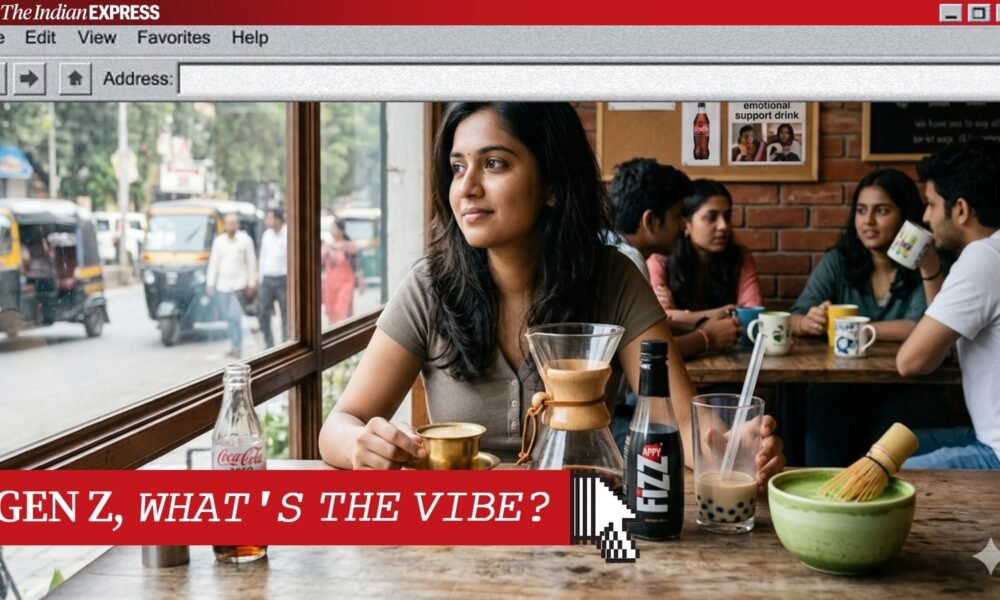
Coffee, Diet Coke, and comfort: Inside Gen Z’s world of ’emotional support’ drinks
Joshua Thakur’s days are usually very hectic and planned. His mornings start at 5 am with a pour-over. “That’s non-negotiable. Life genuinely feels incomplete if I miss my morning coffee,” he tells indianexpress.com. The advertising executive from Hyderabad treats beverages like “emotional support”, something that helps him stay on track. “They’re like little indicators or rewards I earn after I finish a task,” he says. And when the afternoon slump hits, he needs at least two beverages to pull him out of it. “A pour over and a Coke Zero. One to take the edge off, one to bring it back,” he shares.
With the US-Iran War causing a Diet Coke shortage in India, Gen Z has been struggling without access to their “emotional support drink”. From memes to reels, social media is flooded with their withdrawal symptoms online. And here’s a quick video explaining why:
Popularly labelled ‘fridge cigarette’ a few months ago, soft drinks have long been considered one of Gen Z’s go-to choices of coping mechanism. But with Diet Coke out of the picture for now, what is the youth of India turning to?
Like Thakur, Shivasree Venkateswaran also cannot start her mornings without a shot of caffeine. Her emotional support beverage is a freshly brewed filter kaapi. “I come from a Brahmin family where filter coffee is a daily ritual, so I grew up drinking it. Over time, it just became something I cannot do without,” she says, elaborating how, over the course of time, coffee became a constant in her life.
“When I started working, it slowly turned into my emotional support in a way. Whenever I feel tense or need to focus and get something done quickly, I grab a cup of coffee, sit with it, sip slowly and get into work mode,” adds the senior account executive at Milestone Pune.
What exactly is an ’emotional support’ drink?
From a psychological perspective, clinical psychologist Dr Rimpa Sarkar explains that the idea of an “emotional support drink” is less about the drink itself and more about what it represents emotionally.
“At a basic level, humans are wired to seek comfort, predictability, and small rituals when they feel stressed or overwhelmed. An “emotional support drink” becomes a symbolic coping tool, something familiar, easily accessible, and immediately soothing,” she told indianexpress.com.
Whether it is coffee, matcha, boba, or even a soft drink, it creates a sense of control in moments where emotions may feel unpredictable.
Story continues below this ad
Aaditya Sharma swears by Appy Fizz, which has a flavour profile distinct from the usual rotation and lacks caffeine. For him, it’s less about the drink and more about having one reliable thing when everything else feels uncertain. “You can always go back to that one thing and it will always be the same and bring you the same taste and comfort. Doesn’t have to be deep, it just has to be yours,” the PR professional shares.
“I made a conscious call to stay away from alcohol when I’m stressed. Do it once and the association forms; suddenly you’re reaching for it every time things get heavy, and that’s a habit I don’t want to build,” Sharma further elaborates.
Is Gen Z really not relying on alcohol?
Sharma’s statements go in line with a truth most baby boomers and millennials find it hard to digest. Despite being tagged as partyholics who cannot function without turning everything into a “fun scene” — whether that’s bhajan clubbing or a coffee rave, Gen Z has embraced the sober-curious movement with open arms. Unlike Millennials, who normalised partying and social drinking, Gen Z chooses personal well-being, effectively dismantling the “drinking = fun” myth.
Don’t believe us? The numbers speak for themselves. A 2024 UK study found that consumers aged 20 to 24 are nearly half as likely to prioritise spending on alcoholic beverages compared to previous generations. The Conversation has called Gen Z “the soberest generation.” And in 2023, only 18-20 per cent of Americans under 28 said they regularly drank alcohol, according to Statista.
So, an emotional support (non-alcoholic) drink is just a clean option to turn to whenever life beats you down. And in certain cases, it can also be a convenient excuse to blow your money on pretty-looking cups and saucers. Bhumija Rishi loves her coffee, but more than her caffeine fix, she is a sucker for aesthetic crockery. “I love my gold and white cup. It has an old-world charm,” admits the consultant at Network18 Media and Investments Ltd.
Story continues below this ad
Going deeper
Dr Sarkar decoded a few reasons behind this trend:
Micro coping in a high stress environment: Many people today are dealing with constant low level stress. Instead of large coping mechanisms, they rely on small, repeatable habits. A drinkbecomes a quick emotional reset during the day.
Ritual and predictability: Having the same drink at a certain time creates structure. This predictability can calm the nervous system and reduce anxiety because it signals familiarity and routine.
Sensory regulation: The act of holding a warm cup, sipping something sweet or flavourful, and slowing down engages the senses. This can have a grounding effect and bring attention back to the present moment.
Story continues below this ad
Identity and self soothing: For many, it becomes part of their identity. Saying “this is my emotional support coffee” is also a way of acknowledging stress while normalising self soothing behaviour in a socially acceptable way.
Social and cultural reinforcement: Social media has amplified this trend by turning everyday coping habits into relatable content. It creates a shared language around stress and comfort.
Coping mechanism — repackaged and made fun
Dr Sarkar reiterated that it is important to understand that while such habits can be helpful, they are surface level coping mechanisms. “They provide temporary relief but do not address deeper emotional concerns. And at the end of the day, the trend reflects something very real where people are looking for accessible, non overwhelming ways to regulate their emotions in daily life,” she concluded.
DISCLAIMER: This article is based on information from the public domain and/or the experts we spoke to.