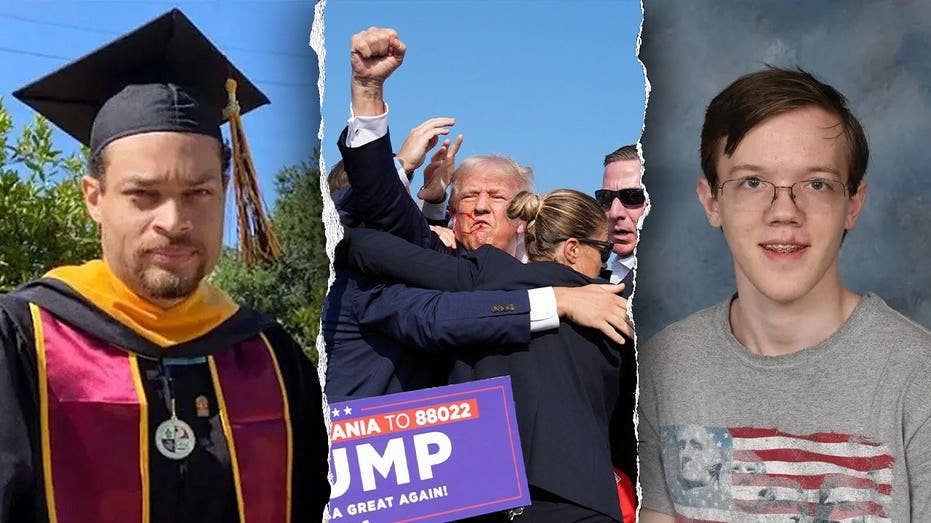
In the Crooks case, key questions about motive and mindset have lingered long after the shooting, fueling speculation about what investigators know and why the public still knows so little. He now faces federal charges, with more expected. He faces federal charges and more are expected. In contrast, Crooks who attempted to assassinate Trump in 2024 at a rally near Butler, Pennsylvania was shot and killed on the spot, limiting the scope and information that became public. Nicole Parker, a former FBI special agent and Fox News contributor, as well as the author of “The Two FBIs,” said to Fox News Digital that there isn’t a clear motive in every case. Parker said, “I don’t think the FBI is trying to hide anything.” “There is probably not enough evidence in that case for investigators to be able to give a clear indication of the direction they should go in. “DC SNIPER INVESTIGATOR REVEALS LIKELY BREAK POINT OF ALLEGED TRUMP ASSEMBLER” Parker said that more information in the Allen case is emerging rapidly in part because of a broader drive for transparency. “The Trump administration wants to get facts out quickly in order to avoid conspiracy theories,” Parker said. She noted that officials are releasing the information “to the maximum extent possible without compromising investigation.” “TRUMP ASSSASSINATION ATTACK SUSPECT LEGISLATIVE TEAM BATTLES THE DOJ OVER EVIDENCE, TEST FIRING GUN”Everycase is different,” said the FBI in a Fox News Digital statement. When a prosecution is in progress, the FBI works closely together with prosecutors to determine what information can be released while not interfering with a trial. Since Saturday’s shooting, the FBI, Department of Justice and our local partners have held multiple press conferences. The FBI is unable to comment at this time due to the ongoing investigation and legal process. “Forensic psychiatrist Park Dietz is an expert in criminal behavior. He said that the difference between the cases often begins with the suspect. “Allen left a bigger trail,” Dietz said. “He was in contact with more people.” He wrote a great deal online. He sent a last-minute missive explaining his actions. “WHITE HOUSES CORRESPONDENTS DINNER SHOOTING SHARPENS THE FOCUS ON TRUMPS BALLROOM CONSTRUCTION POSITION” Dietz said this kind of trail, communication, writings, and personal contacts could accelerate how quickly investigators, and the public, understand a suspect’s mindset. Dietz stated that “some of this is determined” by the offender. “How public will they be about the nature of their grievances and their motives?” NEW BOOK DETAILS THE SECURITY LAPSES AHEAD of TRUMP ASSASSINATION ATTACK: ‘CLEAR THAT THERE WAS a PROBLEM’ “The fact that the shooter wrote to his family to justify his actions and explain why he took them shows that he is aware that this will become public information. It will be a historic document. “There is a part of this that is about fame,” Dietz said. “But grievance was the primary motivation. “Reid Meloy is a forensic psychology and former consultant to FBI Behavioral Analysis Unit. He said that the Crooks case was different in one important way – it never progressed towards prosecution. “There will not be an active prosecution against an individual.” Meloy explained that this distinction affects the amount of information gathered and eventually made public. Meloy stated that the Allen case would be a good candidate for active prosecution. “The data collection will be more thorough and meticulous to gather evidence in the case. “WATCH: Secret Service Director confirms agent was shot by suspected gunman during WHCA dinnerGOT A TIP?” Meloy said that this is probably the main reason for the differences in the amount of information and the timing with which it is released to the media and the public. Meloy said that another important factor is the amount of information a suspect leaves. “People must understand that the amount of data that perpetrators will leave behind is going to vary greatly,” Meloy said. “Some of them are very careful, and they will engage in what we refer to as operational security, where they do not want to leave behind information,” Meloy said. He noted that this can leave investigators little to reconstruct after an attack. Meloy said that 60 to 90% of the time they engage in “leakage”, which is when individuals communicate their intentions before an attack. “Unfortunately, this communication is often not revealed until after an attack has taken place. “CLICK HERE TO DOWNLOAD FOX NEWS APP