
HealthNews
‘Game on’: Bay Area now epicenter of California flu cases

Flu season has arrived with a vengeance in the Bay Area, with multiple signs pointing to a potential surge in infections.
This week the San Francisco Health Department reported the season’s first flu-related fatality, as flu-related hospitalizations rose dramatically to 2.39 per 100,000 residents as of Saturday from a rate of 0.12 per 100,000 in the middle of September.
Advertisement
Article continues below this ad
“This sad news reminds us that respiratory viruses such as flu and COVID should be taken very seriously, especially for people who are at higher risk of getting sick,” San Francisco Health Officer Dr. Susan Philip said in an emailed statement Thursday.
Dr. Monica Gandhi, an infectious disease expert at UC San Francisco, told SFGATE by phone Friday that flu activity normally ramps up closer to the winter holiday season, in November or December.
“I’m very surprised by this flu death because that’s very early,” she told SFGATE. “People are just getting their vaccines right now.”
Influenza levels started to rise in the local wastewater last month and currently San Francisco, Palo Alto, Redwood City and San Jose are showing high levels of the virus, according to WastewaterSCAN.
Advertisement
Article continues below this ad
Data released Friday by the California Department of Public Health shows flu tests in the Bay Area are also coming back positive at the highest rates for the state, with near-10% positivity.
In 2024 and 2025, it took until December for the flu hospitalization rate in San Francisco to reach the same high reported this week.
Gandhi noted that in recent years the Bay Area has seen high numbers of hospitalizations related to the flu, especially among very young children who are at higher risk.
“This kind of tragedy should be a prompt to get the flu vaccine,” she said of the fatality. Flu “is still very serious for high-risk groups.”
Advertisement
Article continues below this ad
Dr. Matt Willis, an infectious disease expert and former public health officer for the Marin County Public Health Department, said in a Friday phone call that once seasonal flu cases begin they continue to ramp up for the season.
“Once it starts, it’s game on,” he said. “… There’s not a lot of examples of, like, a surge and then a resolution and then another surge.”
Willis said that while the flu returns to the Northern Hemisphere every fall and winter, there’s no clear reason why it arrives in certain regions earlier than others. He pointed out that much of the country currently has very little flu activity, according to the latest data from the Centers for Disease Control and Prevention.
“I think this is an area where, you know, we need to be humble,” he said of what sparks flu season. “… It almost disappears in the summer, and then every year, reliably, it’s like the leaves turning, it just comes back.”
Advertisement
Article continues below this ad
Willis said an early start to the season could mean that flu season this year will end earlier than in other years, or that it could last through the spring, potentially leading to more cases overall.
In addition to flu, COVID-19 has been circulating at high levels in the Bay Area for weeks, although in recent days signs point to dropping cases. Willis said this virus double-whammy should alert those at high risk to consider taking more precautions.
“We’re going be in that interval where we’re seeing both actively circulating for a good few weeks,” he said.
Gandhi said people who get sick with the flu should talk to their provider about potentially getting antiviral treatment, and that anyone with trouble breathing or shortness of breath should seek medical care right away.
Advertisement
Article continues below this ad
Both Gandhi and Willis said the best way to protect yourself or your children is to get the flu vaccine. Virtually everyone over the age of six months is eligible for the shot. This year, a new mRNA flu vaccine is available for the first time, and works similar to how COVID-19 vaccines function.
But Willis stressed, “Get whatever shot you can, the shot that you can get is the best shot for you.”
HealthNews
Measles cases surge past 150 in Kentucky; big outbreak identified in one county

LAUREL COUNTY, Ky. —
Just days after Kentucky’s measles case count hit 100, dozens more have been reported.
As of Wednesday, the number of cases reported in the Commonwealth is now 157 for 2026.
Most of those come out of Laurel County, which had seven cases just a few days ago. Now, it has 56, according to the state’s dashboard.
Laurel County is in southeast Kentucky,
The dashboard says that outbreak involves people who are unvaccinated from several large households that have been “isolated from the broader community.”
In only one case did the person report having the full vaccine. One case had one MMR dose, and the rest didn’t have any.
Of the total state count, nine of those cases have led to hospitalization.
So far, no deaths have been reported.
There were only 13 cases overall in 2025, and none were reported the year prior.
What to know about measles
Measles is a disease caused by a highly contagious virus.
It is spread through the air when someone with measles sneezes, coughs, or breathes.
Symptoms include high fever, cough, runny nose, red and watery eyes, and rash. Tiny white spots can appear inside the mouth two to three days after symptoms begin.
The disease can be especially severe in infants, pregnant women, and people who have weakened immune systems.
While rare, measles can result in death.
What Kentucky health officials are saying
Kentucky health officials have warned this is the highest case count in decades. Dr. Steve Stack, with the Kentucky Cabinet for Health and Family Services, along with other local health officials, has been encouraging people to get vaccinated.
“We do not need to have measles,” Gov. Andy Beshear said last month. “We have a proven tool that for over a quarter century eliminated it from the United States. The only reason it’s resurging now is because of, I think, negligent information and guidance being shared freely. We want people to not feel vilified or maligned. We want people to feel informed.”
HealthNews
10 health conditions may be linked to Alzheimer’s, years before diagnosis

NEWYou can now listen to Fox News articles!
Certain medical conditions may signal early-onset Alzheimer’s disease several years before diagnosis, a new Finnish study suggests.
Researchers found that depression, vertigo, headaches and other conditions were more common during the five years preceding diagnosis, potentially offering clues for earlier detection.
The researchers analyzed medical records from 407 people with early-onset Alzheimer’s disease and 4,035 people of similar age and sex without the diagnosis, focusing on the 15 years prior to diagnosis.
SUBTLE CHANGE IN HOW YOU SPEAK COULD BE EARLY SIGN OF DEMENTIA RISK, NEW RESEARCH SUGGESTS
The average age at diagnosis was 60. Early-onset disease is diagnosed in people under 65.
The findings were published in the journal Alzheimer’s & Dementia.
The following conditions were found to be significantly more prevalent among those who were ultimately diagnosed with early-onset Alzheimer’s.
DEMENTIA RISK MORE THAN QUADRUPLES AMONG ADULTS WITH COMMON DISORDER
Vertigo (5.9% of those with diagnosis, vs. 2.1% of those who were not diagnosed)
Depression (5.7% vs. 2.3%)
Headache (4.9% vs. 1.6%)
Stroke (4.4% vs. 2.0%)
Alcohol-related disorders (3.4% vs. 1.4%)
Brain disorders (2.9% vs. 0.9%)
Thyroid disorders (2.5% vs. 0.8%)
Epilepsy (2.2% vs. 0.7%)
Delirium (1.5% vs. 0.1%)
Ear, nose, and throat disorders (5.2% vs. 2.9%)
Differences in medical conditions were most pronounced in the five years before an early-onset Alzheimer’s diagnosis, the study showed.
3 THINGS TO AVOID IN MIDDLE AGE COULD MEAN 13 MORE YEARS WITHOUT DEMENTIA, STUDY FINDS
The researchers also found that healthcare visits increased substantially among early-onset Alzheimer’s patients immediately before and during the time of diagnosis, which may indicate emerging symptoms.
CLICK HERE FOR MORE HEALTH STORIES
“It is well-known that the neuropathological changes associated with Alzheimer’s disease begin at least 15 to 20 years before clinical cognitive symptoms appear,” Suvi-Johanna Krüger, M.D., Ph.D., study co-author and clinical lecturer at University of Oulu, said in a press release.
“Most previous studies have focused on late-onset Alzheimer’s disease, and considerably less is known about early-onset Alzheimer’s disease.”
Study limitations
Because the study was observational, it only establishes associations and cannot demonstrate that these conditions can reliably predict Alzheimer’s disease.
“Our study cannot determine whether these conditions cause early-onset Alzheimer’s disease or whether they are consequences of the underlying disease process,” Krüger noted.
CLICK HERE TO SIGN UP FOR OUR HEALTH NEWSLETTER
“Some conditions may represent risk factors, while others may reflect early symptoms or changes occurring during the prodromal phase of the disease.”
It is also possible that genetics, lifestyle and socioeconomic factors played a role in the patients’ outcomes.
“Early diagnosis is important because more treatment and support options are available in the early stages of the disease.”
Also, the researchers could not independently verify all medical diagnoses or assess the severity of the patients’ disease. Additionally, the findings may not apply to populations outside Finland.
Larger studies looking at disease biomarkers, genetics and clinical assessments could help determine whether there is a casual relationship between the medical conditions and Alzheimer’s incidence and whether these medical patterns could be used to improve early detection.
TEST YOURSELF WITH OUR LATEST LIFESTYLE QUIZ
For people experiencing any persistent medical symptoms, including issues with memory or cognition, experts say it’s important to see a healthcare provider.
CLICK HERE TO DOWNLOAD THE FOX NEWS APP
“Early diagnosis is important because more treatment and support options are available in the early stages of the disease,” Krüger advised.
“Early diagnosis also gives individuals and their families more time to plan for the future and access appropriate support services.”
HealthNews
High Point woman credits routine mammogram for saving her life
(WXII) – One in eight women will develop breast cancer in their lifetime.
Julia Gay hopes her story will raise awareness of early detection.
Other WRAL Top Stories
Gay was at home when she received a call from the breast cancer center in Greensboro, telling her the biopsy from a routine mammogram revealed she had cancer.
She was shocked; there is no history of breast cancer in her family, and she had no symptoms.
“I remember thinking, ‘Julia, you have believed all your life that God never allows anything in your life that doesn’t have a plan or purpose, and this is no exception.'”
Gay began walking into a new chapter of life. One that was rooted in acceptance, courage and healing.
The center helped her assemble a care team, including a surgeon and an oncologist.
“Thanks to the advanced research and technology about breast cancer, they were able to catch it early,” she said. “Had I not gone in, my story could have been totally different.”
October is Breast Cancer Awareness Month. All over the Triad and beyond, there are walks for awareness and to raise money for a cure.
HealthNews
Researchers use AI to design proteins that cut up other proteins
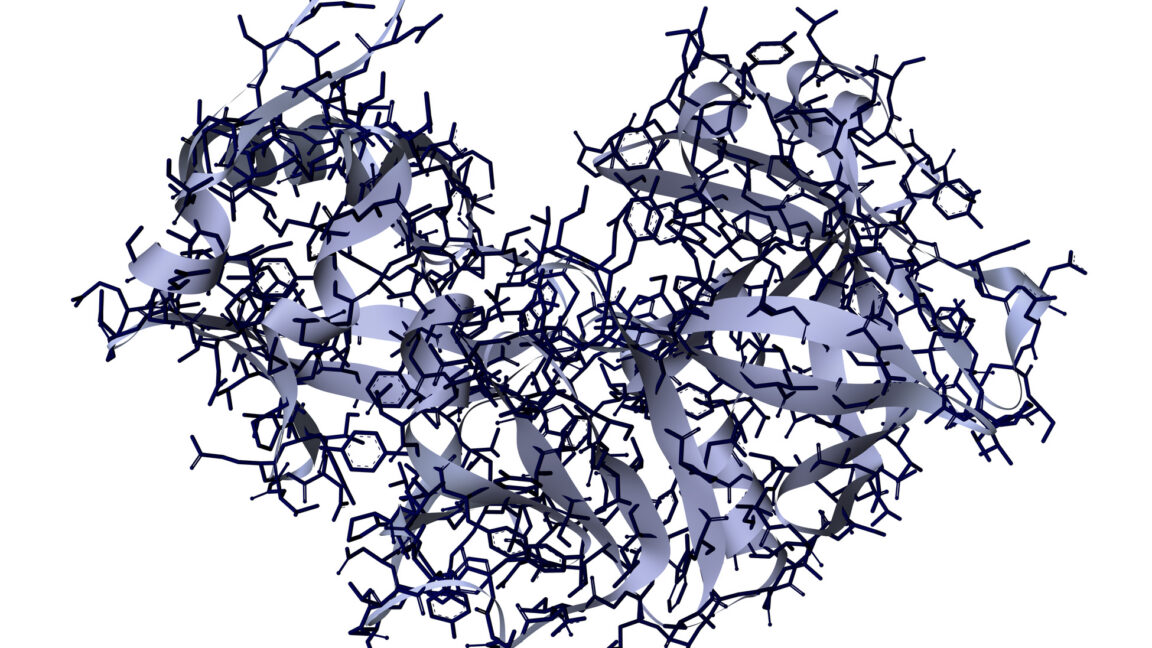
A protein is a chain of amino acids held together by what are called peptide bonds. On their own, those bonds are extremely stable; they’re estimated to have a half-life of several hundred years. But in Earth’s environment, most proteins don’t last nearly that long. That’s because organisms have evolved a handful of ways to catalyze the break-up of peptide bonds, which have diversified into countless specialized protein-digesting enzymes. Proteases are everywhere and generally make short work of any proteins that find their way into the environment.
Now, researchers have basically short-circuited the diversification process, using AI-based protein design tools to take the catalytic core of two types of protease and replace the entire rest of the protein. The resulting enzymes could be tuned to cut specific proteins in half, and the researchers demonstrated their effectiveness by using them to cut proteins associated with neurological diseases.
Cutting proteins
The basic peptide bond isn’t especially interesting-looking—it’s what you get when you link an amino group to an acid, releasing a water molecule in the process. As their name implies, amino acids have both an amino and an acid group, allowing them to form peptide bonds on two sides of the amino acid. This is critical for building up the long chains found in proteins. (The amino acids also have side chains with distinctive chemistry, which gives a backbone specific properties.)
Breaking these bonds apart simply reverses the process by breaking apart the peptide bond and a water molecule, and linking their parts. Because both components are chemically stable, the reaction requires an enzyme to occur with any frequency. Without an enzyme, a typical peptide bond would be stable for hundreds of years in water.
Life has evolved a handful of enzyme mechanisms that manage this catalysis. The research at issue here relied on two different ones. One is a zinc protease, where the positive charge of the zinc atom coordinates the peptide bond that’s being broken, key parts of the protease, and a water molecule. The protease partially pulls a proton off the water molecule, activating it to attack and break up the peptide bond.
The second protease the researchers use is called a cysteine protease. In this case, a cysteine (one of the amino acids) in the enzyme is activated to attack the peptide bond, creating a temporary intermediate where part of the protein being cut is chemically linked to the enzyme. A water molecule eventually breaks this intermediate apart, releasing the second part of the cut protein.
Both of these mechanisms require a handful of specific amino acids from the protease to be located in close proximity within the catalytic center of the protease. Other amino acids in the protease help ensure these key catalytic amino acids are brought together in the right place with the right orientation. The rest of the protease may also enforce a degree of specificity on what proteins get cut. Some proteases, like the ones active in our digestive system, can make cuts next to any amino acid. Others are slightly more selective, preferring to cut near positively or negatively charged amino acids. And a few are very highly specific, such as the protease that activates insulin, which only cuts near a very specific series of amino acids.
Designer enzymes
The people behind the new work, primarily from Nobel-winner David Baker’s lab at the University of Washington, viewed designing a protease as a challenge. For one, the stability of the peptide bonds means that reactions wouldn’t take place without an effective catalyst. And to get that catalyst requires an extremely precise arrangement of specific amino acids. So it wasn’t obvious that the AI protein design tools the lab developed were up to the task.
Both projects took a similar approach. Just like evolution, they started with an existing protease. One was a zinc protease used in a crayfish’s digestive system. The other was a cysteine protease from yeast. In both cases, the protein structure was known, as were the key amino acids that catalyze cleaving other proteins. The design process started with these amino acids.
The design process started with software called RFdiffusion2, which creates a backbone for the enzyme (the backbone consists of the protein’s repeated peptide bonds). The researchers gave RFdiffusion2 a number of constraints. To start, any backbone it designed had to bring together the key catalytic amino acids needed for a functional protease. They also gave it a target amino acid sequence where the protease would eventually cut. The backbone had to accommodate that target sequence in close proximity to the catalytic center.
With a backbone laid out, the process next moved to ProteinMPNN, a tool that works along the backbone, populating it with specific amino acids. (That tool featured in Google’s efforts to watermark AI-designed proteins.) ProteinMPNN selects each amino acid based on a series of constraints. For starters, the amino acid must be compatible with the backbone folding up into its planned structure. Next, in critical areas, each amino acid chosen needs to be compatible with the formation of the enzyme’s catalytic site. And finally, in nearby areas, it has to be compatible with latching on to the intended target.
The researchers repeated this process dozens of times for both the cysteine and zinc proteases. For the cysteine protease, they made 12 different backbones and populated them with 69 different sets of amino acids. For the zinc project, they tried 135 different protein designs. They used AlphaFold3 to predict the structures of many of these designs and found nothing in the databases that looked much like them, confirming their tools weren’t simply stealing previously identified structures.
Do they work?
The researchers started by making a single, long protein that contained the protease, the sequence it was designed to target, and a fluorescent protein. They then tested to see if the fluorescent protein was cut loose. In the case of the cysteine protease, they got 13 designs that worked, a success rate of 19 percent, although all of them were considerably less active than the yeast enzyme that was used as a model.
The zinc project was a bit more complicated. They tested many designs that didn’t include the water molecule that normally takes part in that reaction. These had a relatively low success rate, with only 14 out of 89 showing weak catalytic activity. When they modeled the ones that didn’t work, they found that the designs often let a water molecule block the site where reactions should take place.
So, they also tried designs where they placed a water molecule in the right location as an additional design constraint. These had a much higher success rate, with 35 out of 38 showing some catalytic activity. Again, however, their activity was considerably lower than the enzyme that was used as the starting point for the designs. (They did get one design with a better level of activity, but it wasn’t specific about where it cut other proteins.)
To find out whether this activity could be improved, the researchers identified amino acids that were in close proximity to the active site of the protease, but not actively involved with the catalysis. And they swapped in every alternative amino acid that wasn’t predicted to disrupt the structure of the design. They found some versions that were considerably more active; the best version they identified accelerated the cleavage of the peptide bond by a factor of 109 while remaining highly specific for the intended target protein sequence.
Similar things happened with the zinc-based protease. Their v2 version of their protease, which incorporated some of the random mutations, was 30 times more active than the original design it was based on. It also accelerated peptide-bond cleavage by a factor of 1010.
As a final demonstration of this approach’s promise, the researchers designed zinc proteases that could target proteins associated with neurological disorders, such as Alzheimer’s and frontotemporal dementia. Attempting to modify their existing design to target a new sequence didn’t work well, so they started the process over from the start and managed to find something that could cut the intended target in cells. For the researchers, this suggests that we might ultimately be able to influence the course of some genetic diseases by targeting the malformed proteins that cause them.
What do the results tell us?
The potential therapeutic use of this is complicated. Proteins are often difficult to deliver to the site where they’re needed, and can often trigger an immune response. Things get even more challenging if the protease target is inside a cell rather than on the exterior. That would likely require the target cells to make the protease, which would involve delivering the gene encoding it to the cells where it’s needed. So, there are considerable hurdles that would need to be cleared before we could potentially start developing therapies using this technology.
The researchers also highlight how the work shows some limitations of the tools. As used, they successfully designed proteins that matched all the physical constraints they were given: They folded up into structures that brought the amino acids needed to catalyze a reaction into roughly the right location, and latched on to specific target amino acid sequences.
But we don’t, at the moment, have the ability to tell these tools we want any specific catalytic activity. So many designs lacked some of the subtle details that make evolved enzymes such great catalysts. In other words, the tools are great at structure, but they’re not necessarily great at activity. And, while structure is essential for function, it isn’t everything. As the researchers saw, introducing random mutation could still make subtle structural tweaks that produced enzymes that were considerably more active.
Of course, this protein design software is only a few years old, and both developers and users might have ideas for incorporating constraints beyond physical location.
Nature, 2026. DOI: 10.1038/s41586-026-11143-w, 10.1038/s41586-026-11167-2 (About DOIs).
HealthNews
Bryan Johnson’s girlfriend tracks her ‘nighttime erections’ with ‘techno tampon’

A device that measures nighttime female “erections” to gauge longevity? Now that’s a biohacker’s wet dream.
Every night, Kate Tolo inserts a $15,700 “research grade erection device” into what her boyfriend and business partner, biohacker Bryan Johnson, famously called her “top 1%” vagina.
In fact, both of them wear an erection tracker nightly. Johnson says he’s looking to maintain healthy erections, which some experts agree is a predictor of longevity for men.
And Tolo — despite not having a penis — wants in on the action.
Tolo says women get “erections” too — and it’s possible that tracking them could give ladies similar longevity insights.
She claims to be picking up on research from more than 40 years ago that could pull back the curtain on women’s sexual dysfunction and possibly even show early signs of heart issues, as it does in men.
A bone to pick
Yes, women really do have “erections,” research shows.
During sleep, blood flows to the clitoris, causing it to swell as if aroused. The clitoris is actually very similar to the penis: They are the same organ for the first 2 months of development in the womb.
And using devices similar to Tolo’s — a tampon-shaped light sensor, which she calls her “techno tampon” — research has shown that blood flow in the vaginal tissues does spontaneously surge during sleep, which is also associated with arousal.
“The light sensor inside my probe is the same kind smartwatches use to read your heart rate,” she explained.
That said, it’s been a long time since someone has published research on insights this tech can give us on female health — or improved upon the tech at all, she says. “The tech was invented in 1975 and hasn’t changed in 50 years.”
Tolo’s vaginal “erection” data is not easy to get. Her device costs $15,723.68 and is like “lab equipment in my bedroom,” she said.
“I insert the 5cm probe [and] tape a wire to my leg that is plugged into a machine and a laptop. The laptop can’t fall asleep or we lose the data. I sadly learned that through experience.”
Meanwhile, Johnson’s can be bought online for $275 and connects to a smartphone.
“I’ve tracked my nighttime erections for years … It’s one of the best signals I have for vascular health, and it costs $275,” Johnson said. “The gap in our devices sums up the current status of female health.”
What the ‘techno tampon’ can tell us
In 1985, a study found that vaginal blood flow changed with sleep stages, heightening during REM. This indicates “a nightly erection cycle,” Tolo said. They also found that all women had nighttime erections — regardless of how easily aroused each participant rated herself.
Tolo says nighttime vaginal blood flow could be a powerful test to see if female sexual dysfunction is something physical or psychological. For example, if blood flow happened unconsciously at night but arousal failed during the day, that could point to a psychological problem.
This test was proposed by researchers in 1985. “It’s so sad that their proposal has been sitting in a journal for 40 years,” she said. “And yet there is still no test, and no easy device.”
The second potential use would be using the “techno tampon” to predict heart issues. Heart disease is the leading cause of death for both men and women.
In men, erectile dysfunction is a known early warning sign of cardiovascular disease. Some experts believe it’s because arteries in the penis are much smaller than in the heart, so plaque build up will appear there first, making it harder to get an erection.
Tolo argues: Women have the same kind of erectile tissue with similarly small arteries, but no one has followed vaginal blood flow over time to see if it predicts heart disease as it does in men.
“In men, the reasoning behind nocturnal tumescence testing has been that if erections still happen during sleep, the vascular and neurological machinery is intact — though even in men the test is more limited than people assume,” explained Dr. Hillary Seger, a member of Tolo’s care team.
“For women, there is no validated clinical equivalent. Kate’s recordings are the first look I’ve had at how this signal behaves across a full menstrual cycle.”
Tolo has been outspoken about the disparity in research on women’s health.
This year, she created “the female protocol” to measure 1,900 biomarkers across blood, urine, stool and vaginal microbiome, while holding diet, sleep and exercise constant.


Measles cases surge past 150 in Kentucky; big outbreak identified in one county
LAUREL COUNTY, Ky. — Just days after Kentucky’s measles case count hit 100, dozens more have been reported. As of...


Top U.S. banks dropped customers over political and religious views, regulator says
Top U.S. banks have “debanked” customers because of their political or religious views, as well as their business activities, according...


Hilary Swank, 52, announces she’s pregnant with baby No. 3
Hilary Swank is expecting her third child in December. The “Million Dollar Baby” actress, 52, took to Instagram on Wednesday...

Endeavor Health, Rush announce proposed merged healthcare system
Endeavor Health, including its nine Chicago-area hospitals, announced Wednesday it plans to merge under the umbrella of Rush University System...


Netflix Lays Off 4 of Its Top TV Execs
Among the roughly 1,000 Netflix staffers laid off on Wednesday were TV executives Lisa Lang McMullen, James Oh, Carolina Garcia...


Dell stock plunges after Barclays downgrade on enterprise AI
Dell shares plummeted 11% on Wednesday and dragged down other data center equipment names on mounting concerns that enterprise spending...


Chuck Lorre says Anna Faris’ exit from ‘Mom’ confirmed his casting concerns
Chuck Lorre suggested his reservations about Anna Faris starring in “Mom” had been “correct” when she left the show for...


Kaley Cuoco Welcomes Baby No. 2 With Fiancé Tom Pelphrey
Kaley Cuoco and Tom Pelphrey are celebrating their new family member with a big bang. The Flight Attendant star and...


60 Minutes Ratings Nosedive as Dust-Up Grabs Headlines
The latest episode of 60 Minutes came in as the lowest-rated of the season so far, according to final tallies...


Listen to Hayden Panettiere 911 call as Brian Hickerson’s brother desperately tries to save actress’ life
Zach Hickerson’s desperate attempts to save actress Hayden Panettiere’s life have been revealed in a a newly released 911 audio...
-

 Entertainment2 weeks ago
‘Verity’ Posts $4.5M Previews, ‘Digger’ $1.2M
-

 Entertainment2 weeks ago
Rick Devens Wins In Season 28 Finale
-
 Entertainment6 days ago
Travis Barker reveals why he underwent surgery after concerning hospital photos
-

 Business2 weeks ago
Tesla Cybercab pressure to expand after rocky first month in Austin
-

 Business2 weeks ago
OpenAI safety employee resigns, claiming the company’s ‘culture is broken’
-

 Business1 week ago
Energy Secretary Chris Wright says Trump was “well aware of the risks to energy flows” before launching Iran war
-
Business2 weeks ago
Leaked Anthropic IPO prospectus: The US government could hurt our business
-

 HealthNews1 week ago
Des Moines clinics stumped by unidentified virus