
HealthNews
Historic Trump debate put a 10-million-person brain disease in the spotlight

This neurocognitive disease is only tends to get publicity when a celebrity dies from it. Yet it is a common disease (and one of the most common forms of dementia), in France alone it affects about 250,000 people, which makes it the country’s second most widespread neurodegenerative disease, after Alzheimer’s, putting on a par with Parkinson’s. It is estimated that dementia with Lewy bodies (commonly known as “DLB”) affects more than 10 million patients worldwide.
What causes the disease? What symptoms should we look out for? How is it treated? Here is what you need to know.
A long-ignored illness
Dementia with Lewy bodies owes its name to inclusions that develop inside patients’ neurons called “Lewy bodies”, after the German-born doctor Friedrich Heinrich Lewy, who first discovered their existence in 1912.
However, it was only in 1976 that the first clinical case was formally described, while the first international clinical criteria were defined much later in 1996.
In its earliest stages (the prodromal stage before full-blown dementia develops, followed by the early, milder stage), dementia with Lewy bodies is characterised by the dysfunction of certain parts of the outer layers of the brain, such as the insula and the olfactory bulbs (OB). The insula is involved in cognition, emotions, self-awareness, pain, the autonomic nervous system, taste, while the olfactory bulbs are, as their name suggests, involved in olfaction (sense of smell).
These dysfunctions occur due to the accumulation of abnormal deposits of a protein called alpha-synuclein inside neurons. In its usual state, this protein adopts a more helical conformation (also known as the “alpha helix”; it is the way the protein organises itself in space). In its toxic form, its conformation changes, and alpha-synuclein folds instead into “a mille-feuille cake” (a layered conformation called “beta sheet”).
The accumulation of these misfolded alpha-synucleins results in the development of Lewy bodies inside neurons throughout the course of the disease.
However, alpha-synuclein is important for neuronal function. It is a key element in the transmission between neurons. This transmission element is called a synapse. Alpha-synuclein regulates the synaptic vesicles which are kinds of small “bulls” filled with chemical messengers called neurotransmitters, brain hormones secreted by neurons, such as acetylcholine, noradrenaline, serotonin or dopamine.
The accumulation of the toxic form of alpha-synuclein disrupts neuronal function, as neurons are less able to secrete synaptic vesicles that allow them to communicate with each other.
This phase (called “neurofunctional”, because it affects neurotransmitters) lasts at least fifteen to twenty years. Subsequently, Lewy body disease then enters a more aggressive stage: patients’ experience not only neuronal malfunction but also neuronal cell death.
It is worth pointing out that although Lewy bodies are also found in patients with Parkinson’s disease, they differ in appearance, where they are located in the brain and the alpha-synuclein conformation that develops with Lewy body disease.
What do we know about the causes of dementia with Lewy bodies and its risk factors?
Some work suggests that dementia with Lewy bodies may be linked to our environment.
Chronic contact with certain toxic substances, such as phthalates or air pollution (in the form of ultrafine particles), as well as some infections, could promote alpha-synuclein conformational changes during aging, and trigger dementia with Lewy bodies, particularly in the olfactory bulbs, which are the only parts of the brain in contact with the outside, at the nose level.
Known risk factors for the condition include anxiety and depression. Often, patients are found to have suffered from depression for a few years prior; for this reason, it is thought that this disease constitutes a mode of entry into dementia with Lewy bodies.
Other identified risk factors are high blood pressure, diabetes, “bad” cholesterol, stroke, family history of dementia with Lewy bodies or Parkinson’s disease, or mutations in certain genes (including the GBA or ApoE4 genes, which are however not the cause of the disease).
Numerous symptoms
In France, French weathercaster and writer Catherine Laborde spoke out extensively on her illness: she was very embarrassed by her difficulty in concentrating, as well as the fluctuations in her cognitive ability and overall vigilance. She was also prone to great fears for no apparent reason, which together paints a very common clinical picture of this disease.
Cognitive difficulties are the main symptom of the condition, resulting in lower concentration, slowness as well as organisational difficulties. In addition to cognitive impairment, there are various so-called “core features”:
Cognitive and alertness fluctuations that associate moments of drowsiness, long naps, staring or difficulties at certain times to focus (the cognitive and expressive difficulties experienced by Joe Biden during the televised debate with Donald Trump, which were at the root of his withdrawal from the race for the US presidency, beg us to raise questions about cognitive fluctuations).
Behavioural disorders during REM sleep: the so-called “REM” phase of sleep is the dream sleep phase (with rapid eye movement); normally, during this phase, the body is naturally paralysed. This is not the case for patients with Lewy’s disorder: some of them are restless sleepers, they clearly enact their dreams by moving, screaming, while sleeping with their eyes closed.
Visual hallucinations, which affect 70 to 80% of patients. In the prodromal stage (the early stage of the disease), these hallucinations consist of simple sensations of someone going by or someone being present. Then, they become real hallucinations: patients see people, animals, or scenes arise before their eyes.
Parkinsonism: this is most often manifested by a body part that becomes slower or stiff. Unlike Parkinson’s disease, dementia with Lewy bodies is rarely associated with hand tremors when resting.
These symptoms result from neuronal dysfunction, and the resulting lack of neurotransmitters: a lack of acetylcholine promotes cognitive impairment, a lack of serotonin and norepinephrine promotes depression, the lack of melatonin promotes sleep disorders while the lack of dopamine favours slowing down.
It should be known that it is rare that one person may experience all four core symptoms, even though it can happen: patients generally tend to experience one or two of them.
In addition to the core features, many other symptoms can be bothersome for patients affected by the disorder. Thus, it is common for patients to experience behavioural symptoms, such as anxiety, depression, apathy (demotivation) or even delusion. Patients also often have difficulties expressing emotions or recognising other people’s emotions.
Many patients also have autonomis (neurovegetative) symptoms, such as a runny nose (rhinorrhoea), dryness, urinary problems or low blood pressure when standing up. There are also neurosensory symptoms, such as difficulty detecting smells, or light discomfort.
During the advanced stages of the disease, patients lose the ability to perform everyday activities: getting dressed, eating, washing, using the phone, television or remote control… Patients aren’t able to walk as well or lose weight, because some have difficulty swallowing.
When should I see a medical doctor?
The symptoms of dementia with Lewy bodies are highly variable from one patient to another, which explains why, despite its commonness, this condition remains rarely diagnosed, and largely undiagnosed. It is readily confused with so-called “normal aging”, or with other diseases such as Alzheimer’s disease, Parkinson’s disease, or certain psychiatric illnesses such as depression or bipolar disorder.
Patients usually seek medical help due to cognitive disorders, such as mental slowness or difficulty concentrating. However, it is also advisable to see a medical doctor when depression develops after 60 years without an obvious reason, similarly if a patient experiences vision difficulties, even though the eye exam showed no abnormalities.
Other reasons for seeking a medical opinion: starting to sleep a lot during the day, or having such bad nightmares that you struggle in your sleep while in bed.
In general, diagnosis based on clinical symptoms is enough. However, additional tests can be performed where necessary, such as a brain scan (DAT-scan for highlighting a decline in dopamine activity, a marker of parkinsonism) or an MIBG cardiac, or sleep monitoring (which may show a loss of atony during the REM sleep phase – in other words, the loss of normal paralysis in the dream state).
More recently, it has become possible to detect alpha-synuclein (that constitute Lewy bodies) in cerebrospinal fluid (body fluid that circulates in the brain and around the spinal cord) via a sample obtained by lumbar puncture. The technique used, which is called RT-QuIC synuclein, makes it possible to detect Lewy bodies even before the onset of symptoms of the disease.
Thanks to the Swedish Biofinder study, we know that 8% of the population aged 70 years on average has Lewy bodies which are detected using this technique.
Research is now focused on the identification of an equivalent biomarker that would work via a simple blood test.
Where are we in terms of treatment?
No treatment or cure exists yet for fighting the alpha-synuclein deposits that accumulate in the brain or for the actual disease itself. That said, symptomatic treatment does improve the levels of neurotransmitters in the brain.
At present, it is thought that treating patients from the prodromal to mild stages (the earliest stages) is worthwhile for preventing neuron death. Indeed, fighting neuronal dysfunction can probably prevent some of these neurons from dying.
In this respect, it is important to treat depression and anxiety early on as they are both prodromal symptoms and risk factors for dementia with Lewy bodies.
We know that medical attention (sessions with a speech therapist, neuropsychologist, psychologist, occupational therapist, physiotherapist, psychomotor therapist) for cognitive or physical remediation is beneficial to patients.
The early association of these two approaches, both human and pharmacological, allows to optimise patients’ quality of life and that of their relatives by extension. In France, we are fortunate to have an association of dynamic patients and caregivers: the A2MCL. It also contributes to better support for patients and their relatives, thanks to the availability of a telephone hotline, the services of committed psychologists, the dissemination of advice and the sharing of experiences between caregivers. There are many other associations in the world, such as the LBDA in the U.S. and the Lewy Body Society in the United Kingdom.
Regarding the curative aspects, therapeutic trials are underway in France and worldwide to try to develop effective treatments.
A promising drug is Neflamapimod, which reduces inflammation in the brain and promotes acetylcholine-mediated neuronal connections. Our team is also evaluating the effectiveness of a neuromodulation protocol using light (transcranial photobiomodulation), with the Clinatec Foundation.
Finally, research for better understanding and treating dementia with Lewy bodies is dynamic but while it is qualitatively excellent, quantitatively it is inadequate. In recent years, there have been 30 times fewer therapeutic trials on dementia with Lewy bodies than on Alzheimer’s disease. Yet, if we collectively make progress in the fight against the condition, it will be to the great benefit of patients, their families and society as a whole.
Frédéric Blanc, Professeur de gériatrie et neurologue, chef du service de Gérontologie Mobile-Neuro-Psy-Recherche et du Centre Mémoire de Ressources et de Recherche (CMRR), chercheur au sein de l’équipe IMIS du laboratoire ICube, Université de Strasbourg, Université de Strasbourg
HealthNews
CDC chief says agency will not change measles response if US loses elimination status

The US Centers for Disease Control and Prevention will not fundamentally change its response to measles outbreaks even if the US loses its measles elimination status this month, CDC Director Dr. Erica Schwartz told Reuters on Tuesday.
Global health experts convened by the Pan American Health Organization will determine in the coming days whether the US has lost its official measles-free status, a hard-won public health achievement it has held since 2000.
Many disease experts say that is likely to be the case as the country battles the highest number of infections in more than three decades. Thousands of Americans have contracted measles since early 2025, when the Trump administration took office.
Schwartz said she expected a PAHO decision by early next week.
“Let’s say we did lose our measles elimination status. We’re going to be doing the same exact thing that we’ve been doing today, which is working with the states,” Schwartz said in an interview.
The CDC will make sure “we are leaning in to help them provide awareness about measles, emphasizing, reemphasizing that the number one way to prevent measles is the MMR (combined measles, mumps and rubella) vaccine,” she said.
Schwartz, confirmed as CDC director in August, inherited a raging measles outbreak that has worsened since last year. There have been nearly 5,200 confirmed cases in 2026 — compared to 2,289 for all of 2025 — and 11 deaths reported by state health departments since early last year.
US Health and Human Services Secretary Robert F. Kennedy Jr., who oversees the CDC as well as other health agencies, has for years cast doubt on the safety and efficacy of the MMR vaccine. As the nation’s top health official, he has sought to reduce the number of childhood immunizations. Medical experts have said his rhetoric and actions have fueled falling vaccination rates.
Schwartz pointed to “closely knit communities” as the primary source of US measles infection. Several outbreaks have originated among religious groups where vaccination rates are lower than in the general population, including the Amish in Pennsylvania.
“These communities typically don’t vaccinate their children. … Their families were making decisions about the MMR vaccine 20 to 30 years ago, and we’re just now seeing the results of those decisions,” Schwartz said. “The real focus is why are we not leaning in on these close-knit communities to make sure that they understand that the number one way of preventing measles is the MMR vaccine.”
In August, shortly after Schwartz was confirmed, President Donald Trump and Kennedy unveiled an executive order that called for breaking up the MMR vaccine into three separate shots. Pharmaceutical companies said that could take years, while doctors said it would sow more confusion among families.
Schwartz also pushed back on reports that suggested Kennedy and his top deputies had applied pressure on her or the agency. She said she is in communication with Kennedy every day.
“What has been very clear to me is that the secretary has recognized that I am the director of the CDC, and these decisions and the focus of where we’re going with the CDC rests on my shoulders,” Schwartz said. “At the end of the day, he recognizes that the reason why I’m sitting in this chair is because the CDC needs a leader.”
HealthNews
Check childhood vaccination rates where you live
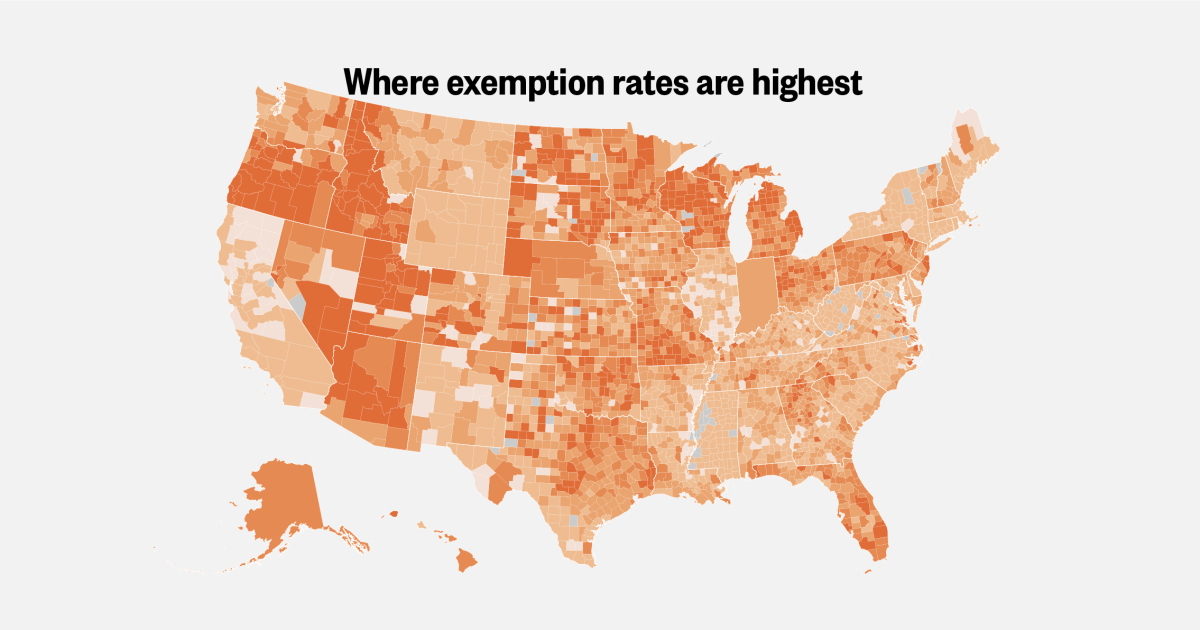
This is part of The Vaccine Divide, an updated data investigation into America potentially losing its measles-free status as the deadly virus roars back and childhood vaccine defenses continue to crack and crumble.
As vaccination rates among children go down, the risk of getting sick from a vaccine-preventable illness such as measles goes up.
Use these maps to see the childhood vaccination rates for your community.
The measles-mumps-rubella vaccine is highly effective in preventing illness in children and adults. To control the spread of measles in a community, a vaccination rate of 95% or higher is needed. A growing number of counties across the country are seeing the level of vaccination among children entering kindergarten drop below that protective threshold.
The number of children entering kindergarten whose parents or caregivers opt them out of vaccines has been steadily climbing in the U.S. for at least a decade. States differ in their requirements for vaccine exemptions, which can be for medical, religious or personal beliefs.
HealthNews
Heightmaxxing trend has teens taking cancer drug erdafitinib for height
NEWYou can now listen to Fox News articles!
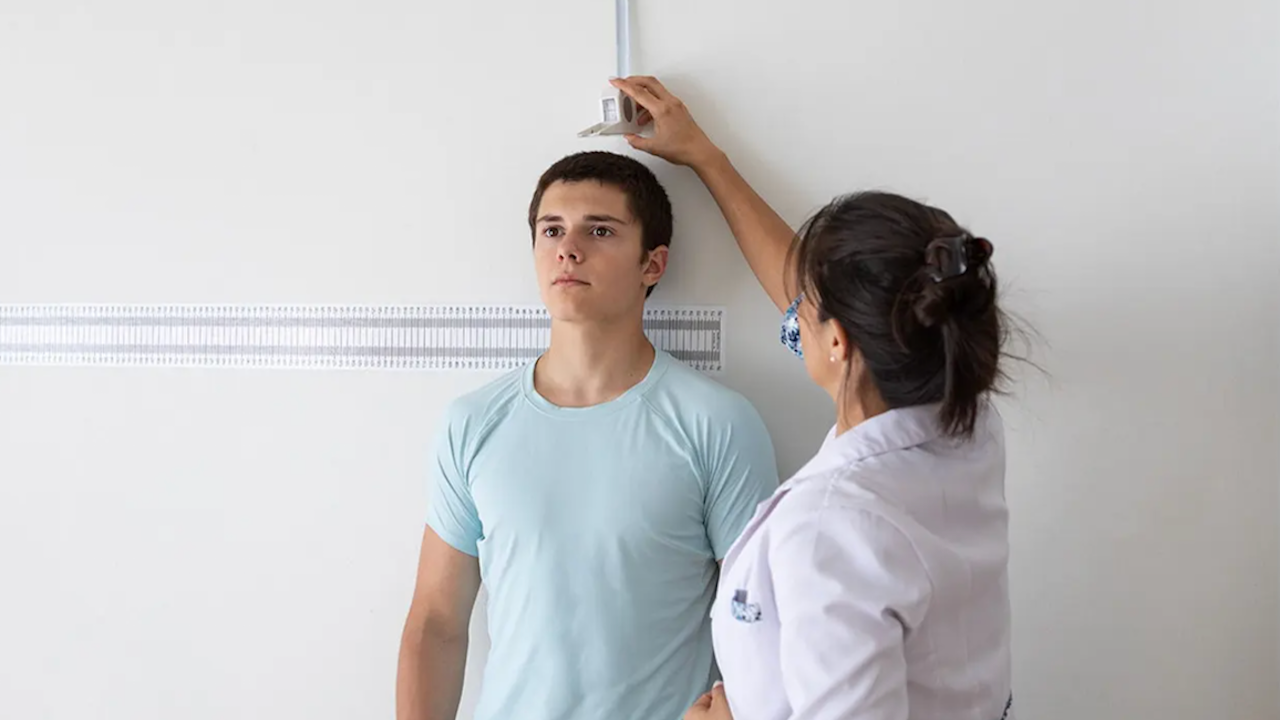
Medical experts are warning of a dangerous new social media trend known as “heightmaxxing,” amid reports that teenagers are taking black-market cancer medications in an effort to grow taller.
Adolescents, primarily teenage boys, are reportedly turning to erdafitinib — often referred to online as “ERDA” or “Erta” — a targeted prescription drug approved to treat advanced bladder cancer.
Teenagers are reportedly experimenting with the prescription medication after encountering online discussions suggesting it could increase height.
DOCTORS WARN OF ‘LOOKSMAXXING’ DANGERS AFTER INFLUENCER’S LIVESTREAM EMERGENCY
“It’s extremely concerning that teenagers are experimenting with powerful cancer medications in an attempt to grow taller,” Dr. Stephanie Widmer, a New York City-based emergency medicine physician and Fox News medical contributor, told Fox News Digital.
“These drugs were developed to treat serious medical conditions, not to enhance physical appearance, and taking them without a legitimate medical indication or physician supervision can have devastating consequences.”
The drug maker, Johnson & Johnson, pushed back against the practice in a statement to Rolling Stone, emphasizing that the medication has never been approved to stimulate height growth and that its safety and effectiveness have not been established for any pediatric or adolescent use.
Medical research has documented unexpected growth spurts in children receiving erdafitinib for brain tumors. A 2024 study published in Hormone Research in Paediatrics described accelerated growth in two pediatric patients, while a separate case report documented a teenager who grew more than 5 inches during treatment but developed serious skeletal complications.
CALLOUT:
Physicians caution that these spurts do not equal healthy skeletal growth. Dr. Jessica Gray, a family physician in Lubbock, Texas, warned that forced, rapid growth can trigger dangerous structural problems, including premature growth plate damage and bone fractures.
POPULAR WEIGHT-LOSS DRUGS FACE NUMEROUS LAWSUITS OVER RARE ‘EYE STROKE’ LINKED TO VISION LOSS
The drug works by blocking specific cellular signaling pathways involved in cancer cell growth, Widmer shared during an appearance on Fox News’ “America’s Newsroom.”
Those same pathways also play a role in bone development, which may help explain why some pediatric patients experienced unexpected growth during treatment.
Widmer noted that height is overwhelmingly governed by genetics, and biological shortcuts do not exist. Once growth plates close near the end of puberty, medications cannot reopen them, meaning older adolescents taking the compound are incurring catastrophic health hazards without any chance of gaining height, she said.
“One of the biggest concerns is that these medications can cause serious side effects, including potentially permanent vision damage, elevated phosphate levels and other metabolic abnormalities,” Widmer said.
“We’re talking about adolescents whose bodies are still developing, and exposing them to these risks for a cosmetic goal is particularly troubling.”
CLICK HERE TO SIGN UP FOR OUR HEALTH NEWSLETTER
Other warning signs and side effects linked to the medication include skeletal pain — especially in the hips or knees — as well as mouth sores, loose nails and skin disorders.
CLICK HERE FOR MORE HEALTH STORIES
The trend has also raised concerns about the influence of social media on teenagers’ decisions about their health. Widmer noted that online discussions about physical appearance and self-improvement can expose young men to potentially unsafe practices that lack medical evidence.
“Parents need to understand that this goes beyond teenagers being insecure about their height,” the doctor said.
“We’re talking about young people potentially obtaining prescription cancer medications and experimenting with them outside of medical supervision. If a child has concerns about their growth, that conversation belongs in a pediatrician’s office, not on an internet forum.”
TEST YOURSELF WITH OUR LATEST LIFESTYLE QUIZ
Doctors advise parents to watch for symptoms such as unusual joint pain or unexplained physical changes, and to speak with their children if they suspect they are using medications obtained online.
Teenagers concerned about their height or growth should consult a pediatrician before considering any medication.
CLICK HERE TO DOWNLOAD THE FOX NEWS APP
HealthNews
Study links ADHD to NYC’s deadly subway surfing trend
People killed “surfing” on top of New York City subway trains tend to be teen boys diagnosed with ADHD, according to a new study published this week.
The trend of young people subway surfing has persisted in recent years, despite at least 12 people being killed riding on the outside of trains since the start of 2024.
The study, which was conducted by researchers from NYU-Langone and the city hospital system, analyzed records of 43 patients under the age of 21 who were taken to Bellevue Hospital between 2018 and 2025 with some form of subway-related trauma.
The research, which was published in the Journal of Adolescent Health, is the first of its kind that looks into subway surfing in the United States. The study identified 10 patients who were injured from subway surfing. All of those surfers were male teenagers who had “markedly higher rates of ADHD” compared to the rest of the group.
“The most striking finding in our series is the overrepresentation of ADHD; 60% of surfers carried the diagnosis versus 6.1% of nonsurfers,” the study said. “This association has not been previously described in the train surfing literature and is among the most notable findings of our study.”
Researchers behind the study acknowledged the sample size is too small to make a sweeping generalization of all young people in New York City who ride on top of trains. The analysis doesn’t include two young girls, 12-year-old Zemfira Mukhtarov and 13-year-old Ebba Morina, who died while riding on top of a J train in Williamsburg in Oct. 2025.
Eveline Teresa Hidalgo, senior author of the study and pediatric neurosurgeon at NYU and Bellevue, said the subway surfers diagnosed with ADHD had also been treated for the disorder.
“We don’t know what this means exactly, and it’s not that ADHD causes them to subway surf, but it means that it’s something that we need to investigate further,” said Hidalgo. ”It could be associated with some attention-seeking behavior. It could be associated with the thrill-seeking behavior, and it’s a typical teenage behavior.”
Hidalgo said the study shows how subway surfing can cause life-altering injuries among people who don’t die after falling from trains. Some patients they studied at Bellevue suffered injuries to their brains and spine, and some had their limbs amputated.
Both the MTA and NYPD have attempted to prevent subway surfing in recent years.
The transit agency has teamed up with city officials to lobby social media giants like Meta and TikTok to ban or censor videos of teens subway surfing in New York City. The MTA has also piloted installing barriers between subway cars on the 7 line — where subway surfing is prevalent as the line is mostly elevated — to prevent people climbing on top of cars. The NYPD has also deployed drones to monitor elevated train tracks to spot and catch surfers.
NYPD data shows 185 people have been arrested for subway surfing so far this year, a 12% increase compared to the same period last year.
The study compared New York City’s subway surfing wave to a similar trend in Berlin in the 1990s. After 18 people died subway surfing over a six-year period in the German capital, the city’s S-Bahn transit system slowly decommissioned a fleet of train cars after finding they were easier for riders to climb.
HealthNews
Brookshire Farms’ owner speaks out after mysterious E. coli outbreak

The owner of the California farm linked to the E. coli outbreak that left more than 15 people severely sick, including a 6-year-old boy fighting for his life, said his heart goes out to the suffering families.
Brookshire Farms in San Luis Obispo County reopened on Nov. 6 after a 10-day voluntary shutdown while the Department of Public Health investigated the source of the E. coli outbreak.
“I am destroyed,” Brookshire Farms co-owner Shawn Callaway told The Tribune Friday as the farm reopened for the public.
“We’ve gone through … about 11 days now of numbness. I can’t explain it… I mean, the worries, the fears, the concerns, the ups and downs. I mean, how do you explain it? I don’t know,” he added.
Authorities said 5 people had laboratory-confirmed E. coli O157 infections after visiting the farm on Oct. 17 or 18, while 10 additional individuals who visited the farm between Oct. 16 and 26 developed matching symptoms.
Three children also required pediatric intensive care after developing Hemolytic Uremic Syndrome (HUS).
Among the affected children is 6-year-old Camden Foy of Nipomo, who is in critical condition at Stanford’s Lucile Packard Children’s Hospital with STEC and HUS following an Oct. 17 visit to Brookshire Farms.
His grandmother, Linda Strong-Foy, has been sharing constant updates on his health since his hospitalization nearly three weeks ago.
Camden was admitted to a Santa Maria hospital and subsequently diagnosed on Oct. 27 with HUS, prompting an emergency ambulance transfer to Stanford.
The tot’s condition quickly escalated into acute neurological complications, leading to severe confusion, brain scans for potential stroke or seizure activity, intubation, and multiple rounds of blood and platelet transfusions between Oct. 29 and 30.
“He’s on 5 blood pressure meds. An IV BP drip, 3 orals, and a BP patch,” Strong-Foy said in a Facebook post Monday.
SLO County’s Department of Public Health collected water, food, and other environmental samples at the farm but did not find E. coli O157 specifically.
The department said that other types of bacteria, including other strains of E. coli, were found at the farm in some samples, but those results did not identify the source of the E. coli O157 outbreak.
“Although it’s frustrating to not be able to pinpoint the exact source of the infection through environmental lab testing, this is not unexpected, and bacterial contamination is often temporary and difficult to detect through available sampling methods,” County Health Officer Dr. Christy Mulkerin said in a Nov. 6 statement.
Callaway said cleanliness is not a problem at the farm, with the 17 restrooms cleaned regularly and pumped twice a week. There are also 17 handwashing stations and eight sanitizing stations.
He added that he doesn’t think the pumpkins were the source of the outbreak because many of the victims had no contact with them.
“(The county) never tested our pumpkins,” Callaway told The Tribune. “They refused to test our pumpkins and said it was not in their investigational area because the pumpkins didn’t have the ability to get tested correctly.”
In the days following the outbreak, the county advised residents to wash their pumpkins and avoid touching ones that had already been carved.
As a result, San Luis Opisbo and Santa Maria canceled their annual pumpkin smash events.
Mulkerin later said the county didn’t intend to imply that the pumpkins were the source of the infection.
“We’re really trying to emphasize to the public, ‘Please don’t be afraid of pumpkins,’” she told The Tribune.


Hegseth Impeachment Effort Blocked in Key House Vote
House GOP leaders successfully killed a push to impeach Defense Secretary Pete Hegseth in a surprising show of unity from...


Trump’s private 2021 letter to Biden revealed in upcoming memoir
In his forthcoming book, former President Joe Biden discloses the contents of a 2021 letter written by President Donald Trump...


Scott Colom says tight Mississippi Senate race is almost over
Democratic Mississippi Senate Candidate Scott Colom tells CNN's Jake Tapper and Annie Grayer when he thinks his race will be...


Conveyor belt of storms unloads on Pacific Northwest
The north Pacific is cranking out one storm after another, sending relentless rain and snow into Alaska, British Columbia and...


Hegseth survives, but Dems say more impeachments could follow
House Republicans narrowly blocked an effort to impeach Defense Secretary Pete Hegseth, voting 211-204 to defeat the …


Man who admitted to dismembering wife remains emotionless as guilty verdict is read
A jury found Virginia man Naresh Bhatt guilty of first-degree murder Tuesday, rejecting his claim on the stand that his...


‘Mike Hammer,’ ‘Fat City’ Star Was 85
Stacy Keach, a commanding actor whose work includes movies like “Fat City” and the starring role in “The New Mike...


Shopping sucks. Blame your feed.
Shopping used to be fun. Now it's all microtrends and algorithm-approved outfits. Audie Cornish, Ari Shapiro, and Amy Odell …


California voters reject billionaire tax
Voters in California have rejected a measure to impose a one-time 5% wealth tax on residents with net worth over...


House GOP blocks Hegseth impeachment effort
The House voted to refer the measure to a committee, effectively killing the resolution to impeach Defense Secretary Pete Hegseth...
-

 Entertainment2 weeks ago
‘Baywatch’ Star Erika Eleniak on Track to Hit $1 Million in 1st Year on OnlyFans
-
HealthNews2 weeks ago
The Most Powerful Obesity Drug Yet Has a Hidden Benefit-and It Happens While You Sleep
-

 Business2 weeks ago
Dollar General overcharged millions at checkout for years, FTC and 20 states allege
-

 Business2 weeks ago
In China, the AI bubble has already burst
-

 Entertainment2 weeks ago
Inside Matthew Perry’s ‘struggle’ ahead of the 2021 ‘Friends’ reunion
-
Entertainment2 weeks ago
I’m a Bus Driver at Walt Disney World at 51 Years Old; Great Benefits
-

 Entertainment2 weeks ago
Taylor Swift, Travis Kelce wedding props deemed too expensive, dangerous revealed
-

 HealthNews2 weeks ago
Your Blood Pressure Could Be Higher Than You Think. These 7 Fruits May Help Bring It Down, Say Experts