BBC News World
In less than two hours, a jury dismissed Elon Musk’s lawsuit filed against OpenAI, Sam Altman, and others. Subscribe to read the story ad free
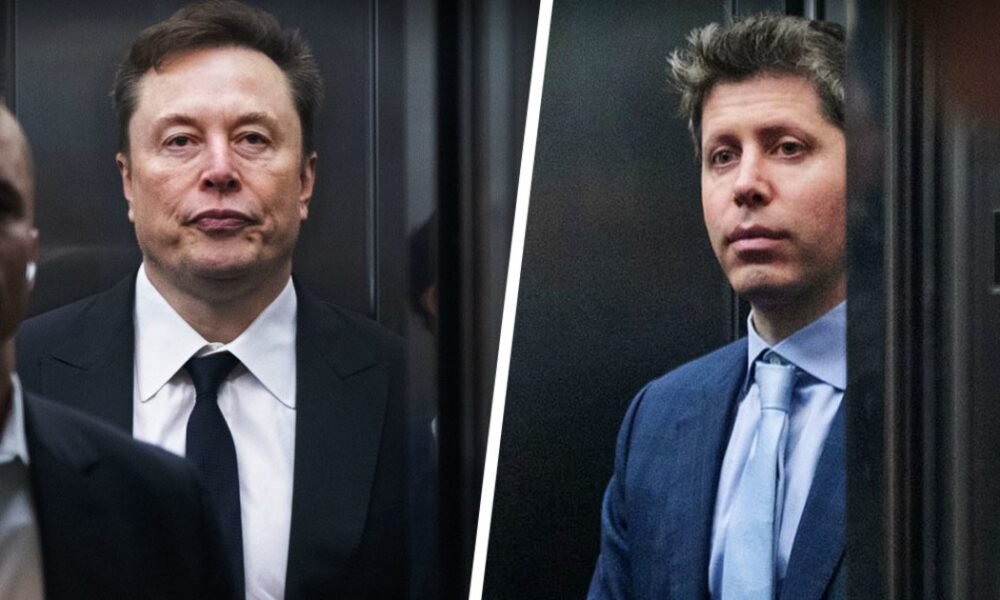
Get access to exclusive content and ad-free articles. The verdict means Altman and OpenAI, the co-founders unlawfully enriched himself of the case, are not liable for all claims following a blockbuster 3-week trial that has captivated and reshaped the race in artificial intelligence.
On the same statute-of-limitations grounds, the jury also rejected Musk’s claim that Microsoft aided and abetted Altman and Brockman in allegedly breaching their duty to OpenAI. Microsoft was a major investor in OpenAI’s profit-making operation.
The verdict is unanimous. The jury’s decision was reached in less than 2 hours. U.S. District judge Yvonne Gonzalez Rogers said she accepted the jury’s verdicts and adopted them. Steven Molo, an attorney for Musk, announced in court that his legal team will appeal. “We want to start the appeal as soon as possible, with all due regard to the court,” said Molo. Molo told reporters he thought the verdict was a narrow ruling on “technical issues” and he believed Musk had proven the core of his case that Altman and other OpenAI employees had breached their duty. He said that he hoped the appeals court would overturn the judge’s rulings, and jury instructions relating to the statutes of limitations. Musk told X several hours later that he was


– writing, “the Judge & Jury never actually ruled upon the merits in the case, only on a Calendar Technicality.” The verdict was not heard by any of the tech billionaires. Musk did respond to a question for comment immediately. Microsoft released a statement saying: “The facts and timeline in this case are well known, and we applaud the jury’s decision that these claims were untimely.” The verdict preserves OpenAI’s status quo, which is one of the most valuable private tech startups in the entire world. OpenAI declared in March that they were Greg Brockman, after raising a fresh round $122 billion of outside investors. OpenAI said in March that it had
a nonprofit organization to manage its business operations, while also confirming large stakes of outside investors such as Microsoft. Musk was questioned about whether he dragged his heels before filing a lawsuit
even though Musk had been on the witness stand three days.
In this case, the time limits were very strict. Three years for Altman and Brockman to be found guilty of breaching a duty they owed OpenAI as a non-profit organization. Two years for the claim that they illegally enriched their own selves from the organization. OpenAI cofounders Musk, Altman and Brockman began discussing a possible for-profit conversion in 2017. OpenAI established a first for-profit division in 2019. Musk sued in the year 2024. Bill Savitt argued, in his opening statements in the trial, that Musk had waited far too long to file suit. “It is too late to invent something to harm a rival,” he said, referring to Musk’s AI startup xAI founded in March 2023. Savitt said to reporters outside the courthouse that the jury viewed the evidence the same way that we did, that is, very conclusively tilting one way. He said he was finally fed up in 2023 when Microsoft invested $10 billion into OpenAI’s profit-making arm in exchange for intellectual properties rights and a portion of future profits. Musk said, “Thinking someone might steal a car is not the exact same as someone actually stealing it.” He said, “I would have filed the lawsuit sooner if they had stolen my charity sooner.” Molo said that Musk’s legal appeal would be partly based on a concept known as continuing violation doctrine. This can extend the statutes of limitations in certain circumstances when there is a long pattern or wrongful conduct. Musk’s attorneys had tried to include the concept of
, but the judge refused.
would file an appeal was on display during the trial. Altman, Brockman, and Musk are all multi-billionaires. Six tech billionaires all testified. Outside the courthouse the trial was sometimes like a circus, as protesters with props came to the scene to protest AI or wealth inequality.