
HealthNews
Is America on the brink of sparking a new flu pandemic?

America is closer than ever to harbouring the next flu pandemic, leading experts have warned.
H5N1, the avian flu that has decimated bird populations worldwide, is spreading through US cattle herds, raging on one of the country’s largest mink farms and, in the past few weeks, has infected three people in Washington state, one of whom has died.
The new cases bring the total number of people in the US infected with H5N1 since 2022 to 75. There have been three deaths.
Scientists say deep cuts to the federal agencies responsible for protecting human and animal health under the Trump administration have allowed the virus to spread largely unchecked, sharply raising the risk of a human outbreak.
The more the virus circulates in animals, the more people are exposed to it, and the more chances it has to adapt to humans, experts say.
H5N1 has shown no sign so far of spreading between people, but if it did, it is feared the virus could trigger a global pandemic with a very high human cost.
The Telegraph spoke to leading virologists, many of whom argue that America is getting closer to becoming ground zero for the next flu pandemic.
It would not be the first time. The first case of H1N1, the “Spanish flu”, is thought to have emerged at an army base in Kansas in March 1918, and the pandemic went on to kill more than 50 million people.
“It does feel like a disaster waiting to happen,” said Prof Ed Hutchinson, a molecular and cellular virologist at the University of Glasgow.
“We keep having a series of near misses, and I wonder how long our luck is going to hold.”
A preventable outbreak
H5N1 reached the US in 2021, carried by wild birds that had migrated from Europe.
For two years, it behaved much as it has elsewhere.
It infected farmed poultry, forcing mass culls at chicken and turkey farms, and occasionally jumped to mammals that had fed on infected carcasses, including seals, dolphins, bears, coyotes and foxes.
The same scenario has played out across the world, including in Britain, where more than three million farmed birds have been culled since 2020 in an attempt to stamp out the virus.
But in late 2023, there was a significant and unusual development in the US.
At a cattle farm in Texas, H5N1 infected a single dairy cow, most likely through contact with infected bird droppings in its feed. In most mammals, the virus quickly dies out, but this time it began spreading rapidly from cow to cow.
Within months, hundreds of herds across more than 12 states had been infected.
In the US, cows are often raised on farms in one state and then moved to large commercial milking centres in another, meaning that at any given time thousands of animals are being moved across the country.
Because cows infected with H5N1 do not always show obvious signs of illness, hundreds of thousands of sick cattle have been unwittingly moved across state lines, bringing the virus into new regions.
The practice has been heavily criticised for the biosecurity risk it carries.
“The cow infections have been totally preventable,” said Marc Johnson, a virologist at the University of Missouri.
“Cattle infection usually lasts a few weeks, and then they recover. If they just separated the infected herds or animals until it fizzled, then it would stop. But they keep moving cattle around and spreading it to new states.”
Surveillance efforts on cattle farms have also been significantly wound down under the Trump administration.
“There was a lot of openness and transparency at the end of the Biden administration, and they were really open about some of the challenges in getting farms to open up to testing,” Dr Devi Sridhar, a professor of global health at the University of Edinburgh, told The Telegraph.
“Then Trump came in, and everything went quiet. And I don’t think it went quiet because it went away. It went quiet because they just stopped tracking it.”
Of the 75 human cases in the US, at least 50 have been linked directly to cattle farming, meaning the outbreak in cows has become the main route by which the virus is reaching people.
Most human cases linked to cattle have been mild, and far less dangerous than historic cases linked to infections from wild or farmed birds. Of the roughly 1,000 human cases of H5N1 linked to birds since it first emerged in China in 1997, around half have died.
But on November 1, the first person to be infected with the cow variant of H5N1, known as genotype B.13, was confirmed to have died.
The individual, who worked on a farm in Washington where at least 40 herds have been infected with H5N1, had underlying health conditions, which may have exacerbated the disease, and died shortly after becoming sick – but the development is still of concern, say experts.
“This goes against the pattern of mild disease when infected from dairy cattle, versus severe disease when infected from birds, which is worrying given the circulation in cattle,” said Dr Sridhar.
Reassortment risks
One of the biggest fears among scientists is that bird flu could combine with ordinary seasonal influenza to create a new strain capable of spreading easily between people.
“This is a time of year when we can expect to see more circulation of [human] seasonal influenza,” said Dr Marion Koopmans, professor of public health virology at Erasmus MC Medical Centre in the Netherlands.
“A bad scenario would be that someone working with cattle brought the ‘regular’ human flu in, got [H5N1] on top of that, and that develops into a mix that can spread but to which people have less immunity.
“The chances of such an event are very low, but it is a concern shared among virologists.”
The process, known as reassortment, occurs when two flu viruses infect the same animal or person and exchange genetic material, potentially creating a new strain.
Scientists are particularly concerned as H5N1 spreads beyond cattle and into other mammals – chiefly mink.
For more than two months, an outbreak has raged on a Utah farm housing thousands of mink, according to an investigation by US news outlet ProPublica.
Mink farms have previously been described as potential pandemic “time bombs”, because their respiratory systems are similar to those of humans, meaning viruses spread easily between them and people.
Despite calls for the animals to be culled, Utah officials have so far refused to mandate action, ProPublica reported.
The investigation also suggested that state officials were prioritising the financial interests of the fur industry, which exports much of its produce to China and Russia, while federal authorities had failed to intervene.
H5N1 has previously spread through mink farms in Spain and Finland, but authorities in those countries took much tougher action.
“There was really vigorous state intervention and culling. In Finland, they decided just to close down the entire industry,” said Prof Hutchinson.
“It doesn’t sound like there’s been a great deal of enthusiasm for intervention [in the US] on behalf of the authorities.
“So you have this ongoing situation where the virus is replicating on a mink farm, which would be an ideal situation for the virus to slowly adapt to something more suitable to humans.
“As we move into the flu season, more and more of the people are also likely to be carrying human influenza at the same time [as potentially being infected with H5N1].”
Prof Hutchinson also warned that the vulnerability of some farm workers could make the outbreak harder to monitor.
“In the US system, a lot of the people working in the farming sector are undocumented workers. They are less likely to be engaged with public health surveillance than some other groups for obvious reasons,” he said.
Reassortment has been the cause of several major flu pandemics.
In 2009, a new strain of H1N1, commonly known as swine flu, emerged in Mexico and spread around the world within months, ultimately causing an estimated 150,000 deaths.
The virus emerged after different strains of bird, pig and human influenza exchanged genetic material, creating a new strain to which much of the population had little existing immunity.
Several countries, including Britain, have stockpiled supplies of H5N1 vaccines designed for humans, in preparation for the possibility that the virus begins spreading between people.
The US holds a federal stockpile of five million doses of bird flu vaccine. The doses are grown and cultured inside chicken eggs, the traditional method of manufacturing seasonal flu jabs.
While effective, the process is relatively slow, and experts have warned that producing enough vaccines to meet demand in a pandemic could take months.
In May last year, US health secretary Robert F. Kennedy Jr., a vaccine sceptic, cancelled a $766 million contract with Moderna to develop an mRNA vaccine against H5N1 – a technology that could offer a much faster way of delivering vaccines than traditional egg-based production. He said the technology “poses more risks than benefits” for respiratory viruses – a view that experts said was baseless.
“This is how outbreaks happen,” Dr Krutika Kuppalli, associate professor in the Division of Infectious Diseases at the University of Texas Southwestern and former World Health Organization official, said.
“You have continued spread of the disease; you’re not controlling it, and it allows the virus to evolve. So at some point, we’ll potentially see more human cases.
“If we develop human-to-human spread, that could really set things off.”
The “blue tsunami” brought in by the US midterms could offer some hope, experts say.
Many hope that a new wave of Democrats in the House and Senate will put pressure on Trump to protect science funding and reinstate some of the people and departments fired in deep federal cuts to the US Centers for Disease Control and US Department of Agriculture last year.
“We’re hoping you’ll have more [strong] voices going into government, and more scientific transparency,” said Dr Sridhar.
Protect yourself and your family by learning more about Global Health Security
HealthNews
US has lost measles elimination status, authorities say : NPR

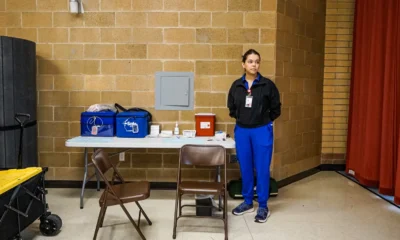
The U.S. has lost its status as a country where measles is eliminated, a public health triumph secured a quarter century ago.
Researchers with direct knowledge of the deliberations on the country’s status told KFF Health News that the Pan American Health Organization reached the conclusion this week: Measles has reestablished regular transmission in the country.
PAHO had planned a public announcement on Nov. 17.
In public health parlance, measles elimination depends on a country’s sporadic outbreaks ending within a year. That’s no longer happening in the United States.
“It’s a very sad moment,” said Anne Schuchat, an epidemiologist and a former deputy director at the Centers for Disease Control and Prevention who was not involved in PAHO’s decision.
“Measles causes so much unnecessary suffering, everything from a high fever and missed work and school to long-term complications like progressive degenerative nerve disease and death,” Schuchat said.
Measles outbreaks are entirely preventable: Two doses of the measles-mumps-rubella vaccine prevent about 97% of infections, so when almost everyone in a community is fully vaccinated, the virus can’t spread.
In the past two years, over 830 people have been hospitalized with measles in the U.S. More than 8,000 people have been sickened in outbreaks that have cost roughly $125 million in medical care, public health response, and productivity losses, Johns Hopkins University researchers estimate.
States have reported 13 measles-associated deaths, including a 7-month-old in New York and infants in Pennsylvania and Wisconsin in recent months. Babies typically aren’t vaccinated before they’re a year old.
PAHO, an international group that oversees health in the Americas and works with the World Health Organization, based its assessment on two analyses: one by the CDC and another by an independent group of measles experts.
Researchers anticipated this conclusion after an outbreak in Utah surpassed the one-year mark in June.
A spokesperson for the Department of Health and Human Services, Emily Hilliard, attributed the resurgence of measles to vaccination gaps that opened years before this administration. Indeed, rates of childhood vaccination have steadily declined since the COVID pandemic started.
But many scientists also blame the Trump administration for spreading vaccine misinformation and stifling a swift, strong response to outbreaks.
For example, the administration cut millions of dollars from children’s immunization programs run by state health departments and terminated funds for research on vaccine hesitancy.
After Health Secretary Robert F. Kennedy Jr. sacked CDC director Susan Monarez in August 2025, she told Congress she was fired because she would not preapprove changes to vaccine recommendations “without reviewing the evidence.”
Monarez added that “we already have seen the largest measles outbreak in more than 30 years” and that, “if vaccine protections are weakened, preventable diseases will return.”
Spokespeople for HHS and the White House defended the administration, and Kennedy, who led a prominent anti-vaccine organization before he took the helm at HHS. “The President and the Secretary have repeatedly encouraged measles vaccination, coordinated with states, and facilitated the deployment of vaccine doses across the country,” White House spokesperson Allison Schuster wrote in an email.
Past administrations sounded alarms
For more than three decades, the federal government treated measles as a preventable tragedy, with sizable outbreaks triggering national efforts to boost vaccination and stop the virus from spreading.
That’s no longer the case, said Patsy Stinchfield, executive director of the Measles Collaborative, a new initiative that educates the public about vaccines and assists health workers responding to outbreaks.
Stinchfield was a pediatric nurse at a children’s hospital in Minnesota during the nation’s last surge of measles before elimination, from 1989 to 1991. She recalled an entire ward devoted to children with measles and the enormous effort required to prevent the virus from spreading to kids with cancer and weakened immune systems.
Two children at the hospital died of measles. “That changed my career forever,” she said.
Back then, she said, the federal government “saw the urgency.” Officials held press conferences, spoke on the news about vaccines, issued clinical guidelines, and published reports in the CDC’s flagship journal — the Morbidity and Mortality Weekly Report, or MMWR — that drove policies.
When data suggested that some children weren’t mounting a strong response to a single dose of the measles-mumps-rubella vaccine, a CDC advisory committee recommended two doses of the shot.
When CDC analyses found that many children with measles hadn’t been vaccinated due to cost, the government launched the Vaccines for Children program to make immunizations available free of charge to underinsured families.
Cases plummeted. By 2000, the CDC and PAHO determined that measles was no longer a national threat — measles transmission had been eliminated.
“Elimination” allows for occasional outbreaks, because measles is not eradicated worldwide and a small fraction of people, such as young infants, can’t be protected by vaccines.
People infected abroad sparked occasional outbreaks after U.S. elimination, but — until now — those fizzled out because of herd immunity, when 95% of people within a community are immunized. In those situations, outbreaks peter out and vulnerable people are protected.
It would be 14 years before another significant outbreak in the U.S. Then in 2015, the virus took off among unvaccinated children at Disney parks in California, giving rise to outbreaks elsewhere. Congress saw some 125 cases as an emergency and summoned the CDC’s Schuchat to testify on the situation.
“Vaccination wasn’t a partisan issue,” she recalled. “This was about problem-solving: What can we do about this?”
National television aired a video of then-U.S. Surgeon General Vivek Murthy talking with Sesame Street’s Elmo about vaccination. HHS officials worked with vaccine experts on strategies to boost public confidence in vaccines. California and Vermont tightened vaccine requirements.
In 2019, House and Senate committees met again about measles, as a large outbreak took hold in Orthodox Jewish communities in New York and New Jersey took hold. Congress asked HHS leaders how the administration planned to curb the rise of vaccine misinformation online.
“Internet fraudsters who claim that vaccines are not safe are preying on the unfounded fears and daily struggles of parents, and they are creating a public health hazard that is entirely preventable,” Lamar Alexander, then a Republican senator from Tennessee, said at the time.
Alex Azar, health secretary during the first Trump administration, and then-CDC Director Robert Redfield held a press conference stressing the “importance of on-time vaccination.”
And during the 2014, 2015, and 2019 outbreaks, the CDC’s MMWR published detailed articles within weeks of data collection. Timing matters since the reports guide emergency response. “The MMWR is the voice of the CDC,” Schuchat said, “alerting the nation, the media, clinicians, and public health experts to events that require action.”
‘The dog didn’t bark’
Just after President Donald Trump took office in 2025, a measles outbreak exploded in West Texas. Within seven months, it surpassed the size of any in the U.S. since 1992, spread to Mexico and at least three other states, sickened more than 4,500 people in the two countries, and killed at least 16.
Instead of broadcasting clear, repeated messages on the importance of measles vaccines, Kennedy falsely claimed on Fox News that they lead to “deaths every year.”
Congress didn’t call a hearing, and HHS didn’t send funds until after the emergency in West Texas had subsided. Besides an annual measles update, the MMWR didn’t publish a single report on the outbreaks that year.
“A lot of this is the dog didn’t bark,” said Dorit Reiss, a vaccine policy researcher at the University of California Law San Francisco. “Something that normally happens isn’t happening.”
Political appointees have delayed or blocked several MMWR articles, according to multiple CDC officials whom KFF Health News agreed not to identify because they feared retaliation for speaking with the press. “There’s a deliberate effort to downplay vaccine-preventable diseases by the administration,” one official said.
“Measles reports from West Texas and New Mexico were intentionally shelved,” another scientist at the agency said. In April, The Washington Post reported that Jay Bhattacharya, who temporarily led the CDC this year and remains head of the National Institutes of Health, had blocked the publication of a study in the MMWR finding that COVID vaccines halved the likelihood of emergency department visits.
“The suggestion that HHS is deliberately suppressing information about measles or other vaccine-preventable diseases is false,” Hilliard, the HHS spokesperson, said in an email to KFF Health News.
Hilliard said Kennedy and the CDC have provided approximately $100 million in additional funding to respond to outbreaks. The timing of MMWR reports, she added, varies due to factors such as data analysis and scientific review.
More than a year after data was collected from Texas, a few reports came out in the CDC’s journal. One study on 60 people hospitalized for measles in West Texas revealed that two required intubation and mechanical ventilation and that a baby born to a mother with measles experienced dangerous brain swelling due to the virus.
The MMWR still hasn’t published detailed reports on massive outbreaks in South Carolina, Utah, and Pennsylvania. The CDC’s national measles update hasn’t appeared in the MMWR this year either. Instead, the journal has featured less urgent articles on scientific techniques that may help characterize future outbreaks.
CDC scientists told KFF Health News that they continue to analyze data but no longer expect to publish their findings in the MMWR because the process has become slow, opaque, and unpredictable. An urgent CDC report on the risks of measles to pregnant women was withheld, The Washington Post reported recently.
“We have two CDCs now,” an official at the agency said. “One is staffed by CDC scientists and civil servants who are committed to public health, and the other is political appointees who go in and change the website.”
The CDC’s measles dashboard counts four fewer measles deaths than state health departments have reported this year. Kennedy has disputed some deaths and made unsubstantiated claims that Pennsylvania health officials misrepresented data.
Kennedy personally instructed the CDC to alter language on a webpage that said vaccines do not cause autism, he told The New York Times last year.
The page now suggests a potential link between the two and no longer lists a slew of peer-reviewed studies that rigorously searched for an association and found none. These have been replaced with speculation about a correlation and unsubstantiated accusations that the scientific establishment has buried a potential link in order “to prevent vaccine hesitancy.”
The Trump administration has muddied the message on vaccines in other ways, Reiss said. Trump incorrectly said in August that the measles-mumps-rubella vaccine could be “quite lethal,” and he repeated the debunked idea that vaccines may cause autism.
Stephen Miller, now Trump’s White House chief of staff, has falsely said doctors “pump your kids full of shots days after birth with no understanding of the long-term consequences.” Recommended vaccines and the vaccine schedule have been thoroughly studied.
Kennedy has made such claims for two decades, including as health secretary. “Having top leadership disseminating rumors, disinformation and flat-out falsehoods has been unforgivable,” Schuchat said.
When pressed by journalists and Congress, Kennedy and Trump have recommended measles vaccines. But they haven’t repeated the message clearly and unprompted on social media or on the podcasts and videos that Kennedy regularly appears in.
Kennedy also replaced vaccine experts on a panel advising the CDC with fringe researchers holding anti-vaccine views. And under his leadership, the CDC has laid off or forced out many vaccine specialists, including all of those in a group that partners with community organizations and pharmacies, the Immunization Services Division partnership branch.
At the same time, Kennedy has devoted resources to searching for potential harms from vaccines, including through an attempted clinical trial considered unnecessary and unethical by medical societies and the WHO.
To regain measles elimination status, the current U.S. outbreaks must end — then, future outbreaks must stop spreading within a year, said Paul Rota, a microbiologist and former CDC official. With outbreaks expanding in several states, he said, that moment isn’t on the horizon.
“Bigger fires create more embers, and any one of those embers can seed another fire,” he said.
HealthNews
I Became My Ex-Husband’s Caretaker And Helped Him Die

Lee died in February. We celebrated his life the Saturday before Father’s Day. I should have been grieving. Instead, I was taking delivery of flowers and preparing brisket for the get-together after the service. I was hugging siblings and grandchildren and neighbors. I was emailing old colleagues and setting up Zoom links for distant friends. But that was OK; I had been grieving my loss of Lee for a very long time — indeed, for the years spanning the distance between middle and old age. I may never completely finish that process, but it certainly is not new; I’m kind of used to it anyway.
I am a historian. My world is structured by events and dates. Lee and I met in 1977 and married in 1978. I was 26 and he was 36. Our four sons were born between 1980 and 1983. (Yes, the youngest are twins.) We rode out lots of ups and downs and managed to stay married until 2010, when we divorced.
Advertisement
Our split was horribly painful; it was hard to disentangle 32 years of friends, possessions and expectations. We generated enough anger and resentment to flood the gulf of silence between us. Lee had two important committed relationships with women after the divorce, further cementing our estrangement.
We had virtually no contact until our twins’ weddings in 2016 forced a rapprochement. From that point onward, interaction became easier. Conversation was initially awkward, then slid into familiar patterns. Old memories created scaffolding for a tentative new friendship. We even danced with each other. It all felt grown-up, civilized and oddly easy. He didn’t have to hate me any more. I didn’t have to dread his bad behavior or be responsible for him.
Then, in 2019, shortly before his 78th birthday, Lee was diagnosed with Parkinson’s disease and Lewy body dementia. No one was surprised; he had been showing signs of cognitive slippage for years. But his girlfriend contacted our sons and me, telling us about his diagnoses and explaining that she could not take on his care.
Advertisement
This was an enormously wise and loving thing to do, helping to focus family concern and jump-start legitimate intervention. Rather to everyone’s surprise, including mine, it turned out that I was still part of Lee’s family.
Lee was not an easy guy to help. He had an Ivy League Ph.D. and the ego to go with it. He had a terrible temper. He drank too much. He dominated conversations and was always sure he was right about everything.
Advertisement
Although he was also charming and lots of fun, his diagnoses scared him and made him see enemies everywhere he looked. Doctors had misdiagnosed him. The state, quite unjustly, wouldn’t let him keep driving. His sons were conspiring to break up his romantic relationship and keep him from going from Wisconsin to Arizona for the winter. But, for some reason, he would listen to me.
I convinced him — over and over again — that it didn’t make practical sense for him to move to Arizona. And I began to think about relocating to Minneapolis, where I could be nearer to our grandchildren and help with Lee’s care.
Even before I moved, I started to help. I spent three weeks in Lee’s house, clearing it out so that it could be put up for sale. I got rid of his library, which filled four rooms. I made endless trips to charity stores to dispose of the clothing and household goods Lee would never use again.
Advertisement
Perhaps, most importantly and painfully, I went through his paper files. This needed to be done page by page, because Lee had kept copies of all of his financial documents, including personal checks, since our separation. These were mixed with correspondence, printouts of bibliographical searches, and 50 years of research notes and teaching materials.
Lee saved and filed everything. During his last few years of independence, he lost the ability to prioritize or categorize anything. His home became a physical map of his disease — cluttered, disordered, dirty and terribly sad. I wept as I burnt out two shredders and drove repeatedly to the recycling center 13 miles away. That gorgeous big brain of his had left home long before Lee did. Going, going, gone.
I closed the door of Lee’s quiet, clean, empty house and went back to my home in Wyoming. The boys told me Lee was doing well, settling into his one-bedroom apartment in a nice new downtown building. I got a puppy and did lots of cross-country skiing.
Advertisement
Then Covid descended. So, on March 20, 2020, I packed up the dog and drove 1,000 miles to Minneapolis, planning to help care for my two granddaughters, then aged 2 and 4, so that their parents could work from home, and I could be near family during the pandemic.
Our local son and daughter-in-law had been Lee’s nearest relations and family support system for years. He went to my daughter-in-law’s parent’s home for holiday meals; our son clipped Lee’s awful toenails and got his hair cut. However, the pandemic and my move to Minneapolis changed things. Everybody needed more help. And Lee was getting sicker.
Advertisement
At first, I did things that were easy for me, like finding new health care providers for him: a new primary care doc. A new neurologist. A new ophthalmologist. A new dentist. When Lee became too confused to live independently, I helped to find a memory care facility for him. Then, hands-off gradually became hands-on.
As the pandemic eased, I took him to medical appointments and became both his health care advocate and the family interpreter and communicator of his medical information. I often drove him to and from family social events. We went out to lunch. I bought clothes for him and tried to organize his hopelessly muddled closet and cupboards. I comforted his terrible anxiety about his phone, his wallet, his watch, his belt, his lists.
Parkinson’s disease and Lewy body dementia are horrible. There are drugs that mask symptom progression for awhile, but the damage is ongoing and relentless. Lee lost so much of what had made him Lee during the three-and-a-half years between diagnosis and death.
Advertisement
Early on, due to short-term memory loss, he stopped being able to read and write, follow a televised sports event or enjoy an old movie. His 6-foot, 3-inch frame bent and stiffened until he could not move or sit without pain. He could neither walk faster than a shuffle, nor could he easily seat himself or rise from a chair. Getting in and out of a car was a miserable ordeal. And the emotional aspects were as awful as the physical ones. Lee was bored, anxious and depressed.
But his amazing long-term memory outlived almost every other part of his personality. And I was the only one around who shared familiarity with the people, places and events of his past. Almost until he lost the ability to speak, we would chat about old colleagues and friends, ideas for research projects and trips we’d taken. Through those slow, rambling, quiet conversations, Lee held on to his identity and I found that the things fractured by our separation and divorce began to heal.
Advertisement
One of those things was the family we had made together. Our sons had been adults when we separated, but they continued to suffer the pain and betrayal that came with the divorce. They had seen our marriage and family as special, unusual, and somehow indestructible. They had not seen the fissures in that carefully constructed edifice — fissures I had done my best to hide from them.
The sense of betrayal cut deep, and was compounded by Lee’s endless — and, ultimately, unsuccessful — efforts to find a new last partner: a woman who would put up with and take care of him. Our sons had to tolerate, and sometimes embrace, Lee’s ladies. At the same time, while being loyal to their dad, they maintained strong loving relationships with me.
An important and unexpected benefit of my involvement in Lee’s end-of-life care was a kind of family reunification. The out-of-town boys visited. We spent some holidays together and passed grandchildren from one elderly set of knees to another at Sunday dinners and backyard barbecues. We reminisced about that long-ago Christmas when we were all sick, wore our pajamas all day, and watched movies, cuddled up on the sofa. We took some sweet group photographs and consulted, with loving tears, about Dad’s care. And by the time the end came, we faced and experienced it together.
Advertisement
Just before Thanksgiving 2022, I got a call from the memory care nurse at about 1 p.m. Lee hadn’t moved from his recliner all day. He hadn’t come to meals. He was not talking. Could I come?
This was the beginning of the last stage. Hospice care. Emotional family goodbyes. A strange holiday season. The long wait that became everyday life.
Advertisement
I grew used to perching on Lee’s wheelchair next to his hospital bed and feeding him tiny pinches of coffee cake from my fingers. I asked the kind, knowledgeable hospice nurses about ways to prevent pressure sores. I requested the relentless increases in morphine doses to ease Lee’s discomfort. And I did what people have done for dying loved ones since the beginning of human time: waited for the end.
It came on a sunny February afternoon. Our eldest son had arrived from California the day before. He was with Lee when he died.
I say “loved ones.” There are many kinds of love. At some point during the last couple of years, Lee asked me, “What is our relationship now?” And I responded, “We are dear old friends.” That was as true as it could be. Lee introduced me to his caregivers as his wife; that was also true in some important ways. It was not legally accurate, but it expressed the central fact that Lee and I were married for most of our adult lives. He was with me when our children were born. I knew his body as completely as I knew my own. Divorce does not erase lived experience.
Advertisement
As I planned Lee’s celebration of life, I considered the fact that I am not alone. There are many old people out there — mainly women, I suspect — caring and grieving for former spouses. We do this for many reasons; chief among them is love: love remembered, love honored.
Born and raised in the Chicago suburbs, Lucinda Myles McCray is a historian of medicine and public health who spent her professional life at British and American universities as a researcher, administrator and faculty member. The author of numerous books, articles and opinion and personal pieces, she now lives with her dog, Molly, in Minneapolis, reading, writing, grandmothering and spending as much time as possible outdoors.
HealthNews
American Cancer Society recommends prostate cancer screening at 50

NEWYou can now listen to Fox News articles!
The American Cancer Society is recommending regular prostate cancer screening starting at age 50 for men at average risk under updated guidelines released Nov. 12.
The update shifts from emphasizing individual decisions about screening to explicitly recommending regular testing for eligible men.
The new guidelines call for PSA testing every two years for average-risk men ages 50 through 69. Black men should begin annual screening at 45, regardless of family history. Other men with a father, brother or son diagnosed with prostate cancer should also begin at 45, with the frequency depending on their family history.
JOE BIDEN SHARES HEALTH UPDATE AFTER PROSTATE CANCER DIAGNOSIS WHILE ISSUING WARNING TO OTHERS
Men ages 70 to 74 should discuss whether to continue screening with their doctors; routine screening is not recommended at 75 and older.
Prostate cancer is the second-leading cause of cancer death among U.S. men. For disease that has not spread beyond the prostate or nearby areas, the five-year relative survival rate is nearly 100%, according to the American Cancer Society.
MAN GOES TO DOCTOR TO PROVE HE’S ‘IN PERFECT SHAPE,’ TEST REVEALS SHOCKING DIAGNOSIS
“Men think it is going to happen to someone else,” Dr. Ash Tewari, chair of the Milton and Carroll Petrie Department of Urology at the Icahn School of Medicine at Mount Sinai Medical Center in New York City, told Fox News.
The doctor, who has performed more than 10,000 prostate cancer operations, said the success rate of treating patients is exceedingly high, but that many men still need to be nudged to get screened.
A prostate cancer screening involves a simple blood test for PSA, which measures the level of prostate-specific antigen, the protein produced by normal and cancerous cells in the prostate gland.
Under the updated guidelines, a PSA level of 3 ng/mL or higher in men younger than 70 warrants a repeat test to confirm the result. There are other explanations for higher PSA levels beyond the existence of prostate cancer, such as an enlarged prostate, inflammation or an infection.
CANCER DOCTOR REVEALS 5 HABITS THAT MAY REDUCE DISEASE RISK AND IMPROVE OUTCOMES
Screening can also identify slow-growing cancers that may never cause harm. The society recommends discussing screening’s benefits and possible harms with a healthcare provider and offering close monitoring as an initial approach for low-risk cancers.
CLICK HERE FOR MORE HEALTH STORIES
“We know how to cure 95% of them,” said Tewari, referring to prostate cancer patients. “I can operate, we have developed medications … to get to them in time, my approach is very simple: Go right where they are.”
To reach more men, Tewari and Mount Sinai have created mobile prostate cancer screening vehicles that are deployed in neighborhoods so men can be examined where they live.
The first bus, the Mount Sinai Robert F. Smith Mobile Prostate Cancer Screening Unit, was sent out in New York City in 2022. Last month, another bus was deployed to the Atlanta Falcons-Chicago Bears game at Mercedes-Benz Stadium in Atlanta. The Winship Cancer Institute at Emory University offered free screenings in partnership with the Atlanta Falcons during the game.
CLICK HERE TO SIGN UP FOR OUR HEALTH NEWSLETTER
Tewari and Mount Sinai are engaged in other ways to get the word out to men.
The ACS estimates that more than 333,000 men in the U.S. will be diagnosed in 2026, and about 36,000 will die from the disease.
Last month, actress Brooke Shields joined Tewari and directed a public service announcement advocating screening and early detection. The goal is to screen more than one million men for prostate cancer under Tewari’s Million Strong Men Initiative.
“We need to be able to talk about …down there,” a son says to his father in the PSA video.
CLICK HERE TO DOWNLOAD THE FOX NEWS APP
“I never got to have the talk with my dad early enough,” says Shields in the video. Her father, Frank, died of prostate cancer in 2003 at 61 years old.
“Prostate cancer is treatable when detected early,” she adds.
TEST YOURSELF WITH OUR LATEST LIFESTYLE QUIZ
“Prostate cancer is often a disease that families don’t talk about until there is a reason to,” said Tewari. “We want to change that. Starting the conversation early can give men an opportunity to learn about their risk, talk with their doctors about screening and act when appropriate.”
Prostate cancer is one of the most common cancers in men. The ACS estimates that more than 333,000 men in the U.S. will be diagnosed in 2026, and about 36,000 will die from the disease.
HealthNews
Deadly deer disease detected in another Georgia county

COFFEE COUNTY, Ga. — Four more deer in South Georgia have tested positive for Chronic Wasting Disease, according to the Georgia Department of Natural Resources.
[DOWNLOAD: Free WSB-TV News app for alerts as news breaks]
The latest detections include the first confirmed case in Coffee County. As a result, Coffee and Cook counties have been added to the state’s CWD Management Area.
Chronic Wasting Disease is a contagious and fatal neurological disease that affects deer and other members of the deer family.
TRENDING STORIES:
‘Prank’ involving eggs, pellet guns lands 4 KSU students in jail
‘We Ready’ rapper’s brother no longer faces charges in his death, DA says
Racial slur allegations spark investigation after metro Atlanta high school flag football game
Wildlife officials are encouraging hunters to help monitor the spread by submitting harvested deer for testing. Testing is free.
Hunters can find more information by clicking here.
[SIGN UP: WSB-TV Daily Headlines Newsletter]
©2026 Cox Media Group
HealthNews
The U.S. has lost measles elimination status. Here’s what that means and who is most at risk.

The United States has lost its measles elimination status, researchers with knowledge of the decision confirmed to CBS News partner KFF Health News on Saturday.
The decision from the Pan American Health Organization came after the U.S. recorded over 5,400 measles cases so far this year — more than double last year’s total. The Pan American Health Organization is a regional office for the World Health Organization, covering North and South America. The agency is set to hold a news conference on Tuesday.
A country is considered as having eliminated the measles if there are “no locally transmitted measles infections or outbreaks lasting 12 months or longer,” according to the World Health Organization.
The United States did not meet that standard for the first time since 2000. According to data from the Centers for Disease Control and Prevention, about a third of this year’s measles cases are linked to outbreaks that began in 2025 and continue to spread.
After a 30-year record of 2,242 cases last year, the CDC has tallied 5,412 cases to date in 2026, resulting in more than 590 hospitalizations and at least six measles-related deaths, with some states reporting additional fatalities.
The biggest outbreak has been in Pennsylvania, where state health officials have reported more than 1,500 cases and seven deaths associated with the disease this year. New York and Wisconsin have each reported one death.
Measles cases have been confirmed so far this year in 45 states and Washington, D.C.
What does it mean to lose measles elimination status?
A country or region loses its measles elimination status once its population immunity lowers enough that the disease’s spread can be sustained, CBS News medical correspondent Dr. Céline Gounder explained. When a country has measles elimination status and a high rate of vaccination, a case of measles or small outbreak will soon fizzle out. But when there are this many gaps in the population’s immunity, there can be “ongoing chains of transmission,” Gounder said.
“It means that we’re at risk of being exposed to measles and getting measles if we’re not vaccinated,” Gounder said. “It means ERs and pediatricians need to consider measles in anyone with a fever and rash, whether they’ve traveled overseas or not. And we may now become an exporter of measles to other countries.”
Dr. Omer Awan, a trained epidemiologist and senior public health contributor for Forbes, said that the loss of measles elimination status is a setback to the nation’s public health infrastructure.
“It’s frustrating and heartbreaking … because we have the tools to fight this. The tool is the MMR vaccine, which we know is 97% effective at preventing the onset of measles,” Awan said. “It’d be one thing if we didn’t have the tools to fight this, but the tools are at our disposal, we just aren’t using the tools that can help us mitigate the spread and beat measles.”
How can the U.S. regain measles elimination status?
A country earns measles elimination status by ensuring there is no local spread of the disease or outbreaks that last for more than a year.
PAHO says that the best way to maintain the elimination of measles is maintaining a vaccination rate of 95% or higher. Countries should also have sensitive surveillance systems to detect cases quickly, laboratory capacity and a guaranteed rapid response to outbreaks. Data about these trends must be submitted to and verified by the organization.
For the U.S. to curb outbreaks and regain measles elimination status, it needs to return to higher rates of vaccination, Awan said. He said battling misinformation and ramping up vaccination campaigns would be key to that effort.
Data shows childhood vaccination rates have declined in many communities around the U.S. in recent years, often below the threshhold needed to help ward off measles outbreaks.
Gounder also noted that lawmakers can create policies that lead to increased vaccination rates.
“States set the school vaccine rules. Nine states made opting out of vaccination easier in 2025. States ending nonmedical exemptions saw kindergarten vaccination rise 2 to 4 points,” Gounder said. “Most legislatures reconvene in January. Your state lawmakers will write next year’s exemption rules.”
Measles in the U.S.
The United States started collecting national data on measles in 1912, according to the Centers for Disease Control and Prevention. About 6,000 measles-related deaths were reported each year in the first decade of that data collection.
In the decade between 1953 and 1963, nearly all children in the U.S. caught measles before they turned 15, with an estimated 3 to 4 million people infected each year and tens of thousands hospitalized, according to the CDC. In those years, 400 to 500 people, mostly children, died of measles annually.
Then in 1963, the measles vaccine first became widely available. The numbers began a sharp decline and several generations of Americans grew up without ever encountering measles.
By 1981, reported measles cases had dropped by 80% compared to the previous year, the CDC said. The country was officially declared as having eliminated measles in 2000.
The U.S. maintained its elimination status for over 25 years. That didn’t mean there were no cases at all — in 2015, an outbreak that spread among unvaccinated people was traced back to overseas visitors at Disneyland in Southern California, and a 2018-19 outbreak in New York was eventually contained by public health measures including curtailing vaccine exemptions. But those spikes were just a fraction of the spread now being seen in the U.S.
The nation recorded 2,242 measles cases in 2025, according to CDC data, linked to 48 separate outbreaks. The CDC reported 245 hospitalizations, mostly in children, and three measles deaths last year. Infections were confirmed in at least 44 states. It was the most cases the country had seen in over three decades.
That record was shattered in 2026, when the U.S. recorded more than double that number of cases by October — a total that topped 5,000 earlier this month.
Almost all of the cases have been in people who were not vaccinated. Measles-related deaths have been reported in Pennsylvania, New York and Wisconsin.
The CDC said 43 new outbreaks — defined as three or more related cases — have been reported so far in 2026, while about a third of the cases reported this year are tied to outbreaks that have been ongoing since 2025.
Who is at risk from measles?
Measles is one of the most contagious infectious diseases. Those who are unvaccinated for the disease are most at risk of getting it. CDC data shows that 96% of people infected with measles in 2026 did not get vaccinated for measles or were unsure of their vaccination status; only 2% of cases were in people who’d been fully vaccinated.
While many people recover, measles can cause severe infections in the lungs and brain that can lead to cognitive issues, deafness or death.
Medical research has shown that two doses of the measles, mumps and rubella (MMR) vaccine is extremely safe and effective at protecting against measles.
Some people — including babies, pregnant women or people with weakened immune systems — cannot get vaccinated for measles, so they rely on population immunity to keep the disease from spreading. Awan said that these groups of people will bear “the brunt of the consequences” of increased measles spread.
“They will be the ones that are most vulnerable to getting infected and experiencing the complications,” such as pneumonia or encephalitis, Awan said.

Friends and family gather to honor Ted Turner at memorial event
Friends and family gather to honor the legacy of CNN founder Ted Turner.


SpaceX Starship historic landing
In an unprecedented maneuver, the Starship spacecraft just came sweeping down to a pinpoint landing within the arms of …

US has lost measles elimination status, authorities say : NPR
The U.S. has lost its status as a country where measles is eliminated, a public health triumph secured a quarter...


Pope Leo XIV returns to Chiclayo in northern Peru
CNN's Christopher Lamb reports on the excitement surrounding Pope Leo XIV's return to Peru, where he holds dual citizenship …


‘Now everything changes’: SpaceX catches Starship upper stage for 1st time ever
SpaceX caught the upper stage of its Starship megarocket for the first time ever today (Nov. 14), a landmark achievement...


SpaceX successfully catches part of Starship rocket on its return to Earth
SpaceX hits milestone with spaceship recovery Wedaeli Chibelushi Live reporter Elon Musk’s SpaceX has successfully caught the top part of...


Starship Flight 15 launch, ship catch & CNN's first reactions
In an unprecedented maneuver, the Starship spacecraft came sweeping down to a pinpoint landing within the arms of SpaceX's …


Ground Stop Highlights Chronic Vulnerabilities in Air Traffic System
The ground stop that brought air travel across the country to a halt Friday evening highlighted persistent weaknesses in the...


Presley Gerber’s $3.5M Hollywood Hills home listed for sale just 2 months after his tragic death at 27
Presley Gerber’s $3.6 million Hollywood Hills home is listed for sale just two months after his tragic death at age...


Jensen Huang Carried a Secret for More Than a Year. It Led to His Downfall.
Jensen Huang was agitated. It was September 2025, and The New York Times had just called his company about a...
-

 Business2 weeks ago
‘It’s only when you see 49-ton trucks in China running on batteries that you realize how serious electrification is’: Octopus Energy CEO Greg Jackson on Europe’s incumbency problem
-

 Entertainment2 weeks ago
Inde Navarrette Makes Shane Gillis Quip ‘SNL’ Opening Monologue
-

 Entertainment2 weeks ago
Severed Human Hand Costume on Red Carpet
-

 Politics6 days ago
60 Minutes Transcript: Donald Trump, the 2026 post-midterm elections interview
-

 HealthNews1 week ago
Thousands of bottles of blood pressure medication recalled by FDA
-

 India Top Stories Feeds2 weeks ago
Hour Battery, €1,699 [2026]
-

 Business1 week ago
Top Democrats call to rein in AI buildout after midterms sweep: ‘National data center moratorium now’
-
Business2 weeks ago
25 Wall Street Rising Stars and Executives to Watch