
Entertainment
Jada Pinkett Smith Wants Will’s Ex-Pal To Sit For Mental Exam to Prove Emotional Distress

Jada Pinkett Smith wants Will Smith’s former friend, who is suing the actress and claiming she threatened him, to submit to a mental exam … TMZ has learned.
According to court docs, obtained by TMZ, Jada is asking the judge to give her permission to have Bilaal Salaam sit for a lengthy mental exam to test the claims he made in his lawsuit about suffering emotional distress due to her alleged conduct.
As we’ve previously reported … Bilaal is seeking $3 million in damages, claiming Jada threatened him and inflicted severe emotional distress.
He says she caused him to live overseas due to fear, caused him to lose his long-term romantic partner, and caused him to develop high blood pressure … and Jada said that is reason enough for him to be examined by a doctor for 5 to 6 hours.
She insists Bilaal made his mental and emotional condition a “centerpiece” of his case, so she should have the right to have a doctor examine whether and to what extent he suffers from those alleged conditions.
As TMZ first reported, Bilaal claims Jada and other friends went after him after he refused to help Will clean up the Chris Rock mess … and became upset after learning he was planning to write a memoir and mention Will.
Entertainment
In Elizabeth Holmes, Nathan Fielder has finally met his match

About a third of the way through “You Can See Everything,” Nathan Fielder’s new documentary about Elizabeth Holmes, we watch the disgraced Theranos founder and convicted fraudster pose for the camera — more than 200 of them, to be exact.
In the days before she reported to federal prison in 2023, Holmes had her likeness captured and scanned so she can be reproduced via video, hologram and artificial intelligence while she’s locked up. It’s partly a business decision — she and partner William “Billy” Evans, with whom she shares two children, are launching a new healthcare startup (which they refer to as Theranos 2.0), and it might be useful to have access to a version of Holmes that can be programmed, say, to give pitches. And yet, we see Holmes crying. She’s been hurt before by putting her image too far out into the public. “I have a weird history with being on camera,” she says, sobbing.
Thanks to “You Can See Everything,” that history is only getting weirder.
The pre-release buzz around this new movie, which was made in secret and revealed via a surprise trailer that dropped last month, has been near deafening. Some of the critics who had been privy to its secrets have boldly declared it “the movie of the year” or wondered whether it might even become the first documentary to receive an Oscar nomination for best picture. With the film opening in theaters across the US on Friday, audiences now have their turn to see what all the fuss is about.
Fielder’s movie is a wholly unique and revolutionary one. Thanks to the unparalleled access to Holmes and her family in the days before her incarceration (at one point we even see Evans showering nude), as well as some truly jaw-dropping creative decisions later in the movie, the film is gripping and shocking. It is a bold, perhaps impossible, quest for truth about someone whom Fielder compares to a magician. At one point, he wonders if she may just be the most manipulative person who has ever lived.
Rarely, if ever, has a documentarian and subject been so perfectly matched. Through his shows “Nathan for You” and “The Rehearsal,” Fielder has established himself as someone pathologically obsessed with elaborate schemes, awkwardness, meta narratives and things that are not what they first appear. In these programs, Fielder plays both the straight man and the chaos agent, often appearing like an alien in human disguise sent to study our most inexplicable behavior, even if it means meddling in things himself.
If Fielder is again playing a version of himself here, Holmes seems to be offering near infinite versions of herself up for examination, like a set of unblinking reflections in a hall of funhouse mirrors. As the movie progresses, Fielder and the audience must question whether and how they’re being deceived. Is Holmes just weird, as Evans, her partner, insists? A victim of the men in her life, as her father seems to believe? Someone who may be on the spectrum and incapable of understanding how others perceive her words, as a revelatory sequence involving Holmes’ reaction to the Abbott and Costello “Who’s On First” sketch seems to suggest? Or is she just a compulsive liar who has somehow managed to delude even herself?
“The world believes a reality about me that isn’t true. So what is the reality?” Holmes says in the movie. It’s a question that hovers over the entire production and one that isn’t easily answered.
Co-directed by Fielder and Lance Oppenheim, who released “Primetime” also under the A24 banner last month, “You Can See Everything” is somehow visually gorgeous and yet profoundly ugly — almost intentionally so. Much of it is filmed in extreme close-up, replete with zits, wrinkles and sweat on Fielder and Holmes, as if we’re studying them under a microscope. As befitting Fielder’s style for leaning into artifice, we often see the crew and their boom mics, as they work to create something that ultimately mixes reality and recreation, fact and fiction.
A surprise person appears halfway through the movie — one being kept a closely guarded secret from audiences and which we won’t spoil here — but whose presence transforms it entirely, emerging as both co-documentarian and co-subject. “We’re working in Fiction Land,” this person astutely observes at one point. That feels like an understatement.
Fielder is a refreshingly candid guide through this strange land. He’s open about his insecurities as to why Holmes wanted him to capture her — does his lack of scientific understanding mean he’ll be an easy mark? — and the movie offers the case that he may have grown too close to or fond of his subject. When one person remarks that Holmes may be a victim of Stockholm Syndrome under Evans, viewers can only wonder if the same can be said for Fielder and Holmes.
When Holmes does eventually report to federal prison in Texas, she does so after Fielder injects his trademark cringe into her last moments of freedom, suggesting he leave Holmes and Evans alone so they can have sex — then asking how it was — and offering her a gag gift in front of her parents of hair dye and sunglasses so that she can go on the run. Then, as she prepares to get into the car to leave Fielder, they embrace and stare awkwardly at one another until we finally hear the words, “You’ve got this.”
Entertainment
Designers are cringing at Tate McRae’s new single cover

Singer Tate McRae has released a teaser for her new single Housewife, and while the moody superyacht setting has sparked fan theories, there’s one detail designers can’t ignore. The font.
Featuring one of the most iconic typefaces of all time, the design has surprised creatives thanks to its unexpected appearance on the single’s branding. But while some are clutching their metaphorical pearls, others see the controversial font choice as a return to form for the pop music design world.
So what typographical sin has ol’ Tate committed? She’s used an ultra light Helvetica font. I know, the horror.
“She will pay for her crimes,” one X user wrote, while another joked, “It’s grotesque tbh.” While one critic claimed “Tate McRae has NO REASON to be using an ultra light Helvetica font,” others gestured to album covers of the early 2000s, like Britney’s I Love Rock ‘N’ Roll, and Madonna’s Bedtime Stories. Remember those? Exactly… that’s why we don’t use ultra light Helvetica, folks.
Entertainment
‘You Can See Everything’ Review: Nathan Fielder’s Elizabeth Holmes Doc Is Surreal
Elizabeth Holmes famously does not blink, whether she’s pitching investors or, by her own admission, flirting with a guy.
Is her moony gaze haunting or hypnotic? A calculated act or proof of her naivete? At various points in A24’s new documentary, “You Can See Everything,” I vacillated between each of the above.
A good portion of Nathan Fielder and Lance Oppenheim’s movie could be classified as a provocative staring contest, as Fielder probes Holmes about her life and the demise of her company, Theranos, in the weeks before she reported to prison to serve an 11-year sentence in May 2023.
The answers he gets from Holmes are rarely satisfactory. (At one point, she insists she’s never told a lie in her entire adult life; despite being convicted of fraud, she maintains her innocence throughout the film.) But with the camera zoomed in tight on Holmes’ every micro-expression and clump of mascara, the movie’s power is in the questions it raises in the space between her words.
In these profoundly uncanny scenes, I found myself fluctuating between being freaked out by the lack of emotion in Holmes’ vacuous gaze and, to my surprise, pitying her. Then I’d quickly shift back to being freaked out, because what if pity was exactly the reaction that Holmes — a talented, convicted fraudster — was angling for? If she could manipulate her voice to sound more authoritative in the workplace, she could certainly adapt her face to appear more sympathetic onscreen.
It turns out that just because you can see everything, that doesn’t mean you know anything. At least not for sure.
‘You Can See Everything’ is not the movie it appears to be
Much like its subject, “You Can See Everything” is a slippery mind-trick of a film — part character study, part psychological thriller, part surrealist thought experiment. What it is not, despite its subject, is a movie about a tech company.
The story of how Holmes went from being named the youngest self-made female billionaire by Forbes to being convicted of defrauding investors as the founder and CEO of the blood-testing startup Theranos is well documented. Holmes has already been the subject of a more traditional documentary, Alex Gibney’s “The Inventor: Out for Blood in Silicon Valley,” which exhaustively maps the discrepancies within Theranos, and a scripted Hulu miniseries, “The Dropout,” which dramatizes Holmes’ origin story and attempts to illustrate how her ambitions outpaced her abilities.
Both of those works lean into the prevailing narrative about Holmes, who was often pitched as “the next Steve Jobs” and proved especially skilled at wooing powerful men to her cause.
“You want it to be true so badly,” Tyler Shultz, a former Theranos employee-turned-whistleblower, says of Holmes’ vision in Gibney’s doc. “I was working with these devices every single day, and she could still kind of convince me. When I think back on those conversations, I just think, ‘How did she do that?'”
The Holmes we see in “You Can See Everything” is tamer, gentler, and, at times, far more submissive than many headlines would have us believe. Yet even Fielder isn’t immune to her strange charisma.
Early in the film, Fielder admits to Holmes that he did a lot of research about her tenure at Theranos. He challenges her answers to questions, at one point telling Holmes, “I don’t think anyone will ever believe you ever again.”
Yet, as time goes on, Fielder seems alternately bemused and unnerved by the onetime wunderkind — though never to the point of aversion. On the contrary, Holmes seems to draw Fielder ever closer, like a close-up magician with a deck of cards in her hands and a trick up her sleeve.
Toward the end of the film, Fielder’s memory is called into question. A friend asks if Fielder is retroactively polishing his interactions with Holmes, perhaps unconsciously, because he’s grown to care about her. Maybe he wants to protect her.
Seemingly taken aback, Fielder replies, “I’m not putting my feelings into this. I’m just trying to be accurate.”
It’s one thing to be told someone is a master manipulator, as “The Inventor” and “The Dropout” plainly do. It’s quite another to experience the manipulation firsthand. “You Can See Everything” offers audiences the latter.
During a Q&A after an early screening of “You Can See Everything” in New York, Oppenheim described how he, Fielder, and the crew would swap interpretations of what they’d just seen and heard after the cameras were switched off. “The disagreements were so dynamic,” Oppenheim recalled.
It’s been over three years since their close encounter of the Holmesian kind, and Fielder said he’s still trying to process what he felt in her presence.
“I’m really curious to hear what everyone else thinks, and what they make of certain things,” Fielder said. “I think it will actually help me understand.”
“You Can See Everything” is in theaters now.
Entertainment
Bridget Marquardt Says Jessica Biel Should Stay in ‘Playmates’ Despite Crystal Harris’ Criticism

Bridget Marquardt doesn’t think Jessica Biel should think twice about the message she got from Hugh Hefner’s ex … and should stay in the upcoming Playboy movie.
Bridget sat down with TMZ’s Charlie Neff on “The TMZ Podcast” to discuss the digital drama going down … and she tells us Crystal Harris was just looking for attention when she messaged Jessica.
Crystal slid into Jessica’s DMs asking her to reconsider playing Hef’s wife in “Playmates,” referencing what she calls “troubling concerns regarding minors” and saying she experienced “sexual, emotional, financial and physical abuse” during her marriage to Hugh.
But Bridget tells us that she doesn’t even think the actress should respond, let alone drop out of the film.
Crystal and Hef tied the knot back in 2012 … and was with him until he died five years later.
And as for Bridget, she starred along Hugh’s other girlfriends Holly Madison and Kendra Wilkinson in the reality show “The Girls Next Door.”
It’s worth noting that while Jessica has been cast as Hef’s wife in the upcoming film, her character’s a fictional one … meaning she won’t be specifically portraying Crystal or any of of Hugh’s other real-life wives.
Entertainment
‘Training Day’ Actress Charlotte Ayanna Arrested for Allegedly Kicking Cop, Spreading Ashes

Charlotte Ayanna, the actress who played Ethan Hawke’s wife in “Training Day,” was arrested in West Hollywood after allegedly kicking a deputy and spreading cremated human remains in a home … TMZ has learned.
Law enforcement sources tell TMZ … deputies were responding to a call for a welfare check on October 8 when they say the situation took a violent turn.
According to cops, the alleged victim told deputies Ayanna — born Charlotte Lopez — threatened his life, battered him, and spread cremated human remains inside the residence.
Authorities also allege Ayanna kicked a deputy during the investigation … and she was ultimately arrested on suspicion of criminal threats, elder abuse, battery on a peace officer, and depositing human remains outside of a cemetery.
On Monday, prosecutors filed three misdemeanor counts … battery, elder or dependent adult abuse, and battery on a peace officer.
When contacted for comment, Ayanna told TMZ, “It was an unfair illegal false arrest. Not only was I never read my rights, including the Miranda rights, but | was never even interviewed to talk to.”
Ayanna is known for her role in “Training Day,” which starred Denzel Washington, and “Love the Hard Way” with Adrien Brody. She won the Miss Teen USA competition in 1993.


Elon Musk reveals ‘world’s first flying car’ at Tesla event
Elon Musk has revealed Tesla’s latest model, which he claims will be the world’s first flying car, using technology from...


The Surface Laptop Ultra delivers on most of Microsoft’s promises
Microsoft promises one machine for dev, AI, and gaming, and mostly gets there. Nick Indge – Oct 16, 2026 8:00...


New York City Council to question SpaceX official over AI safety
The Indian Computer Emergency Response Team (CERT-In) announced that AI models under testing broke into the live systems of Indian...


Tesla’s new Roadster makes a flying debut, hitting 60 MPH in under a second
Tesla unveiled its long-anticipated Roadster on Thursday during a dramatic event in which the vehicle used compressed-air thrusters to fly...


Blue Origin is going all in on the New Glenn rocket
Blue Origin announced a major expansion of its already considerable Florida launch facilities on Friday morning with the intent of...


In Elizabeth Holmes, Nathan Fielder has finally met his match
About a third of the way through “You Can See Everything,” Nathan Fielder’s new documentary about Elizabeth Holmes, we watch...


Googlebook review: Android on a laptop is still Android
Android was designed for phones, but that hasn’t stopped Google from trying to adapt the OS and its apps to...
‘You Can See Everything’ Review: Nathan Fielder’s Elizabeth Holmes Doc Is Surreal
Elizabeth Holmes famously does not blink, whether she’s pitching investors or, by her own admission, flirting with a guy. Is...


Amazon said it may move thousands of workers out of NYC over Mamdani labor bill – what experts say will likely happen
Amazon has said it may close more than a dozen warehouses and move thousands of workers out of New York...


Designers are cringing at Tate McRae’s new single cover
Singer Tate McRae has released a teaser for her new single Housewife, and while the moody superyacht setting has sparked...
-

 Entertainment2 weeks ago
‘Verity’ Posts $4.5M Previews, ‘Digger’ $1.2M
-

 Entertainment2 weeks ago
Rick Devens Wins In Season 28 Finale
-

 Business2 weeks ago
Tesla Cybercab pressure to expand after rocky first month in Austin
-

 Business2 weeks ago
OpenAI safety employee resigns, claiming the company’s ‘culture is broken’
-
 Business2 weeks ago
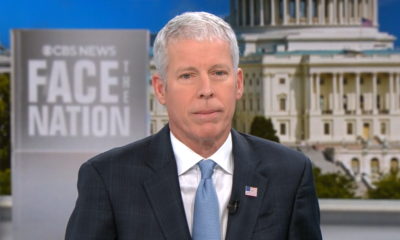
Energy Secretary Chris Wright says Trump was “well aware of the risks to energy flows” before launching Iran war
-

 HealthNews1 week ago
Des Moines clinics stumped by unidentified virus
-

 Entertainment2 weeks ago
Disney pays $115 million for Yamaha’s Orange County headquarters
-
Business2 weeks ago
Leaked Anthropic IPO prospectus: The US government could hurt our business