
Sports
New York Yankees vs. Tampa Bay Rays Results, Stats, and Recap

ST. PETERSBURG, Fla. (AP) Drew Rasmussen walked into the interview room while manager Kevin Cash was showering him with praise.
“That’s the nicest you’ve ever been about me,” Rasmussen said after greeting Cash.
The powerful right-hander deserved all the superlatives.
Rasmussen didn’t allow a hit until there were two outs in the eighth inning, Jonathan Aranda homered off Gerrit Cole and the Tampa Bay Rays beat the New York Yankees 1-0 in their AL Division Series opener Saturday night.
“He was dominant before the break,” Cash said about Rasmussen. “He’s elite all season long. He’s really done that since he’s been a Tampa Bay Ray, coming over here, and his contributions. Feels like he continues to get better.”
Rasmussen retired 15 consecutive batters before Austin Wells doubled with two outs in the eighth, ripping a line drive just inside the right-field line on an inside sinker.
Wells tried for a triple but was easily thrown out on a relay from right fielder Victor Mesa Jr. to shortstop Taylor Walls to third baseman Junior Caminero. Wells ran through a stop sign from third base coach Luis Rojas, who raised both arms before Wells rounded second.
Rasmussen dominated a lineup that scored 18 runs in a two-game Wild Card Series sweep of Boston and was still missing three-time AL MVP Aaron Judge, sidelined since Sept. 16 by a calf injury.
“You say the word dominate. Man, I feel like I’m grinding out there,” Rasmussen said. “I mean, it’s the same thing regardless of the lineup. If you execute on a day, hitting’s really hard. And so it’s just one of those things that, can I go out and throw strike one and can I execute at a zone with two strikes?”
The 31-year-old Rasmussen struck out 10 and walked two in eight innings. He threw 69 of 101 pitches for strikes, getting 23 swings and misses against a batting order that started eight left-handed hitters.
“I thought he was really sharp,” Yankees manager Aaron Boone said. “I thought his changeup was good for him and in play. Obviously, with our left-handed hitters, it looked like he had the cutter going when he needed to. Then the good four-seamer where he mixed in some sinkers off of it. His command is just really good and kind of what sets him apart. He’s got a great arsenal. The ability to pitch on both sides of the plate and up and down obviously makes him challenging and one we’ve had a hard time solving.”
Bryan Baker pitched a perfect ninth for the save, finishing the one-hitter. He struck out pinch-hitter Giancarlo Stanton, in his first plate appearance since April 24 after recovering from calf injuries, froze Ben Rice with a changeup for a called third strike and retired Cody Bellinger on a grounder to secure Tampa Bay’s first postseason win since 2021.
The Rays haven’t won a postseason series since losing the 2020 World Series to the Los Angeles Dodgers.
Baker converted 41 of 44 save chances in the regular season, including his last 30.
Game 2 in the best-of-five series is Monday night at Tropicana Field.
Aranda drove Cole’s 2-2 changeup several rows deep into the right-center stands for his first career postseason hit.
“We know the rival we have against the Yankees and the opponent that they are,” Aranda said. “It’s important to get the first game, but we feel really good and I felt really good with that base hit.”
In his first playoff game since undergoing Tommy John surgery in March 2025, Cole allowed one run and five hits in five innings with five strikeouts. It wasn’t good enough, as the Yankees lost a 1-0 postseason game for the first time since Hall of Famer Don Drysdale threw a three-hitter for the Los Angeles Dodgers in the 1963 World Series.
A loud, boisterous crowd rang cowbells and drowned out Yankees fans in the quirky Trop, which hosted its first postseason game since Hurricane Milton blew the roof off in October 2024. The Rays were forced to play their 2025 season across the bay at Steinbrenner Field, the spring training home of the Yankees.
“That’s the best crowd noise I’ve ever witnessed in any ballpark,” Cash said.
Rasmussen was 16-5 with a 2.67 ERA for the Rays and made the All-Star team for the second straight season. He twice had surgery for a torn ligament in his elbow in college and needed an internal-brace procedure in July 2023 that forced him to miss more than a year.
His 10 strikeouts tied Tyler Glasnow’s franchise record for the most in a postseason game.
Rasmussen has had success against the AL East rival Yankees throughout his career. He entered with a 1.81 ERA in 10 career starts and one relief appearance against New York, and on Sept. 22 took a no-hit bid into the seventh against the Yankees in the win that clinched the AL East title for the Rays.
“What wasn’t elite? I mean, he was just incredible and he did that in Yankee Stadium the night that we were fortunate enough to clinch,” Cash said. “It seemed like he went out and doubled down tonight. Made it pretty easy to sit back and watch and take some decisions out of our hands.”
RHP Cam Schlittler, the favorite to win the AL Cy Young Award, will start Game 2 for the Yankees. RHP Freddy Peralta will take the mound for the Rays.
—
See AP’s full MLB coverage here
Sports
Elon Musk reveals ‘world’s first flying car’ at Tesla event

Elon Musk has revealed Tesla’s latest model, which he claims will be the world’s first flying car, using technology from his aerospace company SpaceX to “basically fly like a rocket”.
The billionaire, who hosted a demonstration of the Tesla Roadster 2 at the SpaceX rocket development and testing facility in Texas, said the sports car could go from 0 to 60mph in a record time of less than a second and had thrusters.
A video of the event shows the Roadster, which he said was controlled remotely “to make sure we don’t kill anyone”, driving up a curved ramp using suction to grip upside down, before using thrusters to flip, fly and land.
Later in the demonstration the Roadster is seen using the jets to leap over a line of Tesla’s existing models and then accelerate to 60mph in record time.
“Turns out the future does have flying cars,” Musk said in a post on his social media site, X, accompanying a video from the event.
Speaking at the event on Thursday, Musk said: “Flying cars are real. It’s got altitude controls, thrusters and main thrusters in the rear. So it can basically fly like a rocket, it can do rolls, crazy gymnastics.”
“I’m not sure it’s necessarily legal in all jurisdictions,” Musk said, adding that the prototype was “not necessarily a safety optimised car but it takes the fun meter to 11”.
In 2014 Musk expressed his scepticism about a future with flying vehicles.
However, three years later he announced the development of the Roadster 2, which will go into production in 2028 and priced in excess of $200,000, (£150,000), to create an electric sports car “to give a hardcore smackdown to gasoline cars”.
After the event, a Tesla reservation website for expressing interest in the two-seater Roadster 2 showed that a “performance” version of the vehicle would require a £50,000 deposit. A “thrust” version would require a $250,000 deposit.
Meanwhile, a one-seater “rocket” variant with “full flight system” was labelled as being available only by invitation. The car company added that flying it was not permitted on public roads.
Sports
Googlebook review: Android on a laptop is still Android

Android was designed for phones, but that hasn’t stopped Google from trying to adapt the OS and its apps to larger machines over the years. Googlebooks are just the latest attempt after tablets, Chromebooks, and foldables induced little change in how people interact with Android software. These new Android-powered laptops are designed to pick up where the web-focused ChromeOS left off, offering premium hardware and native support for Android apps.
Google sees Googlebooks as an alternative to Windows and macOS, but these platforms are entrenched with decades of software and UI conventions that keep users locked in. Googlebooks have to offer something very special to steal users away from either of the dominant operating systems.
For devoted Android phone users, there are some cool things in Googlebook OS, but the Android roots of these machines are impossible to miss. Sometimes it feels like using a Chromebook, and sometimes it feels like using a giant phone. It almost never feels like using a premium laptop, and that’s the problem.
OEMs pulling their weight
While there were a few premium Chromebooks, the platform was really only successful in the budget segment. With Googlebooks, the company is almost conspicuously ignoring lower-cost options. And as most of the lineup clocks in at well over a thousand dollars, Googlebooks are not just a new take on budget-oriented Chromebooks.
All of the launch Googlebooks have excellent touchscreen displays, aluminum and magnesium bodies, biometric unlock (fingerprint or face), and big trackpads. There’s also the Glowbar, which doesn’t do very much right now. It lights up in Google colors when Gemini is activated with the wake word and during boot-up. It also shows the battery level when you plug in a Googlebook. The latter is modestly useful, but it’s not really a selling point.
There’s something in the lineup for most premium laptop buyers. If you want a convertible, there’s the Acer machine. Sleek and spendy? Asus and HP have you covered. Want something a little bigger? Lenovo has a 15.3-inch model with an HDMI port and USB-A.
The least-spendy model, the Acer Googlebook 14, starts at $899, and that’s a limited-time deal. Even this one gets a lot of the hardware right. It has a vibrant OLED screen, a metal chassis, and three USB-C ports (all of which can charge the laptop). However, you won’t get a haptic trackpad, just the old-fashioned kind that physically clicks. The supposedly DTS-tuned speakers also don’t sound great. Still, the hardware is at least as nice as any $900 Windows laptop. Acer hasn’t decided when the price will change or what it will be, but it’s at $899 for the rest of the year at least.
The next step up from that is the Dell XPS Googlebook at $999, but this model has an LCD instead of OLED. If you want the most capable Google laptops with OLED and haptic trackpads, you’re looking at spending at least $1,100 for the Lenovo version. This machine is solid, and the larger footprint allows for vents in the hinge instead of on the bottom. But I don’t love the slightly wobbly feel of the keys or the flex in the middle of the keyboard. The HP Googlebook 14 has a much nicer keyboard, a better overall look, and a Snapdragon X Elite chip inside. However, it’s also $1,300.
I appreciate that Google is pushing for things like haptic trackpads and high-resolution OLED screens, but the more expensive Googlebooks suffer from the same issue as premium Windows laptops—they don’t exist in a vacuum. If you’re spending $1,300 on a laptop, the entry-level MacBook Air is probably a better overall option for most people.
All of the launch Googlebooks have the same keyboard layout, which is a bit different from what you get on other laptops. There’s a G button that works similarly to the Windows button, and the top F-row has been revamped. You get the usual Windows staples like brightness and volume control, but there are also Android navigation buttons and a voice input key that activates the AI-powered Rambler.
Probably the best change to the Googlebook keyboard is ‘quick insert’ in place of ‘caps lock’ (you can still get caps lock with the Fn toggle). Just press this key to add emoji, recent screenshots, clipboard contents, recently visited URLs, and more. Admittedly, I don’t mind using function layers on a keyboard, so the extra step to access caps isn’t a concern. You may feel differently, and that’s okay.
Googlebooks come in both Intel and Snapdragon variants. I’ve been using both, and general performance feels about the same. There have been some reports of app issues with Intel-powered Googlebooks, but I haven’t run into any apps that will only run on Snapdragon.
The Snapdragon model (HP) seems to have a higher performance ceiling, if you can find a way to reach it. Gaming performance also appears better on Snapdragon, but even the heaviest Android games seem fine on the Intel models (Lenovo and Acer). It can be hard to push these machines when you’re relying on software that was originally designed to run on phones. Unsurprisingly, software proves to be the biggest hurdle for Googlebooks.
Using Android—err, Googlebook OS
Google has flirted with Android on larger screens on a few occasions, mostly with tablets and tablets that impersonate laptops. This is the first time it has totally revamped the OS for a laptop, but it’s still Android under the hood. Sometimes that’s good, and other times not so much.
Setting up a Googlebook is a snap for Android users. Just like configuring a new phone, you can scan a QR code with your current phone to copy your accounts, data, and apps over automatically. You can be up and running in minutes, and your phone will integrate deeply with the OS. Well, provided it runs Android 17. That’s going to be a sticking point, since most phones don’t have that update yet.
With Google’s “Better Together” services, a Googlebook can access files on your Android 17 phone, sync notifications, remember where you left off in apps, and even mirror apps from your phone. This all sounds great, and when it works, the experience can be good. However, there are various limitations and bugs that get in the way.
To remain in contact, the phone and Googlebook need to be on the same Wi-Fi network, and switching to other networks can break the connection in annoying ways. Even when the devices appear to have a solid connection, I have rarely seen any hint of Google’s Continue On feature, which is supposed to let you pick up where you left off in a phone app. Mirroring phone apps on your laptop can also be handy, but the performance is varying degrees of bad, and apps with system-level security features won’t work at all. You are also limited to one app at a time, and they won’t stay open in the background.
Accessing the files on your phone from the laptop is a good idea, but the transfer speed is often sluggish. More annoyingly, the connection only goes one way—the Files app on the Googlebook can see your phone, but the Google Files app on a phone can’t see the Googlebook. Speaking of the Files app, this is emblematic of how far behind Google is with desktop software. The app lacks basic things like tabs and support for network shares. It’s nice that it can access my phone, but it feels very restrictive if you’re used to Finder or Windows Explorer.
Google has at least done a good job of making Android look like a desktop OS. There’s a proper desktop that you can fill with app shortcuts, folders, widgets, and files. There’s a folder in the storage tree where you can manage that content, or you can simply drag things onto it from a file manager. You also get ChromeOS-style split-screen support and multiple desktops. These features work, but they’re not as intuitive or capable as what you get on either macOS or Windows.
AI is a big part of the Googlebook experience. Google talks a lot about Magic Pointer, which you can activate by wiggling the cursor. This allows you to hand any content on your screen over to Gemini, but calling it magic is a little silly. You can have it translate text, make images, create calendar appointments, and so on. You’re basically feeding Gemini screenshots and asking it to do things.
Magic Pointer can be useful sometimes, but it’s hardly revolutionary to streamline the process of feeding screen content into an AI by attaching it to the mouse. You still have to contend with the inaccuracy of Gemini. Even adding calendar appointments can fail, which means you have to double-check almost everything the AI does.
Magic Pointer is an optional feature, and you can adjust the sensitivity of the gesture. However, I never found a level that I was entirely happy to use. Too much sensitivity, and the gesture triggers when you don’t intend it. Too little, and you have to shake the mouse so hard that the cursor is probably going to be nowhere near what you wanted to highlight.
Rambler, which debuted on the Pixel 11 lineup, is included with all Googlebooks. This AI-powered voice input feature works in any text field on the laptop, which is handy if you want to add a lot of text without typing and don’t mind sounding like a robot. This has been popular on phones, and most people using it on a Googlebook will probably be impressed.
Create My Widget is another head-scratcher, though. The pitch is that you can simply describe the widget you want, and the AI will place it on your desktop. It sounds cool, but in reality, the content you can rope in is so limited as to make the feature largely useless. If you want calendar countdowns and sports scores, great. If you want system info or app content, you’re out of luck.
All the mobile apps
Googlebooks come with the Play Store, which is crammed full of all the Android apps you could ever want. But desktop apps? Google says it has worked with devs to optimize apps for Googlebooks, and some software has been newly built from the ground up for a desktop experience. For example, Chrome on Googlebooks is a mostly desktop-class experience. It’s missing a few niche features like split windows, tab groups, and multiple profiles, but it will work with all of your extensions.
On other platforms, I’ve routinely used desktop clients for Dropbox and Drive to sync files. I had hoped something similar would be possible on these Android laptops, but no such luck. Dropbox runs on a Googlebook, but it’s not optimized. The UI is clunky, and even if you save a folder offline, it only updates when you refresh the app manually (just like a phone running the app).
Meanwhile, the Drive app isn’t even an Android app—it’s a progressive web app (PWA). So you can’t set it up to sync a folder to the device. All you have is the option to make individual files in Drive available offline. Without a real desktop app experience here, you actually get a lot more functionality out of Google’s cloud storage system on Windows and macOS.
Drive isn’t the only Google web app masquerading as a native app. Gmail and Calendar are also PWAs on the Googlebook, offering the same experience you’d get opening them in a browser tab. Gmail exists as an Android app with a large screen format. Why not adapt that for Googlebooks? Real operating systems have email apps. If you’re just going to end up in a web app, why not buy a Chromebook for a third of the price?
The Play Store uses labels to let you know which apps are best on a laptop, but most apps in the Play Store are very obviously built around a phone experience. Google is in a tough spot here. Developers only build for what people use, and so far, no one has been demanding desktop-style Android apps. As you peruse the Play Store, you’ll see a few of those “optimized” labels, but there are many more “Compatible with desktop” tags, which means you can expect only nominal support for a keyboard and mouse.
The most problematic apps are flagged in the Play Store as “Built for mobile” or even “Better on the website.” Some popular apps fall into these categories. For example, team chat app Slack is an abysmal experience on anything other than a phone. The app runs on Googlebooks, but the web UI is much more desktop-friendly. You are supposed to be able to install Slack as a progressive web app, essentially what Google is doing with Gmail, Drive, and other apps. However, this doesn’t work currently for unknown reasons. Again, you could just use a Chromebook if you wanted everything in a browser tab.
Even apps that have been optimized for desktop can be frustrating on a Googlebook. These apps are aware you have a keyboard, but they can respond to button presses in ways you don’t expect. Photoshop is a major offender here. The app has a poorly scaled mobile UI shifted into landscape, and there are only a few keyboard shortcuts. Sometimes, you’ll see a UI element that looks like it should be controllable with the arrows or enter key, but you just end up moving the cursor around and selecting the wrong thing. In fairness, Android’s Photoshop app is free, whereas the real Adobe suite on other platforms costs money. But calling this a desktop app is a stretch.
You’ll find lots of pbone-first apps that don’t fully understand that you have a trackpad, ignoring hover interactions and right-clicks. Many apps also expect you to frequently trigger the Android back gesture to navigate the UI. On that last count, Google has a solution. Googlebooks have Back, Home, and Multitasking buttons on F1-F3. So you can make phone apps work, but reaching up to mash F1 constantly is annoying.
The Android lineage of Googlebook OS also means that even apps built for desktop may not operate the way you’d expect on a desktop PC. Android was designed for a memory-constrained environment, so the system closes apps in the background whenever it needs to free up RAM. It’s common to come back to an app you left in the background to find that it has lost your place and has to reload. This is a phone-like experience that doesn’t really fit with a real computer.
Can vibes save it?
Google is aware that Googlebook apps may not fulfill all needs. One possible solution to that, say reps, is to simply make what you need with Antigravity. The new Android version of Google’s AI-centric development app is included on every Googlebook, giving you the option to vibe code apps for your laptop. The AI can generate plans, mockups, and line after line of code to bring your idea to life.
Antigravity can autonomously download all the Android developer tools it needs and builds APKs ready for installation on your device. Installing your apps is technically sideloading, as they’re not hosted in the Play Store, but Google gives these special treatment. They get scanned by Play Protect, but you don’t have to enable unknown sources in the settings. Google also confirms these apps won’t be affected by developer verification when that rolls out on Googlebooks next year.
After struggling with the Files app for a few days, I decided the lack of network shares was a deal-breaker. I keep most of my files on a NAS so I can access them from any device, and Googlebooks were cramping my style. I first tried to find an alternative in the Play Store, but the apps with sufficient features were totally unoptimized for a laptop, so I decided to test Antigravity on Googlebooks by making one.
Using Google’s default Gemini Flash model, I was able to get a functional but very buggy file manager installed in a few minutes. Making it work reliably and support all the features I needed took several hours of prompting over a few days, but the result is something I like using more than Google’s default Files app.
My custom file manager is essentially Windows Explorer on Android. While I did not set out with that intent, that’s where I ended up. The app has a desktop-friendly UI, tabs, network share support, expandable file trees, file previews, and more buttons. It has more features than Google’s default app, although it lacks the deep phone and system integration of the default file manager.
On one hand, it’s cool that you can create your own apps with the included Antigravity software. However, you’ll need to pay someone (probably Google) for enough AI compute to get the job done. It took a lot of iterations and bug hunting with Gemini 3.8 Flash to get my app where I needed it to be, and lighter models will struggle to produce something functional. It’s also not ideal to expect people buying a laptop to spend hours chatting with a robot to make it do basic laptop things. It should do those things out of the box.
The first step on a long road
I keep coming back to one inescapable question that hangs over everything Google is doing with these new laptops: Do Googlebooks need to exist? This seems like a lot of effort just to deliver deeper Android phone integration and more AI features when Chromebooks are already established in the market. True, that’s not a premium part of the market, but going after premium laptops means you need a premium experience, and currently, Googlebooks don’t offer that.
The hardware is solid—it’s smart that Google is pushing for things like OLED and haptic trackpads on Googlebooks. Its OEM partners have made some very nice-feeling laptops for Google’s software, but the OS isn’t doing its part. I just don’t feel more productive on a Googlebook than I do on a Chromebook.
I’ve been using Android since the beginning—this should be a good laptop for someone like me. However, the rough edges of the Googlebook experience are still wearing me down. It’s great that it talks to my phone, but that conversation is too often one-sided and buggy. It’s good, in theory, that Googlebooks have a deep software library with the Play Store, but too few apps are actually good on a laptop. And it’s cool that Googlebooks have such nice hardware, but they’re too expensive for what you get.
Maybe Google can fix this—ChromeOS looked a lot different a year or two after its consumer launch, after all. But Google has a lot of work ahead to make the Googlebook experience what it needs to be, and in the meantime, it’s not a viable alternative to macOS and Windows. Does Google have the patience to spend years doing this work? The company’s recent history leaves me feeling skeptical, and that makes it difficult to recommend a Googlebook to even the most ardent Google customers.
The good
Laptop hardware looks and feels great
Extremely quick setup
Deep Android phone integration
Access to millions of Android apps running natively
The bad
High price tags and no budget options
Very few Android apps work well on laptops
Missing features of more mature desktop operating systems
Bugs with phone connectivity
Tentpole AI features are not very useful
Sports
Who’s to blame for Dodgers’ shocking NLCS loss vs. Brewers? Five places to point fingers

The Milwaukee Brewers are going to the World Series for the second time in franchise history and the first time as a National League team (the Brewers were still in the American League when they went to the World Series in 1982). This also means the Los Angeles Dodgers have been eliminated, and their shot at becoming baseball’s first threepeat champion since the 1998-2000 New York Yankees ended on Thursday night. The Brewers have swept the Dodgers in four games in the NLCS, doing so one year after the Dodgers swept them in the 2025 NLCS.
Who is to blame for the Dodgers going four-and-out in the NLCS? There’s plenty of blame to go around, so let’s assign it, shall we?
1. The Brewers
Milwaukee continues to be baseball’s best team
We have to start here. The Dodgers got swept in the NLCS because the Brewers outplayed them in every phase of the game. The Brewers got better starting pitching. Their bullpen was better. Their defense and baserunning were better. Their offense was better at both stringing together hits to build a rally and launching the ball out of the park. Pat Murphy out-managed Dave Roberts as well. You name it, and the Brewers did it better than the Dodgers this series.
“It’s a pretty simple answer,” Dodgers infielder Max Muncy said after Game 3. “We’re playing like shit. They’re playing great.”
As much as we want to (and will) blame various Dodgers for the sweep, the single biggest reason they got swept is that the Brewers were simply the better team. They were the better team in the regular season based on their records (103-59 vs. 100-62) and run differentials (+214 vs. +201), and they certainly played like the better team in the NLCS. The better team doesn’t always win a postseason series. In the NLCS though, the better team has played like the better team, period.
2. Shohei Ohtani
MLB’s brightest star was greatly dimmed … even with Game 4 homer
The biggest star on baseball’s most star-laden team was not himself the last two months of the season. Shohei Ohtani played through knee and biceps injuries and had been so unproductive than Roberts said there would at least be a “conversation” about sitting Ohtani in Game 3. That didn’t come to pass, and hey, Ohtani went 1 for 2 with a walk and a hit-by-pitch in Game 3, and hit a home run in Game 4. The homer put the Dodgers up 4-0 on Thursday. The Dodgers didn’t score again. The bottom line is Ohtani was a non-factor until it was too late. It’s hard to win when your best player is this diminished.
Whenever a team loses in the postseason, the best player gets a disproportionate amount of the blame, and that applies to Ohtani this series. He’s clearly not healthy, yet he insists on remaining in the lineup, and he’s had multiple chances in the first three games to swing things in his team’s favor, but couldn’t do it. When the best player underperforms, he wears most of the blame. It has been the way of the world since the dawn of team sports.
3. Freddie Freeman
Normally clutch, Freeman has been the worst player in the series
Freddie Freeman, not Ohtani, was the worst player in the NLCS by both win probability added and championship probability added. He went 1 for 14 in the series and the one hit came in the first inning of Game 1. Freeman went 0 for 13 after his first NLCS at-bat and that 0 for 13 includes:
Striking out after Mookie Betts worked a leadoff walk in the third inning of Game 1.
Grounding into an inning-ending double play in the fifth inning of Game 1.
Popping up to second on the first pitch to lead off the eighth inning of Game 1.
Flying out with runners on first and second and no outs in the third inning of Game 2.
Flying out with runners on first and second and one out in the third inning of Game 3.
Grounding out with a runner on first and two outs in the fifth inning of Game 3.
That’s an awful lot of empty at-bats in clutch situations for one of the best clutch hitters of this generation. Freeman had as many double plays as total bases (one each) in the NLCS, and his only RBI came on a sacrifice fly. You won’t beat a team as good as the Brewers with sac flies. You need bigger swings from your best players and Freeman didn’t provide them.
4. The supporting cast
Only two Dodgers hitters had consistently strong at-bats in the NLCS
Max Muncy went 2 for 12 with six strikeouts in the NLCS. Teoscar Hernández went 3 for 14. Andy Pages went 3 for 12. Tommy Edman went 1 for 7. Will Smith went 2 for 15 in the NLCS. Postseason legend Enrique Hernández went 0 for 8 with a ghasty strikeout in Game 3. The Dodgers had runners at second and third with one out in sixth, and Hernández took two pitches in the zone for strikes, then flailed at slider out of the zone. It was maybe the single worst at-bat of this NLCS.
Freeman was terrible, Ohtani was terrible, and the thing that has so often set the Dodgers apart these last few years — an elite supporting cast — was terrible as well. Edman, Muncy, Smith, and the Hernándezes are a combined 11 for 58 (.189) in the four games. Betts (3 for 15 with three walks) and Kyle Tucker (4 for 12 with three walks) were the only Dodgers hitters who escaped scrutiny. They were their most productive hitters and consistently had strong at-bats. Everyone else? 😴😴😴
5. Dave Roberts
Roberts did not push the right buttons
The manager can not swing the bat or throw the ball for his players, but he can put his team in the best position to succeed, and Roberts did not do that in the NLCS. Game 3, especially, was a managerial mess. Roberts burned the precocious Josue De Paula in the sixth inning when he sent him up to pinch-hit for Miguel Rojas with runners on second and third and one out, then immediately pinch-hit Enrique Hernández for De Paula when the Brewers brought in a lefty reliever.
De Paula is a rookie, I get that, but he has a track record of hitting lefties well in the minors. More accurately, he has a strong track record of making contact against lefties, which is what the Dodgers needed in that spot. A ball in play to get a run home. Instead, Roberts defaulted to the veteran Hernández, who struck out feebly. For all his career postseason success, Hernández went 1 for 14 this postseason, and a .190/.235/.317 hitter in his last 19 postseason games. Roberts never adjusted his priors.
The NLCS was a flashback to pre-2024 Roberts, when he too often showed too much faith in his veterans and had an unfortunate knack for sticking with starters too long. In 2024 and 2025, it all worked out, and Roberts looked like a genius. Those same mistakes, the ones he got away with the last two years, reared their ugly heads. The NLCS sweep is on the players, first and foremost. Roberts didn’t play his cards well either. He’s made things worse.
Sports
Tesla’s flying car is here. Here’s all you need to know about the Roadster

Tesla has unveiled a new Roadster that can fly, flip and get from 0 to 60mph in a claimed 0.81 seconds, with Elon Musk promising the electric sports car’s combination of rocket thrusters and ground-hugging fans will make it just as extraordinary around corners.
The two-seater was revealed at SpaceX’s Rocket Test and Development Center in McGregor, Texas, where demonstrations of its airborne abilities were followed by an acceleration run that beat Musk’s target of reaching 60mph in less than a second.
He says the production version will be quicker still, with the start of manufacturing now pencilled in for 2028.
It’s a collaboration between Tesla and SpaceX that uses compressed air rather than rocket fuel, with 10 thruster nozzles helping the Roadster perform manoeuvres beyond the usual car-launch routine. Beneath the body, a fan system sucks the car towards the road to improve grip, with Tesla claiming cornering forces greater than 2g.
“You can corner like it looks like you’re breaking physics because the car sticks to the ground so hard. So, acceleration, cornering, it’s going to crush every track record that has ever existed,” Musk said.
Tesla says the rocket-assisted features are optional and won’t be available everywhere, while Tesla’s UK website confirms the Roadster will be left-hand drive only.
Musk himself acknowledged the car might not be legal in every market.
“This will be an actual car that’s on the roads. I’m not sure it’s necessarily legal in all jurisdictions, but there will be such a car that someone can own,” he said. “So, it’s going to be pretty wild that you can have a rocket car.”
The setting gave a fair indication of what was coming. SpaceX’s 4,000-acre test site hosted the unveiling, with a Raptor rocket-engine static fire forming part of the pre-show entertainment.
Musk then arrived promising something beyond the cars audiences had seen in films, while admitting that the demonstrations weren’t entirely without risk.
“This is the culmination of incredible work by Tesla and SpaceX engineers working closely together to make something that you haven’t seen in any movie, better than any James Bond car, better than… well, I don’t know,” he said. “I’ve never seen anything like this.”
The project had grown as the teams worked together, he explained. “And then things kind of built upon themselves and we’re like, well, maybe we could do a little more of this and roll more of that.”
Before the action began, there was a warning for the audience. “By the way, success is not guaranteed,” Musk said. “So, I mean that. It’ll probably work, but if it doesn’t work, we’re at a safe distance.”
He added: “And excitement is 100% guaranteed.”
Tesla’s vice-president of vehicle engineering, Lars Moravy, delivered his verdict after the first demonstration. “Well, it worked,” he said. “Flying cars are real.”
That wasn’t the end of the airborne action, with Musk suggesting the team could go further. “Yeah. I mean, that was just a little flight. Let’s do a longer flight.”
The subsequent manoeuvre somersaulting over a Tesla’s Semi truck and current car line-up prompted Tesla’s chief designer, Franz von Holzhausen, to borrow a name from skateboarding. “Tony Hawk would be proud,” he said. “We call that the kickflip.”
Musk’s reaction was: “I mean, I’ve seen a lot of things, but I’ve never seen that before.”
Moravy, meanwhile, said: “I think we could have cleared more than our whole fleet.”
The car’s ability to control itself in the air comes from more than simply giving it a shove from behind. Alongside the main rear thrusters are separate ones that control its angle, allowing it to change its attitude as it flies.
“So the car has obviously attitude control thrusters and main thrusters in the rear,” Musk said. “So, it can basically fly like a rocket and it could do rolls, it could do crazy gymnastics, whatever you want really.”
He also offered a qualification that prospective owners might want to bear in mind: “Now I should say that this is not necessarily a safety optimized car, but it takes the fun meter to 11 out of 10.”
There wasn’t a human driver aboard for the stunt demonstration. Although a Starman figure made an appearance – like the Starman on board the original Roadster that was sent into space aboard one of SpaceXs test flights. Moravy said: “Just to be clear, that is not a real human.”
Musk explained: “Well, it is technically autonomous for this demo to make sure we don’t kill anyone!”
The flying hardware is fed by two high-pressure air tanks, with Moravy keen to explain just how much air Tesla has managed to pack into the car. It’s stored under pressure, ready to be released through the thrusters.
Moravy said: “We had the rockets we borrowed from SpaceX technology. You talked about the carbon overlay pressure vessels. I just want to tell everyone because I’m a spec guy, there’s two of them in the car. They are a total of 600 liters. It’s about 250 kilos of air, and we have 10 nozzles to do all that work.”
Four rear thrusters alone produce more than 80kN of thrust, according to Tesla, with the air leaving them faster than the speed of sound. The tanks can be replenished by the car, rather than requiring owners to find somewhere selling an exotic propellant.
“And it’s using an advanced ultra-high pressure air tank. So, the car can recharge its air tank – it’s not like you need special propellant or anything like that,” Musk said. “It literally is just going to puff itself up and be able to do these manoeuvres whenever you’d like.”
The acceleration run provided its own bit of live-event drama. Asked about his target for 0–60mph, Musk said: “Well, you got to break one second, obviously.”
When Moravy referred to a one-second goal, Musk corrected him: “Well, I said less than one second.”
The team then ran the car on the test pad, although getting a usable figure from the timing system took a little longer. Moravy said: “We didn’t have a whole lot of room out on the pad, so we had to cut it short, but do we have a live time?”
An initial result was dismissed, with Moravy saying: “I think we broke the system. We didn’t do it 0.17 seconds.” Musk responded: “Yeah. Okay. 0.1 seconds. I think we’d destroy the human if we did that.”
The figure eventually announced was 0.81 seconds. Musk then said there was more performance to come as the car developed. “As you increase force and decrease mass, you get more acceleration,” he said. “So, the production car will actually do better than that – we’ll just ride the limit of don’t detach the retina of the human in the car.”
Moravy claimed: “It’ll do a half a mile in the time that other cars can do a quarter mile.”
Away from the straight-line performance, the fan system is intended to give the Roadster grip that doesn’t depend only on air flowing over its body at speed. By creating suction underneath, Tesla says it can press the car towards the road even when it’s travelling slowly. And that was proven by the car being driven up what looked like a hot wheels track upside down at the start of the event – before it then went off the track, flipped up the right way and came in to land.
Moravy said: “To do that, we have a fan suction system on the bottom of the car that can pull up to two Gs in order to make the car go upside down. And then we borrowed some technology from SpaceX to do the rest.”
Musk took the opportunity for a joke: “Yeah. I mean, this car really sucks.”
“Now you might say how often do you want to stick upside down in a car?” he went on. “Maybe not that often, but it actually has an actual benefit on the track or just driving where the downforce of the car means you can corner incredibly well.”
There’s more to it than simply turning the fans on. The car has high-downforce and low-drag configurations, while the suction system changes how it works as speed increases.
Moravy said the aim was to combine greater cornering grip with better traction under acceleration. “We put the fan sucker system on there to give us traction to be able to corner at greater than two gs and accelerate with all the traction that goes beyond the tires, which is typically 1.26 gs.”
The fan system has two operating modes. “It can suck the car down at low speed to give us traction when we need it. And at high speed, we’ll open up the front and rear parts of the suction system to create even more flow underneath the car,” Moravy explained.
An adjustable rear wing also changes its angle automatically according to the downforce the car calculates it needs on a circuit. The intention is for the aerodynamic systems to adapt to what the driver is doing, rather than leaving the Roadster in one fixed configuration.
The design itself takes inspiration from the SR-71 aircraft, with von Holzhausen saying the team had looked towards aerospace as it worked on a car it knew would be capable of flying. “It’s a nice clean aesthetic. Like I said, we leaned into a little bit of some of the aerospace aesthetics. It’s a two seater.”
Inside, the seats are incorporated into the chassis as part of the effort to keep weight down. Von Holzhausen said: “We leaned into lightweight as well, so the seats are molded into the chassis. It’s a steer-by-wire system.”
There’s a steering yoke, electronic brakes and throttle controls.
The rear diffuser area houses the fans and thrusters, bringing much of the unusual hardware together at the back of the car. The appearance also has to accommodate the changing aerodynamic settings, rather than simply conceal the engineering underneath. Von Holzhausen said: “The car can transform because we wanted to make a pretty car, but also a car that could deliver amazing downforce.”
For all that technology, the Roadster has been given a role within Tesla that’s deliberately about the person behind the wheel. Moravy introduced it by referring to the company’s autonomous future, before Musk made clear that this car is intended to be the exception. “This will actually be long-term the only manually driven car that Tesla makes,” he said. “And so if you’re going to have only one manually driven car, let’s take it to the limits and way past the limits.”
The event also marked 20 years since the original Roadster was introduced, with von Holzhausen recalling its job of proving an electric car could be enjoyable, usable and capable of covering meaningful distances. He said: “They were real cars. And look at how far we’ve come in those 20 years.”
For Moravy, the connection was personal. He said: “To be honest, the Roadster is a reason I came to Tesla. I came here and we had a master plan to build an EV that proved that we could make a cheaper EV that people could afford with Model S. And then we built Model 3 and Model Y.”
He also recalled the previous collaboration between the car company and SpaceX. “But the last time we had Roadster and SpaceX together, we put Elon’s into orbit.”
This time, the aim is to put some of the rocket technology into a car customers can buy.
The replacement has already had a much longer journey than originally planned. Tesla first showed it as a four-seater in November 2017 and initially said deliveries would begin in 2020.
A 2028 production start would put it around 11 years after that first unveiling.
Exactly what buyers will pay remains unknown. Tesla hasn’t announced the Roadster’s price, although its US reservation page requires an initial $5,000 credit-card payment followed by a $45,000 bank transfer within 10 days. That $50,000 total is a reservation payment, not the purchase price of the finished car which has yet to be announced.
Asked when customers would get the car, Musk gave 2028 as the production date. There was no mention of battery capacity, maximum claimed range or charging speed yet.
Top speed is another area where there’s a difference between the figure offered by the engineering team and Musk’s ambitions. Moravy said: “The car can go over 230 miles per hour. Hopefully we can get even faster.” Musk’s response was: “Definitely much faster than that.”
Asked how fast, he replied: “You got to crack halfway to the speed of sound, I think.” Moravy answered: “Challenge accepted, sir.”
Musk is also considering another flying display, this time involving the Snake River Canyon and a fresh attempt at the jump associated with stunt rider Evel Knievel.
He acknowledged that he didn’t know whether it was possible, before suggesting: “Let’s give it another shot.”
Musk had his own way of summing up the new car: “Where we’re going, you don’t need tyres.”
Sports
Why Did Netflix Boot Bela Bajaria?
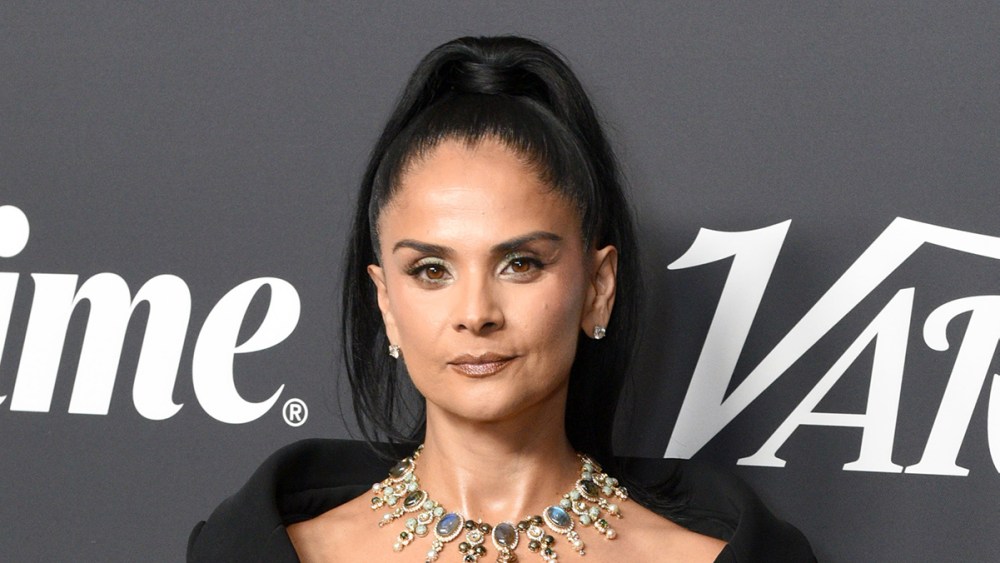
Fear and loathing are running high as Hollywood processes Thursday’s shock firing of Bela Bajaria from her post as Netflix chief content officer.
Yes, the company that popularized the “Keeper Test” is known for abrupt exits. But despite Netflix’s recent stock struggles, many considered Bajaria too big to fail.
Word of her ouster leaked before the executive had the chance to address most of her internal teams — an announcement dovetailed with news of her incoming replacement, the venerated film and TV executive Peter Rice. As the former general entertainment chairman of the Walt Disney Company, Rice’s bona fides are clear — “I wish I bought stock this morning,” one huge talent rep said about Netflix’s new hire — but it doesn’t explain how Bajaria fell out of favor so fast.
One word that came up in nearly a dozen conversations with industry players this afternoon about Bajaria’s pink-slipping: “scapegoat.”
Netflix is obviously against the ropes again, after slowing user engagement on the service rattled Wall Street investors and layoffs came this week as a sacrifice to the share price. But Bajaria’s dismissal makes it clear, according to the numerous sources we spoke with, that content is once again going to take it on the chin.
“People always blame the content,” said the source, “but you don’t lay off 1,000 people unless there’s a big problem with the business model.”
Bajaria’s exit echoes similarly shocking removals in Netflix history — notably that of Cindy Holland, the company’s first content queen who oversaw flagship hits like “House of Cards,” “Stranger Things” and “The Crown.” Holland was ousted in 2020, when Sarandos combined English-language and international content under Bajaria (elevating the latter to the largest autonomous content job in the streamer’s history).
Holland, one insider with knowledge of Netflix observed to Variety, built a business of boutique hits. Bajaria’s foresight was sharper, investing in local language productions and building up Netflix’s global presence (almost two dozen international offices were opened during Bajaria’s reign). She is also credited internally with pushing the streamer into live entertainment. Bajaria was on the “ground floor” of licensing deals with WWE and the NFL, which have proven significant draws for the ad-supported tier of Netflix subscribers, per the source. Her talent relations were on par with others at her level (Bajaria was ubiquitous at premieres and launches in film and TV, most recently at Sarandos’ side at the L.A. premiere of Ben Affleck’s “Animals”).
“The problem isn’t engagement,” said yet another person with knowledge of Netflix. “It’s that the only lever to pull for revenue growth is raising the subscriber price. How’s that Bela’s problem? Where’s the CFO and the CEO?”
Interestingly, we hear that Rice came into play only a few weeks ago when he was reported to be interviewing with Skydance co-CEO Ynon Kreiz for a top position at that newly combined company. The lunch meeting, one source familiar with the men said, was called so Kreiz could request that Rice replace him on the board of his former company Mattel. Regardless, it alerted the town that Rice was done with semi-retirement (a producing deal with A24) and ready to come back to a big job. Another hot Thursday rumor said that Rice also met recently with NBCUniversal about a post there. One source familiar with NBCU said there was no job in play for Rice under Donna Langley’s expansive umbrella, so it’s unclear what he would’ve met about. A spokesperson for NBCUniversal had no comment.
Another lunch may have proven consequential in Bajaria’s exit. Earlier this year, Netflix co-CEO Ted Sarandos was spotted breaking bread with HBO chief content officer Casey Bloys. Was Sarandos courting Bloys for a top job at the streamer, perhaps to take the job then held by Bajaria? Soon, the spin machine reframed the meeting as a friendly gathering, floating the idea that it was a pitch for Bloys to sign a production deal under Bajaria if he did not want to find a way to work at the merged Paramount-Warner Bros. At a Bloomberg conference last week, Sarandos downplayed the meeting: “He’s a good guy,” he said about Bloys. “For some reason, we had a very well-publicized lunch.”
Perhaps. But in hindsight, now that Sarandos has leveled the ax on Bajaria after 10 years, is a lunch ever really just a meal? Rice’s recent focus has been as the head of ceremonies and content for the Los Angeles 2028 Olympic Games — but now Rice focuses on a more urgent task. The exec has been on the open market in the years since he was let go at Disney. He’s seen as the rare exec who has spent time heading up both major film and TV businesses, so the job of chief content officer at Netflix, where he’ll oversee both, makes sense. He’s also well-liked and respected from his time at 20th Century Fox, heading up Fox Searchlight and later the Fox network, and eventually becoming president of parent company 21st Century Fox prior to Disney’s acquisition.
“Surprise” was also a common refrain both inside and out of Netflix on Thursday about the turn of events. But a few hints had already been out there: Netflix is set to report its Q3 earnings next Tuesday, so such a move would have to be made beforehand. And with co-CEOs Sarandos and Greg Peters not going anywhere, the sacrificial lamb next in line was Bajaria. Observers speculated that the Q3 results are likely to be extremely disappointing for the streamer, which is already facing some tough headwinds.
At that same Screentime event, anyone reading between the lines might have guessed that Sarandos was getting antsy with Netflix’s current low-growth status. In particular, he was asked about Netflix’s slower growth (2% year-over-year growth in user engagement during the first half in 2026). “Yes, overall, we’re not growing as fast as I want us to, and we’re working on making that move faster,” he said. Turns out Bajaria’s exit was a part of that change. Now all eyes turn to Rice’s plans for Netflix, and whether those plans will include some of Bajaria’s lieutenants, such as U.S./Canada head of scripted series Jinny Howe and film lead Dan Lin.
Bajaria may also have hit thin ice with Sarandos after the streamer won just 16 Primetime Emmy Awards this year — its worst showing since 2016 and down from 30 in 2025. That’s quite a turn from 2021, when it tied the record for most Emmys won by an outlet in a single year, with 44.
Along with the Emmy slump, Netflix hasn’t premiered a culture-defining hit in the vein of “Stranger Things” in quite some time. But it’s still fielded some of the most-watched programs of the year, including “His & Hers” and Season 4 of “Bridgerton.” Bajaria is known for her keen creative eye, honed over the years at places like CBS and NBCUniversal (where she was ultimately head of Universal TV before moving to Netflix in 2016).
“In her decade at Netflix, Bela’s impact has been undeniable — from attracting new talent, bringing live sports, concerts and events to driving the company’s global expansion and push into new areas of entertainment,” WME co-chair Richard Weitz tells Variety. “Her relationships with talent have been integral in Netflix’s relationships with A talent across the platform. Simply put, she’s been transformational and I know her worldwide team and the talent who have worked with her will miss her.”
Rice will not inherit a bus of happy campers. He’ll have to galvanize a team that lost a slew of executives Wednesday as a result of pink slips; on the TV side, that included Carolina Garcia, who has been let go as director of original series after a decade with the streamer.as well as scheduling head Andy Kubitz, Lisa Lang McMullen (director, overall deals, series), Andrew McQuinn (director, original series), James Oh (director, original drama series) and Jason Pan (manager, original series creative development).
The remaining film group appears safe for now, as Lin’s team saw a major sacrifice in VP Doug Belgrad earlier this week. Morale will need tweaking, budgets adjusting and a slew of new lunches will be scheduled. What you can count on, per one of the streaming insiders, is that “eventually, everyone’s time comes at Netflix.”


Elon Musk reveals ‘world’s first flying car’ at Tesla event
Elon Musk has revealed Tesla’s latest model, which he claims will be the world’s first flying car, using technology from...


The Surface Laptop Ultra delivers on most of Microsoft’s promises
Microsoft promises one machine for dev, AI, and gaming, and mostly gets there. Nick Indge – Oct 16, 2026 8:00...


New York City Council to question SpaceX official over AI safety
The Indian Computer Emergency Response Team (CERT-In) announced that AI models under testing broke into the live systems of Indian...


Tesla’s new Roadster makes a flying debut, hitting 60 MPH in under a second
Tesla unveiled its long-anticipated Roadster on Thursday during a dramatic event in which the vehicle used compressed-air thrusters to fly...


Blue Origin is going all in on the New Glenn rocket
Blue Origin announced a major expansion of its already considerable Florida launch facilities on Friday morning with the intent of...


In Elizabeth Holmes, Nathan Fielder has finally met his match
About a third of the way through “You Can See Everything,” Nathan Fielder’s new documentary about Elizabeth Holmes, we watch...


Googlebook review: Android on a laptop is still Android
Android was designed for phones, but that hasn’t stopped Google from trying to adapt the OS and its apps to...
‘You Can See Everything’ Review: Nathan Fielder’s Elizabeth Holmes Doc Is Surreal
Elizabeth Holmes famously does not blink, whether she’s pitching investors or, by her own admission, flirting with a guy. Is...
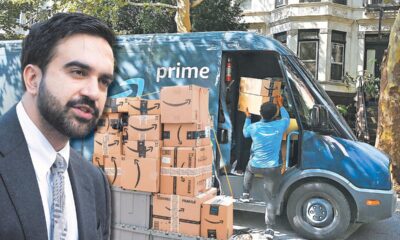

Amazon said it may move thousands of workers out of NYC over Mamdani labor bill – what experts say will likely happen
Amazon has said it may close more than a dozen warehouses and move thousands of workers out of New York...


Designers are cringing at Tate McRae’s new single cover
Singer Tate McRae has released a teaser for her new single Housewife, and while the moody superyacht setting has sparked...
-

 Entertainment2 weeks ago
‘Verity’ Posts $4.5M Previews, ‘Digger’ $1.2M
-

 Entertainment2 weeks ago
Rick Devens Wins In Season 28 Finale
-
 Business2 weeks ago
Tesla Cybercab pressure to expand after rocky first month in Austin
-
 Business2 weeks ago
OpenAI safety employee resigns, claiming the company’s ‘culture is broken’
-
 Business2 weeks ago
Energy Secretary Chris Wright says Trump was “well aware of the risks to energy flows” before launching Iran war
-
 HealthNews1 week ago
Des Moines clinics stumped by unidentified virus
-

 Entertainment2 weeks ago
Disney pays $115 million for Yamaha’s Orange County headquarters
-
Business2 weeks ago
Leaked Anthropic IPO prospectus: The US government could hurt our business