
Business
Peptide peddlers cheer as RFK Jr. unilaterally grants access, overruling FDA
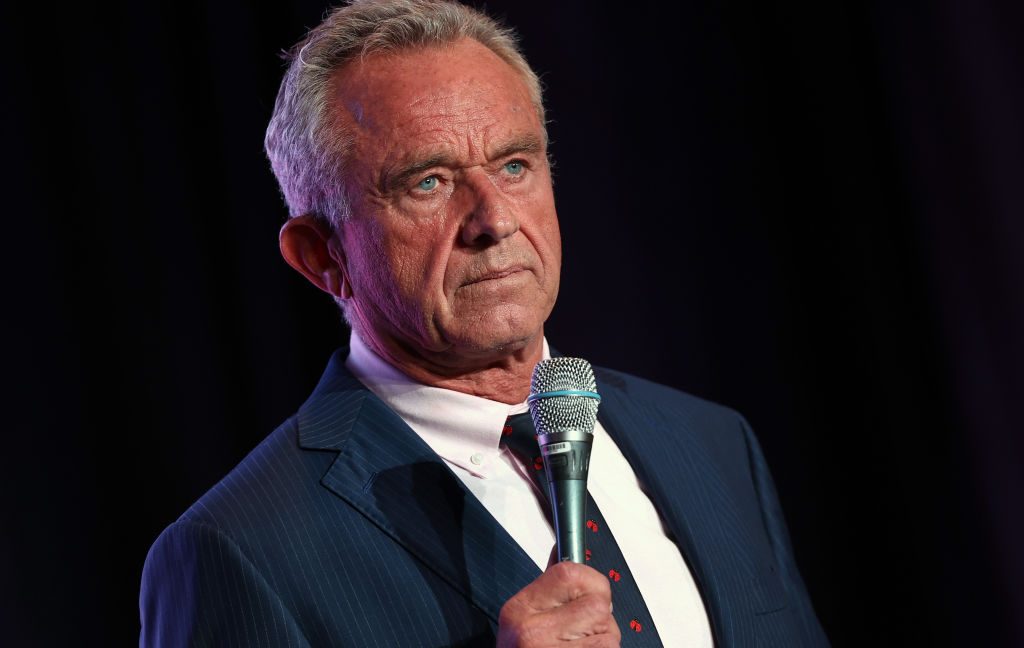
Anti-vaccine Health Secretary Robert F. Kennedy has unilaterally passed a rule that will allow specialty pharmacies to sell six specific peptide drugs, overruling scientists at the Food and Drug Administration.
The peptides are popular among members of Kennedy’s Make America Health Again movement and many prominent MAHA figures and Kennedy allies sell them. Kennedy said he uses some of the peptides and called himself a “big fan.” But FDA scientists continue to say there is insufficient evidence to show if they’re effective and they are potentially dangerous. In 2023, the safety concerns led the FDA to remove the six peptides from a list of drugs that can be made by specialty pharmacies called compounding pharmacies—which make customized formulations of drugs for patients, or, in cases such as this, specialty drugs in bulk.
Kennedy’s new rule sidesteps the need to formally undo that FDA action. The rule is titled “Enforcement Discretion Policy Regarding 503A Compounding Using Certain Peptide Bulk Drug Substances” and was made available Wednesday on the Federal Register, with the final publication data set for October 30. The rule does not change the regulatory status of the peptide; instead, it states the Department of Health and Human Services (HHS) will no longer take enforcement action against compounding pharmacies for making the peptides, essentially giving them a green light to freely produce and sell them. Kennedy had quietly proposed this rule earlier this month.
Questionable rationale
Along with the notice in the Federal Register, HHS also posted a more detailed explanation of the policy today that includes more of Kennedy’s rationale for easing enforcement of the six select peptides, which are: BPC-157, Epitalon, KPV, MOTS-c, Semax, and TB-500.
One reason cited for all the peptides was that an FDA advisory panel voted in July to add these six peptides back to the list of drugs compound pharmacies can make. However, prior to the vote, Kennedy stacked that 12-member committee with eight new members. At least six of Kennedy’s additions have ties to peptide-related businesses and clinics, raising serious conflict-of-interest concerns.
Another explanation for allowing the peptides is that the safety concerns are mainly hypothetical or “inferential” and not based on observed harm in humans. But this is mainly because there are few to no studies involving humans that show either benefits or harms from the peptides.
Still, Kennedy argues in the policy that making the peptides more available through compounding pharmacies will improve safety because it will keep people from buying them on the gray or black market or buying formulas not intended for patient use.
“The Secretary of HHS has determined that this limited enforcement-discretion policy will discourage the continued, widespread use of certain research-use-only peptides supplied by foreign manufacturers that pose a safety risk to US patients,” the HHS policy document states.
Calling the compounded peptides “a more controlled alternative” to illegal versions of the peptides, the document says that “the Secretary has determined that the policy advances patient choice and freedom while appropriately protecting patient safety.”
Responses
Peptide sellers online were quick to celebrate the news. Brigham Buhler, who sells peptides in a wellness clinic he runs, cheered the news on X, thanking Kennedy, President Trump, Calley Means, and Joe Rogan. “Medical freedom just took a major step forward!” he wrote.
Zachary Shurtleff, a marketing executive for a wellness-focused compounding pharmacy, also celebrated, writing, ” Peptides are BACK like they never shoulda left!”
Lee Rosebush, chair of the American Academy of Peptide Medicine, a group formed last year, released a statement thanking Kennedy and the Trump administration for “taking a forward-thinking, evidence-based approach to the regulation of peptides.”
Critics have pushed back, noting that there are already reports of harms from peptides.
In a statement released Tuesday, before the new rule was released, the Center for Science in the Public Interest laid out several reasons why making unproven peptides more accessible is dangerous. For one, reports of harms will “continue to mount,” CSPI said. And if any of the peptides actually showed promise of efficacy, reputable pharmaceutical companies will have less incentive to follow up with thorough clinical trials if the peptide is already widely available. Further, allowing access to peptides based on marketing demand could open the doors for other unapproved products, creating an incentive for illegal sales.
Fred Mills, chief policy officer of Americans for Safe and Effective Medicines (ASEM), said in a statement Wednesday that the new rule “does not resolve problems with untested products, safety risks, questionable ingredients, or misleading claims. In fact, we believe this will worsen what we have already seen—the harms from mass compounding hitting communities hard due to a lack of oversight to rein in bad actors. We need to follow the science, and the reality is that FDA itself has continued to sound the alarm on lackluster data on these peptides. Safety and efficacy aren’t a nice-to-have; they are required.”
Business
Inside billionaire Michael Bloomberg and wife Diana Taylor’s very low-key wedding dinner

Michael Bloomberg and Diana Taylor were spotted celebrating tying the knot after more than 25 years with an intimate dinner Monday at luxe Italian restaurant Gabriel’s on Central Park South.
We hear the pair — who were wed earlier in a private ceremony at their home on the Upper East Side — were joined by Bloomberg Philanthropies CEO Patti Harris and her husband Mark Lebow.
Harris also worked for the former three-term mayor during his administration, as deputy mayor and then as New York’s first female first deputy mayor.
A spy tells us the newlyweds “were dressed up and looked happy.”
“At the end they did toasts,” said the witness. “It was a joyous occasion.”
(We hear Bloomberg did not drink any alcohol, but others in the group toasted with bubbly.)
They also got well-wishes from a fellow high-powered patron: former CIA Director George Tenet was spotted congratulating the couple.
Bloomberg, 84, and Taylor, 71, were wed earlier in the day in front of his daughters Emma and Georgina. They also held a lunch with a dozen close friends and family. According to the New York Times, he also popped by his offices.
The pair met 26 years ago after a chance seating arrangement.
“The longtime couple exchanged vows today in a small, private ceremony at their home on the Upper East Side, joined by family, including his daughters, Emma and Georgina,” Bloomberg’s spokesperson announced.
“The two first crossed paths when they sat next to each other at a Citizens Budget Commission meeting while he was first running for mayor.”
Bloomberg has been dodging the question over whether he would pop the question for over two decades.
During a 2011 appearance on “The View,” Joy Behar — who had recently wed Steve Janowitz — teased, “Maybe you’re next,” to which he curtly responded, “Let’s talk about something [else].”
During his failed 2020 presidential run, Taylor told The Washington Post she hated the term “gal pal,” and said, “Nobody’s come up with the language around what we are.”
Ivy Leaguer Taylor — who functioned as NYC’s unofficial First Lady during his administration, attending events and galas — has worked on Wall Street and was superintendent of banking for New York State during the Gov. George E. Pataki administration.
She was approved as chair of the New York City Ballet’s board of directors in 2021. The couple attended this year’s gala at Lincoln Center together.
Bloomberg was previously married to Susan Brown in 1976. They split in 1993.
Taylor was also previously married.
Business
Dow Jones Futures Rise, CoreWave Jumps After Stocks Fall On Nvidia, Surging Treasury Yields

Information in Investor’s Business Daily is for informational and educational purposes only and should not be construed as an offer, recommendation, solicitation, or rating to buy or sell securities. The information has been obtained from sources we believe to be reliable, but we make no guarantee as to its accuracy, timeliness, or suitability, including with respect to information that appears in closed captioning. Historical investment performances are no indication or guarantee of future success or performance. Authors/presenters may own the stocks they discuss. We make no representations or warranties regarding the advisability of investing in any particular securities or utilizing any specific investment strategies. Information is subject to change without notice. For information on use of our services, please see our Terms of Use.
*Real-time prices by Nasdaq Last Sale. Real-time quote and/or trade prices are not sourced from all markets. Ownership data provided by LSEG and Estimate data provided by FactSet.
IBD, IBD Digital, IBD Live, IBD Weekly, Investor’s Business Daily, Leaderboard, MarketDiem, MarketSurge and other marks are trademarks owned by Investor’s Business Daily, LLC.
©2026 Investor’s Business Daily, LLC. All Rights Reserved.
Business
The US military seems to be getting nervous about the launch supply crunch

The US military is taking a new approach to prop up commercial launch companies as SpaceX looks to wind down its Falcon rocket program, suggesting defense officials see the workhorse rocket’s retirement as a potential national security risk.
The Pentagon’s Office of Strategic Capital has twice in the last two weeks announced it was sending cash to two of SpaceX’s competitors in the launch business. First, on October 26, the office announced a $150 million conditional loan commitment to Stoke Space. Military officials revealed a second $150 million Pentagon loan Tuesday for Rocket Lab.
Stoke Space and Rocket Lab are the first two launch companies to receive significant support from the Office of Strategic Capital (OSC), an organization established in 2022 to infuse companies developing “vital” national security technologies with capital. OSC has been on a loan spree in recent weeks, committing hundreds of millions of dollars to companies specializing in batteries, drones, and semiconductors. In the space sector, the office also provided a $150 million loan to LeoLabs, a commercial satellite tracking company, for production and deployment of radar units.
SpaceX, the Pentagon’s leading launch provider, has stopped taking commercial orders for Falcon 9 launches after 2028 as the company shifts its focus to the next-generation, super-heavy-lift Starship rocket. Falcon 9 and Falcon Heavy launches for government customers, including NASA and the US Space Force, are expected to continue a while longer. The Space Force’s launch contract with SpaceX allows the military to place Falcon 9 and Falcon Heavy orders through 2029, with the actual launches extending through 2033.
Then, if Starship is fulfilling its promise, SpaceX plans to retire Falcon for good. Starship may eventually be capable of launching national security payloads, but SpaceX’s near-term priority is using the rocket’s massive cargo capacity for its own Starlink Internet satellites and Starmind orbital data centers.
Assuring access to space
Military space officials have held to a policy of assured access to space since the 1990s, with the Pentagon paying to support at least two US rocket programs capable of launching national security satellites. The support previously came in the form of direct subsidies, development funding, and launch contracts at premium prices to give the government technical and financial insight into their launch providers, schedule priority on their launch manifests, and, in some cases, to simply keep them in business.
The Space Force’s mix of launch providers today consists of SpaceX’s Falcon family and United Launch Alliance’s Vulcan rocket, which has been grounded twice in the last two years by problems with its solid rocket boosters. ULA’s woes with Vulcan forced the Space Force to shift several national security missions to SpaceX.
Other launch providers aim to compete for their own slices of the growing pie of Space Force launch contracts. Space Systems Command, which oversees launch procurement for the Space Force, now forecasts the military will require up to 249 medium-to-heavy-lift launches through the early 2030s from its roster of launch contractors, more than double the command’s expectation just two years ago.
Alongside SpaceX and ULA, Space Systems Command has tapped Blue Origin, Rocket Lab, Stoke Space, Relativity Space, and Impulse Space for eligibility to compete for some of those national security launches. Blue Origin is the only company that has flown a rocket that could meet the Space Force’s requirements. Rocket Lab, Stoke Space, and Relativity Space are developing their own medium- and heavy-lift launch vehicles, while Impulse Space is working on in-space propulsion.
The loans from the Pentagon’s Office of Strategic Capital aim to get new medium-class rockets from Stoke Space and Rocket Lab ready to meet the military’s needs.
Stoke Space’s loan is tailored to support the buildout of the company’s second launch pad at Cape Canaveral Space Force Station, Florida. The second launch site would support flights of Stoke Space’s Nova Block 2 rocket, an upgraded version of the company’s fully reusable Nova Pathfinder, which is set to debut sometime next year.
“By supporting the construction of additional launch infrastructure, this commitment would enhance the overall capacity and resilience of the commercial space industrial base,” said Jordan Sebold, senior managing director of investments at OSC.
The loan to Rocket Lab will support the company’s efforts to increase the flight rate of its partially reusable Neutron rocket, which Rocket Lab says is also scheduled to make its first launch next year.
“The proposed loan would support faster vehicle delivery and processing and allow Rocket Lab to expand its fleet of maritime vessels with additional equipment for Neutron recovery and transport,” OSC said in a statement. “It would also enable manufacturing upgrades to increase the production of composite structures and engines, and support infrastructure that would reduce turnaround time between launches once the reusable rocket makes its operational debut.”
Both conditional loans are subject to “various financial, legal, technical, investment, due diligence, and other requirements,” OSC said.
Adam Spice, Rocket Lab’s chief financial officer, said Monday the Pentagon loan is on “very attractive terms” and “underscores the importance” of the military’s appetite for launch capacity.
“We always take it when we can get it,” Spice said in a quarterly earnings call. “It gives us additional capital to scale key parts of our business, Neutron in particular … I think this is a helpful indicator, a very positive indicator, about where everyone sees the demand constraint and how it can be unlocked, and capital is certainly a part of that.”
Rocket Lab also unveiled new pricing for the Neutron rocket—an increase from $55 million to $70 million per launch—in response to what the company said was a surge in bookings for the still-unproven launch vehicle. Rocket Lab said it now has a backlog of 117 launches on contract, including orders for Neutron missions and the company’s smaller Electron rocket.
“Launch is extremely constrained, and that is exactly the situation we predicted,” said Peter Beck, Rocket Lab’s founder and CEO.
Business
House Republicans consider issuing subpoena to Nvidia CEO Jensen Huang
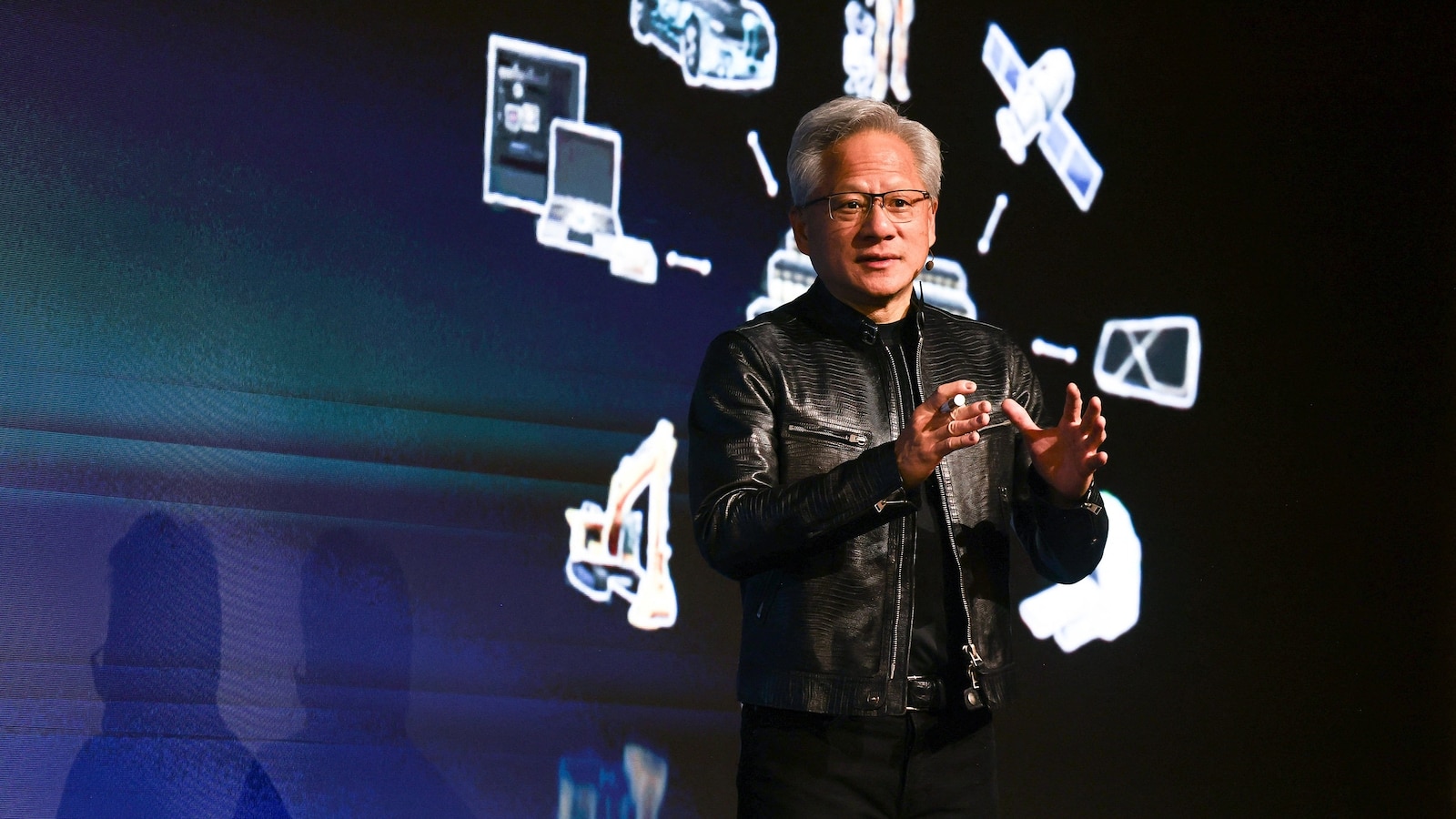
The Republican chair of the House Foreign Affairs Committee, Rep. Brian Mast, told ABC News on Tuesday that he’s prepared to subpoena Nvidia CEO Jensen Huang if he does not respond by Wednesday to a request from several House Republicans for a closed-door briefing on Huang’s reported relationship with an alleged Chinese spy.
Last week, Mast as well as Rick Crawford, the chair of the House Intelligence Committee, and John Moolenaar, the chair of the House China Committee, sent Huang a letter requesting he appear for a “joint, closed-door briefing.”
The focus of the briefing would be on Nvidia’s “security protocols against foreign adversary espionage” after the tech giant on Sunday announced an investigation into its CEO following New York Times’ reporting that he had an affair with an alleged Chinese government agent, identified as Alice Huang, a top executive at Singapore-based data company Megaspeed.
Jensen Huang has not yet responded to the Republicans’ request that he appear for a briefing. Asked by ABC News if he would consider issuing a subpoena to Huang should he not respond, Mast said “absolutely.”
It’s unclear how a potential subpoena of Huang would play out. House Republicans lose control of their committees in January when the chamber turns over to Democrats. The subpoena would likely expire and Democrats would need to issue a new one.
ABC News reached out to Nvidia for comment from Huang for this story.
Congressional Republicans on the Select Committee on China also sent a letter to Huang requesting that he appear for a closed-door briefing Nov. 18 concerning his relationship with Alice Huang. It is not known if Huang will appear before that committee; Nvidia hasn’t publicly responded to the request.
Mast said there is a “lengthy” list of things he wants to hear from the Nvidia CEO including what correspondence he had with the Chinese government. Mast added that he is “100%” worried about the national security implications of Huang’s reported relationship given that he runs the world’s largest computer chip manufacturer.
“They’re American chips. You know. So we thank God that Jensen is an American entrepreneur. You know, it’s an American tech company because they’re the best chips anywhere in the globe,” Mast said. “But that being said, we don’t want China to access them, to use them, to produce them like that.”
Nvidia’s board said they have “no reason to believe that either national security or Nvidia secrets were compromised” by Huang’s affair.
Huang “fully supports the review” and will cooperate with it, the Nvidia statement further said.
Several Democrats have expressed concerns about national security after the report, with House Minority Leader Hakeem Jeffries telling ABC News that there are “real concerns” that need to be addressed.
“We’re going to need a full briefing, specifically as it relates to the Nvidia issue, so we can all get to the bottom of what has happened and what the implications are in terms of America’s national security,” Jeffries said.
On Monday, President Donald Trump said the FBI is investigating the matter. Trump said he spoke with Huang in a phone call on Monday, during which the CEO said that he “didn’t know” he was involved with an alleged Chinese spy.
“He said he had absolutely no idea that the person in question was a spy,” the president told reporters during a press briefing on Monday.
It’s unclear when — if ever — the Trump administration alerted Nvidia that its CEO was the target of an alleged Chinese espionage plot.
The Chinese government has denied the allegations, calling them “baseless and purely slanderous smears against China.”
Neither Alice Huang nor her employer, Megaspeed International, responded to ABC News’ request for comment about the New York Times story on the relationship.
Business
Gas prices fall below $4 a gallon for first time since July

Gasoline prices fell to their lowest level since July on Tuesday, with the national average price slipping below $4 a gallon for the first time in months.
Data from AAA showed that the national average price dropped about 3 cents per gallon from Monday’s report, with the average slipping to $3.97 a gallon on Tuesday.
Gas prices have fallen about 17 cents per gallon over the last week, and roughly 39 cents from a month ago, according to AAA’s data.
CONSUMER INFLATION RISES FASTER THAN EXPECTED IN OCTOBER, CPI REPORT SHOWS
The decline in prices comes as refiners have switched to winter blends of gasoline that typically cost slightly less than summer blends, which can be sold at gas stations starting as early as mid-September.
Winter weather tends to result in fewer drivers on the road, which can reduce demand for fuel and contribute to a downward trend in prices, and AAA noted that gas prices may fall between 10 and 30 cents per gallon during the winter months.
TRUMP ADMIN POURING $480M LOAN INTO GULF OF AMERICA OIL AND GAS PROJECT
Consumers have faced higher gas prices for much of this year during the war in Iran, which has disrupted the flow of oil from the Middle East through the Strait of Hormuz and, in turn, constrained supplies for refiners to convert crude into gasoline.
Gas prices hit a recent peak at $4.50 a gallon May 11, 2026, then declined to a recent low of $3.77 a gallon on July 6, according to data from the Energy Information Administration.
CEO WARNS HIGH DIESEL PRICES COULD TRIGGER A ‘VICIOUS CYCLE’ OF SURGING FOOD PRICES
Ongoing tensions in the Middle East contributed to a rise in gas prices as summer turned to fall, with the national average reaching $4.47 a gallon on Sept. 21, 2026.
The Bureau of Labor Statistics on Tuesday released the October consumer price index, which showed gasoline prices were up 1% last month, a much slower rise that followed monthly jumps of 9.1% in September and 3.9% in August.


Hegseth Impeachment Effort Blocked in Key House Vote
House GOP leaders successfully killed a push to impeach Defense Secretary Pete Hegseth in a surprising show of unity from...


Trump’s private 2021 letter to Biden revealed in upcoming memoir
In his forthcoming book, former President Joe Biden discloses the contents of a 2021 letter written by President Donald Trump...


Scott Colom says tight Mississippi Senate race is almost over
Democratic Mississippi Senate Candidate Scott Colom tells CNN's Jake Tapper and Annie Grayer when he thinks his race will be...


Conveyor belt of storms unloads on Pacific Northwest
The north Pacific is cranking out one storm after another, sending relentless rain and snow into Alaska, British Columbia and...


Hegseth survives, but Dems say more impeachments could follow
House Republicans narrowly blocked an effort to impeach Defense Secretary Pete Hegseth, voting 211-204 to defeat the …


Man who admitted to dismembering wife remains emotionless as guilty verdict is read
A jury found Virginia man Naresh Bhatt guilty of first-degree murder Tuesday, rejecting his claim on the stand that his...


‘Mike Hammer,’ ‘Fat City’ Star Was 85
Stacy Keach, a commanding actor whose work includes movies like “Fat City” and the starring role in “The New Mike...


Shopping sucks. Blame your feed.
Shopping used to be fun. Now it's all microtrends and algorithm-approved outfits. Audie Cornish, Ari Shapiro, and Amy Odell …


California voters reject billionaire tax
Voters in California have rejected a measure to impose a one-time 5% wealth tax on residents with net worth over...

House GOP blocks Hegseth impeachment effort
The House voted to refer the measure to a committee, effectively killing the resolution to impeach Defense Secretary Pete Hegseth...
-

 Entertainment2 weeks ago
‘Baywatch’ Star Erika Eleniak on Track to Hit $1 Million in 1st Year on OnlyFans
-
HealthNews2 weeks ago
The Most Powerful Obesity Drug Yet Has a Hidden Benefit-and It Happens While You Sleep
-

 Business2 weeks ago
Dollar General overcharged millions at checkout for years, FTC and 20 states allege
-

 Business2 weeks ago
In China, the AI bubble has already burst
-

 Entertainment2 weeks ago
Inside Matthew Perry’s ‘struggle’ ahead of the 2021 ‘Friends’ reunion
-
Entertainment2 weeks ago
I’m a Bus Driver at Walt Disney World at 51 Years Old; Great Benefits
-

 Entertainment2 weeks ago
Taylor Swift, Travis Kelce wedding props deemed too expensive, dangerous revealed
-

 HealthNews2 weeks ago
Your Blood Pressure Could Be Higher Than You Think. These 7 Fruits May Help Bring It Down, Say Experts