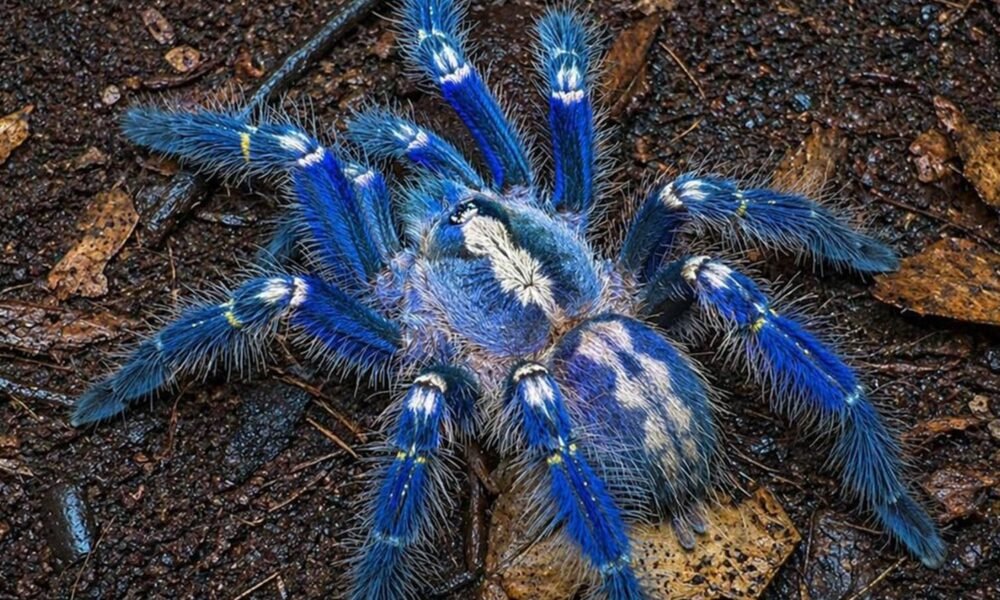
Andhra Pradesh is preparing to protect the Peacock Tarantula. (Source: X/@APDeputyCMO). The Andhra Pradesh Forest Department has launched a conservation status study of the Peacock Tarantula within the vast landscape of Nagarjunasagar Srisailam Tiger Reserve. The project was launched by Andhra Pradesh Chief Minster N Chandrababu Naidu, and Deputy Chief Minster Pawan Kalyan, to conserve a species which is not only critically endangered but also endemic in a small region of Eastern Ghats. This makes it “one of the world’s most vulnerable arachnids”. He also stressed the importance of protecting peacock spiders because of their rarity. “Conservation isn’t only about iconic species, it’s about protecting the rare and endemic,” he wrote. This spider species is found primarily in deciduous forests in central and southern India. It has a distinctive blue hue that darkens as it matures. H.R.P. sent the first specimen to the British Museum in London in 1898. Carter received it from H.C. West of the Madras Railway, the chief engineer. The tarantula feeds on a variety insects, such as grasshoppers, crickets and other small bugs. This natural predation helps regulate insect numbers, preventing potential outbreaks and ensuring that no single insect species overwhelms the ecosystem,” he tells indianexpress.com.Maintaining a healthy ecological balance and vibrant ecosystem is key to the survival of arachnids. Why this spider feeds its babies ‘milk’According to the expert, maintaining a healthy ecological balance and vibrant ecosystem is key to the survival of arachnids. “Unfortunately, our country is a tiger-centric one that has neglected hundreds or endangered or threatened species. It is important to remember that each species relies on a particular habitat, diet, or climate that has allowed it to survive for millions of year. Story continues below this advertisement. Losing one species can have a negative impact on hundreds of species that are interdependent. “Preserve habitats, protect life,” he echoes in conclusion.DISCLAIMER: This article is based on information from the public domain and/or the experts we spoke to.