
BBC News World
Rosebank: Life on the oil field at the centre of a political storm

When we landed by helicopter at Rosebank, this oil field was at the centre of a political storm – and set to be in the path of a real one.
We arrived on Wednesday morning, just a few hours after the UK government had granted consent for the production of gas from the Jackdaw field in the North Sea.
But already attention was shifting to this wild and windy patch of the North Atlantic – the next big decision for Energy Secretary Miatta Fahnbulleh.
Rosebank is bigger than Jackdaw, it would generate higher greenhouse gas emissions, and it could be far more lucrative for its owners, Adura and Ithaca.
This summer, along with a camera crew, I travelled to Jackdaw, 150 miles east of Aberdeen.
Now we were the first journalists to visit Rosebank.
We came here – days before Storm Boelo arrived with strong winds and heavy rain – to scrutinise a controversial project which is at the heart of a national debate about climate change, energy policy and the economy.
But we also hoped for a rare glimpse into life offshore.
“It’s good fun, it’s interesting, every day can change,” said Nicola Boyd, who runs the helideck, and greeted us as we struggled out of our lifejackets and survival suits.
Boyd has worked offshore for nearly a decade, including a year on Rosebank – where she spends two weeks at a time followed by three weeks’ leave.
“It’s a job I love,” she added.
It’s also a job that calls for steady legs and a strong stomach.
Unlike the fixed Jackdaw platform, this installation – 80 miles north west of Shetland – is a large ship, a floating production, storage and offloading vessel (FPSO) named the Petrojarl Rosebank.
It’s been chartered by the field’s owners from Aberdeen-based Altera and, during my 48 hours on board, it was constantly but gently rolling on the North Atlantic swell.
Those conditions may be misleading.
With the understatement typical of an Orkney islander, lead mechanical technician Ewan Leonard told me the winter weather could be “a bit of a challenge.”
“Last week we had a 30m heave coming through,” he said, referring to the swell, “so we’ll probably suffer more of that as the winter goes on.”
Altera CEO Chris Brett told me that in the industry the environment west of Shetland is considered “as harsh as you get anywhere in the world.”
Whatever your view on that industry, the sheer scale of what humans have achieved in such conditions is impressive.
The deep reserves of skill, ingenuity and engineering prowess among the 122 people on board are obvious.
The jobs are well-paid and, according to Ewan Leonard, the facilities are excellent.
“We have single-man cabins, there’s good gym facilities, there’s a lot of rec rooms here.”
Douglas Hogge, a production supervisor in charge of a team responsible for the safe extraction of oil and gas, agrees.
“There’s the gym, the sauna,” he said, adding “you can obviously go and get some fresh air. There’s plenty of fresh air out there.”
There’s even a cinema.
“As you’ve seen yourself, the food is fantastic on board, so no complaints.” added Leonard.
Everyone we spoke to agreed with that, praising the talented chefs who sent out all sorts of delicious dishes, from braised ox cheek to mackerel to pork loin, day and night.
As dusk gathers and the nightshift get ready for work with a strange breakfast of fillet steak and chocolate brownie pudding, the vessel begins to glow in the gloom.
It is a strange sight, the decks criss-crossed by a bewilderingly complex array of pipes, valves and bright yellow steelwork.
The ship doesn’t move far, rotating around a fixed central point called the turret to face into the weather, making life a little easier for those on board.
If production is approved, oil and gas will be pumped up through the turret from wells in the field below, which contains an estimated 300m to 500m barrels, enough for perhaps 25 years.
“For myself and a lot of the guys, that would see us out to retirement,” said Douglas Hogge.
“We need to see this approved,” he added.
Environmental campaigners strongly disagree. They’ve been trying to stop Rosebank for years, with some success.
“The future of the energy sector in the UK is renewable energy,” said Tessa Khan, executive director of the campaigning group Uplift.
Consent for production at Rosebank was first granted under the Conservative government in 2023.
But in 2025, after a challenge by Greenpeace and Uplift, the Court of Session in Edinburgh ruled the approvals of the UK’s largest known untapped oil field and Jackdaw were unlawful because they had failed to take into account the climate impact of actually burning the fossil fuels in cars, homes and factories.
The judge, Lord Ericht, said the fields’ developers could carry on with work short of producing oil and gas while they provided more detailed environmental assessments for the government and regulators to consider.
“We think Rosebank would be a disastrous decision and a terrible deal for ordinary people across this country,” said Khan, urging prime minister Andy Burnham to prioritise renewables in his quest to re-industrialise the nation.
“If the government’s interested in building investor confidence, giving the green light to a major new oil field is going to do the opposite,” she argued.
Whatever happens with Rosebank and Jackdaw, the long-term trend for the industry is clear and it is one of decline.
It’s a quarter of a century since oil production peaked and in recent years jobs in oil and gas have been disappearing much faster than they’re being created in renewable energy such as wind and solar power.
The timeline of Jackdaw and Rosebank
The oil from Rosebank would be loaded onto tankers via a gigantic hose and nozzle, which looks like the super-sized pump of an enormous floating filling station.
From there it would be sold on the international market and, most likely, taken to continental Europe for refining.
Opponents say that proves the project is of little benefit to the UK and should be rejected.
Supporters argue that’s not the case because UK and European energy markets are co-dependent, adding that Rosebank will generate millions in tax for the Treasury.
Neil McCulloch, chief executive of Adura – which owns 80% of Rosebank and is a joint venture between Shell and the Norwegian state energy firm, Equinor – is optimistic.
He points out that Rosebank contains not just oil but gas which would be piped to Shetland and on to the St Fergus terminal in Aberdeenshire, with the potential to heat 500,000 British homes at peak production.
Approval of this project, argues McCulloch, could pave the way for four more Jackdaw-sized gas developments in the waters west of Shetland – Tornado, Tornado East, Tobermory and Suilven.
“We would like to proceed with them,” he said.
A surge in fossil fuel production if Rosebank is approved is exactly what campaigners fear.
It would, argues Tessa Khan, exacerbate the deadly and damaging impact of climate change for British teachers, nurses, firefighters and families worried about their children while making “huge profits for companies that are already incredibly profitable”.
When it comes to the impending UK government decision – which sources have told BBC News should come before Christmas – there is a strange mood at Rosebank.
And for some on board, very particular cravings.
For steward Liam Davidson, it is a desire to see his French bulldog, Bailey, at the end of his fortnight on board.
“My wee dog’s at the heliport when I arrive,” he said, “I do miss her.”
For Nicola Boyd, it’s her double bed and a pizza delivery.
“I love seeing the family, but for me, it’s the pizza,” she told me.
But this time there might be a delay in delivering Boyd herself.
She is coming to the end of her fortnight but, as she helped us into our survival suits, the Met Office issued an amber weather warning for much of Scotland.
For Rosebank, it seems, there are stormy seas ahead, one way or the another.
BBC News World
Further bomb threats disrupt at least another 18 flights across Europe
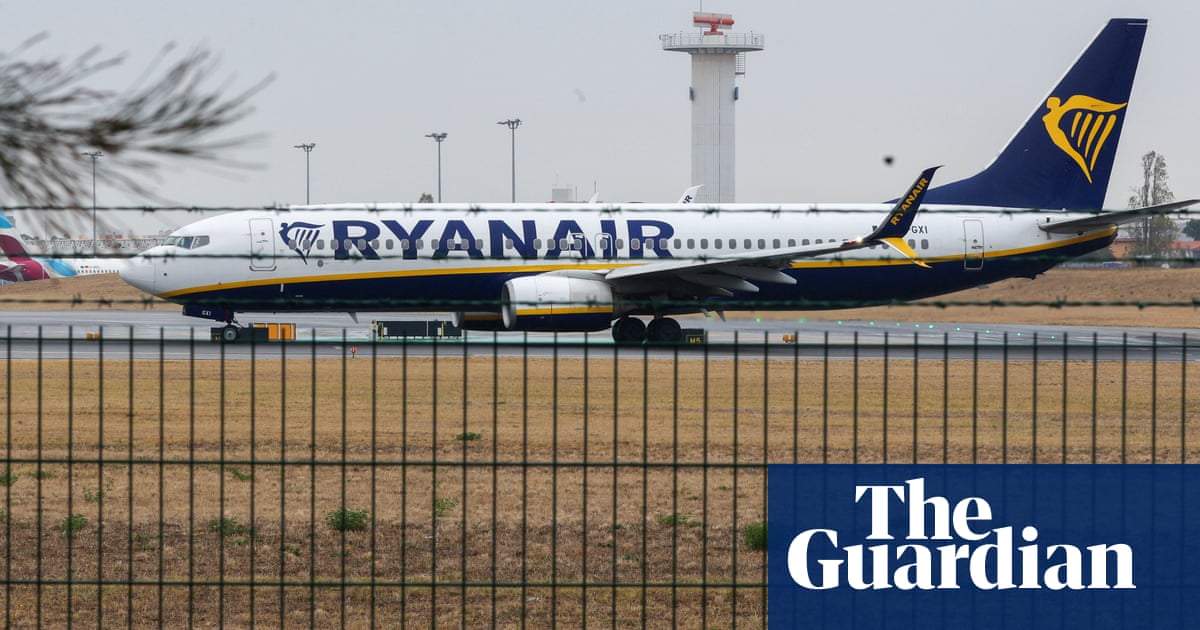
A fresh wave of bomb threats disrupted air traffic across Europe on Friday but the affected aircraft landed safely and searches revealed no explosive devices.
The latest alerts affected at least 18 flights to or from Bulgaria, Cyprus, Czechia, France, Hungary, Italy, Portugal, Romania and the UK.
Danish police investigated a threat against Copenhagen airport but the airport’s management said it was operating normally.
The warnings followed separate threats on Tuesday and Thursday that forced at least 35 flights to be diverted or searched, raising questions over an apparently coordinated effort to cause chaos for travellers.
A number of European media outlets – including news organisations in Bulgaria, Ireland and the UK – have reported that a group claiming responsibility for this week’s threats sent an email to several outlets warning of further attacks on transport across Europe.
“This is only the beginning,” it reportedly said.
The latest threats affected at least nine flights to and from Prague, four flights over France, two flights en route to Sofia and a flight from Lisbon to Rome. Hungary scrambled fighter jets three times to escort civilian flights in its airspace, the defence minister, Romulusz Ruszin-Szendi, said on Facebook.
The affected flights had knock-on effects but were a tiny percentage – just 0.0674% – of the 26,709 flights that according to the air traffic control agency Eurocontrol were scheduled in Europe on Friday.
A separate spate of threats on Friday against media organisations in Ireland disrupted broadcasts and prompted staff evacuations and police searches of offices and newsrooms.
The taoiseach, Micheál Martin, told RTÉ Radio 1 after it resumed scheduled broadcasting that such threats had to be taken seriously and were an effort to sow fear and anxiety.
“It shows how relatively simple it can be to cause disruption and undermine the normal operation of society,” said Martin, adding that European security agencies would seek to identify those responsible and hold them accountable.
The British broadcaster Sky said on Friday it had also received a security threat and reported the matter to the relevant authorities.
Earlier this week, cyber-attacks targeted supermarket refrigeration systems in at least seven European countries.
The Italian prime minister, Giorgia Meloni, said it was unclear whether the hoaxes and recent cyber-attacks were “all connected”.
She added: “But they definitely all tell us the same thing: today, what is under attack are civilian infrastructures.”
The Nato alliance continued to monitor the situation and was working closely with allies, according to a senior Nato military official.
Investigators have said there was no evidence that hoaxes against airlines and other targets were being orchestrated by a hostile terror group or state actor, such as Russia or Iran, but that inquiries were continuing.
Several European media outlets in Bulgaria, Ireland, the UK and elsewhere reported that a group claiming responsibility for this week’s threats warned in an email of further actions against transport across Europe.
“This is only the beginning,” it reportedly said. The Guardian has chosen not to reproduce the email in full, given its unsubstantiated claims.
Some of the threats on Thursday were signed “fighters of the Male State”, a reference to a Russian far-right, ultranationalist and misogynistic movement founded in 2016. In a Telegram post on Friday the group’s founder, Vladislav Pozdniakov, denied involvement and said the group had not existed since 2021.
Some officials suspect the waves of disruption are linked to European support for Ukraine in its war against the Russian invasion.
Spain’s foreign minister, José Manuel Albares, said authorities needed more time to identify culprits but that there appeared to be a pattern.
“It cannot be mere coincidence that so many incidents with exactly the same modus operandi are happening across Europe,” he told the national broadcaster TVE.
“The most reasonable assumption is that we are facing an attempt at hybrid aggression and a form of psychological warfare,” he said, adding that Europe must be prepared for more such challenges.
Mark Rowley, the chief of London’s Metropolitan police, urged a measured response, saying past experience with the paramilitary Irish Republican Army offered valuable lessons.
He recalled the phrase “10p terrorism”, when a hoax bomb call made from a coin-operated phone box could disrupt an entire city, forcing authorities to distinguish between genuine and false threats.
The authorities would need to adapt to an evolving threat landscape involving actors around the world, some backed by hostile states, he said.
“We are going to have to adapt to that same methodology to make sure that we don’t overreact to every message we get online,” he told BBC Radio 4.
BBC News World
College Football Playoff rankings compete with election night

There’s a Tuesday night in November that captivates the nation, leaving households on the edge of their couch cushions as they await the results. This week is no different.
The College Football Playoff will release this season’s first round of rankings in its annual made-for-TV ESPN special tonight at 7 p.m.
For the sixth time in its 12-year history, the CFP’s first rankings reveal of the season coincides with Election Day. As a handful of states close their polls, teams and fans will learn where they stand entering the final month before the postseason. The same ratings collision unfolded during the 2024 presidential election.
In past years, when the show ran on the same night as election coverage, its viewership dipped from well over 1 million to an estimated 800,000. But neither ESPN nor the CFP expressed concern over the alignment.
Each Tuesday night from the first week of November through the end of the regular season, the CFP committee releases rankings that help schools understand how they’re viewed by the committee that will ultimately decide whether they compete for a national championship in December.
This fall’s edition, as little as it may be viewed, is especially intriguing. Only three teams remain undefeated, the fewest since 2014. The biggest surprise? No SEC team is without a loss, while Georgia and Kentucky are the conference’s only schools with one loss. Chaos. This may also be the last iteration of the 12-team playoff, as the CFP and ESPN are reportedly pursuing an expansion to 24 teams as soon as next year.
The Justice Department has deployed roughly 1,000 election monitors to observe voting at polling sites Tuesday, and nearly two-thirds of the jurisdictions chosen have consistently voted for Democrats in recent elections, according to a Washington Post analysis.
The department described the deployment as a record-setting effort to ensure election integrity at polling locations in more than 120 jurisdictions in all 50 states.
Though department monitors are dispatched every Election Day, this effort has prompted anxieties among Democrats who say they worry it will allow the Trump administration to interfere with the election or cast doubt on the results.
Harmeet K. Dhillon, head of the department’s Civil Rights Division, maintained in a statement Tuesday the monitors were sent to pursue “transparency for elections in an assertive and nondiscriminatory manner.”
Of the jurisdictions the department selected for monitoring Tuesday, at least 89 voted for the Democratic candidate in the most recent three presidential election years. At least 29 consistently voted Republican, and five have swung between the parties at least once during the last three presidential cycles.
During the 2022 midterms, the Biden administration sent Justice Department monitors to 24 states, including to Democratic-leaning jurisdictions in roughly the same proportion as this year’s deployment, The Post’s analysis found.
Typically, Democratic administrations are interested in monitoring voting in heavily Democratic areas such as large cities because of concerns over voter disenfranchisement, language barriers and access to the ballot. This year, President Donald Trump and his allies have accused Democrats of attempting to cheat and pushed for greater federal control over how voting is conducted — claims that have largely been rejected by federal courts.
President Donald Trump said Tuesday that the United States would end $4 billion in annual military aid to Israel at the end of this year, following previous discussions with Israeli Prime Minister Benjamin Netanyahu.
In 2016, President Barack Obama signed a 10-year Memorandum of Understanding with Israel to provide at least $38 billion to subsidize purchases of weapons, mostly made in the United States. The agreement was due to expire at the end of 2028.
Trump said, however, that the funding will end early.
“We were giving them $4 billion — we are — but it gets cut off at the end of the year,” Trump said in a phone call with Fox News in which he cast the announcement partly as a bow to domestic political reality. Direct aid to Israel has become less popular in both parties, but especially among Democrats, who are likely to take control of at least one chamber of Congress in Tuesday’s midterm elections.
Trump pointed to Democratic Senate candidate Abdul El-Sayed in Michigan, who has made a cutoff of aid to Israel a campaign issue.
“They don’t need it,” Trump said, referring to Israel. “Why should we suffer the slings from lunatics like an El-Sayed when they don’t need it? It’s a bad talking point.”
Netanyahu has said in recent months that he anticipated U.S. aid will wind down and has repeatedly called on Israel to strengthen its own defense production. In a visit to a West Bank settlement in May, the prime minister said that Israel “needs to free ourselves from dependence.”
Netanyahu’s advisers have long said they anticipated that U.S. public opinion would eventually turn against direct military aid.
Instead of financial support, Netanyahu has pushed for deeper military, intelligence and industrial integration with the United States to be written into the upcoming fiscal 2027 U.S. defense spending bill, known as the National Defense Authorization Act.
Israel critics in Washington say that if it is written into law, the two militaries would be intertwined more deeply than ever.
At least 40 jurisdictions across the United States are voting Tuesday on measures related to data centers. The bulk of the measures are in Ohio, where 18 cities and towns will weigh in on whether to restrict or permit data centers in some way.
Significant majorities of Americans oppose the construction of new data centers, according to a Washington Post-ABC News-Ipsos poll.
Ohio has been one of the states at the focus of the United States’ rapid data center build-out, receiving billions of dollars in investment touted by President Donald Trump during campaign rallies. Data centers have also dominated advertising in the Senate race between Republican incumbent Sen. Jon Husted and Democratic former senator Sherrod Brown.
The jurisdictions voting on data centers range significantly in size, from Joliet Township, Illinois, a city of 85,000, to 624-person Monroe Township in Ohio’s Adams County. A half-dozen municipalities in Maine and Illinois will also weigh in on data centers.
Many of the ballot measures are temporary or permanent bans on data centers. Voters moving en masse Tuesday to enact those bans would be another signal of Americans’ wider discontent against the artificial intelligence industry.
Additional Coverage
October 21, 2026
Most Americans want to halt all data center construction
Lachlan Murdoch, the CEO of Fox Corporation, acknowledged Monday that Fox News is suffering from a dip in its ratings but chalked it up to “viewer fatigue” after a year of tumultuous news events.
Murdoch on a quarterly earnings call said that declining year-over-year ratings are in part due to a monumental 2025: the presidential inauguration, the killing of right-wing influencer Charlie Kirk, the actions of the U.S. DOGE Service under Elon Musk and deadly flooding.
Fox News, known for its news and conservative opinion programming, is a cable TV juggernaut, regularly outperforming rival networks.
Murdoch told investors and Wall Street analysts that viewers are watching less TV, not defecting to competitors. “Those viewers are not going to any other news channel,” he said. “They’re not switching to MS NOW or to CNN.”
For the week of Oct. 19, Fox News brought in 1.7 million prime-time viewers, walloping MS NOW (954,000) and CNN (632,000). Still, Fox’s prime-time audience was down 23 percent from the same week a year prior.
Meanwhile, MS NOW and CNN grew 30 percent and 28 percent, respectively, according to Nielsen data published by Adweek.
In a Tuesday earnings call, Mark Lazarus — the CEO of Versant, MS NOW and CNBC’s parent company — said he’s not seeing news fatigue among the networks’ viewers.
A British man has returned home after a 31,000-mile walk around the world that lasted 28 years.
Karl Bushby, a former paratrooper, was greeted by crowds his hometown of Hull in northern England on Monday, before arriving at his final destination: the home of his mother, Angela.
The idea for the journey was born in a bar, when Bushby, then in his 20s, made a bet that he could walk from the southern end of South America back to England. “Suddenly, it became a challenge,” he told The Washington Post last year.
His only rules: He would not use transport to propel himself forward, and he wouldn’t go home until he got there by foot.
Bushby set off from Chile in 1998 and walked across the Americas, Asia and Europe — navigating the perils of the Darién Gap and the frozen Bering Strait. He swam across the Caspian Sea and the English Channel.
On the penultimate day of his journey, he reunited with family members — including his son Adam, 36 — and met his granddaughter, 12, for the first time, according to the BBC.
A documentary is under production, and Bushby says he plans to write a book.
But, for now, he told a news conference Monday: “I think I’m hanging my boots up.”
BBC News World
what is it and how will it transform physics?

Scientists detect signals at the smallest scale ever explored
Scientists have picked up signals from the smallest scale of nature ever explored – 100 billion times smaller than an atom.
A world so small that some physicists have nicknamed it the zeptoverse.
The research, led by scientists based in Cambridge, was obtained from an experiment at the Large Hadron Collider (LHC).
This vast machine at the European Laboratory for Particle Physics (Cern) on the Swiss-French border smashes atoms together to break them apart and discover what is inside them.
The result is important because it could help researchers develop a new, more complete theory of how the Universe works.
‘Knocking on the door’ of the zeptoverse
Dark matter makes up a large part of our cosmos, and yet researchers have struggled to detect it.
Scientists know it is there because its gravitational force influences normal matter, but in all other respects it has remained completely invisible.
So in this experiment, particles were smashed together at high energy and scientists studied the material that was thrown out – the shrapnel of collisions.
One of these is a sub-atomic particle – smaller than an atom – called a beauty quark.
The particle is unstable and exists for just one and a half trillionths of a second before breaking down into other forms – decaying.
Despite its short lifetime, researchers managed to detect it interacting with other tiny particles at a scale of a billion-trillionth of a metre.
Some theories suggest that at these scales particles are more sensitive to dark matter and it could influence how the quarks interact and break down. So, detecting activity in this tiny world could help scientists detect dark matter.
“We’re knocking on the door of this zeptoverse,” Dr Harry Cliff, of Cambridge University who led the analysis of the data, told BBC News.
He said this sub-atomic dance provided researchers with a ringside seat to the behaviour of possible new particles.
“And what we want to do now is go in and explore and find what new particles are waiting there. And to do that, what we need is more data,” Cliff added.
The 28 countries involved in the project have agreed a £150m upgrade to this detector at the Large Hadron Collider (LHCb), which would increase the frequency of these decays tenfold.
“With that we can probe inside the zeptoverse and see what’s waiting,” Cliff said.
But earlier this year the UK Research and Innovation (UKRI) agency, the government body in charge of research funding, announced that it was withdrawing its share of the money for the planned upgrade.
It did so as it announced cuts to several other particle physics and astronomy projects, including Jodrell Bank’s iconic Lovell telescope.
Although this research was led by scientists based in Cambridge, because of the cuts, Prof Tim Gershon, who leads the LHCb international collaboration, told BBC News that the UK’s full involvement in the research would be in doubt.
“The UK is at risk of not being involved and making really major discoveries,” he told BBC News.
“But I think the biggest long-term impact comes from the fact that the UK won’t get the benefits from training young people who really are our greatest product.”
Among those early-career researchers is Dr Mary Richardson-Slipper, who is part of the team that made the zeptoverse discovery. She is reconsidering her future in light of the physics cuts.
“I love being here in the UK, but I am looking at jobs abroad because that seems to be where there are more opportunities at the moment,” said Richardson-Slipper.
She added that “lots” of her fellow researchers working in fundamental physics had already moved.
The cuts are being made despite an overall record increase in the science budget.
Prof Brian Cox, TV presenter and particle researcher at the University of Manchester, who is not part of the research team, described the result as “important”.
“It would be extraordinary to walk away from UK scientific leadership at this moment, damaging the future research programme and seriously damaging our hard-won international reputation,” Cox said.
BBC News World
Seoul crush scene to be removed from Call of Duty after backlash
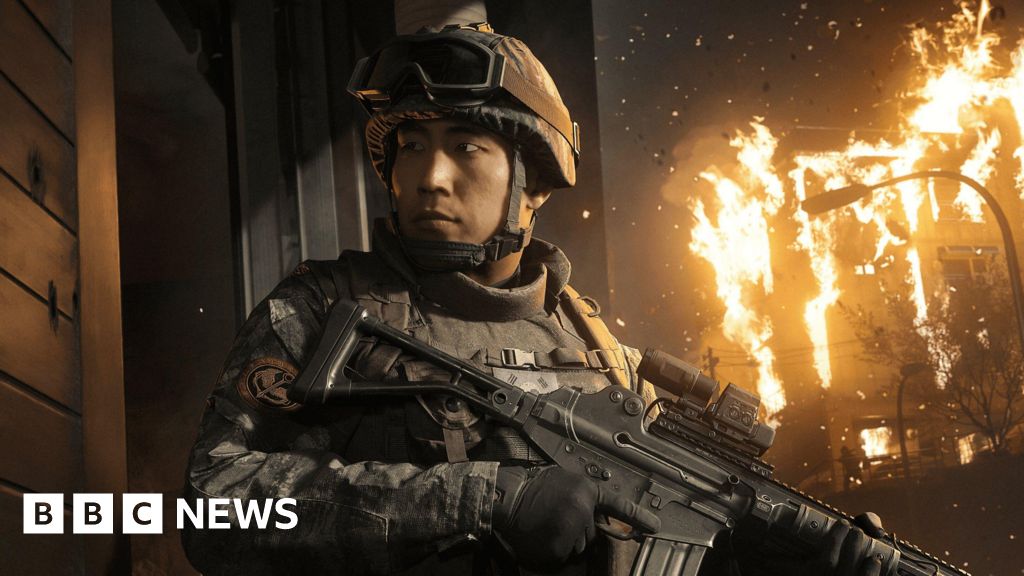
Video clips showing the aftermath of a deadly crush in Seoul will be removed from the latest Call of Duty game after an angry reaction from victims’ families.
Real life news coverage of the 2022 disaster which killed almost 160 people was included in an opening scene of Modern Warfare 4 to illustrate a fictional invasion from North Korea.
Bereaved families said they were “appalled” to see the footage – which included people being removed on stretchers, body bags on the street and resuscitation efforts – repurposed for the game.
Activision, which makes Call of Duty, has since apologised and confirmed it would be removed in the game’s next update on 12 November.
The crush happened in the narrow alleys of Seoul’s Itaewon district when more than 100,000 people went to the area to celebrate Halloween four years ago.
The streets became so tightly packed that people could not move and some were unable to breathe.
In a statement on Thursday, the families of those who died said the disaster “was a tragedy that caused hundreds of casualties, and citizens who took part in the rescue or witnessed it have suffered from trauma until now”.
“We cannot help but be appalled that the chaotic and desperate scene, in which many citizens at the site performed CPR to save one another and victims lay on the freezing street, was used to create a scene in a game.
“Using such an event as material for a game made for entertainment is in itself highly inappropriate and senseless.”
Activision confirmed it had used real news coverage of the disaster “to establish the game’s fictional narrative” but insisted it had “not intended to reference or trivialise the Itaewon disaster or any other real-world tragedy in any way, shape or form”.
Confirming on Friday that the footage would be removed in a statement, the company offered its condolences and apologised to the bereaved families and victims who have been hurt by this incident.
The decision was welcomed by the 10.29 Itaewon Disaster Bereaved Families Association, however the group told the BBC they had not received a direct apology from Activision.
Modern Warfare 4, which was released last week, had already faced criticism for basing the game on North Korea invading South Korea, as the two countries have been technically at war for decades.
Fighting stopped in the Korean War in 1953, but the two countries never signed a peace treaty and conflict is a very real worry in that part of the world.
BBC News World
Flávio Bolsonaro seen landing in Miami with family after Brazil presidential election defeat

Where has Bolsonaro been?
By Thomas Copeland and Jake Horton
Flavio Bolsonaro has not taken a straightforward route to the US, and BBC Verify has been tracking how he got there since leaving Brazil yesterday.
According to Argentina’s National Directorate of Migration, Bolsonaro crossed into the country over land late on Tuesday night local time, where he then boarded a plane with four family members.
Tracking data from Flightradar24 shows a Gulfstream G400 departed Puerto Iguazu in Argentina at 03:18 GMT on Wednesday to head to Guayaquil in Ecuador.
This matches the Argentinian authorities’ statement, which said Bolsonaro and his family “boarded a private flight dispatched by the company Baires Fly S.A. with a destination to the city of Guayaquil, Ecuador”.
The same private jet then departed Guayaquil at around 09:00 GMT, landing at Miami-Opa Locka Executive Airport just before 13:30 GMT where Bolsonaro was pictured getting off it.
How did we get here?
Bolsonaro emerged from the first round of voting in Brazil’s presidential election in early October as the frontrunner to be president, racking up 47% of the vote.
But in a run-off last weekend, he lost against the left-wing incumbent, President Lula.
Bolsonaro said he planned to challenge the result.
But when he next uploaded a video statement to social media, he said been ordered to by the Supreme Court to surrender his passports.
The order was made as part of an ongoing investigation into alleged money laundering. Bolsonaro has not been charged and has denied the allegations.
He said at the time that he had no plans to leave the country, but he never handed in his documents, and they were cancelled by authorities. Bolsonaro has not spoken in public since, and questions about his whereabouts have swirled.
Now, as we’ve seen, he has landed near Miami, Florida.
How Bolsonaro’s whereabouts became a hot topic
Vanessa Buschschlüter
Latin America and Caribbean editor
The past 24 hours have been awash with rumours and confusion all centred around one question: where in the world is Flávio Bolsonaro?
Speculation begins
The speculation was first triggered by a report on an Argentine news site which claimed he had crossed the land border between Brazil and Argentina and had boarded a private plane en route to the US.
Brazilian police took the rumours seriously. They checked border crossings but found no evidence the defeated presidential candidate had left the country, and Argentine officials said they had no reports of him crossing.
For a little while, it seemed like the defeated presidential candidate may just be keeping an uncharacteristically low profile after being unexpectedly beaten by his left-wing rival in the presidential run-off on Sunday.
‘No plans to leave Brazil’
In the last video he had uploaded to social media, he revealed that he’d been ordered to surrender his passports by the Supreme Court – an order he described as an “attempt to intimidate him”. He added that he had no plans to leave Brazil.
But then the deadline Bolsonaro set by the Supreme Court for him to surrender his documents came and went… without Bolsonaro appearing.
Where in the world is Flávio Bolsonaro?
This prompted the cancellation of his passports and attempts to establish where he was.
His lawyers said they did not know his whereabouts.
Then, several sources told the BBC and other broadcasters he was on his way to the US.
The US State Department confirmed it would issue him and his family with visas to enter the US.
There were even reports he had landed already.
‘I heard he was in Argentina’
But when reporters quizzed US President Trump about the matter, he said he simply said: “I heard he was in Argentina”.
A tweet by Argentine migration officials around the same time said Bolsonaro and his wife had crossed the border late on Tuesday and boarded a plane for Guayaquil, Ecuador.
However, it wasn’t clear at the time if that would be the final destination.
Lots of new questions
That same plane has now landed in the US… and Bolsonaro has been seen leaving it.
While this puts an end to the speculation about his whereabouts, it raises many new questions.
Stay with us as we unpack some of them.


Trump offers UFC CEO Dana White press secretary job
President Donald Trump offered UFC CEO Dana White the role of White House press secretary, but White declined, according to...


Democrats at Crooked Con reflect on a historic week
CNN's Donie O'Sullivan talks to Democrats and progressive activists who have gathered in Washington, DC, this weekend for …


Stephen Colbert rushed out of Harvard event, accosted by union protesters
Liberal former late-night host Stephen Colbert had to be rushed out of an event at Harvard after someone pulled a...


Josh Brolin renews vows with wife Kathryn in Vegas for 10th anniversary
Josh Brolin renewed his wedding vows with wife Kathryn in a conspicuously unbuttoned shirt. In a joint social media upload...


Alabama finally puts it all together, dominates LSU and leaves Lane Kiffin staring at $40 million CFP disaster
Alabama spent the past five days taking heat from across the country over its No. 5 ranking in the initial...


Tim McGraw says communication is key to surviving marriage changes
NEWYou can now listen to Fox News articles! Tim McGraw shared his insight into what the “most difficult” part of...


Democratic congresswoman calls Trump's chief of staff move 'desperate'
Democratic Rep. Madeleine Dean joined CNN's Jessica Dean and shared her reaction to President Donald Trump picking …


Bridget Fonda makes rare LA appearance 24 years after her last role
NEWYou can now listen to Fox News articles! Bridget Fonda stepped out for a rare public outing in Los Angeles,...


After the ‘bluenami’, where do Republicans go from here?
Republicans are taking stock of their political future after an unprecedented Democrat victory in the midterm elections.


Lane Kiffin falls flat against Alabama as massive LSU hype crashes into reality
When Lane Kiffin got off the bus for the Tiger Walk before the Alabama game, he was flanked by Shaquille...
-

 HealthNews2 weeks ago
E. coli cases possibly linked to Bengtson’s Pumpkin Farm, Will County health officials say
-

 Business2 weeks ago
AI agents are roaming around consumers’ bank accounts, and banks aren’t happy about it
-

 HealthNews2 weeks ago
RFK Jr.’s vaccine injury clinic could damage NIH hospital, board warns
-

 HealthNews2 weeks ago
First 2 flu-related deaths of 2026 season confirmed in Los Angeles County
-

 Entertainment2 weeks ago
Why Elizabeth Holmes’ movie ‘villain’ fiance is calling high-powered lawyers in Hollywood: sources
-

 HealthNews2 weeks ago
Petting Zoo Closed After E. Coli Investigation At Bengtson’s Pumpkin Farm
-

 Entertainment2 weeks ago
Janet Jackson Makes Rare Public Appearance In An Outfit That’s ‘Nasty’ In The Best Way
-

 Entertainment2 weeks ago
Tom Brady and Supermodel Candice Swanepoel Are Dating