
Food
Supreme Court to weigh energy companies’ bid to end Boulder climate-change lawsuit

Washington — When the Supreme Court returns to the bench Monday for the first time since late June, it will kick off its new term with a major case involving an effort by the city and county of Boulder, Colorado, to hold fossil-fuel producers accountable for the impacts of global climate change.
The lawsuit from Boulder is one of dozens filed by states and local governments against energy companies in state courts that seek money damages for past and future harms that they allege are caused by the buildup of greenhouse gases in the atmosphere, which has led to global warming.
The long-running dispute brought by Boulder targets Exxon Mobil, the nation’s largest energy company, and Suncor Energy, which operates two oil refineries in Colorado. The suit remains in its early stages, and the issue before the Supreme Court is whether the suit can proceed or is barred by federal law. A win for Boulder from the Supreme Court wouldn’t mean it will ultimately prevail against the fossil-fuel producers in state court.
“This is not a judgment about whether these cases will succeed. It’s a judgment about whether folks get to make their case,” said Jonathan Adler, a law professor at William & Mary who has written about federalism and environmental law and filed a friend-of-the-court brief in support of Boulder. “And even if they get to make their case, the scope of what they can pursue could well be narrowed and might well be narrowed significantly.”
Boulder’s lawsuit dates back to 2018. Filed in state court, the city and county allege that Exxon and Suncor’s conduct has caused or contributed to climate change, which has in turn forced Boulder to confront extreme heat, larger and more frequent wildfires and damage to the ecosystem, among other issues.
Boulder officials raised five claims under state law. They argue that the energy companies’ production and allegedly deceptive marketing of fossil fuels has led to “unchecked” use of their products that has caused a rapid rise in the concentration of greenhouse gases in the atmosphere.
Exxon and Suncor attempted to move the case to federal court, but that effort was unsuccessful. The companies also asked the Boulder County District Court to dismiss the case on the grounds that federal law foreclosed the claims against them. When the state court denied that request, the companies asked the Colorado Supreme Court to step in.
The state high court sided with the city and county of Boulder, and Suncor and Exxon appealed to the U.S. Supreme Court.
In addition to considering whether federal law precludes Boulder’s state-law claims, the Supreme Court asked lawyers for both sides to address whether it has jurisdiction to review the Colorado Supreme Court decision.
Only eight of the nine justices will participate in the arguments Monday, as the Supreme Court said last week that Justice Samuel Alito had chosen to recuse himself from the case. No reason was given for Alito’s decision. His financial disclosure for 2025 shows that he had individual holdings in two energy companies, ConocoPhillips and Phillips 66. He did not report individual stocks in either Exxon or Suncor.
Alito’s absence leaves open the possibility that the Supreme Court divides 4-4 in the case. If that happens, the decision of the lower court — the Colorado Supreme Court, in this case — would stand.
A “national problem”
Lawyers for Exxon and Suncor argued in Supreme Court filings that the Constitution and the Clean Air Act preclude claims that seek to address harms caused by interstate greenhouse-gas emissions. The Clean Air Act, they said, did not invite state law to apply to disputes involving interstate pollution.
If the Colorado Supreme Court’s decision is upheld, “it would authorize all fifty States, the tens of thousands of municipalities, and even the hundreds of millions of individuals in our country to ask local courts to establish countless, conflicting climate policies for the Nation,” Exxon and Suncor lawyers argued.
Additionally, the energy companies and the Trump administration, which supports Exxon and Suncor in the case, warned that efforts like Boulder’s to secure relief for the effects of greenhouse-gas emissions — including those released abroad — undermine the government’s control over foreign affairs.
“Such lawsuits would create an end-run around the United States’ existing diplomatic channels for addressing climate change in favor of innumerable state judicial ones,” lawyers for Exxon and Suncor said. “And the imposition of potentially devastating liability on fossil-fuel producers will undercut the government’s pursuit of primacy in global energy production.”
Because greenhouse gases emitted from sources in every state and around the world cannot be unmixed and traced, the companies warned that allowing all 50 states to apply their own laws would result in confusion. Only a “neutral, uniform federal law” can resolve disputes over the regulation of air and water, they said.
“It’s a national problem, so it requires a national solution,” Michael Williams, solicitor general of West Virginia, told reporters during a briefing Wednesday.
West Virginia and 25 other states are backing Suncor and Exxon Mobil and argue that Boulder’s lawsuit jeopardizes their ability to achieve their own policy goals on energy production and environmental protection.
“We don’t take issue with the idea that a state can actually regulate sources within its own borders. So if West Virginia wants to regulate a coal plant in West Virginia, we claim the right to do that,” Williams said. “In the same way, if Colorado wants to regulate emissions coming from Colorado in Colorado, they’re free to do that as well. What they’re not free to do is say, hey you emitters, anywhere in the world … we’re going to make you pay money for any of those emissions anywhere in the world.”
But lawyers for Boulder urged the Supreme Court to dismiss the appeal on the grounds that it does not have jurisdiction. If the justices opt not to, they said the Colorado Supreme Court decision should be upheld.
“Does anything implicit in the Constitution bar this suit?” they wrote in a filing. “Nothing does.”
Boulder noted there is often litigation to address the local impacts of problems that could benefit from international solutions, like food contamination, human trafficking and the fentanyl crisis. The city and county’s effort to hold energy companies liable is just another example, they said.
“That climate change is a global problem does not disempower states from redressing its local harms either,” they wrote in a filing. “This litigation is not an attempt to solve climate change; it merely asks that petitioners bear their fair share of local costs incurred in part because of their tortious conduct.”
Boulder also pushed back on the energy companies’ argument that the Clean Air Act preempts its claims, and said that law governs emissions, not the conduct of the upstream fossil-fuel producers. Plus, lawyers for the city and county said they did not sue for emissions, but over allegedly deceptive marketing and production, which the Clean Air Act does not regulate.
“Indeed, avoiding liability would not require reducing emissions at all — only telling the truth, so the public can make informed consumption decisions free of the distorting effect of petitioners’ misrepresentations,” they said.
The Trump administration argues that Boulder’s suit invites “needless diplomatic friction” with the foreign countries where Exxon and Suncor produce and sell their fossil fuels. But Adler, the William & Mary professor, noted that the Trump administration has withdrawn from international agreements that seek to address global warming and greenhouse-gas emissions.
The foreign-affairs argument “seems to suggest that any time the executive branch claims that it would like to negotiate in a space that could be implicated by companies being held liable for damages that they may have contributed to, that would really give the executive branch the ability to preempt any sort of litigation that it wanted. That can’t be the law,” he said. “If there was an actual conflict between an actual treaty, of course that could preempt state law. But we don’t even have that.”
Adler also said that Congress could weigh in and restrict suits against fossil-fuel companies for the harms tied to their products. In fact, it took similar action in 2005 when lawmakers passed a federal law that shields gun manufacturers from civil lawsuits that seek to hold them accountable for harms stemming from the criminal misuse of their firearms.
“If Congress believes that what’s going on here is a combination of plaintiffs’ lawyers and activists trying to make energy less available or less affordable, or to otherwise create pressure on fossil-fuel companies, Congress has the tools to address that,” he said. “That’s a job for the legislature, not a job for the courts.”
A decision from the Supreme Court is expected by summer of 2027.
Food
Four Fun Things

Will you be watching Sense and Sensibility, which comes out tomorrow in theaters? The NYTimes review calls it “visually lovely, emphasizing the wide gulf between the stuffy world of manners and pecking orders and the wild freedom of forests and moors” with a “looser and more realist feel than many other Austen adaptations, which run toward the corseted side of things.” Sign me up.
We host a lot of overnight guests, especially teenagers, and my friend Mo (of four kids fame) suggested we get an extra twin mattress. How smart is that? Since it’s a real mattress, it’s WAY comfier than an air mattress (never again); it’s light enough to easily carry up and down stairs; and we just slide it under one of our double beds for storage.
What delicious dinners have you made recently? We made white chicken chili (gift link) the other night, and the boys devoured it. Plus, it was even better the following day for a work-from-home lunch.
Good news: Rothy’s clogs and mules are currently up to 25% off. I keep my cozy slip-ons by the door to throw on for neighborhood hijinks, like running to the grocery store, walking around the block with a friend, or watching my kids do wheelies down the street (“Look, Mom!!!”).
P.S. More fun things, and an anxiety trick.
(Chili photo by Christopher Testani for The New York Times; food styling by Simon Andrews.)
Food
One Common Eating Habit Is Linked to Higher Risk of 2 Liver Diseases

It may be time to rethink those late-night raids on the fridge or the cookie and chip cupboard: A new study has linked out-of-hours snacking with two types of liver disease, cirrhosis and metabolic dysfunction-associated steatotic liver disease (MASLD).
Published in Clinical Gastroenterology and Hepatology, the comprehensive study analyzes data from 199,155 individuals, with a median age of 59. Participants are enrolled in ongoing health research and complete food and lifestyle questionnaires every 2–4 years.
The authors of the new study, from Oregon Health and Science University (OHSU) and Massachusetts General Hospital, found a 28 percent higher risk of cirrhosis and a 36 percent higher risk of MASLD among late-night eaters compared to those with more standard eating times.
Late-night eating was defined as eating “after bedtime” or “between dinner and bedtime.”
To put that increased risk into perspective, cirrhosis remained uncommon, with 315 cases among nearly 200,000 participants over the follow-up period.
The researchers think that our circadian rhythms, the built-in cycles that sync our bodies with daytime and nighttime, may explain the link.
“A few studies have hinted at this idea, but this is among the first long-term analyses to explicitly draw the connection to fatty liver disease,” says hepatologist Robert Wilechansky, from OHSU.
“We know the liver is very much in tune with the body’s circadian rhythms. So we’re interested in changing the timing of eating in a way that could make a difference in health, without changing the composition of what people eat.”
The median follow-up time for the study was 16 years, with adjustments made to factor in variables including age, body mass index (BMI), and physical activity. The late-night eating association remained significant after the adjustments.
While the study can’t prove direct cause and effect, and other factors might be at play here – sleep timing and quality weren’t accounted for in this analysis, for example – the researchers suggest that the different way the body processes food at night could be having an influence.
We all have multiple circadian clocks running in our bodies, and the liver does its own timekeeping as well as connecting to the main circadian rhythms.
It’s possible that the liver isn’t prepared to efficiently deal with food late into the evening, resulting in more fat building up and blood sugar levels rising – though these ideas will need further testing.
“Our findings add to the growing body of literature linking late-evening eating patterns to adverse metabolic and liver outcomes,” write the researchers in their published paper.
“This relationship is biologically plausible; higher evening caloric intake may lead to obesity and metabolic derangement via decreased insulin sensitivity and lower energy utilization at night.”
Further research could look at exactly what late-night eating consisted of – in this analysis the snacking time was logged, but not the snack – as well as measuring indicators like blood sugar and liver fat more directly.
An OHSU team that includes Wilechansky is already recruiting for a more thorough clinical trial.
“The effects of late-evening food intake on liver disease should be further studied in diverse populations, incorporating liver imaging and markers of liver disease severity,” write the researchers.
“Confirmation of these results would have the potential to impact best practices in nutrition for chronic liver disease.”
MASLD, also known as fatty liver disease, is when metabolic issues (such as obesity) lead to fat building up in the liver. In some people, it can cause scarring, which can then lead to cirrhosis, where the liver is permanently damaged and can eventually start to fail.
Knowing more about how these two conditions are triggered or exacerbated will help with prevention and treatments going forward. It could be that one way of reducing your risk of liver disease is as simple as being disciplined about eating times – an easier ask than a diet or exercise regime.
“We are seeing over and over again that the timing of behaviors, whether it’s sleep, eating or exercise, really matters,” says sleep and circadian physiologist Andrew McHill, from OHSU.
Food
U.S. producer prices post biggest gain in 4 1/2 years

WASHINGTON >> U.S. producer prices increased by the most in 4-1/2 years in September amid rising costs for goods and services, the latest indication of inflation broadening out beyond energy products.
The report from the Labor Department today also showed fairly large rises last month in key components that go into the calculation of the main inflation measures tracked by the Federal Reserve for its 2% target, leading some economists to still anticipate another interest rate increase this month.
Financial markets, however, continued to expect the next rate hike only in December. The government on Wednesday reported a broad increase in consumer prices in September. Inflation is being driven by the dragging U.S.-Israeli war with Iran, which is keeping oil prices elevated.
Though other data today showed a stronger-than-expected increase in retail sales last month, that was mostly because consumers paid more for gasoline. The underlying trend in retail sales slowed, consistent with economists’ expectations for softer consumer spending growth in the fourth quarter.
Inflation is outpacing wages, which have slowed amid tepid hiring, straining finances for consumers, particularly those in the lower part of what economists call a K-shaped economy.
“Today’s data reinforce a challenging economic crosscurrent: inflation is heating up, the consumer is still spending but with less underlying momentum and the labor market appears frozen rather than broken,” said Chris Osmond, chief investment officer at Fifth Third Wealth Advisors.
“For the Fed, that is an increasingly uncomfortable combination. A pause remains defensible, but the cost of waiting rises if inflation fails to cool.”
The Producer Price Index for final demand jumped 1.3% last month, the largest gain since March 2022, after an upwardly revised 0.5% rise in August, the Labor Department’s Bureau of Labor Statistics said.
Economists polled by Reuters had forecast the PPI increasing 0.5% after a previously reported 0.4% gain in August. In the 12 months through September, the PPI soared 6.3%, the biggest rise since December 2022. That followed a 5.6% advance in August.
Producer goods prices increased 2.6%, the largest increase since the government started tracking the series in December 2009. A 10.8% surge in energy prices accounted for more than 80% of the broad-based rise in goods prices. Gasoline prices rose 20.3%. Diesel fuel prices increased 21% and soared 115.2% year-on-year. Jet fuel cost more as did residential electric power.
Wholesale food prices rebounded 1.2% after declining for three straight months. Food is transported by road and rail, and last month’s jump could be an early sign of the effects of record diesel prices spilling over to the broader economy.
Fresh and dry vegetable prices vaulted 41.0%, but egg prices dropped 31.9%.
Excluding the volatile food and energy components, producer goods prices rose 0.3%. The so-called core goods gained 0.4% in August. Services prices shot up 0.8% after climbing 0.2% in August. A 1.4% surge in margins for trade services accounted for nearly half of the broad-based increase in prices.
“The change in margins is an indicator firms are facing higher prices, and could pass those costs on to consumers,” said Mark Streiber, economic analyst at FHN Financial.
The cost of transporting freight by road increased 3.8%, while airfares jumped 5.0%, both reflecting higher oil prices. Hotel and motel room prices shot up 5.6%. The cost of legal services rose 0.3%. Airfares, hotel and motel rooms, and legal costs are among the key components that go into the calculation of the Personal Consumption Expenditures price indexes.
Economists’ estimates for the increase in September’s core PCE inflation ranged from 0.31% to 0.36%, which could round up to 0.4%. That would translate to a year-over-year rise of 3.1%. Core PCE inflation gained 0.2% in August and advanced 3.0% on a year-over-year basis.
Financial markets saw a roughly 30% chance of a rate increase at the Fed’s October 27-28 policy meeting, CME Group’s FedWatch Tool showed. The odds of a rate increase were slashed by underwhelming payroll gains in September as well as cooler-than-expected PCE inflation readings for July and August.
The Fed in September raised its overnight benchmark interest rate by 25 basis points to the 3.75%-4.00% range.
Stocks on Wall Street were trading higher. The dollar eased against a basket of currencies. U.S. Treasury yields slipped.
In a separate report, the Commerce Department’s Census Bureau said retail sales rose 0.8% in September after jumping 1.3% in August. Economists had forecast retail sales, which are mostly goods and are not adjusted for inflation, gaining 0.3%.
Receipts at service stations surged 6.4%. Sales at auto dealerships rose 0.2%. There were also increases in receipts at furniture, electronics and appliance stores as well as online retailers.
Sales at food services and drinking places, the only services component in the report, increased 1.1%, which economists tied to spending by higher-income households.
Receipts at building material as well as sporting goods, hobby, musical instrument and book stores fell. Sales at miscellaneous store retailers dropped 3.0%.
Retail sales excluding automobiles, gasoline, building materials and food services edged up 0.1% last month after surging 1.2% in August. These so-called core retail sales correspond most closely with the consumer spending component of gross domestic product. While economists believed consumer spending grew at above a 3.0% annualized rate in the third quarter, they saw the momentum fading by year-end.
“Higher gas prices are beginning to bite because, unlike earlier in the year, there’s no offset this time around from fiscal policy,” said Michael Pearce, chief U.S. economist at Oxford Economics. “We expect … the rise in diesel prices to result in larger price hikes across a broader range of goods and services over the coming months.”
Growth estimates for the July-September quarter are around a 3.0% rate. The economy grew at a 2.2% pace in the second quarter. A third report from the Labor Department showed initial claims for state unemployment benefits rose 1,000 to a seasonally adjusted 199,000 last week, still near a 57-year low.
“Paychecks may not be keeping up with inflation, but at least people are still getting them,” said Heather Long, chief economist at Navy Federal Credit Union.
Food
Ilhan Omar’s husband Tim Mynett speaks out as HSI fraud probe grows

While Ilhan Omar, D-Minn., has not been seen publicly since federal agents raided her Washington, D.C., residence on Monday, her political consultant husband was once again spotted emerging from their shared rental home this week.
Tim Mynett was seen Wednesday stepping out in the neighborhood to walk their Golden Labrador Retriever dog Teddy, a second time later that same day to take out the trash and a third time to walk out his wife’s staffer.
“There are rumors that the congresswoman left the country, is that true?” Mynett was asked while on an evening walk with Teddy.
“You guys are annoying the hell out of all the neighbors around here, man,” he told Fox News Digital when approached about the developments this week, including President Donald Trump weighing in on the saga.
One of Omar’s congressional staffers was captured the same day bringing into the couple’s home two large bags from fast food chain Burger King. Security escorted her to the door and staked out in front of the house after she entered with the meal.
ILHAN OMAR’S EMBATTLED HUSBAND APPEARS AT SCENE OF HSI RAID IN MIDST OF CRIMINAL FRAUD INVESTIGATION
Rumors swirled that Omar fled from the country following the raid carried out by Homeland Security Investigations (HSI) as part of a criminal fraud investigation looking into the Somali-born congresswoman’s immigration paperwork, as first reported by Fox News Digital.
Omar’s cellphone and passport were reportedly seized by federal authorities during the search.
The congresswoman’s staff helped to get her birth year adjusted from 1981 to 1982 in the Minnesota Legislative Reference Library, according to reporters. Omar gained citizenship automatically through her father’s naturalization since she was reportedly 17 years old at the time. If Omar was born in 1981, she would have been 18 years old, meaning the validity of her citizenship could be threatened because she was no longer a minor.
The altered birthdate was published during her entire time serving in Minnesota’s House and for months into her time serving in Congress.
When asked about the federal investigation earlier this week, Mynett told Fox News Digital he has “no concerns” about what federal authorities will find on his wife while investigating her immigration pathway.
“My wife came here when she was 12 years old as a child war refugee,” Mynett said. “No concerns.”
His comments to Fox News Digital come after Omar’s relatives were reportedly issued subpoenas as part of HSI’s investigation into the congresswoman’s immigration paperwork. At least two of Omar’s relatives were subpoenaed, one of which is reportedly Omar’s sister, Sahra Noor.
ILHAN OMAR’S HUSBAND INSISTS HE HAS ‘NO CONCERNS’ AMID FEDERAL IMMIGRATION INVESTIGATION
Fox News Digital asked Mynett about President Donald Trump publicly questioning Omar’s net worth by alleging on Truth Social that her accountant may have reported fraudulent money when her previous financial disclosure listed the couple’s shared net worth as high as $30 million.
“Why did Ilhan Omar report a Net Worth of up to 30 Million Dollars just a short time ago, and then immediately say, “Oh, I made a mistake! It’s really $100,000.” Could it be that her highly paid accountant actually reported the money that was stolen from her fraudulent activities in Minnesota? Would something like that be possible? Do you think the accountant actually gave the right number the first time, 30 Million Dollars, and then she was forced to disavow because she never would have been able to report where that much money came from? She must have freaked out when she saw that money!” Trump posted to Truth Social on Tuesday.
“Where did her house come from, where did her cars come from, and what about her lovely place in Washington, D.C.? I didn’t know that Congressmen and women made that kind of money, but I do know her husband, according to information and belief, makes almost nothing, so it couldn’t have come from him. How many people did she illegally bring into our Country from Somalia? America wants answers, and we want them, NOW!”
Mynett is at the center of yet another investigation into Omar — this time looking into her finances.
Following Monday’s HSI raid, U.S. Attorney Jeanine Pirro said Tuesday that her office is also investigating Omar’s financial disclosures about reporting of her and Mynett’s shared net worth.
OMAR FACES MOUNTING SCRUTINY AFTER FRAUD RINGLEADER SENTENCED TO 41 YEARS
Scrutiny of Omar’s finances intensified after her 2024 congressional financial disclosure listed business interests associated with Mynett valued between $6 million and $30 million. Omar’s office subsequently said the figures were incorrect and amended the filing.
The largest change in the documents was from Mynett’s assets. His reported ownership interests in both his winery and venture capital advisory firm, which were previously valued in the millions of dollars, are listed with no value now.
In Omar’s 2024 financial disclosure records, Mynett’s share in his winery was valued between $1 million and $5 million, and his share at the venture capital advisory firm was valued between $5 million and $25 million. Now, his equity interests are both listed at $0.
Omar’s office previously told Fox News Digital that Mynett has partners in both businesses and said the earlier disclosure mistakenly reflected the businesses’ total equity rather than his ownership interest. The office also said the original filing listed assets without accounting for liabilities.
CLICK HERE TO DOWNLOAD THE FOX NEWS APP
Officials noted that the investigation into Omar’s financial disclosures is unrelated to the raid on her home.
Food
KFC to switch from Pepsi to Coca-Cola in 2027
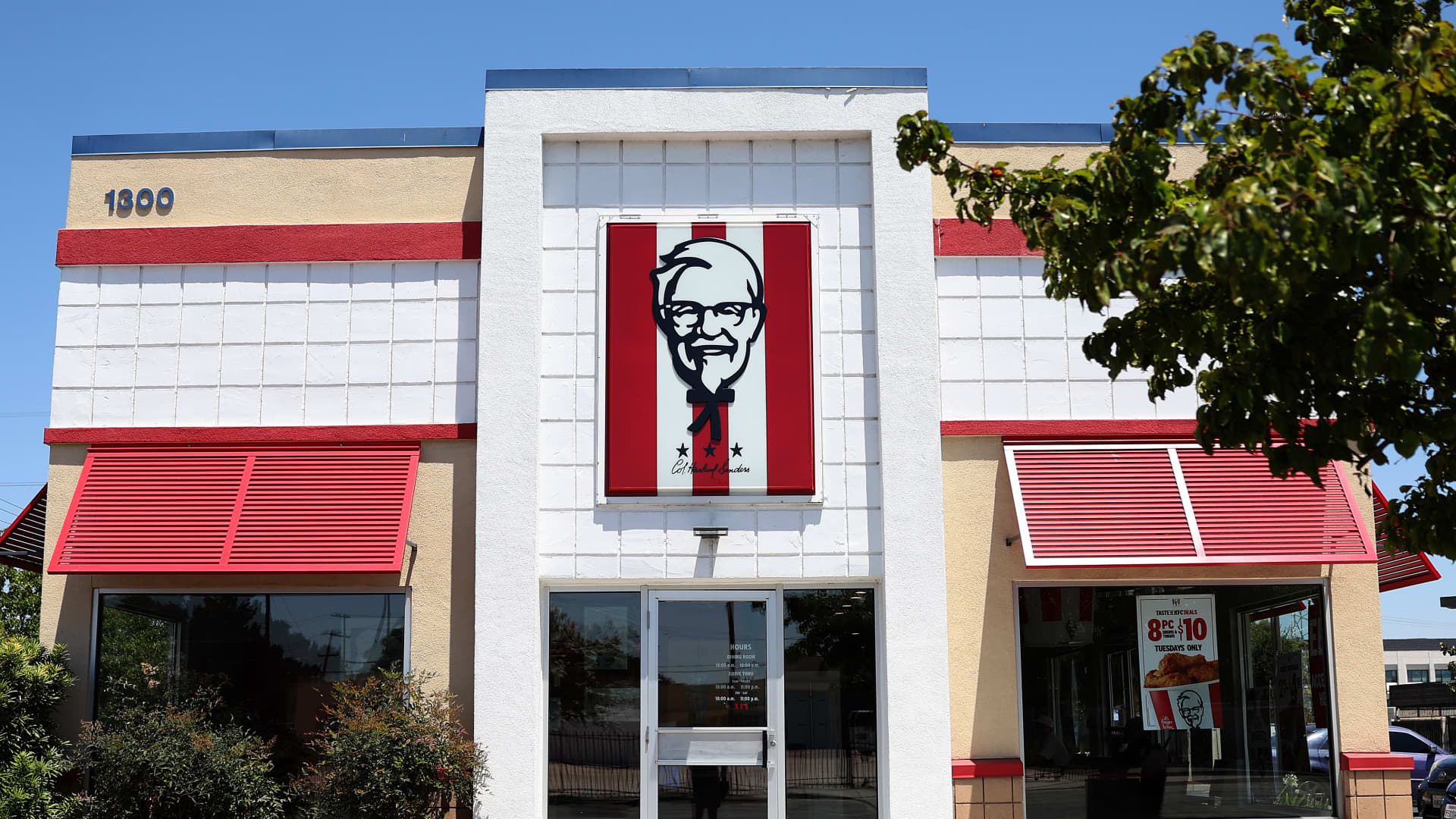
KFC’s U.S. restaurants will ditch PepsiCo and switch to Coca-Cola beverages next year, marking the first time in decades that the Yum Brands chain has changed its drink supplier, the restaurant company said Thursday.
Some of KFC’s international markets serve Coke products, but the chain’s U.S. restaurants have stuck with PepsiCo drinks ever since Pepsi bought KFC in 1986. At the time of the acquisition, KFC was Coke’s second-largest fountain account, trailing only McDonald’s. Pepsi later spun off KFC, along with sister chains Pizza Hut and Taco Bell — but even as the combined Yum Brands, the company stayed loyal to its previous owner. Without Pepsi, Taco Bell would not serve its iconic Mountain Dew Baja Blast.
The change comes as KFC aims to win back U.S. diners, who have ditched the fried chicken chain for rivals such as Chick-fil-A or Popeyes.
“This decision is a critical step in the Kentucky Fried Comeback,” KFC U.S. President Catherine Tan-Gillespie wrote in a memo to franchisees and employees obtained by CNBC. “A new beverage offering, with a new partner in Coca-Cola, gives us a platform to innovate, meet changing tastes and give customers more reasons to choose us.”
For many fast-food chains, beverages have become a critical way to attract consumers. A number of restaurants, including McDonald’s and Taco Bell, have broadened their drink offerings with options such as refreshers or “dirty soda.” For its part, KFC recently unveiled new drinks, including iced coffees and shakes, at Open House, its innovation restaurant in McKinney, Texas.
Coke told CNBC earlier this year that the company has helped many of its restaurant partners create new drinks.
KFC expects to be pouring Coke beverages in all of its U.S. restaurants by the end of the first quarter of 2027, Tan-Gillespie said.
Tan-Gillespie also said that Pepsi remains an important partner for KFC’s parent company and the chain’s international markets.
For decades, Coke and Pepsi have tussled over important restaurant partners, which represent both a sales opportunity and the chance to grow the visibility of their beverage brands.
It is unusual for large restaurant chains to switch beverage providers, but not unprecedented. In 2024, Pepsi poached Subway, the largest U.S. restaurant chain by number of locations, from Coke. Besides KFC, Coke has wooed away a number of notable Pepsi customers in recent years, including Culver’s, Arby’s and Panda Express.


Southwest announces major overhaul of loyalty program
Southwest Airlines is overhauling its loyalty program, adding a new top-tier status with unlimited Companion Pass trips and giving travelers...


Esther McGregor and Emilio Sakraya reportedly set to star in ‘Fourth Wing’ TV series
Esther McGregor and Emilio Sakraya are set to star in the small-screen adaptation of Rebecca Yarros’ hit romantasy novel “Fourth...


Elon Musk reveals ‘world’s first flying car’ at Tesla event
Elon Musk has revealed Tesla’s latest model, which he claims will be the world’s first flying car, using technology from...


Ukraine resuming strikes on Russian oil sites is a ‘disgrace’
President Donald Trump has labeled Ukraine’s resumption of strikes on Russian oil refineries a “disgrace,” the latest salvo in his...


The Surface Laptop Ultra delivers on most of Microsoft’s promises
Microsoft promises one machine for dev, AI, and gaming, and mostly gets there. Nick Indge – Oct 16, 2026 8:00...


Jennifer Meyer speaks out on ex-husband Tobey Maguire officiating her wedding to Geoffrey Ogunlesi
Jennifer Meyer gushed about her “unconventional” wedding to Geoffrey Ogunlesi — and having her ex-husband, Tobey Maguire, officiate. “I genuinely...


What The Sit-To-Stand Test Reveals About How Well You’re Aging
LOADINGERROR LOADING What does it mean to be healthy? Lab work results, body mass index and even the ability to...


New York City Council to question SpaceX official over AI safety
The Indian Computer Emergency Response Team (CERT-In) announced that AI models under testing broke into the live systems of Indian...


Tesla’s new Roadster makes a flying debut, hitting 60 MPH in under a second
Tesla unveiled its long-anticipated Roadster on Thursday during a dramatic event in which the vehicle used compressed-air thrusters to fly...


Blue Origin is going all in on the New Glenn rocket
Blue Origin announced a major expansion of its already considerable Florida launch facilities on Friday morning with the intent of...
-

 Entertainment2 weeks ago
‘Verity’ Posts $4.5M Previews, ‘Digger’ $1.2M
-

 Entertainment2 weeks ago
Rick Devens Wins In Season 28 Finale
-

 Business2 weeks ago
Tesla Cybercab pressure to expand after rocky first month in Austin
-

 Business2 weeks ago
OpenAI safety employee resigns, claiming the company’s ‘culture is broken’
-
 Business2 weeks ago
Energy Secretary Chris Wright says Trump was “well aware of the risks to energy flows” before launching Iran war
-

 Entertainment2 weeks ago
Disney pays $115 million for Yamaha’s Orange County headquarters
-
Business2 weeks ago
Leaked Anthropic IPO prospectus: The US government could hurt our business
-

 HealthNews1 week ago
Des Moines clinics stumped by unidentified virus