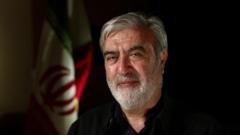
Tehran will never cede control of Strait of Hormuz, senior Iranian politician tells BBC24 minutes agoLyse DoucetChief international correspondentBBC”Never.” A senior Iranian legislator says that’s the time when they’ll be willing to give up control of the Strait of Hormuz. Ebrahim Azizi is a former commander of Iran’s Islamic Revolutionary Guards Corps. He told the BBC in Tehran that “it’s our inalienable rights.” “Iran will decide on the right of passage including permissions for ships to pass through Strait. “And he said that’s about become enshrined into law. Azizi, a member of a hardline-dominated parliament, is a key player. He described the strategic strait Iran weaponised during this conflict as one of its assets to face the enemies. Azizi reflects the thinking of some of the top decision-makers in the new order that has emerged from this war. The new order is militarised and dominated by hardliners. Most notably, the Islamic Revolutionary Guard Corps. Mohammad Eslami explains that Iran’s first priority after the war was to restore deterrence. The Strait of Hormuz was one of Iran’s main strategic leverages. “Tehran will discuss how other nations could benefit from Iran’s framework for the Strait of Hormuz, but control is what matters most.” “But this is a future that some of Iran’s neighbors reject, who are already furious over its attacks against their countries during the five-week war. The war has now been put on hold in a fragile interim ceasefire. In a recent interview, Dr Anwar Gargash described it as “an act of hostile piratery”. He warned that if Iran did not relinquish control of these waters, it would set “a dangerous precedent” for other strategic waterways around the world. Azizi retorted, “They are the pirats who sold our area to the Americans,” in reference to US military bases throughout the Middle East, which, along other infrastructure, have been repeatedly targeted by Iran’s drones and rockets. He added that the US was “the largest pirate in the entire world”. Azizi said that “we have always said that we need to work together in order to secure our region”. That vision has been shattered by most Gulf states except for Oman which is one of Iran’s closest friends and controls the southern coast. It was involved in discussions with Tehran this month to ensure smooth and safe passage of vessels. There have also been signs of disagreements – it’s unclear how deep – within Iran’s political and military elite. This was displayed in recent rare and strongly-worded criticism of Iran’s Foreign Minister Abbas Araghchi who posted a statement to social media on Friday stating that the Strait of Hormuz is “completely opened”. US President Donald Trump responded with a capitalised “THANK YOU” in The state-run Mehr news agency said the foreign minister’s post had “provided the best opportunity for Trump to go beyond reality, declare himself the winner of war and celebrate victory”. Another news agency, Tasnim, described it as a “bad and incomplete tweet that created misleading ambiguity about reopening of Strait of Hormuz”. Araghchi stressed that only ships authorised by IRGC navy were allowed through designated routes which required payment. Azizi dismissed any impressions regarding rifts within regime The fate of this strait is decided by the highest levels of government. The Iranian government has not yet confirmed whether its own team led by Mohammad Bagher Ghalibaf will return to Pakistan. Local media reports that Iran will not attend as long as the US blockade on Iranian ports is in place. Trump has repeatedly ordered Iran open this maritime route, including in a social media post with expletives on 5 April where he warned Iran it would “live in hell” if they didn’t comply. He’s now accused Tehran trying to “blackmail’ the US. Azizi mocks, “I don’t think I can expect much from someone who lies.” “We are defending our rights against American blackmail. “Like other high-level Iranians he mocks Trump on social media. The ban will be lifted when it is safe, but Azizi, who has a parliamentary portfolio that includes national security, refused to say when. He only said, “When it is safe and secure, we will lift the restriction so that the enemy won’t take advantage”. I also asked him about the recent arrests and what Amnesty International and other human rights groups claim are dozens death sentences given to protesters arrested during the January nationwide protests which were crushed by lethal force and killed thousands. Recently, several executions have taken place, including those of young people. Azizi reiterated the government’s claim claiming that the US and Israeli spy services (the CIA, and Mossad respectively) were involved in the unrest. He dismissed the growing concern among some Iranians about the tightening of internal security. “In war, there are always rules, even if it’s a ceasefire,” he said. No sign of a deal but mediators are still communicating. Iran claims that the Strait of Hormuz is closed again after ships attacked.