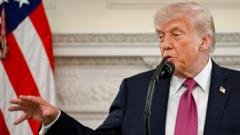
Trump buys time for Iran deal after frantic day of diplomacy20 minutes agoDaniel BushWashington correspondentDANIEL HEUER/POOL/EPA/ShutterstockTuesday began as a frantic day of diplomacy in Washington, with Air Force Two ready to fly Vice President JD Vance to Islamabad for another round of peace talks between the US and Iran.Several hours later, Air Force Two hadn’t taken off and the negotiations were postponed. Donald Trump announced he would extend a ceasefire with Iran that was set to expire Wednesday evening to give the regime more time for them to come up with a “unified proposition” to end the conflict. In between, Trump weighed all his options while the world waited. Trump’s decision was the second time in two weeks that he had backed down from a threat to escalate a war. He bought himself more time to wind up a conflict approaching the two-month mark. Vance never announced the Islamabad visit, leaving Washington guessing. The White House was left in a difficult position, as Iran had not officially committed to attend the talks. It was therefore up to the White House to decide whether or not Vance should be sent. Steve Witkoff, Trump’s son in law Jared Kushner and other senior members of Vance’s US negotiating team flew from Miami to Washington instead of going straight to Islamabad. Vance was invited to the White House to attend “policy meetings”, as the president and senior advisers discussed what to do. The president claimed that he took the decision on the request of Pakistan which has been mediating talks between Washington and Tehran. Trump said, “We were asked to delay our attack on the country of Iran until their leaders and representatives could come up with an unified proposal.” This time, Trump did not specify the length of the ceasefire. He set a deadline of two weeks for the first ceasefire earlier this month. He made contradictory comments in interviews with the press, saying that the talks were progressing well but also warning that he might consider resuming war if Iran refused negotiations. James Jeffrey, former US ambassador to Iraq, Turkey and the Middle East, told BBC that there is no “clear formula” for ending wars. Jeffrey said that Trump is not the first US president who has “threatened significant military escalation” while also putting an attractive deal on the table. “REUTERS/Akhtar soomroTrump’s open-ended statements on Tuesday were more measured than his previous social media attacks against Iran. This may indicate Trump’s desire for an end to a war which has roiled global economics and is unpopular among anti-interventionists in Trump’s Maga support. Brian Katulis is a senior fellow with the Middle East Institute. He said that Trump’s decision has also increased uncertainty over the length of the war. Katulis said that Trump’s decision raises the question of how he will deal with the economic pain Americans are feeling and the political pain from his base. “He hasn’t answered the questions which are still driving this crisis.” “With the ceasefire extended, the US has more time to reach a lasting peace deal. But major questions remain. Iran has called the US blockade of Strait of Hormuz an act of warfare. Trump did not restart the war, but he made no indication that he would lift the blockade. The US had hoped this would force Tehran to back off. Trump bought himself some time. Iran has not shown any interest in ending their nuclear program or supporting proxy groups in the Middle East, two “red lines” Trump demanded to be included in a final peace deal. Trump claims that an Iranian flagged cargo ship was seized. Oil prices rise after Trump’s claim.