India Top Stories Feeds
‘We Failed To…’: Why Serbia’s RTV Anchor Said Sorry On Air After Years Of Biased News Coverage

Published By :
,
Powered by: Crux.
Last Updated:October 28, 2026, 19:45 IST
Reading an official statement live on air, news anchor Goran Eror stated: “The right questions were not asked, or no questions were asked at all. We owe viewers an apology….”
Rapid Read
The Serbian public broadcaster Radio Television of Vojvodina (RTV) issued an extraordinary live on-air apology to its viewers for delivering years of one-sided, biased, and pro-government news coverage.
The apology was broadcast during the opening of its 5:00 PM bulletin on Monday, 26 October 2026, immediately following a historic election defeat for the ruling alliance of authoritarian leader Aleksandar Vučić.
THE ON-AIR APOLOGY
The bulletin began by showing footage of public celebrations following the election victory of the “Student List” opposition movement—scenes that RTV admitted it had deliberately failed to broadcast the night before.
Reading an official statement live on air, news anchor Goran Eror stated: “For many years, the public service broadcaster failed to fulfil its role. Things were kept quiet, one-sided information was provided and reporting was uncritical. The right questions were not asked, or no questions were asked at all. We owe viewers an apology for that.”
Eror added that while several journalists and editors within the organization had fought internally to uphold ethical journalism practices and work freely, they “did not win the battle in time,” but vowed that the fight for media independence would continue.
POLITICAL CONTEXT
At A Glance
1 .
Radio Television of Vojvodina issued an on-air apology on 26 October 2026 for years of biased, pro-government news coverage.
2 .
The apology followed the defeat of Aleksandar Vučić’s ruling alliance in the early parliamentary elections held on 25 October 2026.
3 .
The opposition Student List movement captured over 52% of the vote in the election.
4 .
RTV acting editor-in-chief Nenad Ćaćić resigned following the broadcast and was replaced by Blažo Popović.
The public apology directly followed the 25 October 2026 early parliamentary elections. Former President Vučić’s ruling alliance was decisively defeated by the Student List, a popular anti-corruption movement that captured over 52% of the vote.
Following the broadcast, Nenad Ćaćić, the acting editor-in-chief of RTV’s main channel (RTV 1), resigned from his post. He was replaced by journalist Blažo Popović, alongside Predrag Novković as the new programme director. The systemic shift met long-standing demands from the independent Nezavisnost (“Independence”) trade union regarding state capture of the media.
The shifting political landscape caused immediate turmoil across other pro-regime media outlets in Serbia. Protesters reportedly entered the newsrooms of other government-aligned networks, such as Informer TV, demanding similar apologies for propaganda and biased reporting.
This unprecedented event mirrors a similar media shift that occurred in Hungary earlier in 2026, where the state broadcaster MTVA similarly issued an on-air apology for years of institutional lying following a change in government.
News18 Newsletter
Handpicked stories, in your inbox
A newsletter with the best of our journalism
About the Author
Manjiri Joshi
At the news desk for 20 years, the story of her life has revolved around finding pun, facts while reporting, on radio, heading a daily newspaper desk, teaching mass media students to now editing speci…Read More
Stay updated with News18 for the latest India and world news, in-depth explainers, entertainment, sports, and cricket news. Check out Compare India ✅ to explore the latest commerce deals, exclusive discounts, and top shopping offers.
First Published:
October 28, 2026, 19:39 IST
Disclaimer: Comments reflect users’ views, not News18’s. Please keep discussions respectful and constructive. Abusive, defamatory, or illegal comments will be removed. News18 may disable any comment at its discretion. By posting, you agree to our Terms of Use and Privacy Policy.
Loading comments…
Read More

India Top Stories Feeds
Khawaja book: Sandpapergate a stench Cricket Australia cannot shake

There are stories that can damage reputations, tarnish legacies and put asterisks next to achievements.
Never-ending sagas, claim and counterclaim, one word against another.
Are Pep Guardiola’s trophies at Manchester City rendered worthless by financial rule breaches? Would either of the Houston Astros or Boston Red Sox have won the World Series without sign stealing? How much fake blood was spilled by Harlequins?
Now, sandpapergate has morphed into Usman Khawaja’s-book-gate, opening old wounds and asking questions that have hung over Australian cricket since Cameron Bancroft hid some DIY equipment in his jockstrap in 2018.
Published on Tuesday, Khawaja’s autobiography – Sabr – is only suggesting what plenty have suspected for the past eight years.
It always seemed likely that Bancroft, Steve Smith and David Warner were not the only three members of the Australia camp with knowledge of the sandpaper plot.
Careful with his words, perhaps for legal reasons, Khawaja has said enough to reignite a row that once consumed the entire nation of Australia. Crucially, the former batter has not named individuals and, in the opinion of Cricket Australia (CA), not presented enough evidence to merit a new investigation.
It was Nathan Lyon who once said Australia know how to “headbutt the line, but we won’t go over it”. Khawaja has headbutted the line of whistle-blowing, without taking a full toot.
There are some key quotes from Khawaja, taken from the autobiography and his public statements of the past few days.
Writing in Sabr, Khawaja says: “I’m going to use the term ‘we’ throughout this chapter, because ‘we’ are team Australia – although in this book I’m not speaking on behalf of anyone but myself. This will be my recollection of events.”
In a video posted on Instagram, he added: “You would have seen when I mentioned it was all of us, that’s implying that whether we like it or not, we are all responsible for what happened together. As a team, we need to take that collectively. That is all.”
Then, to ABC on Tuesday: “I’m not here to go on a witch hunt. All I’ve ever wanted is for us to take accountability as a team.”
Rather than directly accusing his team-mates, Khawaja is asking the Australians present in Cape Town to share the blame that was given to Smith, Warner and Bancroft. An individual can be culpable for what happened, even if they were not the one to directly rub sandpaper on the red leather.
Khawaja has also explained that much of his motivation for telling this story comes from loyalty to his childhood friend Warner.
Warner has had his say and, like Khawaja, has not named anyone else he feels should be implicated.
There are questions as to why neither man has spoken up over the past eight years. If they felt strongly, they could have come forward at any time, even if Khawaja is proved correct in his claim he was not interviewed in the original investigation.
Then again, there was the issue of squad harmony, loyalty to their friends and protecting their places in the Australia team. Warner may yet reveal more in the future, ditto for Smith and Bancroft.
This latest evidence has done little to shift views that were entrenched before Khawaja put pen to paper. Darren Lehmann, Australia coach at the time, has stuck to his story of denial, as has Mitchell Starc. Chadd Sayers, another seamer in the 2018 squad, has come out in support of Khawaja and Warner.
So far, so much stalemate.
It leaves the ball in the court of the other Australian players involved, the coaching staff and CA.
On Tuesday, CA chief executive Todd Greenberg said, with a straight face, he did not see “any compelling reason” to reopen the investigation into the ball-tampering saga.
What evidence could compel Greenberg to act? Even if Khawaja has not directly pointed the finger at anyone else in the dressing room that day, surely CA should be curious about the claims that are currently causing so much reputational damage, especially when Khawaja and Warner have called into question the rigour of the original investigation.
The Cape Town files have never been made public. In 2021, David Saker, an Australia assistant coach in 2018, called for them to be released. Now, Saker is not named but is among the staff Khawaja has implicated in the book by claiming a member of the backroom team encouraged Bancroft. That allegation alone surely merits further scrutiny by CA.
Of the players in the Australia XI on that Saturday at Newlands, three were punished; now Khawaja has accepted his share of responsibility, making four.
Tim Paine inherited the captaincy, a reign that ended in his own scandal. Mitchell Marsh remains an active player and is about to skipper Australia in the limited-overs series against England. Marsh will speak on Thursday. His brother Shaun was also in the team in Cape Town. That makes seven.
Then there are the four bowlers, possibly the greatest four-man attack ever assembled.
Starc, with more Test wickets than any other left-arm bowler in history. Lyon, the most successful orthodox finger-spinner in Test cricket. Josh Hazlewood, the reincarnation of Glenn McGrath. Pat Cummins, the clean-cut current Australia captain, an Ashes and World Cup-winning leader.
That they are still Australia’s first-choice bowling unit is testament to their talent, longevity and desire. They remain as a quartet, hunting prizes that have previously eluded them over the coming year – an away Test series win in India, winning the Ashes in England.
As it stands, they are adhering to a joint-statement made in 2021 that they “did not know a foreign substance was taken on to the field”.
The plausibility of elite bowlers not knowing a ball has been tampered with is up for debate. The quartet point to the fact the on-field umpires on the day did not see any reason to change the ball at the time. In contrast, Khawaja said the effects of sandpaper could leave swirls on the leather.
For Cummins, Starc, Hazlewood and Lyon, champion bowlers, the insinuation hangs over them. It is hard to prove a negative. Perhaps the off-ramp is for the foursome to themselves call for a reopening of the investigation? It could clear their names.
As it stands, Australian cricket is stuck in a sandpaper limbo, a halfway house full of historical scandal, innuendo and unanswered questions. According to former captain Michael Clarke, further inaction would leave supporters unable to “trust what’s real”.
Perhaps there is another scenario, the unpalatable prospect of those at the top having no desire to open the door for fear of what might lie behind it. It is worth remembering that the past two Australia captains have lost the job in disgrace: Smith for sandpaper, Paine for sexting.
Is that worse than the status quo? Sandpaper is the stench Australian cricket cannot shake.
India Top Stories Feeds
Grenades, grief and a deepening political divide: five takeaways from Sonia Gandhi’s new memoir

Few love stories have been as closely entwined with a nation’s history as that of Sonia and Rajiv Gandhi. The former’s much-awaited political memoir, Belonging, offers a strikingly candid account of her journey from a small town in Italy to the highest echelons of power in India – all for love, she says.
The veteran Congress party leader has been fiercely protective of her personal world. In Belonging, she opens up for the first time about the extraordinary twists and turns of a life that has largely unfolded in full public view. (The Guardian’s Hannah Ellis-Petersen has a rare in-person interview with Gandhi, and you can read an excerpt from the book here.)
Belonging, published today, contains moving glimpses of Gandhi’s private grief. She writes about the loss of her first child, who died shortly after birth, and the chilling discovery of grenades in a room of their house after Operation Blue Star, the 1984 military operation against Sikh separatists at the Golden Temple in Amritsar. She also provides a ringside view of several turbulent chapters in Indian politics, not least the violent assassinations of her mother-in-law, Indira Gandhi, in 1984 and her husband, Rajiv, in 1991.
Her book also revisits some of the darker episodes that have dogged the Gandhi family and the Congress party, including Indira’s imposition of the Emergency in June 1975, a 21-month period during which civil liberties were suspended, political opponents were jailed and the press was gagged, which caused fear and dismay across the country. In Gandhi’s account, italso caused a rift within the family.
Ultimately, Gandhi’s memoir is a vivid record of six decades of India’s political transformation from the Congress-dominated secular republic she moved to in 1968 until today, when Hindu nationalism has become the dominant political force under Narendra Modi.
Here are five key takeaways from her memoir and what they reveal about the state of Indian politics today.
Gandhi has had no real contact with Modi for the last 12 years
Gandhi’s account offers a glimpse of how deep the political polarisation runs in Indian politics today. In one revealing passage, Gandhi writes that she has had “practically no real contact” with Modi in the 12 years he has led the nation. In fact, at times when the two have been in the same rooms, such as the speaker’s small chamber, Modi “tends to look away, avoiding eye contact”, she says. On occasion, she adds, he has asked briefly about her health after a hospital stay.
For her, this breakdown is a departure from the past, when leaders on opposing sides of the aisle “would treat one another with cordiality”. After the 2001 terror attack on parliament, Gandhi immediately called then-BJP prime minister AB Vajpayee to enquire about his safety, a gesture he appreciated.
Gandhi sees an increasingly authoritarian style of politics, in which those in power seek to “belittle and torment” opponents. For years, Gandhi’s son, Rahul, has been the subject of BJP’s ridicule, which calls him Pappu, a derisive term intended to portray him as inexperienced and naive. She adds that similar things are happening elsewhere in the world, an observation that can be read in the context of US President Donald Trump’s use of personal insults and ridicule against opponents.
It’s lonely at the top for India’s female politicians
India has an illustrious history of women occupying top leadership positions, long before many other democracies. But their rise has often come at a cost – that of loneliness in navigating a male-dominated political world.
In the book, Gandhi describes a 2012 conversation with Hillary Clinton on the countrys’ female leaders and their backgrounds. In her recollections of Indira, she shares that, despite wielding authority, Indira could feel besieged and profoundly alone, and this was particularly acute, Gandhi writes, in the months leading up to the declaration of the Emergency by her mother-in-law.
Gandhi also writes of her own isolation, including when she decided to take on the leadership of the Congress out of a sense of duty to her family’s political legacy.
Those in power are increasingly stonewalling the press
Among the many ways in which Gandhi charts the erosion of India’s democratic conventions in Belonging, one particularly telling shift is the changed relationship between the media and those in power. She recalls a time when journalists had opportunities to question prime ministers directly.
In 12 years in power, Modi has not addressed a single press conference on his own. He has sat in on one press briefing at the conclusion of an election campaign, and appeared alongside US presidents at joint press encounters after bilateral meetings, where they took questions from the press. Modi has consistently avoided facing journalists in an open forum, and his media interactions have largely been one-on-one interviews with sympathetic, pro-government news anchors or in one much publicised exchange with a Bollywood actor who asked him how he liked to eat mangoes.
And it’s not just media …
The book’s publication has brought renewed attention to concerns about the space for free expression in contemporary India, and the extent to which apprehensions about repercussions may influence what can be said, written and published.
Penguin Random House India was to publish Gandhi’s memoir but withdrew from the project in August. Gandhi told the Guardian that it was “uneasy in general with the criticism of the government” and said it had dropped the book after she declined certain suggested edits. Penguin has disputed her account, saying that the suggestion it decided not to publish the book because of refused editorial changes “does not accurately reflect the circumstances”.
The book, released in the US by Alfred A Knopf, is being published in India by HarperCollins.
In June, Penguin had also pulled out of plans to distribute graphic journalist Joe Sacco’s The Once and Future Riot, about the 2013 Muzaffarnagar communal violence. The publisher cited an inaccurate map of India and unresolved citation issues. Sacco, however, blamed the decision on the “current political climate in India”.
She’s had quiet fallouts with the ‘thoroughly dishonest’
Western political memoirs, particularly by former heads of government or senior politicians, are often forthcoming in naming political adversaries, recounting private exchanges and offering candid assessments of colleagues. David Cameron’s 2019 memoir, For the Record, took aim at his former friend, Michael Gove, describing him as “mendacious” and a “foam-flecked Faragist”.
Gandhi, in contrast, is restrained. She writes warmly of the closeness between the Gandhi family and that of Bollywood superstar Amitabh Bachchan, whose parents she lived with when she first moved to India, but she makes no mention of the subsequent estrangement between the two families. In another instance, she does not name the political leader she describes as “thoroughly dishonest” and who she says she trusted in 1999, when Congress unsuccessfully attempted to form a coalition government.
What else we’re reading about
Art | Art Mumbai runs from 12-15 November at the Mahalaxmi Racecourse. Among the highlights of this year’s edition is artist Baaraan Ijlal’s collaboration with the celebrated lyricist Javed Akhtar, turning his evocative Urdu couplets into paintings. The two will be in conversation with curator Ranjit Hoskote on Friday.
Government | The official bungalow of Andhra Pradesh’s chief minister, N Chandrababu Naidu, was renovated by a government-owned enterprise for Rs 6.5 crore (£518,000), according to the Indian Express (£). The renovation work on the Delhi property included was said to have had a major makeover.
Film | Bollywood’s ambitious rendering of Hindu epic Ramayana, starring Ranbir Kapoor and Sai Pallavi, was released on 5 November. Touted as the most expensive Indian film ever made, it earned praise from the Guardian’s Peter Bradshaw, who described it as “thoroughly engaging, rousing and spectacular”.
Your Diwali celebrations
Readers from India and around the world on the festival of lights and tell us how they celebrated.
double quotation markIn India, Diwali comes to you. You can see it in the streets, hear it in the neighbourhood and feel it in the atmosphere. In the UK, it is different. Life carries on around you. But traditions do not have to disappear when you move countries – they can change shape. A small light in a quiet room can carry the same meaning as an entire street illuminated for Diwali. Aman, Plymouth, UK
double quotation markMy favorite part of Diwali back home was getting up before sunrise on Narak Chaturdashi and having a ceremonial bath, followed by a breakfast of traditional Marathi Diwali snacks. I have been living abroad for over 10 years now and it’s always a bittersweet time of the year where I miss my family and the general vibe of Diwali in India. But I am trying to build new traditions as one half of an Indian-Austrian couple, which includes trading the traditional boxes of mithai for Manner Schnitten and marzipan. Charu, Germany
double quotation markThere used to be more of a community spirit to Diwali. As kids, we would be tasked with going door to door, exchanging sweets and snacks with neighbours (sometimes to our great displeasure, because it made for awkward conversation with those we had annoyed with our antics). Nowadays, the celebrations are mostly private. Group celebrations are walled off within exclusive clubs, families light their own fireworks almost competitively, and people send each other sweets through a delivery service. Samyuktha, Chennai
Count it
A number worth knowing
52,878
The government has approved the sale of a 60.7% stake in IDBI bank to Canadian Fairfax Holdings for Rs 52,878 crore (£4.22bn).
Vibe check
It’s hard to take one’s eyes off Muhammed Riswan when he’s at work. The 23-year-old football freestyler from Areekode in Kerala’s Malappuram district conjures tricks with the ball in a delicately choreographed dance. It glides between his feet, next it is rolling on to his back right before he leaps into the air to catch it with one hand.
Riswan, who’s been freestyling for eight years, is one of the two Indians to win Instagram Rings 2026 award recognising creators. The other is Chanel model Bhavitha Mandava.
Riswan’s big break came with a video filmed at Keralamkundu waterfall, where he pulled off a freestyle move before gracefully arching the ball into the water. The clip has since clocked more than 600m views. Last year, he was invited to watch his sporting idol, Lionel Messi, play in Argentina.
Get in touch
India Top Stories Feeds
After Diwali, 93 of the world’s 100 most polluted cities are in India: Worst AQI as high as 868; New Delhi not in Top 10

Sounak Mukhopadhyay
Sounak Mukhopadhyay covers trending news, sports and entertainment for LiveMint. His reporting focuses on fast-moving stories, box office performance, digital culture and major cricket developments. He combines real-time updates with clear context for everyday readers. Sounak brings newsroom experience across breaking news, explainers and long-form features. He has a strong emphasis on accuracy, verification and responsible storytelling. His work tracks audience behaviour, celebrity influence and the business of sport and cinema. He helps readers understand why a story matters beyond the headline. Sounak has contributed to widely read digital publications. He continues to build a body of journalism shaped by consistency, speed and editorial clarity. He is particularly interested in the intersection of media, popular culture and public conversation in contemporary India. At LiveMint, he writes daily coverage as well as analytical pieces that interpret numbers, trends and cultural moments in accessible language. His approach prioritises factual depth, balanced framing and reader trust. The reporting aligns with modern newsroom standards of transparency and credibility. Outside daily reporting, he explores storytelling across formats including podcasts, filmmaking and narrative non-fiction. Through his journalism, Sounak aims to document the rhythms of modern entertainment and sports while maintaining rigorous editorial integrity. Sounak continues to develop audience-focused journalism that connects speed with substance in a rapidly-changing information environment. His work seeks clarity, trust and lasting public value in every story he reports.
India Top Stories Feeds
Sony revives iconic 1979 Walkman design with MDR-3R USB-C headphones: Check price in India

Livemint
For about a decade, Livemint—News Desk has been a credible source for authentic and timely news, and well-researched analysis on national news, business, personal finance, corporates, politics and geopolitics. We bring the latest updates on all the listed companies on BSE and NSE, startups, mutual funds, Union ministries, geopolitics, and untapped human interest stories from around the world, helping our readers to stay informed on the latest developments around the globe. Our Coverage Areas 1. Companies: Comprehensive news and analysis on listed and unlisted companies, corporate announcements, corporate chatter, C-suite, business trends, hiring alerts, layoffs, work-life balance, world’s top billionaires and richest and more. 2. Personal finance: Insights into mutual funds, small savings schemes like – PPF, SSY, post office savings scheme, stock to watch, personal loans, credit cards, top bank FDs, real estate, income tax and more. 3. Politics: Comprehensive coverage of general elections, state elections and bypolls, Lok Sabha, Vidhan Sabha, Parliament, PMO, PIB, finance ministry, home ministry, among other union ministries and government departments. 4. National News: From metro cities like Delhi, Mumbai, and e to untapped stories from rural India, we cover human interest, health, education, crime and courts, and law and order, among other areas of public interest. 5. Economy: In-depth analysis of India’s macro and micro-economic indicators like- GDP, inflation, forex, fiscal deficit, current account deficit, interest rate cycle, economic recovery, RBI circulars, indirect taxes, GST, Insolvency and Bankruptcy imports, exports and everything that impacts Indian economy. 6. Geopolitics: Well-rounded and deeply researched coverage on US News, Oval Office European Union, Ukraine Russia War, middle-east crisis, royal families and global leaders like – Donald Trump, Vladimir Putin, Kim Jong Un, Xi Jinping and premiers of other leading economies in the world. Meet the Team 1. Gulam Jeelani, Political Affairs Editor 2. Sugam Singhal, Senior Assistant Editor 3. Chanchal, Assistant Editor 4. Sanchari Ghosh, Chief Content Producer 5. Pratik Prashant Mukane, Chief Content Producer 6. Sayantani Biswas, Chief Content Producer 7. Ravi Hari, Deputy Chief Content Producer 8. Garvit Bhirani, Deputy Chief Content Producer 9. Akriti Anand, Senior Content Producer 10. Jocelyn Felix Fernandes, Senior Content Producer 11. Swastika Das Sharma, Content Producer 12. Mausam Jha, Content Producer 13. Riya R Alex, Trainee Content Producer
India Top Stories Feeds
‘City of immigrants’: Who is Nithya Raman, the Los Angeles mayor-elect?

Nithya Raman, mayor-elect of Los Angeles, held back tears as the enormity of her victory began to sink in.
“This city has given me and my family so much,” Raman, an Indian-born urban planner who came to the United States at the age of six, told supporters in Los Angeles on Thursday night, after projections showed her winning the mayoral race.
Recommended Stories
list of 3 items
list 1 of 3The blame game: How the US midterm shock is shaping Israel’s race for PM
list 2 of 3Generation Z and young voters help redefine US politics after midterms
list 3 of 3Harmeet Dhillon, top US civil rights official under Trump, resigns
end of list
“The idea that Angelenos voted for an immigrant to be their next mayor at this moment in American history is so deeply moving to me,” the 45-year-old said.
Raman’s victory means that three of the world’s most influential cities – New York, Los Angeles and London – will now be led by individuals of South Asian descent.
A democratic socialist, she also gives the progressive movement another leader in a major US city, after New York and Washington, DC.
The result came amid a dominant showing by Democrats in US midterm elections, in which the party wrested control of both chambers of Congress and scored its biggest landslide victory in half a century. Democratic Socialists of America (DSA), which backed Raman’s campaign, also claimed an impressive series of wins, with 105 of its endorsed candidates on track to secure elected office, according to the group.
For Raman, the victory provides a bigger platform to address central planks of her political vision for the US’s second-largest city, including tackling its longstanding homelessness crisis and expanding affordable housing.
The Asian Democrats of Los Angeles County (ADLAC) congratulated Raman on becoming the first Asian-American elected to lead Los Angeles and said it looked forward to working with her to “deliver for our communities”.
“We saw a wave of change across the country this election, and Los Angeles was no exception,” ADLAC President Zahra Hajee said. “The political establishment should take note: Voters want real solutions and a government that actually works for them.”
From southern India to LA City Hall
Raman was born in the state of Kerala, in southern India, and moved to the US with her family at the age of six.
She studied at Harvard University before earning a master’s degree in urban planning from the Massachusetts Institute of Technology (MIT).
After completing her studies, Raman moved back to India and launched an initiative to improve urban governance in the southern city of Chennai.
In 2013, she moved to Los Angeles, where she co-founded a nonprofit organisation to support people experiencing homelessness. The organisation, SELAH Neighborhood Homeless Coalition, stresses that unhoused people are “fellow members of our community worthy of the same dignity, respect and representation afforded to any housed person”.
Raman also spent a year as entertainment director of Time’s Up, an organisation founded by Hollywood figures to raise money for legal support for victims of sexual harassment.
Her foray into politics came in 2019, when she shocked Los Angeles’s political establishment by defeating incumbent city councilman David Ryu and becoming the first DSA-backed candidate elected to the council. She credited a major grassroots organising drive for that victory.
Raman’s run for mayor this year came as another surprise to the local political scene, as most Democratic Party leadership stuck with incumbent mayor Karen Bass. Raman entered the race at the 11th hour, reversing her earlier endorsement of one-time ally Bass. She said Los Angeles had reached a “breaking point” and was “no longer a place of opportunity for too many”.
Bass was endorsed by prominent Democrats such as California Governor Gavin Newsom, former Vice President Kamala Harris and former House Speaker Nancy Pelosi.
In the end, none of that mattered.
Homelessness ‘a moral failing’
Raman’s mayoral campaign focused on expanding affordable housing, addressing the city’s decades-old homelessness crisis and protecting immigrants.
Her campaign described the city’s housing crisis as “the compounding moral crisis of our time”. Growing desensitisation to homelessness, it added, “is a moral failing”.
“Every time we see one of our neighbors living and dying on the streets, we should be shocked,” a campaign policy statement said. “Instead, in Los Angeles, it has become routine.”
Raman envisions a new approach to addressing homelessness, including expanding medical teams for people living in encampments or on the streets, alongside huge new investment in housing.
She estimates her policies will halve the number of people sleeping in tents and encampments throughout the city by 2028, when the Olympic Games will come to Los Angeles. As of 2025, the city had some 44,000 homeless people, including 27,000 staying on the streets, in vehicles or encampments, according to the Los Angeles Homeless Services Authority.
Raman has also pledged to replace the city’s police chief, whom she says has “lost the confidence” of residents by failing to curb federal immigration raids carried out by the Immigration and Customs Enforcement (ICE) agency.
“Federal raids have left Angelenos afraid to live in the city they call home – where they work and raise their families,” said Raman’s campaign. “That has to stop.”
While Raman was championed by many progressive voices, she initially faced a rift with the DSA over not making the Boycott, Divestment and Sanctions (BDS) movement against Israel an official part of her policy platform.
Raman has said she believes Israel is committing genocide in Gaza. In an October statement to DSA clarifying her position on BDS, Raman said she believes the best way for Los Angeles residents to express solidarity with Palestinians is through “non-violent protest, legislative action, and diplomatic pressure, including BDS”.
In a close vote, the DSA decided against revoking the endorsement granted to Raman by its local Los Angeles chapter, and ultimately celebrated her election victory.
In her victory speech, Raman promised to restore what she called an ambitious, creative and entrepreneurial Los Angeles.
“For too long our broken and unjust status quo has convinced Angelenos that this is the best that we can do,” she said.
‘I am myself’
Raman joins a growing number of leaders with immigrant backgrounds in global metropolises.
In New York last year, Zohran Mamdani was elected as the city’s first South Asian and Africa-born mayor. Like Raman, he has Indian roots; Mamdani’s father is a leading scholar and his mother an internationally renowned filmmaker.
Overseas, Sadiq Khan, the son of Pakistani immigrants, has been the mayor of London since 2016. And in Toronto, Olivia Chow, who moved to Canada from Hong Kong at the age of 13, has served as mayor since 2023.
Raman’s rise has drawn comparisons with Mamdani’s. Both have immigrant backgrounds, belong to the DSA, have advocated major changes to urban policy, including on housing, and sought protections for immigrant communities.
Ana Oaxaca Carrasco, assistant professor of political science at the University of Wisconsin – Madison, said Mamdani and Raman both connect to immigrant communities through their policies and personal experiences.
“These leaders embody the multicultural realities of the cities they represent,” Carrasco told Al Jazeera. “Their names, identities, lived experiences and immigration stories have been visible parts of their political appeals.”
“By openly identifying as immigrants, they have broken barriers in political representation in ways that may resonate with immigrant communities across national origins,” Carrasco added.
Raman has said she is flattered by comparisons to Mamdani but is careful to distinguish herself.
“Mamdani is one of the most popular politicians in America right now, and I’m very grateful to be compared to someone who is that skilled as a communicator and a leader,” she said in an October interview with Vanity Fair.
“But I am different. I am myself.”

Hegseth Impeachment Effort Blocked in Key House Vote
House GOP leaders successfully killed a push to impeach Defense Secretary Pete Hegseth in a surprising show of unity from...


Trump’s private 2021 letter to Biden revealed in upcoming memoir
In his forthcoming book, former President Joe Biden discloses the contents of a 2021 letter written by President Donald Trump...


Scott Colom says tight Mississippi Senate race is almost over
Democratic Mississippi Senate Candidate Scott Colom tells CNN's Jake Tapper and Annie Grayer when he thinks his race will be...


Conveyor belt of storms unloads on Pacific Northwest
The north Pacific is cranking out one storm after another, sending relentless rain and snow into Alaska, British Columbia and...


Hegseth survives, but Dems say more impeachments could follow
House Republicans narrowly blocked an effort to impeach Defense Secretary Pete Hegseth, voting 211-204 to defeat the …


Man who admitted to dismembering wife remains emotionless as guilty verdict is read
A jury found Virginia man Naresh Bhatt guilty of first-degree murder Tuesday, rejecting his claim on the stand that his...


‘Mike Hammer,’ ‘Fat City’ Star Was 85
Stacy Keach, a commanding actor whose work includes movies like “Fat City” and the starring role in “The New Mike...


Shopping sucks. Blame your feed.
Shopping used to be fun. Now it's all microtrends and algorithm-approved outfits. Audie Cornish, Ari Shapiro, and Amy Odell …


California voters reject billionaire tax
Voters in California have rejected a measure to impose a one-time 5% wealth tax on residents with net worth over...
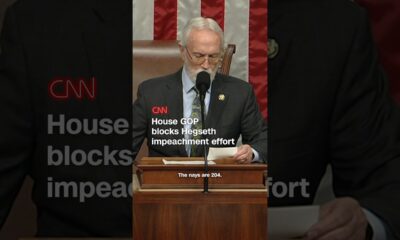

House GOP blocks Hegseth impeachment effort
The House voted to refer the measure to a committee, effectively killing the resolution to impeach Defense Secretary Pete Hegseth...
-

 Entertainment2 weeks ago
‘Baywatch’ Star Erika Eleniak on Track to Hit $1 Million in 1st Year on OnlyFans
-
HealthNews2 weeks ago
The Most Powerful Obesity Drug Yet Has a Hidden Benefit-and It Happens While You Sleep
-

 Business2 weeks ago
Dollar General overcharged millions at checkout for years, FTC and 20 states allege
-

 Business2 weeks ago
In China, the AI bubble has already burst
-

 Entertainment2 weeks ago
Inside Matthew Perry’s ‘struggle’ ahead of the 2021 ‘Friends’ reunion
-
Entertainment2 weeks ago
I’m a Bus Driver at Walt Disney World at 51 Years Old; Great Benefits
-

 Entertainment2 weeks ago
Taylor Swift, Travis Kelce wedding props deemed too expensive, dangerous revealed
-

 HealthNews2 weeks ago
Your Blood Pressure Could Be Higher Than You Think. These 7 Fruits May Help Bring It Down, Say Experts