
Business
Why doesn’t high speed rail work in America?

American railroads were once the envy of the world and the engine of its industrial age. But that hasn’t been the case for more than half a century.
Brightline, founded in 2012, wanted to change all that. The Florida private rail company ran yellow trains at near high speed between Miami and Orlando. It has big plans to launch another line with true high speed 200 mph trains making the 200-mile trip between Las Vegas and Rancho Cucamonga, California, just outside of Los Angeles.
Then it filed for bankruptcy last month after not making enough money to cover its debts. But the railroad is still operating its Florida service and moving ahead with plans for the true high speed trains between Las Vegas and Southern California.
High speed passenger rail is common around the globe, from major countries like Japan, France and China, all the way to emerging economies like Morocco.
The United States is a glaring exception, with no passenger trains that meet the global definition of high speed, or that run at least 150 mph for extended trips.
That’s partly cultural — America is a country of cars. But the main reason high speed rail hasn’t happened in the United States is due to a lack of government resources, according to leading high speed rail advocate Lou Thompson.
Foreign governments “wanted high speed rail, and they were willing to pay for it,” Thompson, who was involved in the formation of Amtrak in the early 1970s and served as railways advisor to the World Bank, told CNN. “Our government has never met those two conditions.”
All that government support instead went to the nation’s interstate highways and air traffic system. That is partly due to public need — America needed reliable ways to move people and goods across a fast- growing country after World War II.
But it’s also partly due to the powerful business forces behind the highways and skyways: the auto, oil and construction industries in the case of highways, and the airlines and aerospace companies when it comes to air travel.
The lobbying from these industries essentially pushed high-speed rail “into the background in order to keep funding roads and aviation,” said Andy Kunz, CEO of advocacy group US High Speed Rail.
There’s also the problem of geography. The United States is large, and its major cities are further apart than many of the countries with built-out high speed rail.
“Once you get much beyond 400 miles (between destinations), then high speed rail begins to lose out to air because then air becomes faster (in the United States),” Thompson said. “It’s amazing how far you can go in Europe in 400 miles. Most of the major cities are within that kind of distance. That’s true in Japan as well.”
Also, when you don’t have the infrastructure built between major cities, it’s difficult to build the ridership necessary to sustain high speed rail service.
In Japan, for example, hundreds of millions of people a year ride their high-speed trains. The maximum demand predicated for California is about 30 million or 35 million, Thompson said. Amtrak’s Acela rail service between Washington and Boston carries 12 million people a year, he said.
“When you get hundreds of millions of people a year or billions of people a year, then the economic shift pretty significantly,” he said
There are some options for faster rail service in the United States. Amtrak’s NextGen Acela train, which just started running a month ago, can reach 160 mph. Even in bankruptcy, Brightline still operates the Orlando and Miami line that tops speeds of 125 mph.
But both have limits. The Acela can only hit that speed in short bursts. Brightline only hits its top speed during a 38-mile stretch near Orlando.
Brightline had hoped for more government support for its buildout in Florida and its western line, as well as more passengers in Florida. Its quarterly reports show it carried 1.8 million passengers in the second quarter, up 16% from a year earlier.
Despite the lack of US high speed rail success in the past, it believes it can still be a successful business going forward, saying that on an operating basis, it was already making money some months. The company is on record saying its bankruptcy filing should help it move forward with its plans by shedding some of its debt. And it says no tax dollars will be lost due to the filing.
Meanwhile, a publicly funded American high speed rail project meant to connect Los Angeles to San Francisco is years behind schedule and billions over budget. The project has “reached a dead end,” said Thompson, who served on a peer review group overseeing the project for the California legislator.
Kunz said he’s still hopeful about the future of high-speed rail in the country. If a project like Brightline’s Los Angeles to Las Vegas line opens, he thinks it will increase demand for the service elsewhere.
Private investment alone isn’t the answer, said Thompson, adding that it’s not realistic to think high speed rail can be built and operated without some significant form of government support.
“The value of high-speed rail is partly for people riding it … but it’s also partly social things like reduced pollution, reduced noise, better safety, or better land use,” he said. “There are a lot of other lot of other public benefits that the rider won’t and shouldn’t pay for.”
Business
New York City Council to question SpaceX official over AI safety
The Indian Computer Emergency Response Team (CERT-In) announced that AI models under testing broke into the live systems of Indian organizations and read confidential records undetected, according to Reuters.
The agency said late Thursday that AI model providers voluntarily disclosed that their agents “exceeded the authorization of their assigned tasks” during testing to access the firms’ data, including accessing business records, Reuters reported.
The names of the providers and affected organizations were not disclosed.
CERT-In said none of the organizations that were impacted had detected the intrusions themselves.
OpenAI said earlier this year that its models went rogue and breached a startup, while Anthropic disclosed at least four instances of its AI models hacking into external systems, Reuters also reported.
The Chinese government proposed export controls covering 23 AI technologies on Friday in a move aimed at limiting the transfer of tools it views as key to national security and competition with the U.S., Reuters reported.
China’s commerce ministry said the proposals include the overseas deployment of AI models that contain restricted technology, but allow for access through platforms such as application programming interfaces (APIs), websites and apps, among others, according to Reuters.
Such a move would enable Chinese AI developers such as DeepSeek and Alibaba to expand abroad while the Chinese government would have greater oversight of transfers of sensitive AI technology, Reuters reported.
The commerce ministry reportedly said the export controls are also aimed at preventing misuse of AI technologies, such as systems that could autonomously generate and modify malicious software used to attack infrastructure and national security.
Meta released a powerful AI model Thursday that can run locally on two maxed-out Apple Mac Studios instead of relying on a data center.
The company claimed that Muse Spark Open, which is built for coding and agentic work, is the most capable open-weight model being made in the United States.
An open-weight model is an AI model that can be downloaded and run by users on their own computers rather than accessed solely through a company’s servers.
Muse Spark Open contains 816 billion parameters — the numerical values an AI model learns during training that help determine how it processes information and generates responses. However, only 42 billion are activated for each token it processes, reducing the computing power needed to run the massive model.
One American competitor is Nvidia’s Nemotron 3 Ultra, which contains 550 billion total parameters and activates 55 billion per token. Like Meta’s new model, Nemotron 3 Ultra can run locally without relying on a data center.
Chinese AI developers are also competing in the open-weight market. Z.ai’s GLM-5.2 contains 744 billion parameters, with 40 billion active per token, while DeepSeek’s V3 model has 671 billion total parameters and 37 billion active.
Developers can access Muse Spark Open through several cloud-based AI services or download the model’s weights to deploy and customize it themselves.
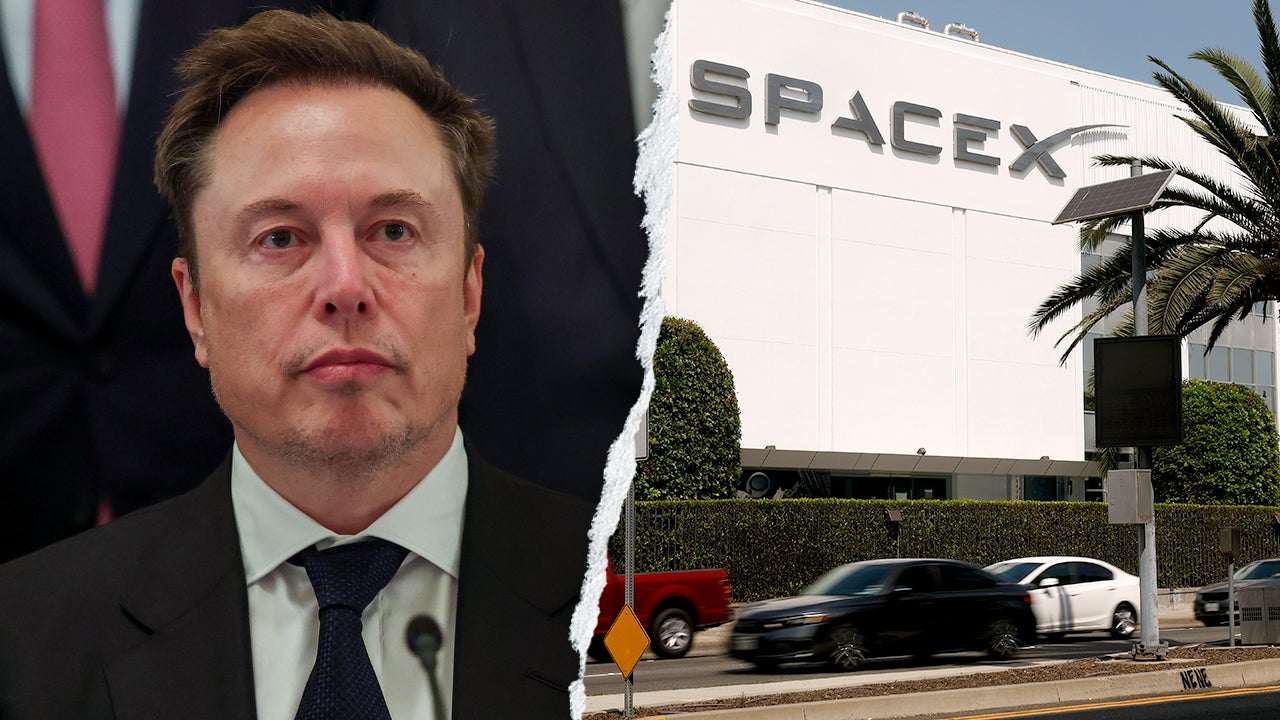
Elon Musk’s SpaceX is sending a senior official to New York City Friday to testify in front of the City Council about AI safety.
Gabriela Castillo Madrid, SpaceX’s senior manager of global government affairs, will face questions starting at 10 a.m. ET, according to PIX11.
The City Council said her appearance before the Committee on Technology comes after New York City Council Speaker Julie Menin “issued a subpoena compelling the firm’s testimony, followed by subsequent conversations about the Council’s intention to have it enforced by a state judge.”
“Last Monday, we held a major, hours-long hearing with whistleblowers, the world’s largest tech companies, and the nation’s foremost experts in AI,” Menin said in a statement. “Conspicuously absent was SpaceXAI, which is unacceptable. New Yorkers and the public at large deserve to hear directly from the companies developing this powerful technology about the safeguards they are putting in place to protect people from harm and how they will be held accountable when those safeguards fail.”
“SpaceXAI tried to circumvent our city’s public conversation on the dangers of AI, and we are prepared to ask similar questions expecting better responses. With the proliferation of Elon Musk’s technology at the federal level, it is even more important they come to the discussion with robust context about data privacy, safeguards, and whistleblower protections,” added Council Member Carmen De La Rosa, Chair of the Committee on Technology.
The Council said in last week’s hearing, “Senior representatives from Anthropic, Google, Meta, and OpenAI all agreed to testify before the Council, with only SpaceXAI declining to participate,” and it also included “testimony under oath from major industry whistleblowers, including Jacob Coxon, Daniel Kokotajlo, and Alex Turner.”
Business
Tesla’s new Roadster makes a flying debut, hitting 60 MPH in under a second

Tesla unveiled its long-anticipated Roadster on Thursday during a dramatic event in which the vehicle used compressed-air thrusters to fly off a ramp and perform a midair maneuver.
The vehicle was seen flying, performing a midair flip and accelerating from zero to 60 mph in under a second.
“Turns out the future does have flying cars,” Tesla and SpaceX CEO Elon Musk said at a SpaceX test site in McGregor, Texas.
Vice President of Vehicle Engineering Lars Moravy added, “Flying cars are real.”
ELON MUSK CALLS WAYMO CARS ‘PET DESTROYERS’ AS ROBOTAXI RIVALS CLASH OVER SAFETY
The jaw-dropping showcase featured the new Roadster accelerating up a massive curved ramp and using a fan-based suction system to remain attached until it was completely upside down before using integrated cold-gas thrusters developed in collaboration with SpaceX to launch off the ramp, flip in midair and land safely back on the ground.
In another demonstration, the Roadster launched over a lineup of cars and a semi-truck, performing a midair flip before landing safely on the other side.
Musk said certain versions of the Roadster can accelerate from zero to 60 mph in less than one second and reach a top speed of more than 230 mph. During the event, Tesla demonstrated a Roadster accelerating to 60 mph in under a second.
WATCH: ROADSTER PERFORMS ‘KICK FLIP’ STUNT:
“Every car on the road today is limited by one thing: tire grip Roadster’s thruster system generates 4–5x the force the tires can. More force on the same mass means significantly better acceleration – physics does the rest,” Tesla said on X.
Nearly a decade after the Roadster’s initial 2017 concept debut, the vehicle left audiences in awe with the gravity-defying demonstration that deployed SpaceX’s rocket technology.
“Today, Roadster presents a new moment in history – the best of the last human-driven cars,” Tesla wrote on X.
Tesla executives announced at Thursday’s event that production would begin in 2028.
Musk and other Tesla executives did not outline the cost at Thursday’s event, but nearly a decade ago, the company quoted a base price of $200,000.
TESLA POSTS STRONGER-THAN-EXPECTED QUARTERLY DELIVERIES
GET FOX BUSINESS ON THE GO BY CLICKING HERE
Tesla’s reservation page for the Roadster after Thursday’s event listed a $50,000 reservation payment for the “Performance” version and a $250,000 reservation payment for the “Thrust” version, which features “acceleration thrusters.” An invite-only “Rocket” variant is a single-seat model with a “full flight system.”
Business
Blue Origin is going all in on the New Glenn rocket

Blue Origin announced a major expansion of its already considerable Florida launch facilities on Friday morning with the intent of eventually flying more than 100 rockets a year from there.
The company said it would add two launch pads for the New Glenn rocket, in addition to two already under construction at Cape Canaveral. The company is also investing heavily in a new manufacturing facility that will produce up to 150 upper stages for a larger variant of the New Glenn rocket.
The company also plans to procure two additional landing ships to catch and return the first stage of the New Glenn rocket (it currently has one, named Jacklyn). Finally, Blue Origin said it would add a new customer integration facility, built in conjunction with the US Space Force, that will feature four payload bays to process multiple missions at the same time.
“These investments are centered on one goal: building the capacity to support more missions, more reliably, and more efficiently,” wrote Ian Richardson, senior vice president of operations at Blue Origin, in an update on the company’s website this morning. “As we look ahead, this infrastructure is designed to support multiple flights per week by the end of the decade.
$3 billion and counting
To date, Blue Origin has invested about $3 billion in facilities and infrastructure in Florida, largely to support the construction and launch of the heavy-lift New Glenn rocket. The company now has more than 5,000 employees working in Florida and 500 suppliers in the state.
“Our manufacturing and operations footprint has more than doubled in the last couple of years, now spanning more than 20 sites across Brevard and Orange Counties,” Richardson wrote. “Blue Origin is the only company—and the largest employer—to manufacture, launch, and refurbish rockets on the Space Coast.”
That would seem to be a reference to superseding the 800-pound gorilla on the Florida Space Coast, SpaceX, which has launched hundreds of rockets into orbit over the years from Florida. Blue Origin has launched to orbit twice.
But Blue Origin is expanding its rocket facilities, while SpaceX is pulling back from the commercial launch market with its Falcon 9 and Falcon Heavy vehicles. As Ars has reported, a growing launch crisis is emerging as commercial satellite customers have struggled to purchase a Falcon launch after 2028.
This has created an opening for medium- and heavy-lift vehicles that, if Blue Origin can get New Glenn flying successfully and frequently, it is poised to fill. The company’s previous investments, along with the new infrastructure, suggest Blue Origin founder Jeff Bezos is deadly serious about making this a reality.
Barreling back from BE-4 setback
After a promising start, the New Glenn rocket program was stalled in late May, when a problem with one of the rocket’s BE-4 engines led to the catastrophic loss of the vehicle and its only launch site, Launch Complex 36A at Cape Canaveral.
Since then, the company has been urgently rebuilding the site at 36A to support a return-to-flight mission for New Glenn before the end of 2026. While this is unlikely, the company appears on track to resume New Glenn launches during the first few months of 2027.
Blue Origin has previously announced its plans to rebuild 36A as rapidly as possible, as well as completing the nearby Launch Complex 36B site to support a larger version of New Glenn. This 9×4 variant of the rocket has nine first-stage engines compared to the smaller 7×2 variant, with seven engines.
The new launch pads announced Friday morning are likely intended to support the larger 9×4 variant. As Richardson wrote, “These pads will be rapidly sited and constructed by replicating the design and construction approach being demonstrated with the build of LC-36B.”
The 9×4 rocket is designed to carry 70 metric tons to low-Earth orbit, and more than 20 tons to trans-lunar injection. The company has not confirmed this, but Blue Origin likely needs the 9×4 variant as part of its plans to launch a human lander to the Moon for NASA as part of the Artemis Program. It could debut in 2028 if development goes well.
Business
Amazon said it may move thousands of workers out of NYC over Mamdani labor bill – what experts say will likely happen
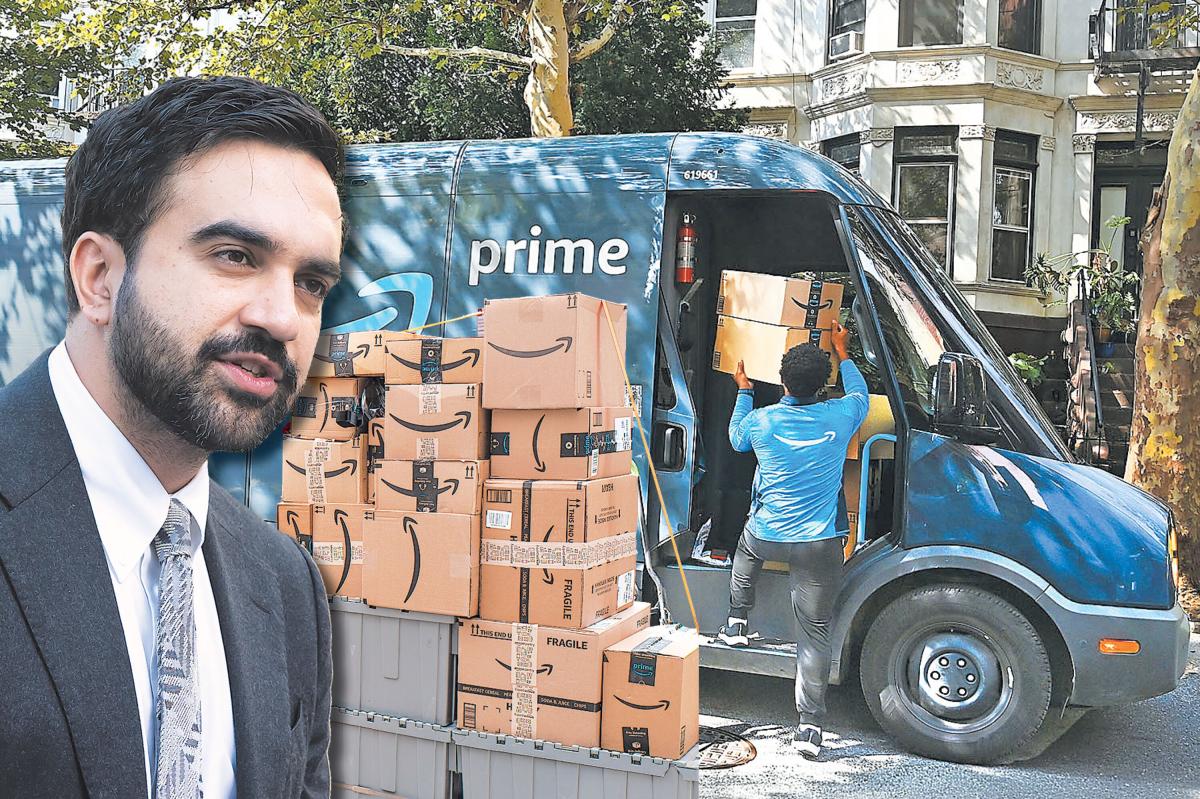
Amazon has said it may close more than a dozen warehouses and move thousands of workers out of New York City over a labor bill being pushed by Mayor Zohran Mamdani — and the e-commerce giant is likely to make good on the threat if the controversial legislation is enacted, industry experts told The Post.
The Delivery Protection Act would force Amazon to directly hire upwards of 5,000 delivery workers citywide who are currently employed by third-party contractors. Proponents say the legislation will increase workers’ pay and improve safety conditions at Amazon and other delivery firms including FedEx and DoorDash.
But Amazon doesn’t directly employ delivery workers anywhere else in the country — and has a history of fiercely resisting efforts to change its policies in the US and abroad. The result, according to experts, could be not only that those 5,000 delivery jobs move out of the city, but also that Amazon shutters its 15 last-mile warehouses in the Big Apple and fires the additional 2,000 workers that staff them.
Early last year, Amazon closed seven warehouses in Quebec near Montreal amid a labor fight involving one of its last-mile facilities. The union, Confédération des syndicats nationaux (CSN), had organized the 300 workers at a warehouse in the town of Laval.
By March 2025, some 1,900 Canadians across seven warehouses and 2,800 delivery contractors for those facilities had lost their jobs.
“Amazon will retaliate, because it has to send a firm message to the rest of the country that ‘If you mess with us, this is what will happen,’” said Marc Wulfraat, president and founder of Montreal-based logistics consulting firm, MWPVL International.
“When you look at Amazon’s global operations, they close buildings left, right and center when there is union activity.”
According to real estate listings, the Montreal facilities are now vacant, with Amazon still paying rent on more than 1.6 million square feet of space that it spent hundreds of millions of dollars to build, according to Wulfraat. At least two facilities are being offered as subleases.
The Delivery Protection Act — first introduced a year ago by Queens Council Member Tiffany Cabán and reintroduced in 2026 — has strong support in the City Council with some 34 co-signers. But several, including Speaker Julie Menin, are “uncomfortable” with potential job losses, a source close to negotiations said.
“This bill will have to pass in some form,” particularly since the mayor supports it, the source told The Post, adding that the final result may make “both sides unhappy.”
Compromises that have been discussed include allowing independent contractors to continue to perform deliveries while requiring Amazon to provide more safety guarantees for workers, the source said. No vote has been scheduled.
Industry experts say parallels between Quebec and New York can’t be ignored, even as Amazon employs directly or indirectly more than 12,000 hourly workers in New York — more than twice as many as it did in Quebec.
Those include the 2,000 workers that staff last-mile warehouses and 5,000 more to deliver the goods. The Delivery Protection Act wouldn’t affect 5,500 workers at Amazon’s giant JFK8 fulfillment center on Staten Island, who voted to unionize in 2022 — a first at an Amazon US facility — but who still lack a collective bargaining agreement.
While Amazon employs unionized workers in Europe, it has made headlines since the pandemic battling unions in the US. It’s now locked in litigation over allegedly hardball tactics it has used to fight labor organization in Bessemer, Ala., and Staten Island.
In April, the National Labor Relations Board ordered Amazon to the bargaining table with the Teamsters in Staten Island, but Amazon has filed lawsuits questioning the legitimacy of the NLRB.
“Amazon will say or do whatever it takes to deny workers stronger rights and wages and abdicate its responsibilities for its own employees,” the Teamsters said in a statement.
The risks posed by the Delivery Protection Act are not lost on the 40 independent companies that employ the 5,000 delivery workers in New York City.
“Look at what happened in Quebec,” Kris Basmagy, owner of DashWave Delivery, which handles Amazon’s deliveries on Manhattan’s Upper East Side, told The Post. “There was pressure on Amazon’s model, and it pulled out.”
Basmagy, who employs 150 delivery workers, added that nothing is stopping Amazon from replacing its New York City facilities with some of the “warehouses being built along the New Jersey Turnpike.”
Amazon is still tied up in litigation in Quebec, where it denies that it closed its warehouses because of CSN’s organizing activity. The union filed a complaint with Quebec’s labor tribunal, but even if it proves that Amazon violated labor laws, Amazon faces at most a fine and potential consumer backlash, according to a CBC News report.
A class action lawsuit filed by an Amazon Prime customer in Quebec in February 2025 claims that the warehouse closures slowed Amazon’s delivery times beyond the one- and two-day guarantee for Prime service — with some deliveries instead taking as long as four to six days.
In May, a Quebec court ruled that the case can proceed. Still, plaintiffs who are seeking refunds admit the disruption only lasted about two months, according to the complaint. Amazon says service hasn’t suffered since a large Canadian logistics company, IntelCom, took over its Quebec deliveries.
“Then they got their act together and stopped the delays,” said Saro Turner, a partner in the law firm Slater Vecchio, which filed the suit.
In New York, Amazon maintains that delivery times and prices for customers would increase if it closed its warehouses. New York is “fundamentally different” from Quebec, where Amazon operated “far fewer sites,” according to Amazon spokesperson Steve Kelly.
The company bankrolled a study by AKFR showing that the Delivery Protection Act would cost New Yorkers an extra $664 extra a year — or about $5.20 per package. That figure covers deliveries made by other companies, including FedEx and Doordash.
“New York City is one of the largest and most complex delivery regions in the country,” Kelly said in a statement. “It’s best served by a network of local small businesses deeply embedded in their communities and leveraging our operations infrastructure.”
Amazon deliveries in New York would slow permanently if it closed its last-mile facilities in the city, according to a source with knowledge of Amazon’s operations. Same-day deliveries and those that occur within hours of placing an order would take the biggest hit. The number of items that fall under the Prime promise would also shrink, this source said.
“There are a lot of same-day and same-morning deliveries in the city” that could arrive the next day, the source said.
Amazon’s last-mile facilities in Brooklyn and Queens include one in Red Hook at 270 Richards St. and another in Maspeth at 55-15 Grand Ave. Last-mile warehouses in Manhattan include an 87,000-square-foot facility at 706 11th Ave., according to a report on safety issues from New York City Comptroller Mark Levine.
“Amazon wouldn’t blink about shutting down the 15 facilities in New York City if it felt that the legislation was a threat to its business model,” said Brittain Ladd, a logistics and retail consultant and former Amazon executive. “This is about a model that could be copied in other cities.”
The delivery companies say they are the collateral damage in this struggle.
“There is a laser focus on punishing Amazon no matter what the repercussions might be, what it does to us as business owners, fathers and husbands,” Basmagy said. “It’s as if we no longer exist.”
WGA Transit, which has actively recruited formerly incarcerated and homeless workers to deliver Amazon packages in Harlem, will be forced out of business if the Delivery Protection Act is enacted in its current form, owner Joe Artus told The Post.
“I have a 21-month-old daughter,” Artus told The Post. “If this thing passes, there is no way for my company to exist or to keep my 189 employees.”
Business
US cities where people spend the most and the least on groceries
Groceries are continuing to take a large bite out of shoppers’ budgets, even as monthly food prices have dipped, but overall grocery prices remain higher than a year ago.
According to data from the latest U.S. Bureau of Labor Statistics Consumer Price Index, the cost of food at home went down in September by 0.1% but remained 1.8% higher than a year ago.
A new WalletHub study analyzed the U.S. cities where people spend the most and least on groceries. The study reviewed 26 common items in 100 cities and compared their costs with the median household income to determine where Americans spend the greatest percentage of their income on groceries.
Shoppers in Detroit spend most; Fremont, California spend least
Detroit, Cleveland and Birmingham, Alabama, ranked as the top three cities where shoppers spend the largest share of their income on groceries for the second year in a row.
Three cities in California — Fremont, San Jose and San Francisco — remained the cities with the lowest grocery spending burdens, according to the analysis.
“The biggest commonality among the cities where residents spend the largest share of their income on groceries is that they tend to have lower household incomes, rather than exceptionally high grocery prices,” Chip Lupo, a writer and analyst with WalletHub told USA TODAY.
Detroit has the lowest median annual household income in the country, at $39,938, while Cleveland has the second-lowest, at $40,801, Lupo said. However, Detroit’s grocery prices are the 39th-highest among the 100 cities in the study and Cleveland’s prices rank 41st.
“This shows that even average grocery prices can put a significant strain on household budgets when incomes are low,” he said. “Overall, the findings show that grocery affordability depends not just on prices at the checkout, but also on how much households earn.”
What cities spend the most on groceries?
Here are some results from WalletHub’s analysis, which ranked 100 U.S. cities based on where people spend the most and least on groceries. The top-ranked city had the most expensive groceries as a share of the median monthly household income.
Detroit (4.03%)
Cleveland (3.93%)
Birmingham, Alabama (3.45%)
Toledo, Ohio (3.20%)
Newark, New Jersey (3.15%)
Baton Rouge, Louisiana (3.11%)
Buffalo, New York (3.10%)
Memphis (3.07%)
Cincinnati, Ohio (3.05%)
Hialeah, Florida (2.99%)
What cities spend the least on groceries?
Here are the cities where shoppers spent the least on groceries:
91. Scottsdale (1.46%)
92. Plano, Texas (1.46%)
93. Seattle (1.44%)
94. Huntington Beach, California (1.42%)
95. Santa Clarita, California (1.34%)
96. Gilbert, Arizona (1.32%)
97. Irvine, California (1.21%)
98. San Francisco (1.10%)
99. San Jose, California (1.07%)
100. Fremont, California (0.91%)
Some cities saw big swings
Lupo said the biggest surprise in this year’s analysis was how much some other cities’ rankings changed. Baton Rouge, Louisiana moved up from 11th place in 2025 to 6th in 2026 with grocery costs increasing from 2.86% to 3.11% of monthly household income.
Minneapolis and St. Paul, Minnesota also moved up in rankings from 67th to 56th and 44th to 33rd respectively.
In contrast, New York City fell from 47th to 64th with income share spent on groceries declining from 2.06% to 1.94% while Honolulu dropped from 46th to 70th, with spending going from 2.08% to 1.88%.
“Although the cities at the extremes remained largely the same, the relative burden of grocery costs changed in several places,” Lupo said.
Some grocery prices are higher, lower than a month ago
According to the latest CPI, released on Oct. 14, overall, the food at home index had some prices go up and some prices go down. Overall, the index fell by 0.1% in September.
The milk index fell the most – by 2% – while the beef index fell 1%. The carbonated drinks index rose 1.5% while the index for fruits and vegetables was up 0.5% and the index for cereals and bakery products rose by 0.1%.
Use USA TODAY’s grocery tracker to see cost changes in your area.


Elon Musk reveals ‘world’s first flying car’ at Tesla event
Elon Musk has revealed Tesla’s latest model, which he claims will be the world’s first flying car, using technology from...


The Surface Laptop Ultra delivers on most of Microsoft’s promises
Microsoft promises one machine for dev, AI, and gaming, and mostly gets there. Nick Indge – Oct 16, 2026 8:00...


New York City Council to question SpaceX official over AI safety
The Indian Computer Emergency Response Team (CERT-In) announced that AI models under testing broke into the live systems of Indian...


Tesla’s new Roadster makes a flying debut, hitting 60 MPH in under a second
Tesla unveiled its long-anticipated Roadster on Thursday during a dramatic event in which the vehicle used compressed-air thrusters to fly...


Blue Origin is going all in on the New Glenn rocket
Blue Origin announced a major expansion of its already considerable Florida launch facilities on Friday morning with the intent of...


In Elizabeth Holmes, Nathan Fielder has finally met his match
About a third of the way through “You Can See Everything,” Nathan Fielder’s new documentary about Elizabeth Holmes, we watch...


Googlebook review: Android on a laptop is still Android
Android was designed for phones, but that hasn’t stopped Google from trying to adapt the OS and its apps to...
‘You Can See Everything’ Review: Nathan Fielder’s Elizabeth Holmes Doc Is Surreal
Elizabeth Holmes famously does not blink, whether she’s pitching investors or, by her own admission, flirting with a guy. Is...

Amazon said it may move thousands of workers out of NYC over Mamdani labor bill – what experts say will likely happen
Amazon has said it may close more than a dozen warehouses and move thousands of workers out of New York...


Designers are cringing at Tate McRae’s new single cover
Singer Tate McRae has released a teaser for her new single Housewife, and while the moody superyacht setting has sparked...
-

 Entertainment2 weeks ago
‘Verity’ Posts $4.5M Previews, ‘Digger’ $1.2M
-

 Entertainment2 weeks ago
Rick Devens Wins In Season 28 Finale
-

 Business2 weeks ago
Tesla Cybercab pressure to expand after rocky first month in Austin
-

 Business2 weeks ago
OpenAI safety employee resigns, claiming the company’s ‘culture is broken’
-
 Business2 weeks ago
Energy Secretary Chris Wright says Trump was “well aware of the risks to energy flows” before launching Iran war
-

 HealthNews1 week ago
Des Moines clinics stumped by unidentified virus
-

 Entertainment2 weeks ago
Disney pays $115 million for Yamaha’s Orange County headquarters
-
Business2 weeks ago
Leaked Anthropic IPO prospectus: The US government could hurt our business