Connect with us

LifestyleNews

Why Gen Z is embracing ‘lily padding’ to build careers

 ​Workplace trends are evolving as quickly as the people shaping them, and one of the latest phrases going viral online is ‘lily padding.’ This approach resembles a frog jumping between pads, and now, the term is being used to describe how younger professionals, particularly Gen Z, are switching jobs more frequently and often within short spans of time. While some see this as impulsive or lacking commitment, others view it as a more intentional and adaptive way to build a career.. At its core, lily padding reflects a shift in how many young professionals approach work. Instead of staying in one role for years, they are choosing to explore multiple opportunities, build diverse skill sets, and prioritise flexibility. Shorter stints, in this context, do not necessarily signal short-term thinking. Many Gen Z workers are moving on, not out of disloyalty, but because they feel limited by the growth opportunities in their current roles and are actively seeking better learning experiences and career progression.. This mindset is also shaped by broader changes in the professional landscape. Rapid technological shifts, the growing presence of artificial intelligence, and economic uncertainty have altered perceptions of job security. For many, stability is no longer tied to staying in one organisation, but to staying relevant and adaptable. At the same time, this trend presents challenges for employers. Organisations often associate longer tenures with reliability and may hesitate to invest in employees who could leave within a year. This creates a tension between a workforce that values mobility and companies that prioritise stability.. But how should frequent job changes be interpreted from a career development perspective?. Gurleen Baruah, organisational psychologist at That Culture Thing, tells indianexpress,com, “Lily padding” depends a lot on context, intent, and the person. What are they optimising for, and how aware are they of their choices? It can support growth because moving across roles builds range, adaptability, and the ability to learn fast in new environments. That is valuable today.”. At the same time, she notes, depth comes from staying. “Understanding systems, people, and complexity takes time. Without that, learning can remain surface-level. So it can help or hurt. The key question is whether the moves are intentional and building on each other, or just reactive shifts without direction.”. Potential downsides of switching jobs too often. “One downside is a constant sense of restlessness,” reveals Baruah, adding that always looking for the next thing can make it hard to feel settled or satisfied. Over time, this can reduce patience and the ability to stay with difficult phases, which are often where real growth happens.. Psychologically, she notes that there can be a pattern of moving away from discomfort rather than working through it. This can affect resilience. Professionally, it may also raise questions around consist  

Continue Reading
Click to comment

Leave a Reply

Your email address will not be published. Required fields are marked *

LifestyleNews

‘Is yellowish urine a sign of Type 2 diabetes?’

 ​Even small, everyday observations about our bodies are enough for a quick spiral into panic. One such scenario is spotting darker or more yellow urine and wondering if it signals something serious. With rising awareness around conditions like Type 2 Diabetes, many people tend to connect even minor bodily changes to larger health issues.. A similar query recently surfaced on Quora: “Is yellowish urine a sign of diabetes type 2?”—a question that reflects just how common this confusion is. To settle this doubt, we reached out to Dr Satish Chander Wasoori, a Senior Consultant in Endocrinology at Paras Health Gurugram.. DISCLAIMER: This article is based on information from the public domain and/or the experts we spoke to. Always consult your health practitioner before starting any routine.. So, is yellow urine a sign of Type 2 diabetes?. Type 2 diabetes usually presents with a cluster of symptoms (Image: Freepik). According to Dr Wasoori, the short answer is no. “Dark yellow urine is more commonly a sign of dehydration rather than Type 2 diabetes,” he explains. In most cases, it simply means you’re not drinking enough water or that certain foods or medications may be affecting you.. While uncontrolled diabetes can lead to fluid loss and increased urination, its colour alone is not a reliable indicator of blood sugar levels. “People often misinterpret darker urine as a sign of diabetes, but in most cases, it simply reflects inadequate water intake or certain dietary factors.”. As per the endocrinologist, a change in urination frequency is a more “significant” symptom, as compared to colour, when it comes to Type 2 Diabetes.. Also Read | Canadian doctor lists four surprising things that can spike your blood sugar — even if you haven’t eaten anything. What are the early signs of Type 2 diabetes?. Instead of focusing on urine colour, it’s important to watch out for symptoms that are often subtle and easily ignored:. Story continues below this ad. Persistent fatigue. Frequent urination. Excessive thirst. Unexplained weight loss or gain. Frequent infections (especially skin or urinary). Slow wound healing. Blurred vision. Increased hunger. “These symptoms are often dismissed as lifestyle-related issues, which delays diagnosis,” says Dr Wasoori.. Additionally, individuals with risk factors — such as a “family history of diabetes, obesity, sedentary lifestyle, hypertension, or age above 35” —should undergo regular screening, even in the absence of symptoms. “Early detection is key to preventing complications,” Dr Chander concludes.. DISCLAIMER: This article is based on information from the public domain and/or the experts we spoke to. Always consult your health practitioner before starting any routine.. 📣 For more lifestyle news, click here to join our WhatsApp Channel and also follow us on Instagram. © IE Online Media Services Pvt Ltd  

Continue Reading

LifestyleNews

Archana Puran Singh and Parmeet Sethi reveal reason they still call their in-laws ‘uncle’ and ‘aunty’; how secrecy shapes emotional safety in relationships

 ​Archana Puran Singh and Parmeet Sethi hid their wedding for 4 years (Source: Express archive photo). Relationships don’t always follow neat timelines or socially approved paths. Many couples begin their journeys navigating secrecy, family resistance, and unspoken compromises, especially in cultures where marriage is deeply tied to identity, gender roles, and career expectations. This idea surfaced in a recent YouTube video shared by Archana Puran Singh and Parmeet Sethi, who first met in 1988 and have been together for nearly 38 years. The couple reflected on the early years of their relationship, revealing that they secretly married in 1992 and kept it hidden for 4 years due to family opposition and professional concerns. Even today, they continue to address each other’s parents as “uncle” and “aunty,” a habit formed during those years of secrecy.. Explaining how this tradition began, Archana said, “We still call them ‘aunty’ and ‘uncle’, and people ask why. He also called my parents uncle and aunty. We were seeing each other for 4 years, and for the next 4 years, we were secretly married. So for 8 years we continued calling them aunty and uncle.” What began as a protective measure gradually became part of their family dynamic.. Archana also spoke about why hiding their marriage felt necessary at the time, particularly for her as a woman in a public-facing profession. “We didn’t want anyone to know that we were married,” she said, adding, “So that uncle and aunty is still going on. And everyone is happy with it.” Today, Archana’s mother and Parmeet’s father live with them, reflecting a close-knit household shaped by years of adjustment and understanding.. But how do years of secrecy or hiding a relationship shape communication patterns and emotional safety between partners?. Counselling psychologist Athul Raj tells indianexpress.com, “Long-term secrecy changes how couples learn to talk and how much they allow themselves to feel. When a relationship has to be hidden, partners become emotionally efficient. They communicate in shortcuts, glances, and pauses. This often creates strong emotional intelligence and mutual dependence, a quiet understanding that feels deeply intimate. But secrecy also normalises emotional restraint. Big conversations get postponed, conflict is minimised, vulnerability is rationed.”. Hiding milestones offers safety, and careers remain intact, families are managed, and public scrutiny is avoided. (Source: Express archive photo). Over time, he adds, this can make emotional safety “conditional rather than expansive.” The relationship feels protected, but not always fully expressed. If secrecy is later acknowledged and consciously unpacked, it can deepen trust. If it becomes an unexamined habit, it risks turning intimacy into containment.. Psychological trade-offs of hiding major milestones. The trade-off is between external stability and internal expression, notes Raj. Hiding mile  

Continue Reading

LifestyleNews

Beyond dal baati churma: The flavours of Rajasthan’s ker sangri and safed maas
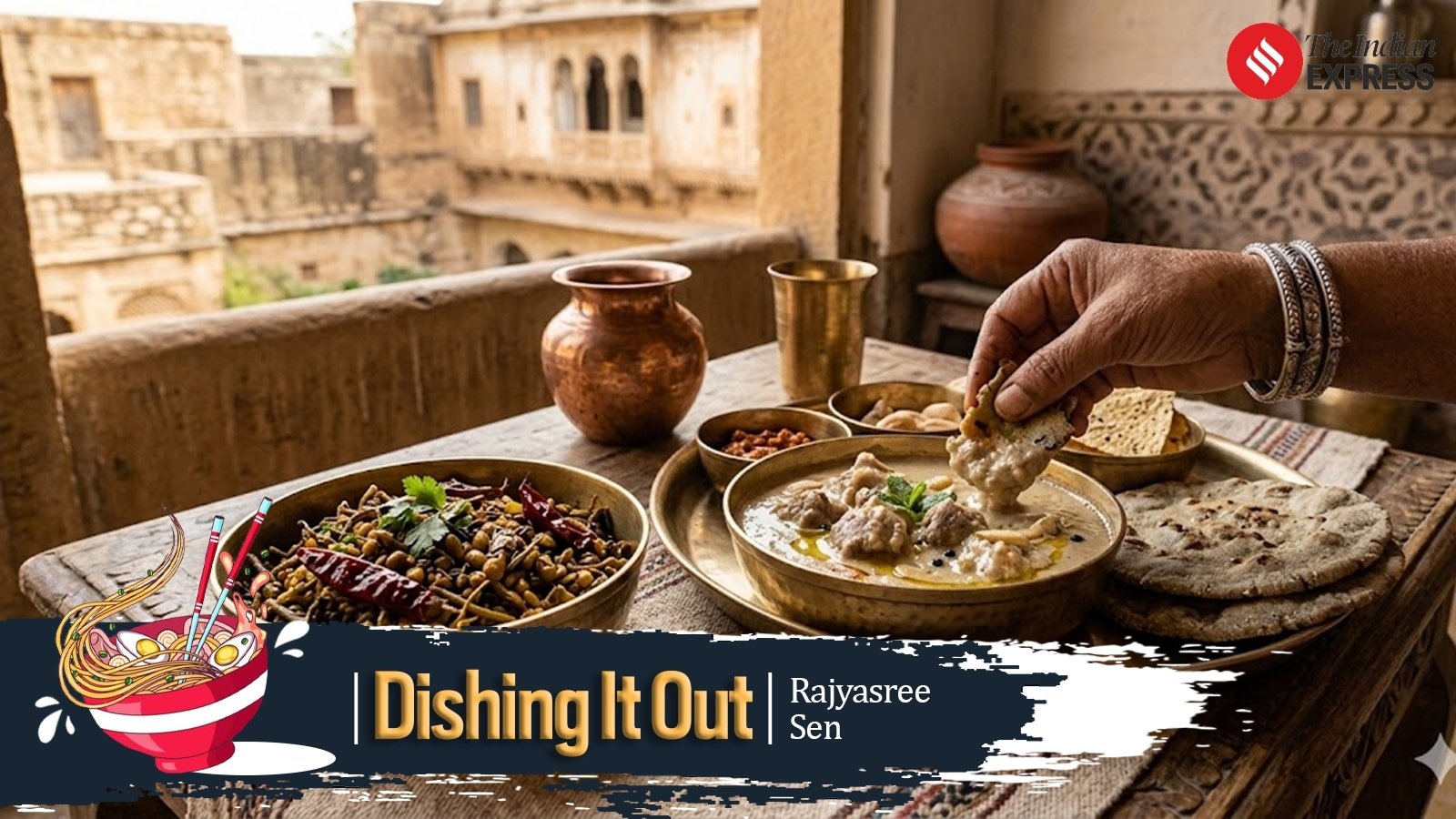
 ​This week, I spent two days at a beautiful palace on the way to Jaipur. Patan Mahal is not only a balm for the senses—given that we were there in the middle of the week and there was no one in sight—it is also a great place to ease your taste buds into the world of Rajasthani cuisine.. While I became well-acquainted with vegetarian Marwari cuisine because I lived in Calcutta and had friends in the right places, Rajasthani cuisine was something I encountered only when I travelled to the state for the first time in my teens. Rich, earthy, and exotic – thanks to the desert vegetables that form a part of the daily fare – it also boasts of some of the most delicious meat preparations I have ever had. This trip was no different.. Traditional Rajasthani cuisine embodies the hardships of living in a desert and the desire to eat tasty food. I want to start with one of my favourite preparations, the underrated Safed Maas. Everyone talks about Lal Maas, but the subtlety of Safed Maas is not to be dismissed. Unlike Lal Maas, which is fiery in appearance and which I will discuss later, Safed Maas is cooked in a nutty, creamy sauce and has a slight sweetness that acts as a perfect foil to the spice. Slow-cooked, velvety, and rich, this is as celebratory as it gets.. For the more herbivorous inclined, the Ker Sangri is a must-try. This dish is innovation at its best. Rajasthanis prepare a sturdy, hearty vegetable using dried sangri beans and ker berries that grow in the desert. No European or even non-Rajasthani vegetable resembles the sangri bean’s thick, grass-like structure. It is cooked in a yoghurt gravy or as a dry vegetable with potatoes and berries. Easily available in the desert, this is a staple in Rajasthani homes.. Rajasthanis prepare a sturdy, hearty vegetable using dried sangri beans and ker berries that grow in the desert. (Wikimedia Commons). Another common preparation, and quite the delicacy, is Gaanth—a porridge made from wheat, milk, and sugar. Breads are usually made from makki (corn) or bajra (pearl millet), and generously slathered with butter or ghee, and topped with mushti khand, a raw, unprocessed sugar unique to the region that tastes of honey and caramel.. Even the ingredients used in Rajasthani cuisine are evocative of the desert they come from and the one they survive in. Mathania red chillies impart flavour and colour but very little heat, kachri powder made from dried and powdered wild melon—used to tenderise meats—fresh cumin, turmeric root, aniseed, and coriander seeds carry the stamp of the desert.. Another popular Rajasthani preparation is Gatte ki Sabji, where soft gram flour dumplings are simmered in a lightly flavoured yoghurt gravy. The gram flour is mixed with spices, oil, and yoghurt.. Story continues below this ad. A dessert I tried for the first time on this trip was the Rajasthani Lapsiisa. It resembled a finer version of the Bengali Bondey, but was made with daliya (broken wheat), ghee, and jaggery (o  

Continue Reading

LifestyleNews

Ranveer Singh’s trainer and Dhurandhar co-star Mustafa Ahmed on actor’s 10 kilo-weight gain to play Hamza: ‘He was eating about 4,000…’

 ​At one level, Dhurandhar: The Revenge is a revenge story. A young man, Jaskirat, returns home to find his family destroyed — his father killed, his sister raped and murdered (Photo: Dhurandhar/Mustafa Ahmed/Instagram). Ranveer Singh’s trainer and Dhurandhar co-actor, Mustafa Ahmed aka Rizwan, recently shared details about Singh’s transformation to play Hamza in the Aditya Dhar film.. “We used to practice Kalari for at least 1.5-2 hours every morning so that his body is mobile. He doesn’t look stiff in the film. His body doesn’t look tight. Usually, when people bulk up, they look stiff. That also takes away from the performance as an actor because you don’t flow freely. So, we were very particular… he has to look big, like a beast, but he can’t seem slow or stiff. Then we used to do weight training in the evening for 1.5 hours or 1 hour with dumbbells and bars. We worked on the machines very little. Which is what helped him to be that big. We packed on a good 10 kgs in about 6 weeks. We had very little time. We had 4-5 weeks of just prep work, and then we had 1 week for travel and transition. When we met, he was 77 kilos, he was 87 when the film started,” Mustafa told Filmygyan.. DISCLAIMER: This article is based on information from the public domain and/or the experts we spoke to. Always consult your health practitioner before starting any routine.. Praising Singh’s relentless efforts to play an Indian spy, Mustafa, who trained him for Padmaavat as well as Gully Boy and has known him for 10 years, added, “He really trained hard. He ate a lot. He was eating about 4,000-4,500 calculated calories a day. People think food is good. But when you are eating only chicken and rice or some mutton and rice, the same food, and two protein shake smoothies with 750 calories, it takes about 45 minutes. One meal itself takes 45 minutes. It is not easy. It’s not that you can eat burgers and pizzas to make such a body. But he did it. When he makes up his mind, he is like a machine.”. Diet was carefully planned (Photo: Freepik). While emphasising that he needed to be careful about Singh’s diet as the latter is a foodie, Mustafa mentioned, “He does need to take care of his diet because he is a foodie. I had to make sure I checked with his team… he is a treat to train. One of the few people who is always willing to push and also loves to weight train. He enjoys himself in the gym. Sometimes, I have to tell him to control his energy. I become a bad person. I pull him away from people during training. In Padmaavat, he was 83-84 kilos, but for Dhurandhar’s Hamza, there was a lot of muscle in the extra 3-4 kilos. Though it sounds small, it is a lot. Hamza was massive.”. Revealing that Singh’s weight loss to play the other character, Jaskirat Singh Rangi, was his own effort, Mustafa said, “He did it on his own with some other trainer. He is good at losing weight. He did that process with me from Padmaavat to Gully Boy. He controls  

Continue Reading

LifestyleNews

‘Food monitoring programs have detected…’: Orthopaedic surgeon shares 3 commonly consumed fruits that carry pesticide residues; expert weighs in
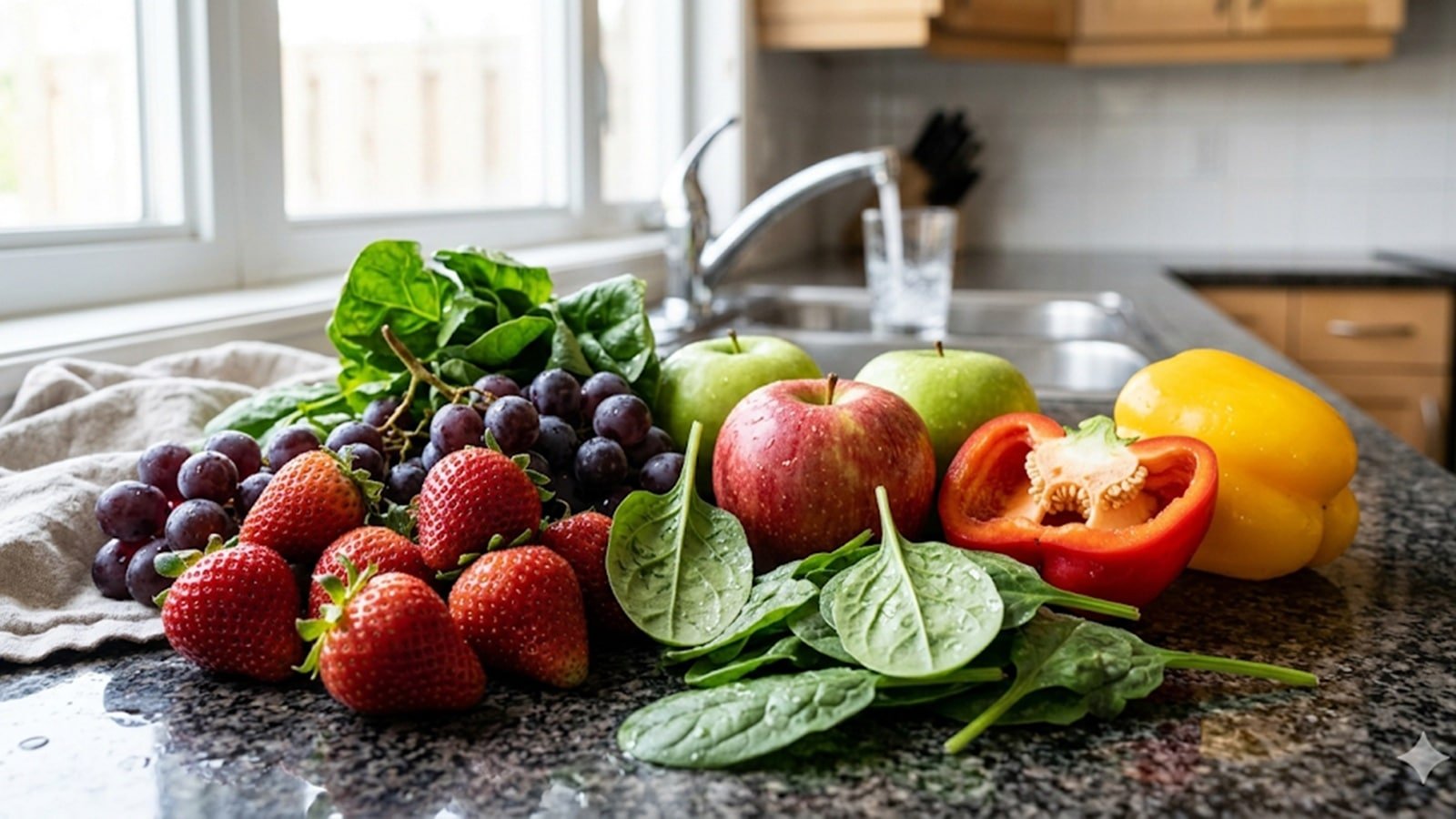

 ​Understand the risks of pesticide residues in produce. (Source: AI Generated). Fruits and vegetables are a key part of a healthy diet, but concerns about pesticide residues have made many people question how safe their everyday produce really is. In a recent Instagram video, Mumbai-based orthopaedic surgeon and health educator Dr Manan Vora highlighted certain commonly consumed fruits and vegetables that are more likely to carry pesticide residues.. He clarified that this does not mean people should stop eating them, but rather take simple steps to reduce exposure. Explaining why some produce is more vulnerable than others, he said, “The first is spinach, because these leaves have a large surface area, and pesticide sprays can easily stick to the surface. Food monitoring programs have detected multiple pesticide residues in spinach, including compounds like permethrin, which is considered a neurotoxic insecticide (sic).”. DISCLAIMER: This article is based on information from the public domain and/or the experts we spoke to. Always consult your health practitioner before starting any routine.. He also pointed to strawberries as another example, noting the challenges in cleaning them effectively. “The second is strawberries. Their skin is very delicate and cannot be peeled, which is why pesticide sprays can remain on the fruit’s surface.” Grapes were also highlighted due to the way they grow. “The third is grapes. Grapes grow in tight clusters where pesticide sprays can accumulate on the surface. Studies show that over 90 per cent of conventional grape samples contain multiple pesticide residues.”. Beyond these, Dr Vora drew attention to a broader category often referred to as the “Dirty Dozen,” which includes produce known to carry relatively higher pesticide loads. “It is not just these three; on the global monitoring list, strawberries, spinach, kale, apples, peaches, nectarines, pears, grapes, cherries, blueberries, and bell peppers are collectively called the ‘Dirty Dozen’.”. So, from a food safety perspective, how significant is this risk for the average consumer?. Dr Palleti Siva Karthik Reddy, MBBS, MD general medicine, FAIG, consultant physician at Elite Care Clinic, tells indianexpress.com, “From a clinical and public health standpoint, the risk exists but needs to be understood in context. Certain foods, such as spinach, strawberries, and grapes, tend to retain more pesticide residue due to their surface characteristics and cultivation methods. However, for the average consumer, the risk is not immediately alarming if dietary habits are balanced and produce is cleaned properly.”. He notes that the larger concern “arises with long-term cumulative exposure,” especially in vulnerable groups such as children, pregnant women, and individuals with compromised immunity. What is important is awareness and consistent food hygiene practices, rather than avoiding these foods altogether, as they are nutritionally es  

Continue Reading

Latest News

Politics47 minutes ago

‘Wait till…’: Cong slams Modi govt for not passing on fuel tax cut to the people; predicts price hike with date, reason

 The Congress has come out lashing at the Narendra Modi government after it cut excise duty by ₹10 each on...

Politics2 hours ago

Multiple delays later, Noida International Airport’s phase 1 set for inauguration tomorrow: All you need to know

 Prime Minister Narendra Modi is scheduled to inaugurate the first phase of the Noida International Airport in Jewar, Uttar Pradesh...

LifestyleNews2 hours ago

‘Is yellowish urine a sign of Type 2 diabetes?’

 ​Even small, everyday observations about our bodies are enough for a quick spiral into panic. One such scenario is spotting...

BBC News World2 hours ago

Whale swims for freedom after big German rescue effort on Baltic coast

​ Whale swims off sandbank after big German rescue effort on Baltic coast. 31 minutes ago. Paul KirbyEurope digital editor. EPA....

Tech3 hours ago

Today’s NYT Connections: Sports Edition Hints and Answers for March 27, #550

​Looking for the most recent regular Connections answers? Click here for today’s Connections hints, as well as our daily answers...

Tech3 hours ago

Today’s NYT Strands Hints, Answers and Help for March 27 #754

​Looking for the most recent Strands answer? Click here for our daily Strands hints, as well as our daily answers...

Tech3 hours ago

Today’s NYT Connections Hints, Answers and Help for March 27, #1020

​Looking for the most recent Connections answers? Click here for today’s Connections hints, as well as our daily answers and...

Tech3 hours ago

Today’s Wordle Hints, Answer and Help for March 27, #1742

​Looking for the most recent Wordle answer? Click here for today’s Wordle hints, as well as our daily answers and...

Politics3 hours ago

‘We’re comfortable with India’: Top US official dismisses Pak as mediator for Iran-US truce

 A former US official is not pleased with the prospect of Pakistan becoming a negotiator in mediating peace between Iran...

Video3 hours ago

‘Will the UK government protect our children from social media addiction?’ | BBC News 

[embedded content] 

Trending News

Join Our Newsletter

Stay updated with breaking news and exclusive content.