
Fashion
Why its absolutely appropriate for children to attend a funeral
Fashion
Bandhani, Batik & Shibori: Bound by Dye, Freed by Design

Bandhini was in the news recently. Ralph Lauren has faced global backlash in April 2026 for selling a (£420) “Bandhani-inspired” printed cotton wrap skirt without explicitly crediting India, the craft’s origin. Critics argue the design mimics Bandhani aesthetics but is machine-printed, stripping away artisanal authenticity and sidelining Indian artisans. The skirt uses printed fabric, not hand-tied Bandhani, which requires painstaking knotting and dyeing.
Bandhini, Batik & Shibori
Across continents and centuries, cloth has carried stories. In India, Bandhani knots find their ways into bridal silks; in Indonesia, Batik’s waxed lines trace royal philosophies; in Japan, Shibori’s indigo folds echo the rhythm of storms and nature. Three traditions, three cultures, one shared language of resistance and release—where dye is held back, beauty emerges, and heritage is written.All three—Bandhani, Batik, and Shibori are textile traditions that share the resist-dyeing principle but express it differently.
Common Thread
- Resist-Dye Principle: Each technique prevents dye from reaching certain parts of the fabric, creating patterns.
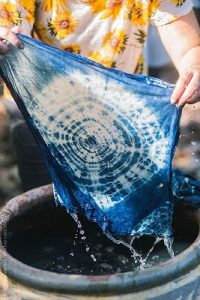
- Handcrafted Artistry: All rely onmanual skill and patience, with artisans carefully preparing fabric before dyeing.
- Symbolic Motifs: Designs often carrycultural meaning—whether auspicious dots in Bandhani, royal motifs in Batik, or nature-inspired forms in Shibori.
- Natural Dyes: Traditionally, they used plant-based dyes (indigo, turmeric, madder, etc.), linking the craft to local ecology
It is precision in dotted motifs
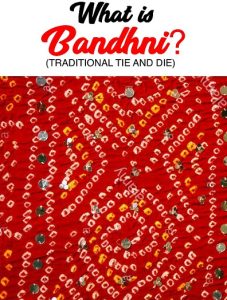
It dates back to the Indus Valley Civilization (~3000 BCE). They are tiny knots tied with thread before dyeing, creating dotted motifs.
They arestrongly identified to weddings and festivals in the States of Gujarat and Rajasthan.
Bandhaniis a type oftie-dyetextile decorated by plucking the cloth with the fingernails into many tiny bindings that form a figurative design.It involvespinching fabric with thumbnails, tying with thread and subsequently dyeing in stages.The motifs include Dots (bindi), waves (leheriya), checks (mothara).Fabrics are silk, cotton or georgette.Texture looks like crinkled surface from knots.

Today, most Bandhani making centers are situated inGujarat,Rajasthan, Sindh,Punjab regionand inTamil Naduwhere it is known asSungudi. It is known as chunri in Pakistan.
Shibori (Japan)
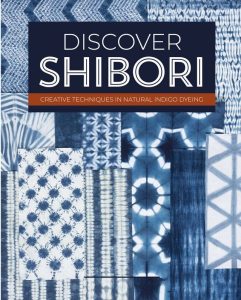
Tie-dye, in fact, has been around for centuries. Take Japan’s shibori technique for instance; it is derived from the Japanese word ‘shiboru’. Shibori which means to wring, squeeze or press. One of the oldest techniques of resist-dyeing; fabrics are bound, tied, sewn, compressed, twisted, knotted and folded to create sections that resist the dye and then form contrasting patterns. It came to Japan 1,300 years ago from China, and found another unique interpretation here.
Origin: Ancient Japan, earliest surviving examples from 756 CE at Tōdai-ji temple.Emerged during the Nara period (~8th century CE).Regions: Nara, Kyoto, later spread globally.
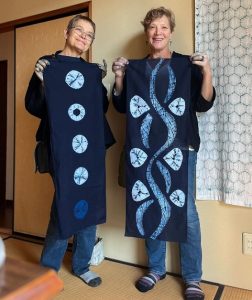
Indigo dye is used predominantly and it symbolized protection, harmony with nature.
Thetechniqueincludes folding, stitching, pleating, clamping, and binding the fabric before dyeing.
Styles:
-
-
- Kanoko (fawn spots, similar to Bandhani dots)
- Arashi (storm, diagonal rain-like lines)
- Kumo (spider web)
- Itajime (clamped geometric shapes).
-
Batik is a wax-resist dyeing technique that originated in Indonesia, particularly on the island of Java, though similar methods appeared in ancient Egypt, China, and India. It became globally recognized in the 19th century when European scholars and traders documented Javanese batik. Batik is Indonesia’s most iconic textile art, blending ancient wax-resist dyeing with deep cultural symbolism. While wax-resist techniques existed globally,Javanese batik achieved unmatched refinement and cultural depth, making it both a national symbol and a global design influence.
It flourished in Java, Indonesia, with evidence from the 13th century; UNESCO- recognized heritage. Archaeological evidence shows batik patterns in 13th-century East Java temple carvings.They use wax-resist dyeing using a canting (pen tool) or copper stamps (tjaps).The word batik comes from Javanese amba (“to write”) and titik (“dot”), referring to the dotted wax patterns.

Motifs are primarily geometric, floral, symbolic designs; some reserved for royalty (parang,kawung). Everyday wear and ceremonial garments, deeply symbolic in Javanese culture use Batik prints.
Process:
Hot wax is applied to fabric using a canting (pen-like tool) or copper stamps (tjaps) .Multiple cycles of waxing and dyeing create intricate, multicoloured designs. Cotton and silk fabrics are most common. for Batik prints.
Cross-Cultural Influence
In modern fashion, Indian designers blend Shibori’s indigo aesthetics with Bandhani’s vibrant colours, creating fusion textiles.
Together, they show how different cultures evolvedresist-dyeinginto unique textile arts, each carrying deep cultural meaning while sharing a common creative foundation.Today, all three are celebrated worldwide, influencing contemporary fashion and design while remaining rooted in tradition
They share several important commonalities despite their different cultural origins. Each textile represents heritage, rituals, and philosophyin its culture.


Tamil Nadu CM Vijay orders modernisation of Amma canteens
C Joseph Vijay, the chief minister of Tamil Nadu, ordered on Monday the revamping and modernisation Amma Unavagams in the...


IPL 2026: Match 63, CSK vs SRH Match Prediction – Who will win todays IPL match? – CricTracker
The Indian Premier League (IPL On , Monday The Men in Yellow have six wins and six losses after In...


First look of Indias debut bullet train between Mumbai, Ahmedabad unveiled
The first glimpse of India’s bullet train, which is set to run between Ahmedabad, India and Mumbai, was unveiled by...


PM Modi in Norway: PM Modi calls for peaceful resolution of conflicts in West Asia and Ukraine
The logic behind India’s engagement with Northern Europe is fundamentally changing. When India first met with the Nordics (Norway, Sweden,...


Escaped tiger shot by German police after attacking man. #Germany #BBCNews


88 dead as new Ebola outbreak spreads to second African country
An international effort is underway to contain an Ebola outbreak in the Democratic Republic of Congo (DRC) and Uganda that...


Footballer stabbed seven times recalls train knife attack | BBC News
Just weeks into his first season at Scunthorpe United, 23 year-old footballer Jonathan Gjoshe had been travelling from Doncaster …


At Big Ten spring meetings, coaches lobby for 24-team playoff
RANCHO PALOS VERDES, Calif. — Outside the meeting rooms at a swanky resort in Southern California, the Big Ten displayed...


Southwest bans robots after a humanoid takes flight
Southwest Airlines banned human-like and animal-like robots after a humanoid named Stewie travelled on a flight from Las …


Iran war day 80: Trump issues warning; Tehran ready to confront attacks
EXPLAINER The fear of renewed US strikes in Iran looms while Israeli attacks continue in Lebanon despite extended ‘ceasefire’. Published...
-

 BBC News World3 hours ago
Trump targets political rivals ahead of midterms
-

 Entertainment1 day ago
Adam Driver and Kenneth Lonergan Reunite For ‘Tomorrow Is a Drag’
-
 LifestyleNews11 hours ago
Can a pre-diabetic stop taking Metformin by eating garlic instead?
-
Tech11 hours ago
Today's NYT Mini Crossword Answers for Monday, May 18
-

 Sports7 hours ago
Ulster SFC final: Aidan Forker delighted it all came together in Ulster final
-

 Food1 day ago
Juneteenth Foods: 23 Recipes for a Cookout Celebration
-

 HealthNews1 day ago
Epidemic of Ebola Disease caused by Bundibugyo virus in the Democratic Republic of the Congo and Uganda determined a public health emergency of international concern
-
TravelNews4 days ago
Adani Airport, IHG sign Five-Hotel deal; Kimpton debuts in India