Connect with us

BBC News World

Why Trump means the Cuban Revolution faces its biggest threat yet

Will a worsening internal crisis create the conditions for the Cuban Revolution to unravel from within?​Will a worsening internal crisis create the conditions for the Cuban Revolution to unravel from within? 

Why Trump means the Cuban Revolution faces its biggest threat yet
Will Grant profile image
Will GrantCuba correspondent in Havana
BBC A man stands next to a mural depicting Ernesto "Che" Guevara, in Havana
BBC

A sizeable exhibit in the Museum of the Revolution in Havana is dedicated to conditions in Cuba before the revolution took power in 1959. Inside the ornate former presidential palace, photographs and oral testimony detail the grinding poverty and ingrained corruption of the dictatorship of Cuba’s then-military strongman, Fulgencio Batista.

The enduring image is of a woman in a dirt-floored palm-leaf hut cooking with firewood. Similar pictures appear in state museums across the island from the Bay of Pigs to Birán, the birthplace of the father of the Cuban Revolution, Fidel Castro. The inference is clear: the revolutionaries saved Cubans from the ignorance and hardship of life under a Washington-backed de facto leader and led them to dignity, education and true independence.

Yet today, Lisandra Botey identifies more with the impoverished woman in the photograph than with the revolutionaries who liberated her country from Batista.

“We’re living like that now, we’re exactly like that”, says housewife Lisandra outside her home in Havana, which is cobbled together with pieces of sheet metal and wood.

“Every morning, we have to go down to the beach [in Havana] and look for firewood. Then we bring it home to cook breakfast with – because if we get power, it comes on during school hours.”
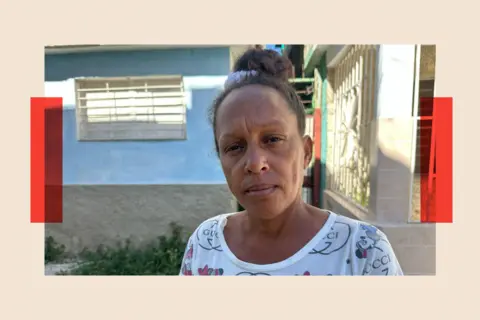
Lisandra Botey

Lisandra’s nine-year-old daughter set off for school that morning with nothing in her stomach, she explains, tears pricking her eyes. Her husband, Brenei Hernández – a construction worker with next to no work – says they often have no idea where the next meal is coming from.

“Every day is the same hunger, the same misery”, he says, stirring a pot of white rice – so at the very least his daughter will come home from school to something hot to eat.

With the Cuban economy in freefall since the coronavirus pandemic, no gas has been delivered to Brenei’s flimsy home in a Havana suburb for months. He and his neighbours were already cooking with firewood and charcoal before US troops forcibly removed Cuba’s closest ally, the Venezuelan president, Nicolás Maduro, from power on 3 January. Since then, though, Washington has seemingly taken full control of Venezuela’s oil industry and the supply of crude to the communist-run island has dried up.
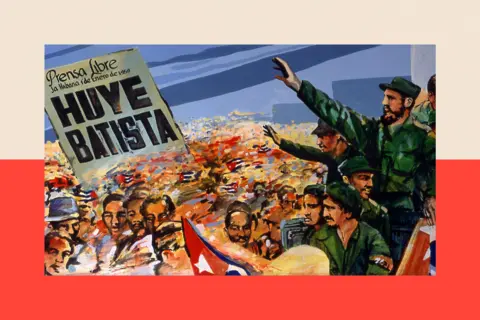
Universal Images Group via Getty Images A painting showing Fidel Castro celebrating with people the overthrow of the  Batista regime
Universal Images Group via Getty Images

The decades-long US economic embargo on Cuba has been ramped up like never before: US President Donald Trump has threatened tariffs on any nation which sends oil to the stricken island.

None of Cuba’s traditional allies – whether Mexico, Russia, China, Vietnam or Iran – have stepped up to fill the void left by Venezuela, although the US Treasury this week said it would relax restrictions on a limited number of oil sales, to “support the Cuban people for commercial and humanitarian use.”

The move comes amid rising tensions between Washington and Havana. Cuba’s government has reported that its border guards fatally shot four people travelling in a US‑registered speedboat. It said the individuals were Cuban nationals living in the United States.

US Secretary of State Marco Rubio said the US was investigating the “highly unusual” incident.

“Washington’s old playbook on Cuba doesn’t apply anymore and whoever hasn’t appreciated that yet is in for a shock,” says Cuban economist, Ricardo Torres. “Trump is changing the rules of the game.”

Trump has declared that “Cuba is ready to fall”, intensifying pressure on the island at its most vulnerable moment since the Cold War. Some commentators have said one of the aims of Washington’s removal of Maduro in Venezuela was to deepen Cuba’s economic crisis. It appears the Trump administration hopes to weaken the revolution – possibly terminally – and push for the collapse of state-run socialism on the island.

The underlying calculation is straightforward: that a worsening internal crisis could create the conditions for the Cuban Revolution to unravel from within. What remains far less certain is whether such a strategy will force regime change, or whether the communist-run Cuban government will, as it has in past crises, find new ways to endure.

Blackouts and ‘extreme rationing’

The effects of the fuel crisis are being felt the length and breadth of Cuba.

Blackouts in Havana can last for 15 hours a day or more. Hospitals are in darkness with only emergency cases being admitted. Schools are often shuttered. Rubbish is piled high on street corners with no fuel for the state’s garbage trucks to collect it. Scrawny and elderly residents can often be found sifting through the discarded waste.

For an island proud of the social safety net it built for its people since 1959 – universal healthcare, the eradication of illiteracy, tackling infant mortality rates and preventable diseases – the picture is bleak, and getting worse.

One constant question since Maduro’s arrest is: how long can Cuba hold on without new fuel supplies reaching the island?

“Perhaps the oil inventories could last for six to eight weeks,” suggests Ricardo Torres – but he admits it’s hard to know with any degree of precision. “Cuba doesn’t publish figures on fuel inventories.”

“Extreme rationing” could be introduced, he says, but draconian restrictions are already in place. People are limited to 20 litres of fuel at the petrol pumps, which must be paid for in US dollars.

They’re obliged to use a government-run app called Ticket. But the wait can last for days, even weeks. Drivers are finding more than 10,000 people ahead of them when they join the virtual queue for half a tank of petrol. Unsurprisingly in such circumstances, the price of black-market fuel has skyrocketed.
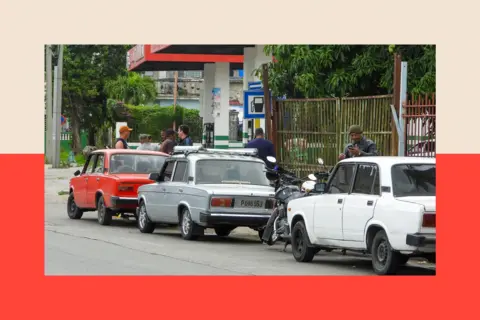
AFP via Getty Images Vehicles wait in line to refuel at a gas station in Havana
AFP via Getty Images

Despite it all, Brenei Hernández doesn’t direct his ire at Washington. Quite the opposite, in fact: he blames the Cuban state.

“I’d like Trump to take this place over. Then let’s see if things get better,” he says with unerring honesty. “What can I tell you? I’m not going to lie,” he adds.

Regime change

Having spent years listening to Cubans repeat anodyne revolutionary slogans when asked for their opinions on camera, it’s disarming to hear such frank views expressed with no outward fear of the repercussions. Such is the level of disgust and exhaustion, the public’s fear of reprisals for speaking out is beginning to evaporate.

“It’s too much,” Brenei says. “We’re only eating white rice. Hopefully I can get enough money together in the next couple of days for a packet of hot dogs, or three or four eggs.”

Lisandra already worries that her daughter will want a birthday cake this year, which is well beyond their means.
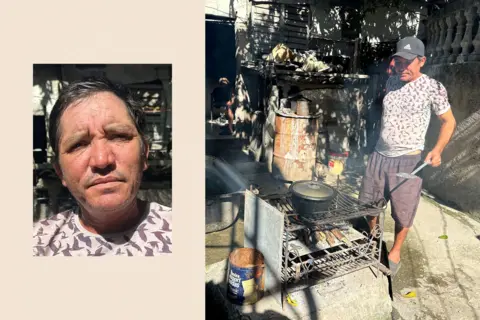
Brenei Hernández

Such suffering may be part of the Trump administration’s strategy of “maximum pressure” on Cuba. But while the methodology may be new, says Ricardo Torres, Washington’s ultimate goal in Cuba remains the same as always: regime change.

“Whether the change in Cuba is something very sudden or a negotiated solution, in the end, it’s regime change that Trump wants.”

The issue for Cubans is how Washington intends to make that change happen, Torres adds, with more acute pain from the oil shutout on the horizon.

The Cuban government has repeatedly described the policy as inhumane, cruel and illegal under international law: “What right does a world power have to deny fuel and the ability to function to a smaller nation?” said Cuban President Miguel Díaz-Canel.

It’s all a far cry from the optimism of Washington’s Cuba policy of a decade ago. After decades of enmity, in 2014 President Barack Obama opted to re-establish ties with the island in a historic but short-lived thaw. Hardliners in the Cuban government warned that Obama’s overtures amounted to the same aim of regime change dressed up in nicer clothing. For the ordinary Cubans who lived through it, though, the diplomatic reset felt like the polar opposite of the current Trump approach.
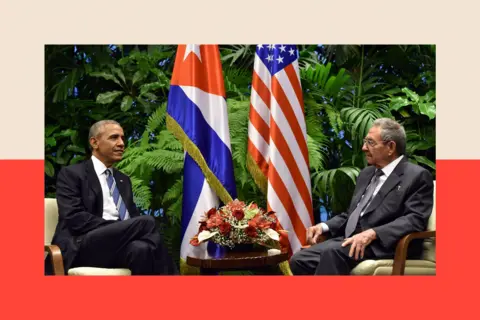
AFP via Getty Images Barack Obama (L) and Cuban President Raul Castro meet at the Revolution Palace in Havana
AFP via Getty Images

Next month marks the tenth anniversary of Obama’s visit to Havana as the first sitting US president to step foot on the island in almost a century.

In front of the Cuban leader, Raúl Castro, he delivered an extraordinary address – broadcast live on state television – in which he said he had come to “bury the last remnant of the Cold War in the Americas” and “extend the hand of friendship to the Cuban people”.

The man who oversaw the diplomatic thaw was the then-US ambassador to Cuba, Jeffrey DeLaurentis. I asked him whether the Cuban Revolution was now facing an existential threat.

“That will depend upon what some other countries might do”, DeLaurentis replied.

Venezuela’s oil support was worth some 35,000 barrels of crude a day to Cuba. There have been some broad indications that Russia might send oil to the island and the Cuban foreign minister, Bruno Rodríguez, was recently in Moscow for talks with his Russian counterpart and with Russian President Vladimir Putin. So far, though, no Russian fuel tankers have docked in Cuban ports.

Rodríguez also travelled to China, Vietnam and Spain trying to drum up support.
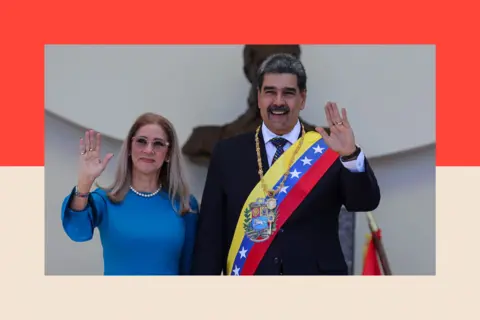
Getty Images President of Venezuela Nicolas Maduro and his wife Cilia Flores
Getty Images

“The rush to defend and help has certainly not been as enthusiastic and as significant as we’ve seen in the past. But there’s still a chance that other countries might take some action,” says DeLaurentis.

As to what Trump specifically wants in Cuba, the former lead US diplomat on the island says the administration is “trying to take coercive steps to bring the government to the table or capitulate but not necessarily collapse”.

“That’s a pretty risky strategy it seems to me, with a lot of potential for unintended consequences,” he adds.

Those consequences are already visible in the rapidly worsening humanitarian crisis which prompted Mexico to send tonnes of emergency aid to Cuba, including powdered milk and personal hygiene items. They’re already being felt every day by the families forced to cook with firewood and the drivers in urgent need of petrol.

Esteban Bello Rodríguez runs several “almendrones”, 1950s classic American automobiles, in which he ferries tourists around the iconic spots of Havana. His trade has been heavily impacted by the fuel scarcity and the fall in tourism.
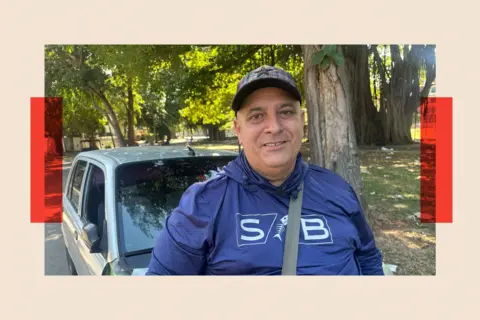
Esteban Bello Rodríguez

“There’s a problem here – the fuel problem – so surely the people at the top on both sides have to sit down, figure it out,” he says bluntly. “All I know is that a solution must be found because this is affecting the entire country – the people, nationwide. All of us.”

The real power

On the US side, Cuba policy is largely being led by the Secretary of State, Marco Rubio – a Cuban-American son of exiles and former Florida senator.

Trump says Rubio is talking to the top tier of the Cuban government and for days there’s been widespread speculation over who might lead that negotiation on the Cuban side. Cuban economist Ricardo Torres says that the only dealmaker on the island is Raúl Castro, even at the revolutionary leader’s advanced age of 94.
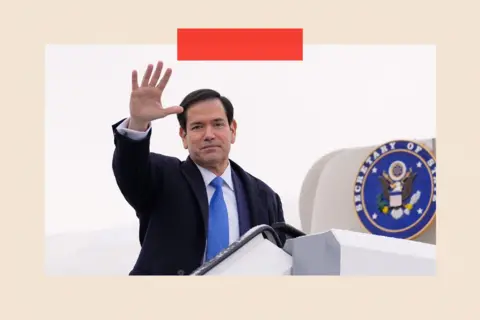
AFP via Getty Images US Secretary of State Marco Rubio waves as he departs Munich International Airport 
AFP via Getty Images

“The only people with capacity to engage in a meaningful negotiation are people close to Raúl. The civilian government doesn’t have any real power – including President Miguel Díaz-Canel”, he argues.

“The real power in Cuba is Raúl and the closed circle around him.”

Last week, the Axios news outlet reported that his grandson, Raúl Rodríguez Castro – commonly known in Cuba as “El Cangrejo”, meaning The Crab – is the Trump administration’s point of contact inside Castro’s inner circle. If so, he’s considered one of his grandfather’s most trusted confidantes, having been his personal bodyguard, and more business-orientated than ideological, with no high-level diplomatic experience. Neither side, especially not the Cubans, have confirmed he’s in talks with Rubio.

“In the case of Venezuela, the Trump administration has been very pragmatic,” adds Torres.

Rubio has seemingly been happy to deal with an interim government in Caracas under Delcy Rodríguez and Washington appears to be looking to persuade the conservative Cuban-American lobby in Florida of the benefits of negotiating with a similarly defenestrated regime in Havana.

However, despite the public adherence to the “maximum pressure” strategy, Washington does seem to fear that total political change overnight in Venezuela or Cuba would be profoundly destabilising and could prompt a migration crisis as well as humanitarian one.
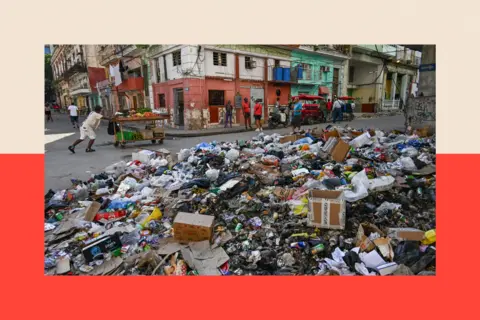
AFP via Getty Images People walk past rubbish piled up on a street in HavanaAFP via Getty Images

Several Cuba watchers have noted that Rubio’s tone towards the island was markedly softer in recent comments he made at the Munich Security Conference, with an emphasis on economic reforms rather than a root-and-branch political transformation.

“In a way it almost sounded like a strange variant of Obama 2.0 in terms of economic reforms and so forth,” said former ambassador DeLaurentis. “That signalled to me that they are looking for a Delcy-like figure to negotiate with.”

“Ten to 20 years ago, the diaspora in south Florida would have been completely opposed to that kind of approach. But I guess that now they’d give the president and the secretary the benefit of the doubt, and allow this sort of scenario to play out,” adds DeLaurentis.

Meanwhile, any visitor wanting to see the photograph of the pre-revolutionary woman cooking with firewood will have to wait. The museum has been closed for over a year for refurbishments and now there’s no fuel to continue the work.

In what is now the most challenging time in the island’s modern history, it’s not yet clear if only the Museum of the Revolution will be undergoing a renovation this year – or the Cuban Revolution itself.

Top picture credit: AFP via Getty Images

Thin, lobster red banner with white text saying ‘InDepth newsletter’. To the right are black and white portrait images of Emma Barnett and John Simpson. Emma has dark-rimmed glasses, long fair hair and a striped shirt. John has short white hair with a white shirt and dark blazer. They are set on an oatmeal, curved background with a green overlapping circle.

BBC InDepth is the home on the website and app for the best analysis, with fresh perspectives that challenge assumptions and deep reporting on the biggest issues of the day. Emma Barnett and John Simpson bring their pick of the most thought-provoking deep reads and analysis, every Saturday. Sign up for the newsletter here


Continue Reading
Click to comment

Leave a Reply

Your email address will not be published. Required fields are marked *

BBC News World

Indonesia to ban social media and other online platforms for under 16s

​ Indonesia to ban social media and other online platforms for under 16s. 1 hour ago. Lesthia Kertopati, BBC Indonesiaand. Kathryn Armstrong. Getty Images. Indonesia says it will ban social media and other popular online platforms for children under 16, becoming the latest country to introduce restrictions aimed at protecting young people from online abuse.. Meutya Hafid, the country’s communications and digital affairs minister, announced that accounts for under 16s on “high risk” platforms would be deactivated from 28 March.. “This will start with platforms such as YouTube, TikTok, Facebook, Instagram, Threads, X, Bigo Live, and Roblox,” said Hafid, adding that the ban would make Indonesia “the first non-Western country to delay children’s access to digital spaces according to age”.. There was no immediate response from the affected platforms.. “Our children are facing increasingly real threats—ranging from exposure to pornography, cyberbullying, and online scams, to addiction, which is the most significant concern,” said Hafid.. “The government is stepping in so that parents no longer have to fight alone against the giants of algorithm-driven platforms.”. Children’s charity Unicef reported in 2023 that roughly half of the 510 Indonesian children it surveyed had been exposed to sexual images on social media.. “As a working mum with two children, especially with a teenage son, I don’t have much time to constantly monitor what my son is doing in the digital world,” Amanda Kusumo, 42, told the BBC in response to news of the ban.. “With government regulations like this, it really helps ease our worries as parents,” she said, adding: “I’m confident that the government’s decision will ultimately bring positive benefits for both children and parents.”. Amanda’s 17-year-old son, Matt Joseph, said he saw the arguments both for and against the ban.. “It’s true that children still can’t fully manage their own screen time or control themselves when using their phones. But if the government chooses to completely block all platforms considered “risky” for them, I feel there might be a gentler, wiser way to approach it,” he said.. Matt Joseph feels that much of what young people enjoy comes from social media. If the government wants them to use it less, they need an incentive – such as improving what is available to watch on TV – he suggested.. “It would be nice to have entertainment that feels like it’s really meant for us, something that supports learning while still giving us joy.”. Indonesia’s child protection agency, meanwhile, said it could not comment on the government’s plans until it had studied them.. The announcement comes after Australia became the first country to start forcing social media firms to block users under 16 from having accounts on their platforms in December – a policy being closely watched by other world governments.. Critics have called on the Australian government to extend the ban to cover online gaming sites like Roblox and Disc  

Continue Reading

BBC News World

Hungary to expel Ukrainian bank workers in row with Kyiv

​ Hungary to expel Ukrainian bank workers in row with Kyiv. 2 hours ago. Helen Sullivan,BBC Newsand. Paul Kirby,Europe digital editor. Reuters. Hungary says it is expelling seven Ukrainian bank workers arrested on Thursday while transporting $80m (£60m) worth of cash and 9kg of gold in cash-transport vehicles to Ukraine.. After Ukrainian Foreign Minister Andriy Sybiha accused Budapest of taking the group hostage and stealing money, Hungary’s tax authority said they had been detained on suspicion of money laundering.. Ukraine’s state savings bank, Oschadbank, said they had been part of a regular transport between Austria and Ukraine and were “unjustifiably detained”.. Hungary’s tax authority said it was conducting criminal proceedings and added that the transport was being overseen by a former general of Ukraine’s intelligence service.. “This year alone, more than $900m, €420m and 146 kg of gold bars were transported through the territory of Hungary to Ukraine,” the national tax and customs administration said in a statement on Friday.. It is not yet clear what has happened to the enormous sums of cash and the gold seized on Thursday, but Polish Foreign Minister Radek Sikorski said “they’ve stolen the money”.. Relations between Ukraine and Hungary have deteriorated during Russia’s full-scale invasion of Ukraine and have descended into a war of words over a halt to Russian oil supplies through the Druzhba pipeline in Ukraine.. The arrest of the bank workers comes deep in Hungary’s election campaign, with Prime Minister Viktor Orbán trailing in opinion polls with little more than a month before the vote.. Hungarian reports described how black-clad officials from Hungary’s TEK counter-terrorism centre raided the Ukrainian-registered vehicles on Thursday and then their convoy headed to Budapest.. Sybiha accused Orbán of dragging Ukraine into its “domestic politics and electoral campaign”, adding that Kyiv would not tolerate “this state banditism”.. His opposite number in Budapest, Foreign Minister Péter Szijjártó, asked why such enormous sums were being moved in cash: “If this is truly a transaction between banks, why was it not carried out by transfer?”. Orbán made no mention of the seven bank workers in his regular radio appearance on Friday, although he did say “transit shipments” important to Ukraine would be halted until a row over Russian oil supplies was sorted out.. Orbán, seen as Russia’s closest ally in the EU, has accused Ukraine of deliberately halting Russian oil through the pipeline. Kyiv says the pipeline was damaged in a Russian air strike in January, but Orban says satellite images indicate there is no reason why the pipeline should not be working and has threatened to “force the Ukrainians to restart deliveries”.. The Hungarian leader has also blocked a €90bn (£78bn) EU aid package seen as vital for Ukraine’s financing in a bid to force the resumption of oil supplies.. Orbán has repeatedly opposed EU funding for Ukraine,  

Continue Reading

BBC News World

US and Venezuela agree to resume diplomatic ties after Maduro capture
​ US and Venezuela agree to resume diplomatic ties after Maduro capture. 8 hours ago. Ione WellsSouth America Correspondent. Reuters. The US and Venezuela have agreed to re-establish diplomatic and consular relations.. The agency said in a statement that the two sides would make joint efforts to promote stability, support economic recovery and advance political reconciliation.. While their diplomatic relations have been improving since the US military captured Venezuelan President Nicolás Maduro in January in a surprise raid, the announcement of formal bilateral ties marks a hugely symbolic step.. President Donald Trump ordered troops to seize Maduro and his wife, bringing them to a Manhattan court to face allegations of weapon and drug offences, which they deny.. The US embassy in Caracas, which closed in 2019, has already reopened, and Washington has appointed a new diplomat in Venezuela.. The Venezuelan government said on Thursday it was willing to advance a “new stage of constructive dialogue, based on mutual respect”.. It said the relationship must result in the “social and economic happiness of the Venezuelan people”.. But the statement from Caracas made no reference to a transition or future elections, unlike the US state department’s.. The US has accused Maduro – who is due to stand trial this month in the US – and other members of his government of leading a criminal organisation involved in activities such as illegal mining and drug trafficking.. Sources told the BBC that more diplomatic staff from the US embassy in Bogotá, Colombia, are expected to be transferred to Caracas soon. The move will make it much easier for officials to negotiate face-to-face and provide consular services.. The US state department said its engagement was focused on helping Venezuelan people move forward through a “phased process that creates the conditions for a peaceful transition to a democratically elected government”.. After a visit to Venezuela, US Secretary of the Interior Doug Burgum told reporters on the runway in Caracas on Thursday on his way back to the US that it was a “brilliant strategic move” to intervene in Venezuela before Iran.. The US and Israel launched military action on Iran on 28 February. Iran’s Supreme Leader Ayatollah Ali Khamenei was killed during the first wave of strikes.. Burgum, who leads President Trump’s National Energy Dominance Council, added on Thursday that the intervention would help ensure that “oil will flow to America”.. Since the US military strikes on Venezuela and seizure of Maduro, the US has struck new oil deals with Venezuela.. Washington has allowed the country to sell sanctioned oil with US oversight, and Venezuela has changed its law to allow more foreign investment in the oil sector.. On Wednesday, Venezuela’s interim president Delcy Rodríguez and Burgum said the two countries would work together to develop mining in the country.. Along with having the largest proven oil reserves in the world, Venezuela is r  

Continue Reading

BBC News World

Israel strikes Beirut after evacuation warning sparks panic
​ Israel strikes Beirut after evacuation warning sparks panic. 8 hours ago. Alice Cuddy,Senior international reporter, Beirutand. David Gritten. Reuters. Israel has launched airstrikes on Beirut, Lebanon, after ordering hundreds of thousands of people to leave the city’s southern suburbs. There were no immediate reports of casualties.. The Israeli military says it is targeting Hezbollah across Lebanon, with Beirut’s south seen as a stronghold for the Iran-backed armed group.. “The Defense Army has launched a wave of airstrikes targeting Hezbollah’s terrorist infrastructure in Beirut’s southern suburbs,” a spokesperson for the Israeli Defense Forces (IDF) said on X.. Following the evacuation orders, traffic jams formed on main roads heading north and south as panicked residents complied with the unprecedented blanket demand covering the area.. Follow live updates. Israel tells people in large parts of southern Lebanon to leave ahead of attacks. Battered and isolated, Hezbollah drags Lebanon into another war. Before the latest strikes, Lebanon said more than 120 people had been killed and nearly 700 wounded by airstrikes since Monday. At least 90,000 are displaced.. The Israeli order came after the military also told all residents of a huge swathe of southern Lebanon near the Israeli border to leave on Wednesday, ahead of an anticipated ground incursion.. Hezbollah has warned Israelis living within 5km of the Lebanese border to leave their homes.. Mohammed al-Khaouzam was among those stuck in traffic trying to flee Beirut’s southern suburbs on Thursday afternoon.. “We’re coming from Bir Hassan. They [the Israeli military] issued a warning so that’s why we’re leaving,” he told the BBC.. Khaouzam, who is originally from Syria, is heading north with his wife and children. He described Lebanon as his “second country”.. “May God help everyone. May God help all of the Lebanese,” he said out of his car window.. A woman driving north said her children were in Beirut and had called her telling her about the warning to leave the suburbs of Chiyah, Burj al-Barajneh, Haret Hreik and Hadath.. She said she was going to stay with them, hoping it would be safe.. “Is there any place to go? What should I do?” she asked.. Food kitchens and shelters in the capital have warned that they cannot support the number of people being displaced.. Reuters. Lebanese authorities have said at least 102 people have been killed in Israeli strikes over the past four days. There have been no reports of fatalities by Israeli authorities.. Israeli aircraft have carried out waves of strikes targeting Hezbollah in Beirut’s southern suburbs, southern Lebanon and the eastern Bekaa Valley since Monday, when the group launched rockets and drones over the border in retaliation for the assassination of Iran’s Supreme Leader Ayatollah Ali Khamenei.. It pulled Lebanon into the war between Israel, the US and Iran, only 15 months after a ceasefire deal ended more than a year of full-on fighting betw  

Continue Reading

BBC News World

Anthropic vows to sue Pentagon over supply chain risk label
​ Anthropic vows to sue Pentagon over supply chain risk label. 11 hours ago. Lily Jamali,North America Technology correspondentand. Kali Hays,Technology reporter. Reuters. The US has officially deemed artificial intelligence (AI) firm Anthropic a supply chain risk, setting the stage for an unprecedented legal fight.. The Pentagon’s designation is the first time a US company has been labelled a supply chain risk, which means the government considers Anthropic not secure enough for it to use.. It has led Anthropic, which has refused to give defence agencies unfettered access to its AI tools over concerns of mass surveillance and autonomous weapons, to move towards challenging the decision in court.. “We do not believe this action is legally sound, and we see no choice but to challenge it in court,” chief executive Dario Amodei wrote on Thursday evening.. In a statement earlier on Thursday, a senior Pentagon official said the supply chain risk designation was “effective immediately.”. Amodei wrote that Anthropic had received a letter from the defence department the previous day designating it a risk, noting that the designation “has a narrow scope.”. “The law requires the Secretary of War to use the least restrictive means necessary to accomplish the goal of protecting the supply chain”, he wrote.. “Even for Department of War contractors, the supply chain risk designation doesn’t (and can’t) limit uses of Claude or business relationships with Anthropic if those are unrelated to their specific Department of War contracts.. The AI developer had been in talks with the Department of Defense in recent days.. Those talks did not prove fruitful, according to a person familiar with Anthropic who asked not to be identified, in part because of how President Donald Trump and other members of his administration had publicly berated the company.. Leadership at Anthropic had thought last week the two sides were near a resolution, after weeks of back and forth. Then Trump posted on his Truth Social platform that he was directing all federal agencies to stop using Anthropic, the person familiar added.. “We don’t need it, we don’t want it, and will not do business with them again!” Trump wrote in the Friday post.. Hegseth followed up with a post on X, writing that Anthropic would be “immediately” designated a supply chain risk, prohibiting any business working with the military from “any commercial activity with Anthropic”.. Anthropic said it had received no communication from the White House or the Pentagon that these statements were coming.. According to a person familiar with discussions, the feeling inside Anthropic is that it is disliked by some in the Trump administration as its chief executive has not been among the tech leaders to donate large sums to Trump or publicly praise him.. On Thursday, tech giant Microsoft said that it would continue to embed Anthropic technology in products for its clients with the exception of the US Department of Defense.. “Our law  

Continue Reading

Latest News

Politics1 hour ago

Bharat Petroleum sends SMS alerts, denies any fuel shortage in India as US and Israel’s conflict with Iran spreads

 India’s major public-sector company Bharat Petroleum Corporation Limited (BPCL) has assured customers of fuel availability amid social media panic over...

Politics3 hours ago

BJP will form government in Uttarakhand again in 2027: Amit Shah in Haridwar

 Union home minister Amit Shah said on Saturday that the Bharatiya Janata Party (BJP) will once again form its government...

Politics3 hours ago

BJP recasts ‘permission’ to buy Russian oil as US seeking India’s ‘help’, Cong hits back with US treasury secy’s remarks

 A political slugfest continues between the opposition Congress and the ruling BJP after the United States said it had “allowed”...

Politics4 hours ago

Absolutely certain that global warming has accelerated in past decade: Study

 Global warming has accelerated in the past ten years with a new study concluding it with 98% certainty. While scientists...

Politics5 hours ago

When will Noida International Airport open? What we know after key DGCA license granted

 The upcoming Noida international airport might be set to begin operations within the next two months, after the Directorate General...

Politics6 hours ago

Delhi Uttam Nagar clashes LIVE: Vehicles set on fire, streets choked with protests amid tensions

 Live. By. Delhi Uttam Nagar clashes LIVE updates: To prevent tensions in Delhi’s Uttam Nagar amid ongoing protests, security has...

Politics6 hours ago

Delhi Uttam Nagar clashes LIVE: Vehicles set on fire, streets choked with protests amid tensions

 Live. By. Delhi Uttam Nagar clashes LIVE updates: To prevent tensions in Delhi’s Uttam Nagar amid ongoing protests, security has...

Politics6 hours ago

Delhi Uttam Nagar clashes LIVE: Vehicles set on fire, streets choked with protests amid tensions

 Live. By. Delhi Uttam Nagar clashes LIVE updates: To prevent tensions in Delhi’s Uttam Nagar amid ongoing protests, security has...

Politics7 hours ago

MP man, out of jail, kills teen; locals see him ‘eating victim’s brain’, ‘drinking blood’

 A 46-year-old man, who was released from jail a few weeks ago in a case related to the murder of...

Politics8 hours ago

Veteran journalist Narayan Bareth passes away after cardiac arrest in Jaipur

 Veteran journalist Narayan Bareth passed away here after suffering a cardiac arrest while undergoing treatment for pneumonia, a family member...

Trending News

Join Our Newsletter

Stay updated with breaking news and exclusive content.