
HealthNews
Your annual doctor’s appointment is supposed to cost nothing. So why are people being charged?

After moving to West Virginia last year, Steve Kuo signed up for a new insurance plan that would cost him $500 a month. But there was one upside: He knew he was entitled to a free preventive visit. He wanted to take advantage of it, so he made an appointment at a clinic near his new home.
But then when he got there, they asked about his medical history and he mentioned prior kidney problems. When he received a bill a few weeks later, he had been charged twice for the same appointment: Once as that free preventive visit, once as an “office sick visit” because of the kidney conversation. He was flummoxed — and very annoyed, as he shared on social media. “No copayment means no copayment, exactly as stated in the insurance guidelines,” Kuo told me over email. “What is written and agreed upon should be honored.”
He is far from alone. On Reddit, I easily found more than a dozen examples in just the past year of people getting a surprise bill for what they thought was going to be a free visit.
One woman posted a nearly $1,000 bill she’d received for what she thought was going to be a preventive gynecology visit. Another woman said that she ended up facing roughly $3,000 bills because she was given an ultrasound (which she said she didn’t request) at a preventive visit, and then her blood draw was sent to an out-of-network lab. Another person lamented that they had been billed $170 for an office visit because they had briefly mentioned back stiffness.
It’s not supposed to be like this. Americans don’t get much when it comes to our healthcare, but most of us are supposed to be entitled to at least one thing: Once every year, no matter your health insurance, you can go to the doctor with the goal of preventing future health problems by discussing important vaccinations, cancer screenings, and cardiovascular health screenings. The Affordable Care Act made that the law in 2010.
But more than 15 years later, people all over the country are walking into their doctor’s office, thinking they’re entitled to that one free visit every year, and walking out being billed for a sick visit, blood labs, and more. Researchers estimate that Americans spend tens of millions, maybe hundreds of millions of dollars every year on services that are supposed to be free under the ACA.
Dr. Yalda Jabbarpour, a family physician in the Washington, DC, area and medical director of the Robert Graham Center for Policy Studies, told me she still deals all the time with people’s confusion about what a preventive visit really means.
“Every single time I’m in the clinic, this issue comes up with a patient. And it’s sad that it comes up,” Jabbarpour told me. “In my mind, the blame is not to be put on the patient. The blame is not to be put on the physician. Really, this points to a bigger system issue that we need to solve.”
How could a seemingly simple promise of one free annual doctor’s visit result in a situation so convoluted that patients and doctors are still struggling with it nearly two decades later? And how might we fix it?
Patients are getting surprise bills from their doctors — and they’re pissed off
The goal of the ACA was to expand coverage and make sure health insurance would be comprehensive to actually help people stay healthy. As part of that project, the authors of the law added a mandate for insurers to cover those services, including an annual wellness exam. The problem is, they did not define what the parameters of that preventive visit actually were, said Alex Hoagland, a healthcare economist at the University of Toronto.
“It didn’t establish a clear definition of…all the diagnosis codes and procedure codes and how frequently you get that combination within a year,” he said. “They don’t define what actually is preventive care and what’s not.”
Do’s and don’t’s for a preventive visit:
Topics that should be free to talk about: routine vaccinations, many cancer screenings, screenings for diabetes and cardiovascular health, contraception.
Topics that could lead to you getting charged: chronic pain, prior medical problems, other physical and mental health symptoms (including depression).
If you are a first-time visitor at a doctor’s office, you may also be charged a “new patient” fee.
That has left each insurer to define a preventive visit on their own — and that’s where the perverse incentives that leave patients in a lurch begin. Preventive visits are supposed to be reserved strictly for screenings and talking about other preventive measures you can take to protect your long-term health, but you may get billed for an “office visit” or a “sick visit” if you talk about any specific symptom you’re experiencing, the same as if you had come in because you had the flu.
Health insurers have an incentive to keep the definition of preventive care as narrow as possible, so they have to pay fewer claims without any contribution from the patient. At the same time, doctors want to be paid for the actual services that they are providing. If somebody does bring up a bigger health problem during a preventive visit, then the doctor reasonably wants to be paid accordingly.
“I know, particularly in the healthcare space, it’s really popular to blame one party or another, and here I don’t think it’s a matter of corporate greed or physician incompetence or whatever,” Hoagland said. “It’s just a natural mismatch of incentives.”
So the reality is that “one free doctor’s visit” sounds straightforward, but, in practice, it’s much more complicated. You as the patient might think of it as one visit, but in our fee-for-service healthcare system, where providers bill based on each specific thing they do, it’s not. The conversation about your vaccination may be free — but asking about your back pain is not. If you get blood tests ordered, that’s another line item. The list goes on. “It’s not like you walk into a doctor’s office and it’s just one thing that happens, right?” said Sabrina Corlette, co-director of the Center on Health Insurance Reforms at Georgetown University. “It’s multiple different things that are happening when you go into a doctor’s office.”
Part of the problem may be that it’s one free visit. We Americans are consumers at heart: Tell us we’re going to get something for free and we want to take advantage of it. But having just one free visit may also lead to people bringing a laundry list of questions to that preventive visit, because they think of it as their only chance to ask everything of their doctor.
That makes it easy for the discussion to tip over into a sick visit — and not only does that lead to a surprise bill, it can also crowd out the conversation about prevention that the visit is supposed to be focused on.
“What ends up happening a lot…is that a patient comes in for their annual visit, and in their mind, that is their time to bring up every single thing that’s been happening during the year, because they see it as the free visit to bring up everything that’s happened during the year. For some patients, that takes up the entire visit,” Jabbarpour told me. “They leave, and it’s like, ‘Oh my god, we forgot to do all the screening things: the vaccinations, the cancer screenings, and the cardiovascular risk screening.’ And then something happens down the line because you never address those screenings.”
A 2021 study by Hoagland and Paul Shafer, both of Boston University at the time, estimated that Americans with employer-sponsored insurance had in 2018 alone paid between $75 million and $219 million in medical bills that should have been free. They were more likely to be charged for things like contraception or cholesterol and diabetes screenings, with individuals sometimes paying hundreds of dollars for those services.
Hoagland told me he had been billed for preventive visits because he has type 1 diabetes and the system automatically categorized his appointment as a diabetic visit. Earlier this year, he co-authored a study that found people with chronic conditions were more likely to be charged for preventive care. Corlette said that she too had recently been charged for what was supposed to be a preventive visit after she mentioned an issue as an aside. And these are folks who study health care for a living.
“It was literally maybe a 10-second conversation where I would ask the doctor a question about something,” she said. “And that triggered it.”
Colonoscopies are another dramatic example of how this issue plays out in real life; Corlette told me the procedure was one of the first services where this fuzzy line between prevention and treatment under the ACA became obvious. People go under for what is supposed to be a preventive colonoscopy. But then their doctor finds a polyp and decides to remove it — good clinical practice, but as a result, their patient could end up being charged thousands of dollars because the colonoscopy was no longer preventive once that polyp was snipped.
“All of a sudden, that would trigger what the patient thought was a preventive service into a cost-sharing obligation,” Corlette said. “Colonoscopies can be thousands of dollars. That was when we were first like, ‘Oh, yeah, this is a more complicated area than I think the lawmakers that drafted this provision originally envisioned.’”
How the US could fix our preventive visit headaches
The ACA’s preventive visit promise was clearly well-intentioned and it’s worth remembering that, if you look in the aggregate, more Americans are getting more free preventive care than they did before the law was passed. The problem, as much as anything, is expectations: People think they’re entitled to a free visit and are understandably frustrated when they get billed for it.
“The difference is before the Affordable Care Act, maybe they anticipated some kind of cost-sharing,” Hoagland said. “But after, they expect it to be free.”
Sign up for the Good Medicine newsletter
Our political wellness landscape has shifted: new leaders, shady science, contradictory advice, broken trust, and overwhelming systems. How is anyone supposed to make sense of it all? Vox’s senior correspondent Dylan Scott has been on the health beat for a long time, and every week, he’ll wade into sticky debates, answer fair questions, and contextualize what’s happening in American health care policy. Sign up here.
It doesn’t have to be this way. Corlette’s team at Georgetown University recently released a proposal that Americans be entitled to three primary care and two urgent care visits every year with no cost-sharing. This approach has two virtues, she told me: It will help people feel like they are actually getting value from their insurance — the very complaint that Steve Kuo raised — and, because we know primary care helps prevent problems down the road, it should also improve people’s health in the long term. Take the pressure off that one free visit and let people see the doctor a few times a year without worrying about being charged.
“In employer-based insurance, a lot of people feel like, ‘What the hell am I getting for my premium each month?’” Corlette said. “We wanted people to feel like they’re getting good value, and we wanted to get to better population health.”
Hoagland also endorsed the idea of at least one free physician’s visit every year, no matter what’s discussed. In the long term, Jabbarpour said she’d like to see copays eliminated entirely for primary care.
But any payment reforms are not going to happen immediately. What can we do right now?
For one, doctor offices could make an effort to be as transparent as possible. Jabbarpour’s MedStar system has started calling people a couple of days before their appointment with a brief script that tells the patient that they could be charged if the conversation with their doctor touches on additional medical problems. If your doctor’s office doesn’t proactively bring it up, ask when you schedule your appointment or when they call you to confirm it. Worst-case scenario, ask your provider what they consider preventive care when your visit begins. You might also want to educate yourself on what services are generally considered preventive and should be available for free: Your insurer may make that information available on their website, or KFF has a database you can peruse.
It’s not a perfect solution. “What ends up happening is patients come in, and they say, ‘I know I’m not supposed to talk to you about anything else, so I’m not going to tell you about anything else.’ And you don’t want that to happen,” Jabbarpour said. You should ask your doctor directly: What do you consider to be preventive care? Establish boundaries at the start. That way, you can at least be aware if you are going to get charged because the conversation crossed the line to discussing an active health problem.
And if you want to see the underlying laws change, start organizing. Contact your state and federal reps and ask them what they are doing to ensure this stops happening. Things could be different: Jabbarpour said she hopes to one day work in a health system where the cost of a single primary care visit isn’t so high-stakes, where doctors and their patients can manage their health according to their particular needs, rather than worry about how to bill for one specific conversation that covers the whole range of somebody’s health — like primary care is supposed to do.
“I think some patients can be managed by seeing us once every year, once every two years, and some patients need to see us monthly,” Jabbarpour told me. “To put all patients in the same box and say you can only see your primary care physician once a year if you want it paid for, it makes zero sense.”
HealthNews
Health officials warn Marion residents after rabid raccoon found

MARION, Mass. —
A raccoon found in Marion, Massachusetts, has tested positive for rabies, prompting the town to issue a rabies advisory.
According to the Marion Board of Health, a raccoon that was “acting oddly” near Point Road and the water tower tested positive for rabies.
What should Marion residents know about the rabies advisory?
Town officials ask the public to stay vigilant and watch for wildlife showing signs of rabies and to refrain from interacting with wild animals.
Anyone who encounters an animal that may be infected with rabies should not approach it, keep a safe distance and call Animal Control at 508-748-1212 or 911.
What animals are most likely to carry rabies in Massachusetts?
In Massachusetts, animals most likely to be found infected with rabies include raccoons, bats, skunks, foxes and woodchucks, also known as groundhogs. Cats are the domestic animals most frequently found to be rabid due to lower vaccination rates compared with dogs.
What are the signs of rabies in animals?
Signs of rabies in animals can include abnormal or aggressive behavior; lethargy, weakness or paralysis; self-mutilation; seizures; excessive salivation; and difficulty breathing or swallowing. Rabies is a fatal but preventable disease caused by a virus carried in the saliva of infected animals. It can spread to people and other animals through a bite or when saliva is introduced into an open wound or the eyes, nose or mouth.
How effective is treatment after rabies exposure?
HealthNews
7 surprising ways GLP-1 drugs may protect your body beyond weight loss

NEWYou can now listen to Fox News articles!
GLP-1 medications may provide health benefits that extend beyond weight loss, according to a growing body of research.
From reducing cardiovascular risks to potentially easing joint pain and inflammation, studies suggest these drugs may affect multiple systems throughout the body.
Here are seven potential benefits beyond shedding pounds.
POPULAR WEIGHT-LOSS STRATEGY SHOWS SURPRISING POTENTIAL FOR CHRONIC PAIN RELIEF
No. 1: Protecting heart health
Research suggests semaglutide — the active ingredient in Ozempic and Wegovy — may provide cardiovascular benefits beyond those associated with weight loss.
A major study published in The Lancet found that semaglutide reduced the risk of heart attacks, strokes and cardiovascular death among people with existing cardiovascular disease and overweight or obesity. The benefits were observed across different body weights and were not fully explained by weight loss.
No. 2: Reducing joint pain and improving mobility
GLP-1 medications have been linked to reduced joint pain, although researchers are still investigating how much of the benefit comes from weight loss versus other effects.
TEST YOURSELF WITH OUR LATEST LIFESTYLE QUIZ
The STEP 9 clinical trial, published in the New England Journal of Medicine, found that semaglutide significantly reduced knee osteoarthritis pain and improved physical function among adults with obesity.
No. 3: Promoting kidney health
GLP-1 medications may help protect kidney function through several mechanisms, including improvements in blood sugar, blood pressure and inflammation.
GLP-1 BOOM COULD RESHAPE RESTAURANT BARS AS DINERS CUT BACK ON ALCOHOL
In the landmark FLOW trial, published in the New England Journal of Medicine, semaglutide reduced the risk of major kidney-related complications and cardiovascular death by 24% among patients with type 2 diabetes and chronic kidney disease.
No. 4: Reducing liver inflammation and scarring
MASH, or metabolic dysfunction-associated steatohepatitis, is a more severe form of fatty liver disease involving inflammation and liver cell damage.
Research suggests GLP-1 medications may help improve liver health, although the extent to which these benefits occur independently of weight loss remains under investigation.
A clinical trial published in the New England Journal of Medicine found that semaglutide improved liver tissue findings among patients with MASH, including reductions in inflammation and liver scarring.
Researchers found that 62.9% of semaglutide recipients experienced resolution of MASH without worsening liver fibrosis, compared with 34.3% receiving placebo.
No. 5: Reducing respiratory flare-ups
Real-world research presented at the European Respiratory Society Congress has linked GLP-1 medications to fewer asthma attacks and COPD flare-ups.
Researchers believe the drugs’ potential anti-inflammatory effects may play a role, although additional studies are needed to determine whether the medications directly improve respiratory health.
CLICK HERE FOR MORE HEALTH STORIES
No. 6: Supporting mental health and curbing addiction
The brain contains GLP-1 receptors in regions involved in regulating appetite, emotions, motivation and responses to rewards.
Emerging research suggests semaglutide may have potential benefits for mental health and addiction.
CLICK HERE TO DOWNLOAD THE FOX NEWS APP
An observational study published on the preprint server medRxiv linked semaglutide use to lower rates of substance-related and mood disorders. However, the findings have not been peer-reviewed and do not establish that the medication caused the reductions.
No. 7: Soothing severe skin conditions
GLP-1-based medications are also being investigated for their potential benefits in inflammatory skin conditions, including psoriasis.
A clinical trial published in JAMA Dermatology found that adding tirzepatide to an existing psoriasis treatment improved skin clearance among adults with moderate to severe psoriasis and overweight or obesity.
CLICK HERE TO SIGN UP FOR OUR HEALTH NEWSLETTER
Researchers are continuing to investigate whether these benefits result from weight loss, reduced inflammation or a combination of factors.
The effects of GLP-1 medications can vary by drug and individual, and patients should consult a healthcare provider about potential risks and benefits.
HealthNews
Can Pennsylvania’s deadly measles outbreak be stopped? CDC steps in to help
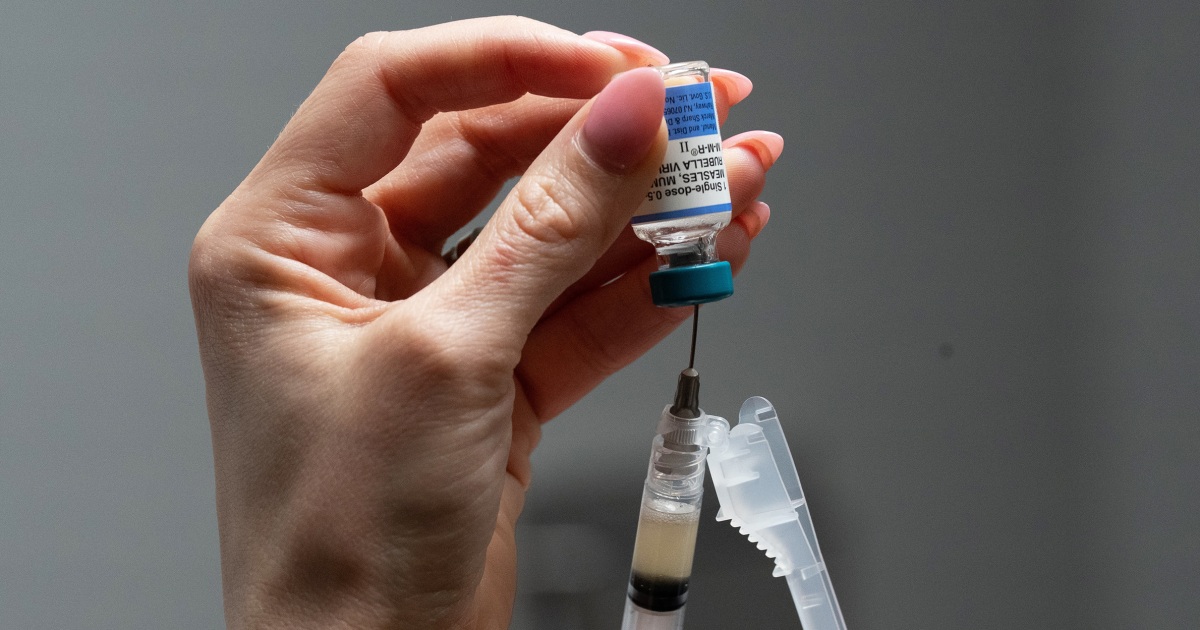
The Centers for Disease Control and Prevention is sending one of its scientists to Pennsylvania to help curb the state’s growing measles outbreak, a CDC spokesperson said Thursday. That person, a “disease detective” within the agency’s Epidemic Intelligence Service, is scheduled to arrive later this week.
It’s the CDC’s first in-person assistance to the state after a social media feud in August between Health Secretary Robert F. Kennedy Jr. and Pennsylvania Gov. Josh Shapiro. The two traded jabs following a press briefing where Shapiro announced that two unvaccinated people had died of measles complications and accused Kennedy of spreading vaccine misinformation.
“I made very clear that his actions and the rhetoric that’s coming from this administration are having a negative impact on communities across America, particularly right here in Pennsylvania,” Shapiro said during the briefing.
Kennedy then suggested that the deaths may have been “fabricated,” and that Shapiro was seeking to profit from them politically.
HealthNews
Mom of 6 Sues Doctors, Hospital After Hysterectomy Allegedly Leads to Paralysis, Quadruple Amputations

NEED TO KNOW
Mom of six Trisha Stevens has filed a lawsuit after she developed sepsis following a hysterectomy
Stevens underwent multiple amputations and became paralyzed after she claims doctors were negligent in providing prompt care, according to the lawsuit
The Portland, Ore., mom is seeking $68.5 million in damages from her medical providers
An Oregon woman underwent multiple amputations and is now paralyzed from the lower back down after she claims her medical teams ignored signs she’d developed a serious infection, per a lawsuit.
Portland mom of six, Trisha Stevens, 48, underwent a hysterectomy on Oct. 4, 2024, at Adventist Health Portland, after struggling with abnormal uterine bleeding and adenomyosis, per the complaint.
Stevens claims that four days after the surgery, test results showed inflammation, but her doctor, who is named in the suit, allegedly did not review the results or take “any action in response to them, including communicating the results to Ms. Stevens or initiating any additional treatment, follow-up, monitoring based on those findings.”
PEOPLE has reached out to Adventist Health Portland, who is not named in the suit, for comment.
Two weeks later, on Oct. 19, Stevens was walking down the bleachers at her son’s football game, when she “experienced a sudden tearing and popping sensation in her lower abdomen, followed by vaginal bleeding,” per the suit. Three days later, Stevens called the office of the doctor who performed the hysterectomy, who is named in the lawsuit. Stevens allegedly reported “bright red vaginal bleeding, passage of a blood clot the size of a baseball, a low-grade fever, diarrhea, and stomach cramping.”
She was told by a nurse to rest and hydrate, and was not directed to an emergency room, the suit says. But her condition continued to decline. On Oct. 22, Stevens went to the emergency department at Legacy Mount Hood, where she was found to have a significantly elevated heart rate and low blood pressure. She was also experiencing severe menstrual bleeding and was “saturating vaginal pads with blood at a rate of three per hour.”
She was diagnosed with “peritonitis, lactic acid acidosis, and AKI (acute kidney injury), with septic shock and bacteremia,” which can be life-threatening. But she was allegedly not given antibiotics until the following day. Later, she underwent surgery. But by then, her infection had progressed to the point that amputation was recommended.
Take PEOPLE with you! Subscribe to PEOPLE magazine to get the latest details on celebrity news, exclusive royal updates, how-it-happened true crime stories and more — right to your mailbox.
On Nov. 6, two months after her initial surgery, Stevens had both her legs amputated above the knee. She later had her right hand amputated at the wrist, and her left thumb, as well as fingers on the left hand.
Inadequate blood supply to her spinal cord caused her to become paralyzed from the lower back down, according to the lawsuit. Portions of her lips and tongue were amputated, the suit says. She also had acute kidney injury, a fungal infection, and rhabdomyolysis.
A representative for Legacy Health, which is named in the lawsuit, told PEOPLE, “We are deeply saddened by what Ms. Stevens and her family have experienced, and we extend our compassion to them. Because this matter is now in litigation, we cannot comment on the specific allegations or care involved.”
Stevens is seeking $68.5 million.
“This infection did not just make me sick, it attacked my body so violently that I went into septic shock and multi-organ failure, and I have spent every day since living with what survival cost me,” Stevens tells PEOPLE in a statement. “I cannot fully close my mouth, I struggle to speak and swallow, and the damage and constriction from necrosis and scarring have affected my gums and teeth, leaving me needing dental treatment. I live with chronic pain, wounds, recurring infections, and bowel and bladder problems that require daily care, planning, and help.”
“When I look in the mirror, my eyes fill with tears because I see a body altered from head to toe. The injuries are visible, but the emotional damage is often hidden. Every day, I grieve the person I was, the body I once lived in, and the independence my family and I had before this happened,” Stevens tells PEOPLE.
“Depression is a real battle as I try to process losses that touch every part of my life, but I keep fighting for my husband, my children, and the life we are trying to rebuild together.”
HealthNews
Big Bear bald eagle Jackie’s cause of death revealed

The viral bald eagle known as Jackie, who lived in California’s Big Bear Valley, died of multiple causes, according to a new necropsy report.
The California Department of Fish and Wildlife released the necropsy results this week in partnership with the San Diego Zoo Wildlife Alliance and Ojai Raptor Center after testing of Patient 26-519, more commonly known as Jackie, was completed.
The necropsy found that Jackie had multiple conditions, including a type of infectious avian flu. She died in August following an injury sustained in a fight with other birds.
“Jackie’s necropsy confirmed Highly Pathogenic Avian Influenza (HPAI) as the primary underlying cause of her decline,” Steve Kubiski, San Diego Zoo Wildlife Alliance’s director of disease investigations, said in a statement. “In an uncommon presentation of the virus, the infection caused a severe ulcer in her stomach that led to persistent internal bleeding, anemia, and the development of bacterial sepsis.”
According to the necropsy report, Jackie’s chronic condition led to secondary bacterial infection, severe inflammation and the development of blood clots. Toxicology testing also revealed that Jackie had environmental contaminants and traces of a rodenticide called brodifacoum in her liver.
“Together, the findings showed that Jackie was suffering from multiple severe and interconnected disease processes that had been developing over time and ultimately led to her decline and death,” CDFW said.
The CDFW also noted that Jackie’s remains were cremated by the U.S. Fish and Wildlife Service’s National Eagle Repository.
“We’re grateful to everyone who cared for her and worked to support her well-being. Understanding the results of these tests is an important part of learning from this case and can help inform the care and treatment of other eagles and wildlife in the future,” CDFW Director Meghan Hertel said in a statement.
Jackie was one-half of the bald eagle duo that went viral and gained worldwide popularity in 2023. She and her partner, Shadow, were the stars of a San Bernardino National Forest livestream operated by the nonprofit Friends of Big Bear Valley. They welcomed five eaglets together.


Steven Soderbergh To Help Finish ‘The Batman Part II’ Production
EXCLUSIVE: As director Matt Reeves continues to attend to an ongoing family matter, Steven Soderbergh is coming on to help...


Netflix’s Chief Content Officer Bela Bajaria Exiting
Bela Bajaria is out at Netflix. The news comes only 24 hours after the streamer underwent a massive cull, laying...


Netflix’s Bela Bajaria Leaving After 10 Years Amid Layoffs
In a major executive shakeup, Bela Bajaria is out at Netflix after 10 years at the streamer, most recently serving...


Violet & Xaden Have Been Cast In Prime Video’s ‘Fourth Wing’ TV Show
Lightning strikes as Prime Video has found its leading stars for the upcoming TV series Fourth Wing, the small-screen adaptation...


Targeted ads delivered 0-click exploits to install mercenary malware
Researchers say that mercenary hackers laced ads with zero-click exploits that installed sophisticated malware on the devices of targeted individuals...


Will the Fed raise interest rates? Kevin Warsh could offer clues
When Federal Reserve Chairman Kevin Warsh strides onstage in Bangkok on Friday morning, it will be after 11 p.m. on...


Ilhan Omar’s husband Tim Mynett speaks out as HSI fraud probe grows
While Ilhan Omar, D-Minn., has not been seen publicly since federal agents raided her Washington, D.C., residence on Monday, her...


Meta launches an open-weight AI model that runs on Macs
Meta has launched what it calls the “most capable” open-weight model in the United States. Dubbed Muse Spark Open, the...


Disney Inks Dude Perfect to Deal for Original Content
The Walt Disney Co. is cutting another major creator deal, this time with the prolific sports-focused Dude Perfect, The Hollywood...


Brendan Fraser Sequel Gets New Title Ahead of 2027 Release
Brendan Fraser‘s forthcoming installment in Universal Pictures‘ popular The Mummy franchise is alive and well. The studio announced Thursday that...
-

 Entertainment2 weeks ago
‘Verity’ Posts $4.5M Previews, ‘Digger’ $1.2M
-

 Entertainment2 weeks ago
Rick Devens Wins In Season 28 Finale
-

 Business2 weeks ago
Tesla Cybercab pressure to expand after rocky first month in Austin
-

 Business2 weeks ago
OpenAI safety employee resigns, claiming the company’s ‘culture is broken’
-
 Entertainment1 week ago
Travis Barker reveals why he underwent surgery after concerning hospital photos
-
 Business2 weeks ago
Energy Secretary Chris Wright says Trump was “well aware of the risks to energy flows” before launching Iran war
-

 HealthNews1 week ago
Des Moines clinics stumped by unidentified virus
-

 Entertainment2 weeks ago
Disney pays $115 million for Yamaha’s Orange County headquarters