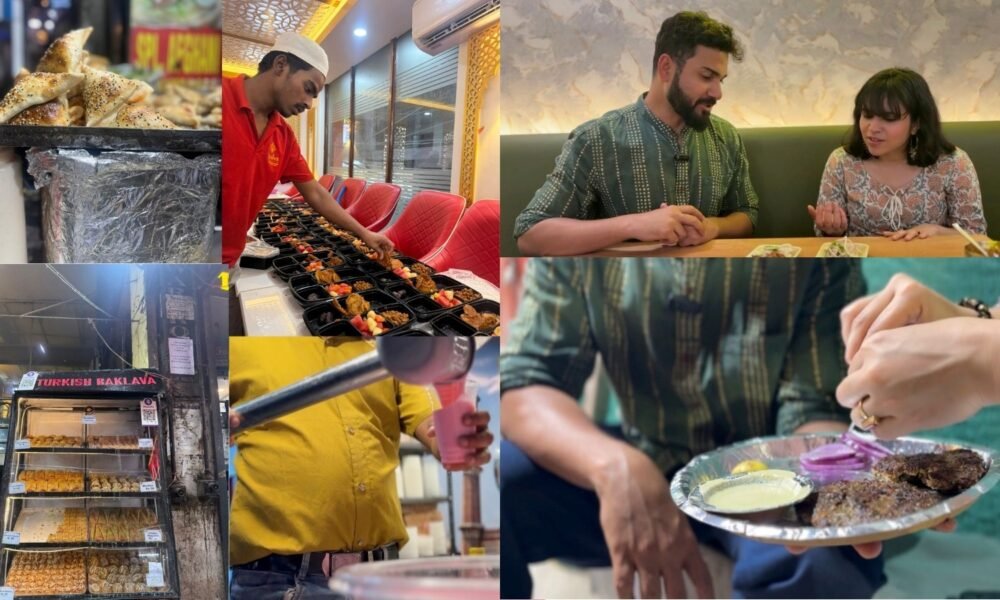
India’s diversity has long made it a melting pot of cultures. And there is no place better than Delhi, which embodies a truly cosmopolitan identity. As someone who has always enjoyed the sweetness of sewaiyan and the tantalising flavours of biryani, the holy month of Ramadan felt like the right time to experience the festival beyond what I had learnt from books and friends. And what better way to do it than through food?. I decided to take a food walk with celebrated food author Sadaf Hussain, whose culinary finesse left me amazed. From enriching me with the historical backdrop of dishes to explaining the right balance of spices that make a meal memorable, Hussain’s wisdom became the cherry on top of this food experience.. Interestingly, the conversation on Ramadan celebrations often circles back to the bustling lanes around Jama Masjid in Old Delhi, where the aroma of kebabs and biryani fills the air well into the night. However, Shaheen Bagh, an emerging food hub in South Delhi, has its own unique rhythm. Its story is closely tied to the CAA-NRC protests, when local women led a peaceful sit-in that drew people from across the city. Over time, what began as a political gathering gradually turned into a space where people also shared food, conversations and community.. Shaheen Bagh during Ramadan (Photo: Himakshi Panwar). The evolution of ‘Chaalis-foota road’. Shaheen Bagh turned into a food hub during the protests. “Log baithte the, aur itni bheed mein aadmi bhooka toh nahi reh sakta na (People would sit together, and in such a huge crowd, you can’t really let someone stay hungry, can you?),” Mohammad Parvez, manager of Zaika restaurant, told indianexpress.com.. “So people needed food and snacks. That’s when locals began setting up biryani and other food stalls. After the lockdown, people realised it’s a good place to come and eat,” he shares.. Walking through the stretch locals refer to as “chaalis-foota road” (40-feet road), I felt an unexpected sense of familiarity. The narrow lanes, small eateries, and the hum of evening crowds reminded me of Purani Dilli in many ways. Except this was South Delhi, and the transition from quiet residential pockets to a lively food street felt almost magical.. But the most fascinating sight that evening was the preparation for Iftar, the meal that marks the end of the daily fast during Ramadan. For the first time, I witnessed how an entire neighbourhood seemed to move in quiet synchrony. Shopkeepers began setting up long tables outside their establishments. Plates of fruits, glasses of mohabbat-e-sharbat, and bowls of dates and fritters were laid out neatly as the sun began to dip.. Story continues below this ad. “This is for everyone, from our staff to passersby,” a worker at SKC restaurant told me while arranging plates. Anyone can come and break the fast with us.” He asked me to wait until 6:15 pm and join them.. First Iftari. By the time it was quarter past 6, the streets of