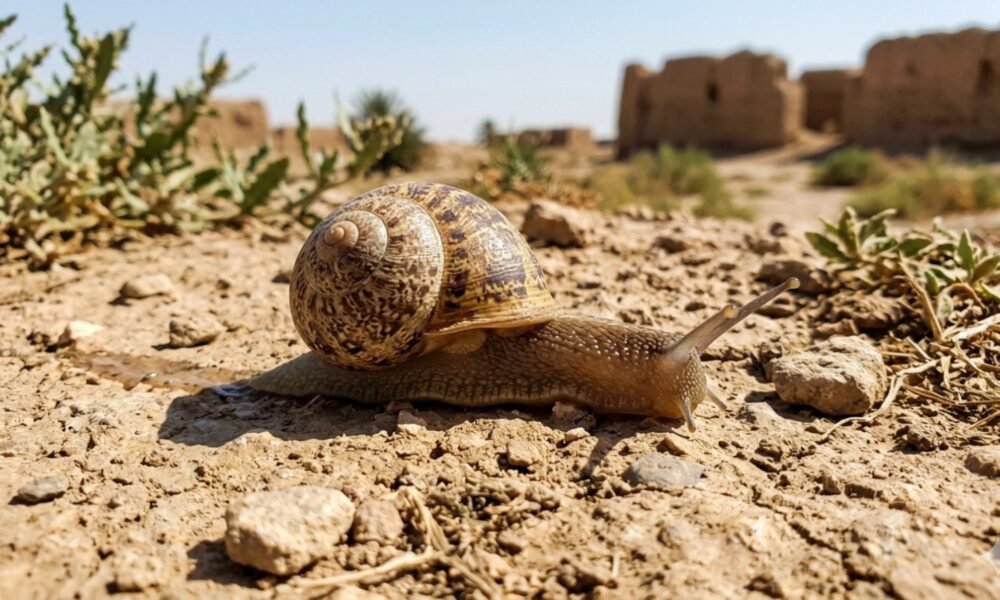
It might sound unbelievable, but some snails can sleep for years; literally pressing pause on life until conditions improve. In the natural world, where survival often depends on quick reactions, these slow-moving creatures take a completely different approach: they wait.. At the centre of this ability are species like the Desert snail, which have evolved to survive in extremely harsh environments. In deserts and dry regions, where water is scarce and temperatures can be extreme, staying active is not always an option. Instead, these snails enter a state known as estivation—a deep, protective sleep triggered by heat and dryness.. During estivation, the snail retreats into its shell and seals the opening with a layer of dried mucus. This natural barrier locks in moisture and shields the snail from dehydration. Inside, its body slows down dramatically—heart rate, metabolism, and energy use all drop to minimal levels. In this state, the snail can survive without food or water for remarkably long periods.. Helix aspersa can remain dormant for several months up to 2–3 years (Image: Wikimedia Commons). Also Read | Midnight melodies: Why some birds chirp while you sleep. How long can they really sleep?. While many snails remain dormant for weeks or months, some have been known to stay in this state for years. There are documented cases of snails “waking up” after several years when environmental conditions improve, particularly when they come into contact with moisture again. This ability allows them to outlast droughts that would be fatal to most other animals.. One such documented case is that of Sphincterochila boissieri (Negev Desert snail), which revived after four years of estivation, with its sealed shell protecting it from extreme 50°C heat and from lack of rain.. Another well-known example is the Helix aspersa, commonly called the garden snail. Although it typically hibernates during cold weather, it can also estivate in hot, dry conditions. This flexibility helps it survive in a wide range of climates, from gardens to semi-arid regions.. What makes this behaviour so fascinating is that it’s not really “sleep” in the way we understand it—it’s a survival mechanism. By shutting down most of their bodily functions, snails conserve energy and protect themselves from environmental stress.. Story continues below this ad. In a world that often rewards speed and constant activity, these creatures show that sometimes survival is about patience—waiting quietly until the world becomes livable again.