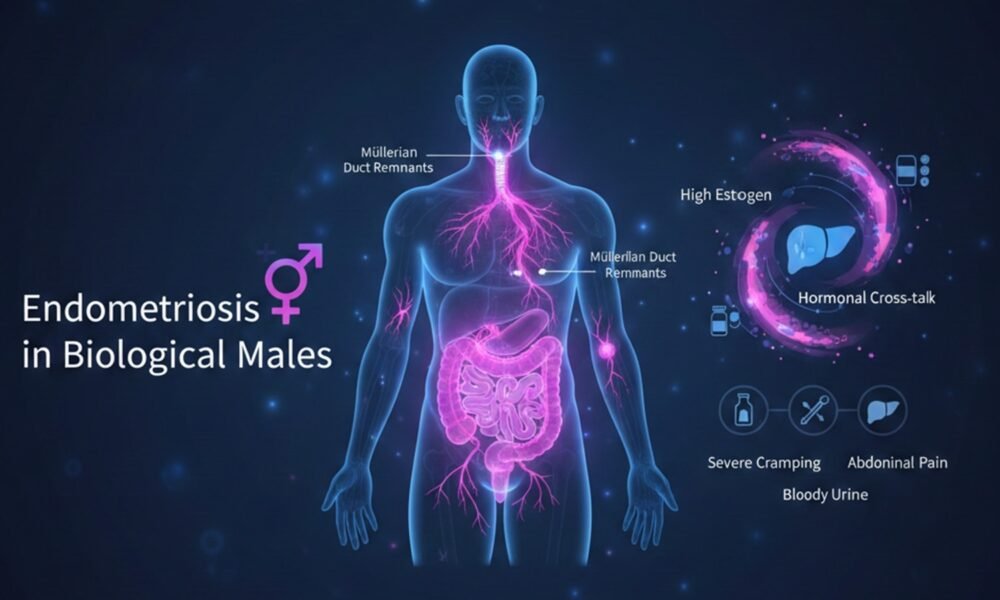
Male endometriosis is a medical mystery that disproves long-held theories (Source: AI Generated). Endometriosis is widely understood as a condition affecting women, but emerging conversations in medical education are highlighting that biology does not always fit neatly into expected categories. London-based general physician Dr Sermed Mezher recently addressed this little-known phenomenon in a video shared on Instagram, explaining that medical literature has recorded rare instances of the condition in biological males.. He noted that fewer than 20 such cases have been documented historically. He said, “In these instances, endometrial-like tissue, which normally lines the uterus, is found growing in locations such as the bladder, abdominal wall, or inguinal canal. The presence of this tissue in a male body is a biological anomaly that challenges some of the traditional theories regarding how the disease originates and spreads.”. The physician further described how early embryonic development may help explain these rare cases. He explained, “Early in life, around six weeks after our foray from fertilisation, all of us develop something called a Müllerian duct, and in females, these go on to produce their reproductive systems. In males, however, the production of anti-Mullerian hormone causes these to regress. And the theory goes that remnants of these Müllerian ducts can actually become reactivated after exposure to oestrogen.”. He added, “The prevailing theory for these rare occurrences is often linked to hormonal cross-talk or high levels of oestrogen exposure. Many of the recorded cases involved men who were undergoing prolonged oestrogen therapy for prostate cancer or individuals with severe liver cirrhosis, which can lead to an inability to properly metabolise oestrogen. Scientists believe that these high oestrogen levels may trigger the transformation of vestigial embryonic cells, known as Mullerian duct remnants, into endometrial-type tissue.”. He also pointed out that men with obesity or advanced liver disease may have altered hormone levels that increase circulating oestrogen, potentially raising risk. Despite its rarity, the condition can present with symptoms such as severe cramping, persistent abdominal pain and bloating, offering researchers new insight into how hormones and genetics may influence endometriosis more broadly.. So, given how rare endometriosis in biological males is, what should clinicians and patients look out for?. Dr Palleti Siva Karthik Reddy, senior consultant in internal medicine, Bengaluru, tells indianexpress.com, “Since male endometriosis is exceptionally rare, it is rarely the first suspect. Clinicians should look out for unexplained, chronic lower abdominal or pelvic pain, or occasionally, blood in the urine. The biggest red flag for investigation is a history of significant oestrogen exposure. This often stems from prolonged oestrogen therapy for conditions like prostate cancer or from medical