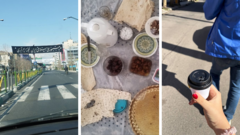
‘Even under missiles we carry on living’ – how young Iranians are coping with war. 15 hours ago. Ghoncheh HabibiazadBBC Persian. BBC. Snow fell in parts of Tehran on Tuesday night, blanketing the Iranian capital with a layer of white after air strikes on oil depots caused days of dark skies and black rain.. But life goes on, even as the war drags on.. Sahar, a woman in her 20s, told BBC Persian that she was spending most days sheltering at home in Tehran, cooking, reading, and playing a life simulation video game.. “I think my creativity has increased during the war. I’m constantly stressed and end up building prettier homes in the game,” she said.. ‘I just want to be able to sleep’: Attacks in Iran rock cities and cut power. Iran’s new leader has never been tested. He now faces an existential battle. Sahar – whose name, as with the other contributors, has been changed for safety reasons – found out on Tuesday that a woman she had gone to school with had been killed.. “Her body hasn’t been found. I felt horrible after hearing it,” she said.. “Why do we have to experience such horror when we’re in the prime years of our youth? I just want this to end before Nowruz. My favourite days in life are the early days of spring.”. Follow the latest on the Iran war. Fewer than 10 days remain until Nowruz, the Persian New Year festival, which marks the arrival of spring.. It is usually a time when families gather to celebrate. Markets and streets across Iran are crowded with people buying sweets and nuts for guests ahead of the holiday.. But this year that has not been the case, according to those living in Tehran.. “It doesn’t feel like the run-up to Nowruz. But even under missiles, we carry on living. We have no choice but to live,” said Peyman, a man in his 30s.. “The metro is empty. So empty that for every person there are 30 or 40 empty seats. The streets are very quiet as well… so quiet that you could easily play football in the middle of a street,” he added.. Another man in his 30s said: “My sleep schedule depends on the bombings now. I go to sleep at around six or seven in the morning and wake up at 2pm. Sometimes, I have to go out to buy groceries, but Tehran is very empty.”. Tehran and its surrounding province have a population of 14 million, but some residents have left to seek safety elsewhere since the US and Israel began attacking Iran on 28 February.. Some headed north towards the Caspian Sea, where there have been fewer attacks.. Reuters. Mina, a woman in her 20s, is one of them. She is now in the city of Rasht.. “My family kept insisting we go to Rasht to stay with my grandmother, but my best friend and flatmate didn’t want to leave Tehran. I felt guilty about leaving without her, so I didn’t want us to go,” she recalled.. “The night they hit the [oil] depots, our flat was shaking all the way to the front door. All the windows lit up as if it were morning.”. She added: “I kept thinking that if anything happened to my family, it would be my