
HealthNews
Federal Aid for Lead Cleanup Is Receding. That’s a Problem for Cash-Strapped Cities.

Tighter regulations and an influx of federal money in recent years have helped communities across the U.S. initiate efforts to clean up lead contamination in soil, drinking water, and older homes. But Congress and the Trump administration have partially rolled back those rules and resources, potentially making it more challenging for cash-strapped cities and towns to undertake sweeping lead remediation programs.. This story also ran on Verite News. It can be republished for free.. That’s the case in New Orleans, where an investigation by Verite News found high lead levels in about half of the playgrounds on city property and found detectable levels of the toxic metal in most homes that tested their drinking water in a voluntary program.. No level of lead exposure is safe, according to federal environmental officials, but undertaking a comprehensive cleanup can be financially prohibitive. New Orleans is facing a $220 million budget deficit that has led to city employee furloughs and layoffs.. Congress allocated $15 billion over five years to lead pipe replacement under the Bipartisan Infrastructure Law, a Biden-era measure set to expire at the end of this year. In 2024, the Environmental Protection Agency also tightened the standards for lead-contaminated soil for the first time in 30 years and mandated that water systems replace all lead service lines by late 2037.. But a spending package passed by Congress and signed by President Donald Trump in January redirected $125 million of that lead remediation money to wildfire prevention. And since October, the EPA has partially rolled back protections against soil contamination, raising the federal hazard level in urban areas and the threshold for removing contaminated soil.. Tom Neltner, the national director of the nonprofit advocacy group Unleaded Kids, said it was the first time an administration had loosened the limits on lead in soil.. “ We’ve seen the Trump administration say positive things about its commitment to lead but then take actions that undermine that,” Neltner said.. But, he added, progress is still being made in some communities.. EPA press secretary Brigit Hirsch said the changes made under the Trump administration have reduced confusion and uncertainty that could hamper cleanup efforts.. “The Trump EPA’s record on protecting Americans — especially American children — from lead is unmatched,” Hirsch said in an emailed statement. “In just the last year, the Trump EPA backed up its commitment to reducing lead exposure in children with BILLIONS of dollars and historic action.”. She cited a November EPA announcement of $3 billion available to pay for water pipe replacement. That money is from the 2021 infrastructure law passed during the Biden administration.. Verite News spoke with people in Michigan, Indiana, and Rhode Island to learn how they addressed their lead pollution, with the aim of finding options that could be applied in New Orleans and other cities..
HealthNews
This Doctor-Senator Who Backed RFK Jr. Now Faces a Fight for His Job — And His Legacy
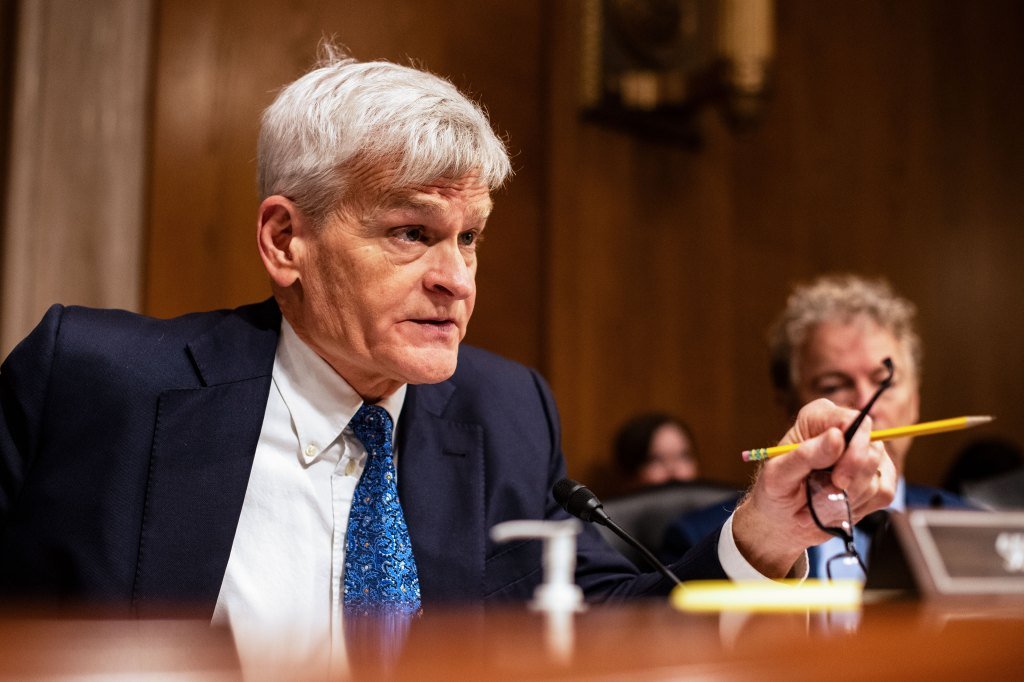
BATON ROUGE, La. — The ambitious liver doctor would go just about anywhere in his home state to give people the hepatitis B vaccine.. This story also ran on Verite News. It can be republished for free.. Bill Cassidy offered jabs to thousands of inmates at Louisiana’s maximum-security prison in the early 2000s. A decade before that, he set up vaccine clinics in middle schools, a model hailed nationally as a success.. “He got that whole generation immunized in East Baton Rouge,” said Holley Galland, a retired doctor who worked with Cassidy vaccinating schoolchildren.. About the same time, a lawyer and environmental activist with a famous last name was starting to build the loyal anti-vaccine coalition that, two decades later, would move President Donald Trump to nominate him as the nation’s top health official.. Today, a year after now-Sen. Cassidy warily cast the vote that ensured Robert F. Kennedy Jr.’s ascension to that role, the Louisiana Republican’s life’s work — in medicine and in politics — is unraveling.. Newborn hepatitis B vaccination rates in the U.S. had plunged to 73% as of August, down 10 percentage points since a February 2023 high, according to research published in JAMA last month. In December, the Centers for Disease Control and Prevention’s Advisory Committee for Immunization Practices — remade by Kennedy — voted to revoke a two-decade-old recommendation that all newborns get the shot.. The next month, Trump endorsed U.S. Rep. Julia Letlow, a Cassidy challenger in what’s shaping up to be a competitive Republican Senate primary. Letlow’s foray into politics began in 2021 when she took the seat won by her husband, left vacant after he died from covid.. KFF Health News made multiple requests for comment from Cassidy over three months. His staff declined to make him available for an interview or provide comment. Letlow’s campaign did not respond to requests for comment.. Email Sign-Up. Subscribe to KFF Health News’ free weekly newsletter, “The Week in Brief.”. Your Email Address Sign Up. Rise of the Skeptics. As the May primary nears, some Louisiana doctors are worried they’ve begun a long trek down a dark road when it comes to vaccine-preventable diseases.. Last year, on the day Kennedy was sworn in a thousand miles away in Washington, Louisiana’s health department stopped promoting vaccines, halting its clinics and advertising. Its communications about an ongoing whooping cough outbreak in the state have nearly ceased. It took months for the state to announce last year that two infants had died from the illness. A Louisiana child’s death from the flu was confirmed this January, and a couple of cases of measles were reported last year.. Spokespeople for the Louisiana Department of Health did not respond to questions.. “It’s so hard to see children get sick from illnesses that they should have never gotten in the first place,” said Mikki Bouquet, a pediatrician in Baton Rouge. “You want
HealthNews
What the Health? From KFF Health News: 40 Years of Health Policy
The Host. Julie Rovner. KFF Health News. @jrovner. @julierovner.bsky.social. Read Julie’s stories.. Julie Rovner is chief Washington correspondent and host of KFF Health News’ weekly health policy news podcast, “What the Health?” A noted expert on health policy issues, Julie is the author of the critically praised reference book “Health Care Politics and Policy A to Z,” now in its third edition.. This month marks host Julie Rovner’s 40th anniversary reporting on health policy in Washington. Over that time, she’s covered a vast range of topics, from the response to the AIDS epidemic, to Medicare and Medicaid changes, to the fight over the “Patients’ Bill of Rights” — and a half-dozen major reform fights, including the introduction of the Affordable Care Act and the efforts to repeal it.. In honor of the occasion, Rovner invited two of her longtime sources to chat about what has — and has not — changed in health policy over the past four decades.. Email Sign-Up. Subscribe to KFF Health News’ free Morning Briefing.. Your Email Address Sign Up. Click to open the transcript Transcript: 40 Years of Health Policy. [Editor’s note: This transcript was generated using both transcription software and a human’s light touch. It has been edited for style and clarity.]. Julie Rovner: Hello from KFF Health News and WAMU Public Radio in Washington, D.C. Welcome to What the Health? I’m Julie Rovner, chief Washington correspondent for KFF Health News. Usually we’re joined by some of the best reporters covering Washington, but today we’re bringing you something special. I hope you enjoy it. We’re taping this episode on Friday, Feb. 27, at 4 p.m. As always, news happens fast, and things might have changed by the time you hear this. So here we go.. I have two special guests today, who I will introduce in a moment. But first I’m going to explain why I chose them. I started reporting on health policy in 1986, covering health and welfare on Capitol Hill and at the Department of Health and Human Services for what was then the Congressional Quarterly “Weekly Report.” This month marks my 40th anniversary on the health beat, and as anniversaries so often do, it got me thinking about everything I’ve seen and covered, including a half a dozen major health reform fights, a dozen budget reconciliation bills, years-long fights over everything from the Patients’ Bill of Rights and human cloning to bioterrorism and a pandemic. It also got me thinking about where I thought the U.S. health system would be four decades after I began, and where it actually is. And I thought it might be fun to reminisce with a couple of people who not only were there when I started, but who also taught me a lot of what I know. So without further ado, let me introduce my guests. Chip Kahn just stepped down as president and CEO of the Federation of American Hospitals after 25 years in that post. Chip previously worked in both the House and the Senate for the major h
HealthNews
Con la presencia del ICE, habitantes de Minnesota crearon un sistema médico en las sombras. Un aprendizaje para otras ciudades
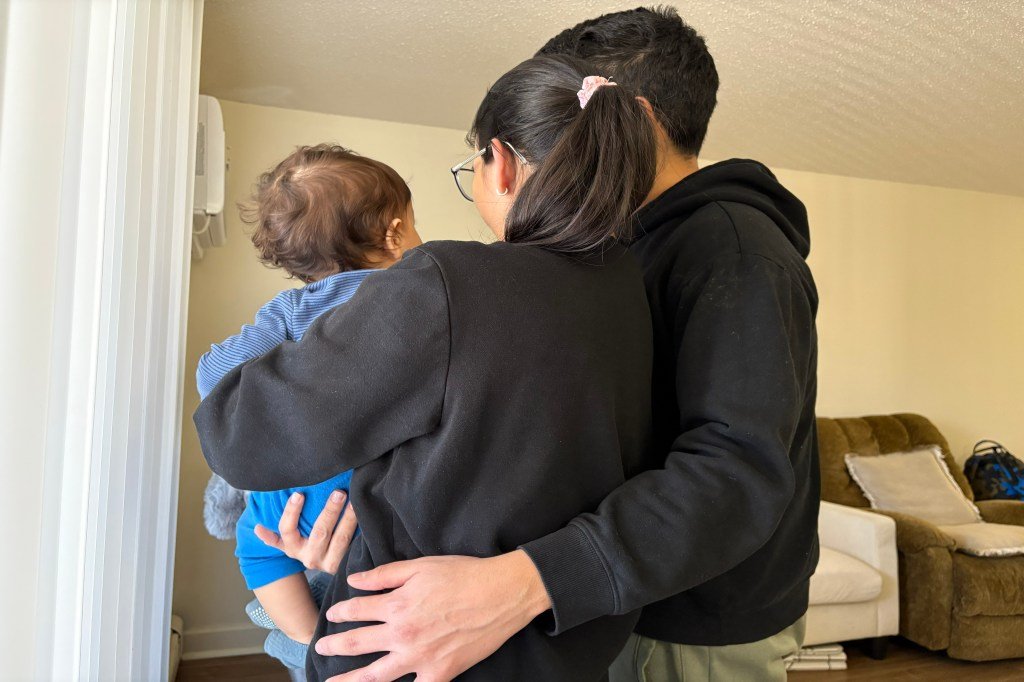
MINNEAPOLIS. — Gabi tiene grandes ojos color café, trenzas y una afección genética que hace que sus huesos sean frágiles. Se fracturan con facilidad, lo que le provoca a la niña de 2 años tanto dolor que su madre dejó su trabajo limpiando oficinas para quedarse en casa y cargarla por el apartamento de una habitación que comparten con seis familiares.. Sobre Noticias En Español. Noticias en español es una sección de KFF Health News que contiene traducciones de artículos de gran interés para la comunidad hispanohablante, y contenido original enfocado en la población hispana que vive en los Estados Unidos.. Use Nuestro Contenido. Este contenido puede usarse de manera gratuita.. Detalles. Hablemos de Salud. Forma parte del grupo de Facebook de KFF Health News en español KFF Health News-Hablemos de Salud”.. KFF Health News – Hablemos de Salud. Cuando agentes federales de inmigración llegaron a su ciudad, deportaron primero al padre de Gabi y luego a su tía.. Gabi nació en Estados Unidos y es ciudadana estadounidense. Su mejor oportunidad de algún día pararse, o incluso caminar, es una cirugía compleja en las piernas y los pies que estaba programada para enero.. Pero su madre, quien está tan asustada que ni siquiera se anima a sacar la basura, y mucho menos a atravesar la ciudad hasta el hospital, canceló el procedimiento. (En este artículo, KFF Health News y NPR acordaron identificar solo parcialmente a los pacientes y a sus familias porque temen convertirse en blanco de la ofensiva migratoria del presidente Donald Trump).. “Quiero más que nada, mi deseo, es que mi bebé empiece a caminar”, dijo su madre, mientras Gabi se movía en sus brazos, con una sonda de alimentación que salía de su estómago conectada a un soporte de suero intravenoso. “Pero con la situación que está pasando, cancelé la cita de cirugía porque le van a hacer cirugía en sus piernas y todas las citas de terapia física; lo cancelé todo. Porque tengo miedo de salir”.. El Departamento de Seguridad Nacional (DHS, por sus siglas en inglés) declaró el fin de lo que llamó Operation Metro Surge (Operación Metro Surge), llevada a cabo por agentes del Servicio de Inmigración y Control de Aduanas (ICE, por sus siglas en inglés) y de la Oficina de Aduanas y Protección Fronteriza (CBP, por sus siglas en inglés). Aun así, trabajadores de salud dicen que los agentes de inmigración siguen apostados en los estacionamientos de hospitales. Y drones sobrevuelan zonas agrícolas en las afueras de Minneapolis, donde inmigrantes somalíes y latinos se han establecido en los últimos años.. La ofensiva en Minnesota mostró el alcance del sistema de vigilancia y detención que la administración Trump está utilizando para desarraigar a comunidades inmigrantes del país y su fuerte impacto en el sistema de salud.. Crisis de salud similares surgieron dondequiera que se concentraron oficiales de inmigración en el último año.. En Dallas, clínicas
HealthNews
ICE, ALS, Addiction Medicine, and Robotic Ultrasounds: Journalists Sound Off on All That and More

KFF Health News Southern California correspondent Claudia Boyd-Barrett discussed how family members and lawyers of those in Immigration and Customs Enforcement custody are struggling to find them in California hospitals on CapRadio’s Insight With Vicki Gonzalez on Feb. 25.. Click here to hear Boyd-Barrett on Insight With Vicki Gonzalez.. Read Boyd-Barrett’s “‘I Can’t Tell You’: Attorneys, Relatives Struggle To Find Hospitalized ICE Detainees.”. Céline Gounder, KFF Health News’ editor-at-large for public health, discussed the neurodegenerative disease ALS on CBS News’ CBS Mornings on Feb. 20.. Click here to watch Gounder on CBS Mornings.. KFF Health News senior correspondent Aneri Pattani discussed Elyse Stevens, a New Orleans doctor who faced investigation because of her patient-centered approach to substance use disorders, on The Lens’ Behind The Lens podcast on Feb. 20.. Click here to hear Pattani on Behind The Lens.. Read Pattani’s “Inside the Battle for the Future of Addiction Medicine.”. KFF Health News chief rural correspondent Sarah Jane Tribble discussed major cuts to Medicaid on WBUR’s Here & Now on Feb. 19. Tribble also discussed Alabama’s plan for robotic ultrasounds on The Daily Yonder’s The Yonder Report on Feb. 19.. Click here to hear Tribble on Here & Now.. Click here to hear Tribble on The Yonder Report.. Read Tribble’s “Alabama’s ‘Pretty Cool’ Plan for Robots in Maternity Care Sparks Debate.”. Related Topics. Medicaid. Public Health. States. Alabama. Doctors. Hospitals. Immigrants. Mississippi. Pregnancy. Trump Administration. Contact Us Submit a Story Tip
HealthNews
What the Health? From KFF Health News: What About the State of Health?
The Host. Julie Rovner. KFF Health News. @jrovner. @julierovner.bsky.social. Read Julie’s stories.. Julie Rovner is chief Washington correspondent and host of KFF Health News’ weekly health policy news podcast, “What the Health?” A noted expert on health policy issues, Julie is the author of the critically praised reference book “Health Care Politics and Policy A to Z,” now in its third edition.. After urging Republicans earlier this year to make health care a central issue in their midterm campaigns, President Donald Trump gave the issue only passing mention in his record-long State of the Union address this week.. Meanwhile, Trump’s nominee to become U.S. surgeon general, Casey Means, a favorite of the “Make America Healthy Again” movement, got her long-delayed hearing before a Senate committee this week. Means’ nomination has been controversial not only because of her outside-the-mainstream medical views but also because she would be the first surgeon general without an active medical license.. This week’s panelists are Julie Rovner of KFF Health News, Alice Miranda Ollstein of Politico, Sheryl Gay Stolberg of The New York Times, and Lauren Weber of The Washington Post.. Panelists. Alice Miranda Ollstein. Politico. @AliceOllstein. @alicemiranda.bsky.social. Read Alice’s stories.. Sheryl Gay Stolberg. The New York Times. @SherylNYT. Read Sheryl’s stories.. Lauren Weber. The Washington Post. @LaurenWeberHP. Read Lauren’s stories.. Among the takeaways from this week’s episode:. Trump devoted little of the State of the Union to health care, even though affordability is top of mind for voters. The topics he did address, briefly, included lowering drug prices — an effort that has yielded some benefit for some people — and, notably, fraud. The next day, the administration announced it would withhold Medicaid funding for Minnesota over fraud allegations. While fraud is a serious, persistent problem for Medicaid, which covers those who are low-income and disabled, withholding federal funds from a single, Democratic-led state is a major step that puts other states on edge.. Means, Trump’s nominee for surgeon general, on Wednesday appeared before senators to make her case for confirmation. A central figure in the MAHA movement, Means was smooth and gracious in her presentation, yet there were worrying signs for public health — she declined to endorse the seasonal flu vaccine, for instance. She also faces questions about her medical credentials, a key qualification in particular for someone who would serve as the head of the Public Health Service Commissioned Corps.. The issue of abortion access was downplayed in Trump’s State of the Union and Means’ nomination hearing, reinforcing how times have changed since the first Trump administration — and raising questions about whether voters who strongly oppose abortion will be motivated to turn out for the midterm elections. Instead, Trump discussed fertility drugs during his speech, and Means expressed what she said are her concerns about the risks of oral contraceptives.. Email Sign-Up. Subscribe to KFF Health News’ free Morning Briefing.. Your Email Address Sign Up. Plus, for “extra credit” the panelists suggest health policy stories they read (or wrote) this week that they think you should read, too:. Julie Rovner: KFF Health News’ “When It Comes to Health Insurance, Federal Dollars Support More Than ACA Plans,” by Julie Appleby.. Sheryl Gay Stolberg: ProPublica’s “South Carolina Hospitals Aren’t Required To Disclose Measles-Related Admissions. That Leaves Doctors in the Dark,” by Jennifer Berry Hawes.. Lauren Weber: The Washington Post’s “Inside RFK Jr.’s Push Against the Flu Vaccine That He Links to His Voice Condition,” by Lauren Weber, Lena H. Sun, and Caitlin Gilbert.. Alice Miranda Ollstein: Stat’s “Pharma Lobbyists Focus on a Surprising New Target: The FDA,” by Daniel Payne and Lizzy Lawrence.. Also mentioned in this week’s podcast:. The Wall Street Journal’s “A Vaccine Skeptic as Surgeon General,” by The Journal’s editorial board.. Stat’s “Exit of CDC’s Acting Director Highlights Agency’s Lack of Leader,” by Helen Branswell.. The Washington Post’s “RFK Jr. Is Staying Quiet About His Vaccine Changes as GOP Pollsters Raise Red Flags,” by Rachel Roubein and Lauren Weber.. The New York Times’ “MAHA Moms Turn Against Trump: ‘Women Feel Like They Were Lied To,’” by Sheryl Gay Stolberg and Hiroko Tabuchi.. Click to open the transcript Transcript: What About the State of Health?. [Editor’s note: This transcript was generated using both transcription software and a human’s light touch. It has been edited for style and clarity.]. Julie Rovner: Hello from KFF Health News and WAMU Public Radio in Washington, D.C. Welcome to What the Health? I’m Julie Rovner, chief Washington correspondent for KFF Health News, and I’m joined by some of the best and smartest health reporters covering Washington. We’re taping this week on Thursday, Feb. 26, at 10 a.m. As always, news happens fast, and things might have changed by the time you hear this. So here we go.. Today, we are joined via video conference by Alice Miranda Ollstein of Politico.. Alice Miranda Ollstein: Hello.. Rovner: Lauren Weber of The Washington Post.. Lauren Weber: Hello, hello.. Rovner: And Sheryl Gay Stolberg of The New York Times.. Sheryl Gay Stolberg: Hi, Julie.. Rovner: No interview this week, but more than enough news, so we will jump right in. So we watched all the nearly two hours of President [Donald] Trump’s longest ever State of the Union address, so you wouldn’t have to. And if you’re interested in what he had to say about health, you really only needed to tune in for about five minutes, during which he took a victory lap for lowering drug prices, which he kind of did and mostly didn’t, and announced that Vice President JD Vance will henceforth be in charge of fighting fraud in health and social programs, which we’ll talk more about in a moment. Yet, just last month, President Trump told House Republicans at their retreat that health should be front and center as an issue for the midterms. What happened to that strategy?. Weber: I gotta be honest, I was shocked. I mean, KFF recently had a poll saying that health care costs are top of mind for voters, so the fact that he spent only five minutes of the longest State of the Union talking about health care, I think, is quite notable. And he had stuff he could have talked more about, on affordability, that he did mention when he got to it. I think some of it was a lot of the State of the Union did focus a lot on, you know, the hockey team and other various awards.. Rovner: Yes, the Olympic hockey team came marching in through the press gallery. That was something I’ve not seen in my 38-something years as a State of the Union watcher …. Weber: As a former high school field hockey goalie, I’m a big fan of the goalie getting the medal. But it did take away from some of the more policy topics. So again, health care costs — top of mind for people — seems like a missed opportunity.. Stolberg: Here’s my take on that. First of all, I think we know why Trump said he was going to let Bobby [Health and Human Services Secretary Robert F. Kennedy Jr.] go wild on health. Because Trump doesn’t really care that much about health care. He finds it complicated. He has said so. I’m sure you remember from the first term, Who knew health care was so complicated? In addition, TrumpRx, I think, OK, he can point to that. Gonna say, he can trumpet that, no pun intended. But his health care plan is barely a concept of a plan. He doesn’t have a plan. His notion of directing money into health savings accounts to help people buy health care, quote-unquote “outright,” you know, is just not workable, and it’s vague. Republicans on Capitol Hill have a number of thoughts about how to achieve that, but he doesn’t really have anything to offer, and he’s got to deal with these Obamacare subsidies having been replaced. So I think this has always been a weakness for Republicans. And if there’s one strength that Trump has, it’s kind of the MAHA [“Make America Healthy Again”] movement, which is itself, and we’ll talk about this later, you know, fractured. And he didn’t mention that at all.. Ollstein: Not only did he not spend a lot of time on this, but he exaggerated and sort of misrepresented the few things he has done. And I think there is a big political danger in that, if you say, We solved drug pricing, we brought down your drug prices, and the voters don’t feel that, when they go to pick up their drugs, they cost just as much. There could be a backlash there. And so I think there’s a risk to not focusing on this overriding issue enough, but I think there’s also a risk in overpromising and underdelivering to voters.. Rovner: Yeah, you’ve anticipated my next question, which is to do a quick fact check on some of those claims, particularly the one that he lowered drug prices more than any previous president. He has indeed negotiated deals that have lowered some drug prices for some people, mostly those who buy their drugs without insurance coverage. But I think you could argue that Presidents [Bill] Clinton, [Barack] Obama, [Joe] Biden, and even George W. Bush, who signed the big Medicare prescription drug benefit bill — all those presidents signed legislation that had a much bigger impact on what Americans pay for their drugs than Trump has at least so far produced, even though he talks about it a lot.. Stolberg: I think that’s a really good point. Medicare Part D was huge. You know, it had its flaws. It inserted the provision barring Medicare from negotiating directly with companies, which Joe Biden, you know, with the Inflation Reduction Act, partially overturned, or at least dug into. But I think that was an inflated statement, to say the least.. Rovner: Yeah, and I think Alice is right. This is going to be lived experience for a lot of Americans. It’s like, Wait, I thought you said you lowered drug prices. I’m not seeing my drug prices much lower yet.. Ollstein: Well, the Democrats found that as well when, you know, they passed meaningful things, but things that didn’t kick in before the election. And so the message didn’t line up with the lived experience, and it didn’t have the political benefit that they were hoping it would.. Rovner: Yeah.Now, Trump also said, and I quote, that “I want to stop all payments to big insurance companies and instead give that money directly to the people.” Now I think he was talking about the Affordable Care Act subsidies, which have been the topic of much debate since last year. But the fact is that the federal government gives lots and lots of payments to big insurance companies through Medicare and Medicaid, particularly Medicare Advantage, which was part of that big bill that George W. Bush signed in 2003. I imagine this is giving health insurers some pretty major heartburn right now.. Stolberg: It’s always easy to beat up on the insurance companies, right? Like, they’re a very easy target. But, you know, we had a fact-check team at the State of the Union address the other night. I was on it, and I fact-checked this statement, and I wrote, “This is misleading.” I said he’s, you know, proposed redirecting insurance subsidies into health savings accounts, which people could use to purchase health care services directly. And then, as I just stated earlier, it doesn’t offer specifics. And I quoted your analysis, at KFF, which says the president’s plan is vague, and without knowing more, it is impossible to say what the implications would be for people with preexisting conditions who rely on the ACA markets. So I think what’s bedeviling Trump is the expiration of these ACA extended tax credits, and he doesn’t have an answer for it.. Ollstein: And the remarks at the State of the Union, I think, never say an issue is over, because we know in health care, things always come back in some form. Nothing’s ever over, but it could be read as the final nail in the coffin for the negotiations around reviving the ACA subsidies, if you have the president getting out there and saying no more money for big insurers, that doesn’t exactly help the few Republicans who are trying to negotiate something on Capitol Hill, get something done.. Rovner: Although he has been on all sides of this issue.. Ollstein: Oh, certainly. But in terms of messaging and the bully pulpit and where the energy is going, it’s not going into, hey, let’s cut a deal to bring down people’s rates, even if that includes giving money to the insurers, which, you know, of course, they’ve also misrepresented this issue. And, you know, where the money goes and what it’s used for has been, you know, sort of misrepresented. So it’s just a mess.. Stolberg: If they called Obamacare “Trumpcare,” he’d give the money to the insurers.. Rovner: That’s true. Maybe they should have done that at the time. Well, finally, about the speech about that fraud announcement on Wednesday, the day after the speech, HHS announced again that they plan to withhold Medicaid money from Minnesota based on fraud allegations. This is the latest in a series of efforts going after Minnesota and its Democratic governor and 2024 vice presidential candidate Tim Walz over what actually is a continuing Medicaid fraud problem that the state and the federal government have been working on for over a year. But now it’s complicated by the fact that, apparently, every single member of the federal task force that was working on the fraud cases from the U.S. Attorney’s Office in Minnesota have resigned over the feds’ immigration work. So they were working on fraud, but they’ve left for other reasons. When we talked about this last month, about the federal government withholding Medicaid funding from Minnesota, I asked the panel when other blue-state governors were going to start paying attention to feds’ withholding federal Medicaid funds from blue states. I guess that would be now.. Weber: I mean, yeah, it’s a lot of money. I mean, Medicaid money would be a huge problem if a bunch of blue states lost it. We’ve seen selective targeting of blue states for public health funds. It seems reasonable to expect that to be coming for the Medicaid fraud. I think it’s important to note there is a fair amount of Medicaid fraud, and CMS [Centers for Medicare & Medicaid Services] has announced what looks to be a somewhat promising fraud initiative about stopping “pay and chase.” So, I mean, I think there’s a lot of story left on spool here on that front.. Rovner: You have to say what pay and chase is.. Weber: Oh, yes, so pay and chase. This is one of my one of my soapboxy things. I did an investigation with Sarah Jane Tribble back when I was at Kaiser Health News [KFF Health News] all about this. But essentially, the way the fraud system works here in the United States, which is kind of wild, is that people just pay the fraudsters money, and then the feds have to chase to get the money back, which is kind of crazy. It’s a system that many experts have explained to me is incredibly broken and leaves the taxpayer holding the bag, because often they don’t get the money back. So there is this new effort by CMS to utilize AI in a way that could really revolutionize how fraud is fought, but the selectiveness of which this seems to be being applied to Minnesota, or at least highlighted in Minnesota, leads to some political concerns.. Rovner: I will add that part of this big new fraud effort is also going after fraud in durable medical equipment, which made me both smile and roll my eyes, because this has been a continuing problem ever since I started covering health care in the 1980s. Indeed, fraud is perennial. There’s a lot of money, some people are going to cheat to find it, and there’s always going to be an effort to work to ferret it out.. Well, it was a busy news week beyond the State of the Union. Also on Capitol Hill this week, Casey Means, President Trump’s nominee to serve as surgeon general, finally got her confirmation hearing before the Senate Health, Education, Labor & Pensions Committee after she had to bow out of an earlier scheduled date last fall because she went into labor with her first child. Lauren, remind us who Casey Means is, and how’d the hearing go? Is she going to be our next surgeon general?. Weber: So Casey Means is a health tech entrepreneur and someone with a large social media following who really got her bona fides from condemning the medical establishment, from leaving her residency and rising on podcasts and other talk shows, and through her entrepreneurship to promote this idea that the medical system is broken, and here’s how we can fix it. And when she finally got her hearing on the Hill, I think it’s really interesting, because she and her brother, Callie Means, really wrote the MAHA bible. They wrote this book called Good Energy, which a lot of MAHA principles are based off of. And what’s fascinating about a confirmation hearing for her is you see how MAHA, as a coalition, really doesn’t have a political home. There’s parts of it that Democrats really like, there’s parts of it that Republicans obviously really like, and there’s this awkward confrontation of that when you see this MAHA figure then questioned by both sides of the aisle. Something that she really exposed is a current deep issue in the MAHA movement, which I know Sheryl’s also written on, with this glyphosate order, and she got a bunch of questions from both sides of the aisle on that. But the big takeaway, I think, a lot of people were focused on, as they should as surgeon general, was that she dodged a lot of questions about vaccination. She refused to explicitly say she would recommend the measles or flu vaccine, which is pretty shocking coming from a potential surgeon general candidate, but also in line with the MAHA movement and her political patron, Robert F Kennedy Jr.. Rovner: And also, I mean, Sheryl, you and I were talking before we started taping that, I mean, she did, compared to some of the nominees for some of these jobs, she did a pretty good job. She was really smooth. She ducked questions in a way that one does duck questions, you know, saying thank you for asking that good question. But I know you were saying also, there’s some talk about whether or not she’s actually qualified to be surgeon general.. Stolberg: That’s what I’m hearing today. I agree with you, Julie, that she was very smooth, and I was actually struck by how much her appearance reminded me of what confirmation hearings used to look like in the pre-Bobby Kennedy era, when nominees, you know, tried to entice politicians, tried to, you know, be engaging. She thanked Democrats. Thank you so much, Sen. [Patty] Murray, for engaging so deeply with these issues, you know, I want to thank you for our meeting that we had. I really enjoyed getting to talk with you, you know. And she is very knowledgeable, and she’s a smooth speaker, and she was, I think I told Lauren last night, she was like the Artful Dodger. Or maybe I should, I might have said that on social media. But there are questions about her credentials. So, her medical license is inactive. She has a license with the Oregon Medical Board. It is inactive. This means that she cannot prescribe medication, and she can’t treat patients right now. And there’s some question about whether or not one has to have an active medical license, not necessarily to be a surgeon general, but to be head of the Commissioned Corps of the [U.S.] Public Health Service, which the surgeon general is.. Rovner: And which is basically the only … the surgeon general used to have a lot of line authority at HHS, and the only thing that’s left is being head of the Commissioned Corps.. Stolberg: That’s exactly right, and the bully pulpit. And, you know, I looked at the statute last night. The statute also says that the surgeon general has to have, quote, I think, “experience in public health programs.” But it’s ill-defined. Like, what does that mean? But you are seeing some folks today, including, as you mentioned earlier, Julie, Jerome Adams, President Trump’s surgeon general, who are raising questions about her qualifications. And I think we may see more of this.. Ollstein: I also thought it was notable that The Wall Street Journal editorial board came out against her this morning and said they find her unqualified, and raised concerns that her equivocation on vaccines could further contribute to the already diminishing trust, public trust in public health. And so the Wall Street [Journal] editorial board remains pretty influential among conservatives, so I think that is an interesting sign of where things could go. And, of course, raises the question if her nomination does collapse for lack of votes, who else could be nominated?. Rovner: And I guess Jerome Adams doesn’t want to come back for the second term.. Ollstein: I don’t know if he’d be welcomed back.. Rovner: He’s burned his bridges.. Weber: He’s not welcome back, if I had to guess, yeah, no.. Stolberg: No, he doesn’t want to come back. He’s hawking his book.. Rovner: Lauren, you wanted to add something?. Weber: Yeah. I just wanted to add, I mean, it was interesting. She did get a couple stronger questions. [Sen. Lisa] Murkowski from Alaska, obviously, a Republican moderate who could be a potential “no” vote of the group, did question her pretty strongly on her stance on hepatitis B vaccines. She did get a question from [Sen. Jon] Husted about her thoughts on pesticides. That said, you know, [Sen. Bill] Cassidy also peppered her with some questions, but Cassidy also peppered Kennedy with a lot of questions, and then he was confirmed. So I think there is some chatter today about her credentials, but no Republicans brought up her credentials yesterday. The person who did was a Democratic senator, Sen. [Andy] Kim, I believe, and so, you know, we’ll have to see in this political moment what shakes out.. Rovner: Before we leave this subject, Alice, like most of the high officials at HHS of late, she rather deftly ducked Chairman Cassidy’s question about whether the abortion pill mifepristone should be available without an in-person visit with a doctor. What did you take away from her answer?. Ollstein: So, her comments on birth control got more attention, which we can talk about in a sec, but on mifepristone, it was very much in line with this administration just not wanting to talk about it and saying, Everybody shut up. We’re studying it behind closed doors. Just wait for us to do that, and then you can say something. So she very much kept in line with that. Didn’t want to tip her hand.. Rovner: I would say it felt like she’d been given the talking points.. Ollstein: Yes, exactly. And she was not really, like, free in sharing her personal views on the matter, because she was, you know, seemingly told to stick with the administration line. But I think Lauren can talk more about the birth control piece, and she’s researched that a lot.. Weber: Yeah, I could chime in on that. And I also, just on the mifepristone piece, I think it was notable that [Sen. Josh] Hawley didn’t go after her for it. I felt like that was Hawley toeing the line, because, obviously, he, notably, in some of the RFK hearings, really went after that, and also has publicly, recently stated that he’s very disappointed in the FDA on mifepristone. So the fact that he had a pretty chummy exchange with her, some softball questions about AI chatbots, I mean, it was, I thought, notable in terms of toeing the line, on Hawley towing the mifepristone line. When it comes to birth control, Means does have a history of disparaging birth control and highlighting some of the known side effects and speaking about wanting more natural forms of contraception, which is, you know, somewhat common in the right-wing and wellness influencer space that she currently finds herself in.. Rovner: Sheryl, do you want to add something before we move on?. Stolberg: Abortion also is not a good issue for this administration. It’s not a good political issue. President Trump didn’t bring it up during his State of the Union. They don’t want to talk about it. It’s a loser for them. So I think that probably accounts for Hawley’s reticence in asking her about it, and, you know, sort of the muted answers that she gave, and she was very careful to say, I believe birth control should be available to all women, and she kind of said that her previous remarks, where she had said that it had horrific side effects, etc., were taken out of context.. Rovner: All right. Well, we’re going to take a quick break, and we will be right back.. Well, while we were on the subject of abortion, to follow up on what Sheryl just noted, President Trump did not mention it during the State of the Union, a speech where he touched on lots of other things that were important to his base. He has been hinting that he wants to downplay abortion for a while now, but could this come back to bite him and other anti-abortion Republicans in the midterms, where some of his most motivated voters might just not turn out?. Ollstein: So that’s the argument that anti-abortion advocacy groups have been, you know, shouting from the rooftops for months now. And you know, they recently put together their own polling to try to make that argument. And I think that different wings of the Republican Party are making different calculuses here. And you could argue that not doing enough on the issue is risking the votes of the conservative base, who are really fired up about this. You know, these voters are very motivated. They turn out. They knock on doors, these anti-abortion voters. But the administration seems to be making a calculus that there are a lot more people out there who are uncomfortable with the kind of national restrictions that the anti-abortion movement is demanding from the FDA, and so they, like Sheryl said, have calculated that this is a loser issue for them and they should lean away from it. And it’s just interesting because a midterm year is not the same as a presidential year in terms of who turns out, who gets fired up. And of course, there’s the primary versus general election dilemma, where doing one thing could really help you in a primary, but doing the opposite could really help you in the general, and so something you say on the campaign trail could come back to bite you later.. Rovner: Sheryl, you want to add something?. Stolberg: Yeah, I think it’s fascinating to look at Trump I versus Trump II. So when Trump was running for office in 2016, he made a deal with Marjorie Dannenfelser, one of the big leaders of the anti-abortion movement, that he was going to work to overturn Roe. And the anti-abortion movement just embraced Trump and said, you know, he was the most anti-abortion candidate ever, the most anti-abortion president ever. Well, now Roe has been overturned, and it’s a completely different climate, where we are seeing the effects of what it looks like in states where women do not have access to abortion. And it’s a dark picture out there. I mean, women are being injured, and this struggle is, it’s a different debate, and it’s a much harder debate. It was easier for Trump when Roe was intact.. Rovner: Yeah, and we’ve, I mean, what we’re seeing, it’s also, it’s not just people, it’s not just women who want to get abortion. It’s women who can’t get care during pregnancy complications. … I think that’s the piece that’s upsetting so many people. And, you know, shoutout to ProPublica, who’s just continuing to do an amazing job with this. Lauren, you want to add something?. Weber: Yeah, I think it’s notable that he didn’t talk about abortion in the State of the Union, but he did bring up fertility drugs, and how his TrumpRx can reduce the cost for fertility drugs. And obviously that could agitate some members of the anti-abortion … some of the more hard-core members of the anti-abortion movement who have issues with fertility treatments like IVF. But I think also, Trump’s making a calculus, as we’ve talked about: Are the anti-abortion voters gonna go vote for the left? Probably not. I don’t think so. So …. Rovner: It’s just a question of whether they stay home.. Weber: It’s … a question of whether they stay home. But I think he’s just playing to the fact that he thinks he has them in the bag to some extent.. Rovner: Maybe they won’t stay home because they’d rather have him than … his candidates, those who would like to restore abortion. Well, also this week — I said there was a lot of news — while the administration isn’t moving very fast to try to rein in availability of the abortion pill, states are. There was a hearing in federal court this week in Louisiana about that state’s lawsuit calling for the FDA to rescind its rule allowing the mailing of mifepristone from out of state. Alice, I imagine the administration would much prefer this decision to ultimately be made by judges and take it out of their hands, right?. Ollstein: Well, what they’re asking the court is to not make a decision at all. They’re asking them to hold it in abeyance, which is fancy judicial language for hit pause. Put it on freeze. Don’t do anything right now, like the messaging we were talking about in the confirmation hearing. What they are telling courts is: We’re working on this issue. You should defer to us and stop these states from suing us, and let us work on reviewing the abortion pill behind closed doors, and we will issue some sort of a decision at some point. And so that is, you know, what came up in court in Louisiana. The only other notable thing is that the judge did allow the makers of the pill, Danco and GenBioPro, to intervene in the case. So that happened because the Justice Department is not defending the regulations on the pill on the merits. They’re not saying, you know, the FDA went through a fair scientific process, and we are defending the decision they made to allow telemedicine and mail delivery of the pills. They’re not doing that. They’re saying, Hit pause. So the drug companies are the ones now in court, allowed to make the argument that the FDA should be, you know … their decision was based on science and not ideology, and that should be left alone.. Rovner: Well, we’ll see how this all plays out. All right, moving on to news from the Department of Health and Human Services. Last week, we mentioned that Jay Bhattacharya, the director of the National Institutes of Health, has now also become the acting head of the Centers for Disease Control and Prevention. That’s awkward for a lot of reasons, not least of which is that the NIH is headquartered in Bethesda, Maryland, just outside Washington, D.C., and CDC is in Atlanta, Georgia. Bhattacharya is also the third interim director of the CDC in seven months, after the first interim chief, Susan Monarez, was confirmed by the Senate to lead the agency, then summarily let go when she refused to rubber-stamp the recommendations of the anti-vaxxers appointed to CDC’s vaccine advisory panel by Secretary RFK Jr. Monarez was replaced by HHS Deputy Secretary Jim O’Neill. He’s now been relieved of both jobs and is off to head the National Science Foundation. Adding to the confusion, the No. 2 at the CDC, Ralph Abraham, stepped down this week, effective immediately, citing, quote, “unforeseen family obligations.” Lauren, you said last week that this is all about the White House wanting to rein in HHS, in general, and its anti-vaccine activities, in particular, in advance of the midterms. But what might this continued churn mean for CDC, and are we ever going to see someone nominated to, you know, run the agency?. Weber: Julie, I wish I had the answer to that question, because I would certainly have written that story if I had an answer to what will happen to the leadership at CDC. I don’t know. I mean, I think the bottom line is, is that this is an agency that has not had a steady leader for a very long time. It has certainly made some quite shocking moves for the CDC. Obviously, they overhauled the vaccine schedule at the beginning of January, and it remains to be seen how this will be going forward. I think it’s very difficult. Running a federal agency is a huge task. I mean, assuming that someone can run both equally is a tough sell. I do think he’s limited in terms of time, of how much time he would be interim. But the reality is, and I think Helen Branswell reported this as well, and it seems like there’s not a lot of people running the top of the CDC these days.. Rovner: Yeah. Well, remember when Monarez quit, most of the career leadership also quit. So, I mean …. Weber: Right.The agency was also gutted when RFK Jr., you know, got rid of about a quarter of HHS at the beginning of his term. So the CDC is, certainly, is a very changed and in mangled shape currently. So I think it remains to be seen who ends up taking the reins of it.. Rovner: Sheryl, how are things at CDC?. Stolberg: They’re really difficult. I talk to people inside the agency, you know, they’re feeling really dispirited. A lot of the top leadership is gone, as we just said. The idea that Jay Bhattacharya could run the NIH and the CDC, two massive federal agencies with complementary missions — the NIH is the nation’s biomedical research agency; the CDC, public health — in two locations, Atlanta and Bethesda, is, honestly, I don’t know who came up with this idea. I heard … I don’t have evidence to back this up, but I heard that this was actually Trump’s idea, which kind of makes sense, if that is true, because maybe only President Trump would think up such a crazy thing that you could [laughs] … I think they recognized that they needed to put someone Kennedy trusts in there. That has really been kind of the big issue. And it is all about the midterms. It’s all about the pivot. The White House wants Kennedy to turn away from vaccines and toward healthy eating. That’s why we’re seeing him do this national “Eat Real Food” tour. And, you know, wearing the Mike Tyson tattoo and social media, etc. It’s a very, very difficult situation for a storied agency, and many, many people are worried that it is going to take a long time for the CDC to rebuild, if ever.. Rovner: Lauren, you want to add something?. Weber: Yeah, I just wanted to echo that, I think, what gets lost in a lot of D.C. circles and, frankly, around the country, is this is an agency that also was pocked with bullet holes just a couple months ago. I mean, if that had happened in D.C., I think you would see a very different response, to be quite honest. I was very taken aback and shaken to see the bullet holes when I went down after that happened. And I think the visuals of that got a bit lost in some of the conversation. But so this is an agency that not only is suffering with utter leadership turmoil, but has, frankly, been shot at. And so …. Rovner: Right, they were physically attacked, their building was physically attacked.. Weber: Physically attacked. And so the folks that are still left, I think, it’s a tough deal. And to Sheryl’s point on the midterms, and I have a story on that this morning with Rachel Roubein, led by Rachel, you know, we found out that the MAHA piece of this is, look, I mean, they’re telling Kennedy to focus on foods because they see it as more popular. And honestly, MAHA is saying they’re gonna throw some cash. Tony Lyons — I mean, who knows that this will happen — but Tony Lyons told me they’re hoping to raise $100 million for midterm spending for Republicans. So, you know, there is that element of the coalition that I think they’re trying to make happy with this whole piece of it.. Stolberg: One interesting note about the cash. Tony Lyons has already committed a million dollars to Cassidy’s primary challenger, which is really interesting. I mean, Cassidy voted reluctantly for RFK to be secretary, you know, and he fell on his sword for the administration, and now Kennedy’s people are working actively to unseat him.. Rovner: Let us move to MAHA. I have a segment that I’m calling “MAHA Is Mad-Ha.” The Make America Healthy Again movement is big mad about RFK Jr.’s seeming reversal on the use of weed killers by Big Farm, not to be confused with Big Pharma. The HHS secretary Sunday night put out a lengthy statement arguing that while pesticides and herbicides used on crops are poisons, that U.S. agriculture is also dependent on them, and their use needs to be phased out, rather than cut off, in order to protect the nation’s food supply. MAHA advocates, though, see this as a complete betrayal. Sheryl, I want you to start … start by telling us where you are and why.. Stolberg: So I’m in Austin, [Texas,] where there is a MAHA Action rally tonight, interestingly, an “Eat Real Food” rally. They’re not going to be talking about glyphosate, as far as I know, and they’re not going to be talking about vaccines. So, just an interesting sort of personal perspective: Last Wednesday, when Trump issued the executive order on glyphosate after business hours, right? Shocker, I was like …. Rovner: And glyphosate is the weed killer that’s used in Roundup, which has been the subject of many, many lawsuits that it’s a carcinogen. And some of those lawsuits were brought by RFK Jr., right?. Stolberg: That’s right, who won a massive judgment in 2018, a $289 million judgment. And this weed killer, Roundup, this has really been an animating force behind a lot of the MAHA movement, the Moms Across America, led by Zen Honeycutt, is really wrapped up in this issue, in getting glyphosate out of American food. As Vani Hari, who calls herself the Food Babe, said to me, What good is it if you eat real food, if it’s sprayed with pesticides? So I was, you know, minding my own business that Wednesday night, Trump issues the executive order, and I sent a text to Kennedy’s spokesman, and I said, Does the secretary have any response? And I got a three-sentence reply, basically saying that, you know, Kennedy was supporting Trump. This was a matter of national security. That is how Trump framed his order. He said, We need to ramp up production of this weed killer because we have only one domestic producer, and we don’t want to rely on foreign nations to keep our food supply running in the event of a crisis. That three-sentence statement from Kennedy obviously did not sit well. His MAHA moms exploded. I can’t even begin to tell you the anger. My headline of the story that I wrote said “MAHA Moms Turn Against Trump,” and then it quoted someone I interviewed from Turning Point USA, Charlie Kirk’s organization, saying, women feel like they were lied to. So the anger is very deep and real. And I guess Kennedy felt that he had to address it in some lengthier way to, you know, try to assuage this part of his movement that really helped power him to the position that he is in right now, and also aligned itself with Trump, perhaps foolishly, and helped, you know, they threw their weight behind a Republican. And now, I think, Lauren said earlier, they really kind of have no political home.. Rovner: Yes, Lauren, did you want to add to that?. Weber: Yeah, no. I mean, Sheryl hit all the points. I think it’s important to note that these people are mad, as she said. And, you know, Glyphosate Girl, Kelly Ryerson, who’s big on social media, told me some version of We feel lied to in the sense that we, you know, we showed up, we voted for this, and we’re seeing no results, and we may change our minds in the next election. Because a lot of these people were independents or Democrats or so on. And I think what’s really fascinating about that is it kind of goes back to when Kennedy was going to be in consideration to be a health czar or something else. I mean, the bottom line is, the man does not have control over the EPA [Environmental Protection Agency]. I mean, that’s not his jurisdiction. And I think that a lot of his followers really got on board with the MAHA movement under the pretense that he was going to come in, he was going to do all this stuff. But the political realities are just very different. And this MAHA coalition, you know, as I talked about earlier, is so fascinating because it talks all about “real food,” which is, as we’ve talked about on this podcast, was Michelle Obama, a Democrat-led issue 10, you know, a decade or more ago. It talks about glyphosate. Typically, you see that as often being a lefty issue that is now under this right tent. And then, obviously, vaccines, which kind of is a political horseshoe issue, which you often see on the far left and far right. And I think you see this fracture in MAHA, because it just does not fit very neatly within the partisan lines that D.C. is so accustomed to.. Rovner: OK. That is this week’s news. Now it is time for our extra-credit segment. That’s where we each recognize a story we read this week we think you should read, too. Don’t worry if you miss it. We will post the links in our show notes on your phone or other mobile device. Lauren, why don’t you go first this week?. Weber: Yeah. So I wanted to highlight an article that I did with my colleague Lena [H.] Sun and Caitlin Gilbert, and it’s titled “Inside RFK Jr.’s Push Against the Flu Vaccine That He Links to His Voice Condition.” We did a deep dive into how Kennedy feels about the flu vaccine, and it turns out that he, in several instances, has linked it to his spasmodic dysphonia, which is a type of dystonia. It’s a neurological voice condition that causes his raspy voice. But the catch is, is that all the scientific experts that we spoke to said there’s no scientific evidence to support that. And as Kennedy has gone around saying this about his voice, he’s also disparaged the flu vaccine while in office on, you know, the day after he took office, last February, he moved to kill a national flu vaccine awareness campaign. And this January, he downgraded the recommendation for the flu vaccine for children. And public health officials that I spoke to are horrified. They’re very worried this could lead to more cases, more misery, potentially even deaths from the flu. And some of the otolaryngologists that I spoke to also pointed out that while Kennedy had linked this condition, which was also known as a dystonia, to his voice, and there was no scientific evidence to link it to vaccines, however, there is evidence of some association between drug use and dystonias. And they pointed out that that is an association. And as has been well reported in the past, Kennedy has spoken very openly about his heroin addiction. And so, you know, we spoke to a bunch of folks who just marked this sea change that we’ve seen. You know, Kennedy obviously has, has gone after vaccines, but the flu vaccine in particular appears to be personal.. Rovner: It does. Really interesting story. Thank you for writing it. Sheryl.. Stolberg: I was just going to say, if Lauren hadn’t written that story and wanted to talk about it, I’d have wanted to talk about it because it was such a good story. So the story that I think people need to read this week is by ProPublica, and it’s headlined, “South Carolina Hospitals Aren’t Required To Disclose Measles-Related Admissions. That Leaves Doctors in the Dark.” And this is a really fascinating and troubling story about what’s happening in South Carolina. There are 973 reported cases of measles there. But because hospitals aren’t required to disclose it, doctors have no idea, and ordinary people have no idea where it’s happening. The story opened with a man who went to a meeting to talk about what happened to his wife. His wife was a schoolteacher, and she was vaccinated against measles, like pretty much all American adults are. But one of her kids in her class had measles, and she had a rare breakthrough infection, and she got very, very sick. And there was no way to foresee this. And I think that this is like a canary in a coal mine issue, where we’re seeing sort of a downgrading of the importance of knowing about infectious disease, especially measles, under this Trump-Kennedy health regime. And it’s putting people in danger.. Rovner: Yeah. It was quite an interesting story. Alice.. Ollstein: So I have a piece from Stat [“Pharma Lobbyists Focus on a Surprising New Target: The FDA”] by my former colleague Daniel Payne and our co-podcast friend Lizzy Lawrence. And it is about how the FDA has become politicized and become a much bigger lobbying target than ever before. And they go into how a lot of decisions are being made by the White House. And so that has, you know, emerged as the center of power in FDA-related decisions. And thus, you know, companies that have business before the FDA feel that it’s worth it for them to pour lobbying efforts into this in order to influence processes that previously they felt they couldn’t influence. And so that’s raising a lot of concerns. So I highly recommend the piece.. Rovner: Yeah, really interesting story. My extra credit this week is from my KFF Health News colleague and sometime podcast panelist Julie Appleby, and it’s called “When It Comes to Health Insurance, Federal Dollars Support More Than ACA Plans.” Now, this is something we have talked about before, and I have talked about a lot since the debate over the expiring ACA subsidies heated up. But it bears repeating: Just about everyone who gets health insurance in the U.S. gets some sort of federal subsidy. It’s not just people who buy it on the ACA marketplaces. Medicare and Medicaid are both paid for in large part through taxpayer dollars. Employers get a tax break from offering health insurance, and employees who get health benefits don’t pay taxes on them, which is one of the biggest subsidies in the federal budget. So the next time somebody complains about why people who buy their own health insurance should get federal help with the costs, remember that, in all likelihood, you do, too.. OK, that is this week’s show. As always, thanks to our editor, Emmarie Huetteman, and our producer-engineer, Francis Ying. A reminder: What the Health? is now available on WAMU platforms, the NPR app, and wherever you get your podcasts, as well as, of course, kffhealthnews.org. Also, as always, you can email us your comments or questions. We’re at whatthehealth@kff.org, or you can find me still on X @jrovner, or on Bluesky @julierovner. Where are you guys hanging these days? Sheryl?. Stolberg: I’m at @SherylNYTon both X and Bluesky.. Rovner: Lauren.. Weber: I’m @LaurenWeberHP — the HP is for health policy — at X and Bluesky.. Rovner: Alice.. Ollstein: I’m on Bluesky @alicemiranda and on X at @AliceOllstein.. Rovner: We’ll be back in your feed next week. Until then, be healthy.. Credits. Francis Ying. Audio producer. Emmarie Huetteman. Editor. Click here to find all our podcasts.. And subscribe to “What the Health? From KFF Health News” on Apple Podcasts, Spotify, the NPR app, YouTube, Pocket Casts, or wherever you listen to podcasts.. Related Topics. Multimedia. Public Health. Contraception. Cost of Living. Podcasts. Trump Administration. What the Health? From KFF Health News. Women’s Health. Contact Us Submit a Story Tip
Latest News
MP man, out of jail, kills teen; locals see him ‘eating victim’s brain’, ‘drinking blood’
A 46-year-old man, who was released from jail a few weeks ago in a case related to the murder of...
Veteran journalist Narayan Bareth passes away after cardiac arrest in Jaipur
Veteran journalist Narayan Bareth passed away here after suffering a cardiac arrest while undergoing treatment for pneumonia, a family member...
Veteran journalist Narayan Bareth passes away after cardiac arrest in Jaipur
Veteran journalist Narayan Bareth passed away here after suffering a cardiac arrest while undergoing treatment for pneumonia, a family member...
Kerala: Five held for smuggling high-end used cars from Bhutan; DTO among accused
Kochi, The Customs Commissionerate has arrested five persons from West Bengal and Assam in connection with the smuggling of high-end...
Ex-Delhi CM Arvind Kejriwal accuses BJP of insulting martyrs over ‘Phansi Ghar’ controversy
Aam Aadmi Party (AAP) chief and former Delhi chief minister Arvind Kejriwal appeared before the Delhi assembly’s privileges committee on...
Will expose BJP-poll panel conspiracy disenfranchise Bengali voters: Mamata Banerjee
West Bengal chief minister Mamata Banerjee on Friday said that she would “expose the Bharatiya Janata Party (BJP) – Election...
Govt proposes shift to a duty system based on alcohol content percentage
The Karnataka government on Friday proposed the removal of state control over liquor pricing and a shift to a duty...
Delhi woman hides in forest area after cab driver tries to molest her on way to Nainital
A 22-year-old woman from Delhi alleged that a taxi driver attempted to sexually assault her late on Thursday night on...
Era of few powers shaping world is over, multipolarity here: Jaishankar at Raisina Dialogue
New Delhi: The era of a few major powers shaping the global landscape through deals and compacts is over and...
Era of few powers shaping world is over, multipolarity here: Jaishankar at Raisina Dialogue
New Delhi: The era of a few major powers shaping the global landscape through deals and compacts is over and...
Trending News
-
Politics2 weeks ago
Road rage turns fatal: Two teens stab man to death over honking in Gujarat’s Morbi; arrested
-
Politics1 week ago
Are you James Bong? Supreme Court slams Rajasthan police
-

 Theboldnews video4 days ago
The Weight of Being Alone #shorts #emotional #psychological
-
Politics2 weeks ago
Mortal remains of Meghalaya MP Ricky Syngkon laid to rest AJ Syngkon
-

 Politics1 week ago
Uttarakhand Transformation Dialogues 2026: Dr R Meenakshi Sundaram outlines reform roadmap for 2047 goal
-

 Theboldnews video4 days ago
Behind the Posts | The Reality of Neglected Parents
-

 Business1 week ago
A Single Morning. A Lifetime of Consequences.
-
Politics2 weeks ago
Centre blocks five OTT platforms for streaming ‘obscene’ content