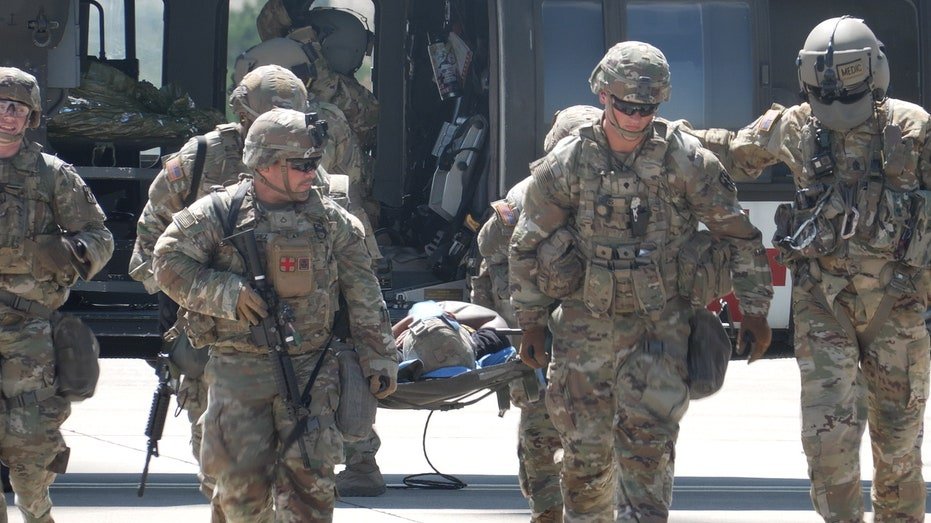
FORT HOOD, TX — This week, the 1st Medical Brigade of the III Armored Corps at Fort Hood conducted Operation Silver Lightning, a training exercise designed to simulate providing advanced medical care in a contested, large-scale combat environment. From March 23 to April 1, the brigade employed the tactical arm of the Army Health System as combat medics, optometrists, doctors, veterinarians, and other medical personnel simulated a mass casualty event under combat conditions in underground tunnels on the Fort Hood installation. Fox News was given an up-close look at how the exercise was implemented.
The exercise reflects evolving assessments of how to adapt medical support in the face of drones and other contemporary threats observed in Ukraine. Col. Kamil Sztalkoper, director of public affairs for the III Armored Corps, explained that medics must disperse and, when possible, hide in plain sight by using multiple locations. He noted that some training facilities—dating back to the 1940s and 1950s and once used to house nuclear assets—are now repurposed for current readiness. The tunnels at Fort Hood have been decommissioned and cleaned out for use as a training facility, in this case an underground field hospital. The tunnels’ several miles of passageways function as a triage emergency room, operating room, veterinary care, optometry, and clinics, enabling troops to practice delivering care while countering the growing drone threat observed elsewhere.
During the exercise, about 300 soldiers and role players portraying wounded troops ran through evacuation and medical drills, with responders rushing the wounded from a helicopter to a military medical vehicle and then into the tunnels. Combat medics trained to treat wounded soldiers or role players, each portraying injuries that mimic battlefield pain and symptoms. Col. Brad Franklin, deputy commander of the 1st Medical Brigade and chief nurse, described the dilemma of limited staff—insufficient surgeons, nurses, and medics—and more patients than available resources, which forces triage decisions and even reverse triage to care for casualties.
A World War II veteran spoke about a special performance observed during the exercise, providing a personal perspective to the training.