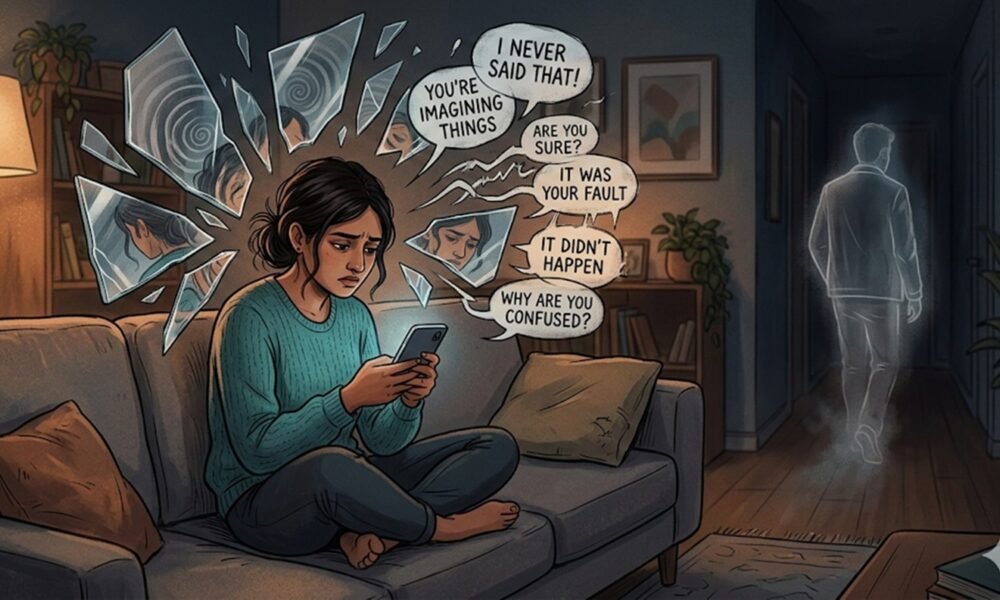
What is ‘ghostlighting’ in dating? An expert explains the toxic mix of ghosting and gaslighting (Source: AI Generated). Modern dating has introduced a growing vocabulary to describe relationship behaviours. Now, another phrase called ‘ghostlighting’ is gaining attention as people try to make sense of confusing or emotionally difficult relationship experiences.. To understand this trend, it is helpful first to examine ghosting, a behaviour that has already become widely recognised. It refers to suddenly ending a relationship by completely cutting off communication with someone. This abrupt silence can leave the other person feeling confused, hurt, and without closure. Although commonly associated with romantic relationships, ghosting can also occur in friendships or even in professional settings.. Ghostlighting is an even more troubling pattern because it combines ghosting with elements of psychological manipulation in the form of ‘gaslighting’. It occurs when someone manipulates their partner into questioning their perceptions or behaviour before eventually disappearing. Such manipulation often involves denying events, minimising concerns, or shifting blame. The key lies in understanding how the person behaves before or after disappearing. Instead of acknowledging their withdrawal from the relationship, they may subtly distort the situation so the other person begins to blame themselves for what happened.. As discussions about modern relationships continue to evolve, recognising patterns like ghostlighting may help people better understand unhealthy dynamics and set clearer boundaries in their personal lives.. But what psychological dynamics drive behaviours such as ghosting and ghostlighting in modern dating?. Psychologist Rasshi Gurnani tells indianexpress.com, “Ghosting usually reflects avoidance and emotional immaturity in relationships. From a psychological perspective, many people struggle with confrontation or fear being seen as the ‘bad person’ for losing interest. Instead of communicating honestly, they withdraw or disappear. Ghostlighting goes a step further because the person not only distances themselves but also distorts the narrative when questioned, often making the other person feel as if they are overreacting or imagining things. This behaviour is commonly linked to avoidant attachment patterns, low emotional accountability, and discomfort with difficult conversations.”. She adds that in modern dating environments where interactions can feel disposable, some individuals choose these strategies because they allow them to avoid responsibility while maintaining control of the situation. Unfortunately, this often leaves the other person feeling confused, invalidated, and searching for closure that was never clearly offered.. Recognising the early warning signs of ghostlighting. Early signs of ghostlighting often appear through inconsistent communication and subtle emotional invalidation. Gurnani notes that someone