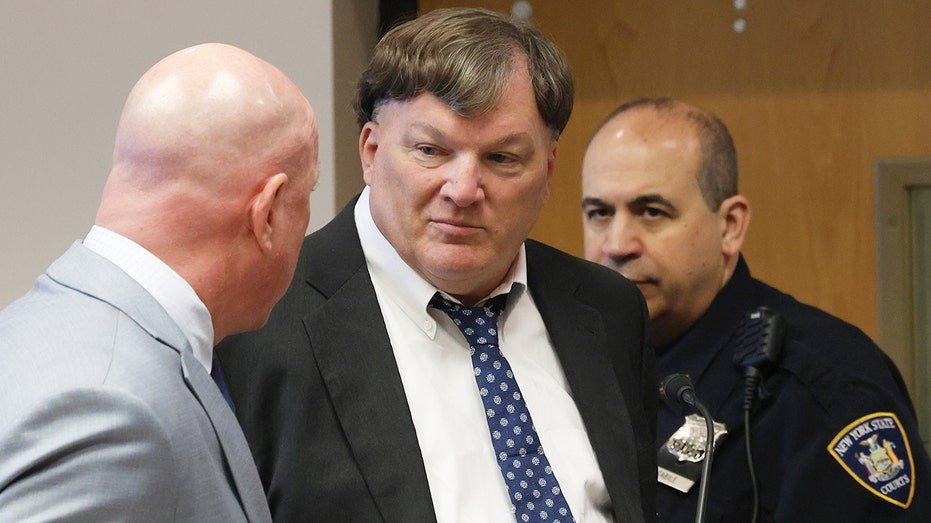
The man charged with killing seven women along Long Island, Rex Heuermann, pleaded guilty on Wednesday, marking the end of a decades-long case that had instilled fears of a serial killer lurking in the region. The 62-year-old architect admitted to murdering seven women, many of whom were sex workers, and dismembering their remains over about 17 years. He appeared in Suffolk County Court at 11 a.m., acknowledging the killings dating back to 1993. Heuermann was arrested outside his Midtown Manhattan office in July 2023 and has maintained his innocence for nearly three years; a trial had been set for September.
“It’s a difficult day,” said Robert Macedonio, an attorney for Heuermann’s ex-wife Asa Ellerup, before the court hearing. “No one can envision ever in their life standing here in a courthouse on a line surrounded by media with your ex-husband accused of seven, potentially eight homicides. It’s unimaginable. There’s no way to prepare for it.”
The Gilgo Beach investigation, which brought the case into the national spotlight in 2010, began after police found numerous sets of human remains along an isolated beach highway on Long Island while searching for 23-year-old Shannan Gilbert. Investigators relied heavily on DNA analysis to identify the victims found along Ocean Parkway in Gilgo Beach. The remains of six women—Melissa Barthelemy, Amber Lynn Costello, Maureen Brainard-Barnes, Megan Waterman, Jessica Taylor and Valerie Mack—were recovered along the corridor, with the remains of a seventh victim, Sandra Costilla, found more than 60 miles away in the Hamptons. An eighth woman, Karen Vergata, was discovered nearly 20 miles west on Fire Island in 1996, and later near Gilgo Beach in 2011; Heuermann has not been charged with Vergata’s killing.
In 2022, Heuermann, who was living in nearby Massapequa Park, was identified as a suspect after the Gilgo Beach task force used a vehicle registration database to connect him to a pickup truck seen by a witness when one victim disappeared in 2010. Detectives quickly began examining Heuermann’s life, with prosecutors alleging he used burner phones to arrange meetings with the victims before abducting them. Retested DNA found on the victims’ remains also pointed to Heuermann, with cellphone data indicating he had been in contact with several of the women shortly before they disappeared.