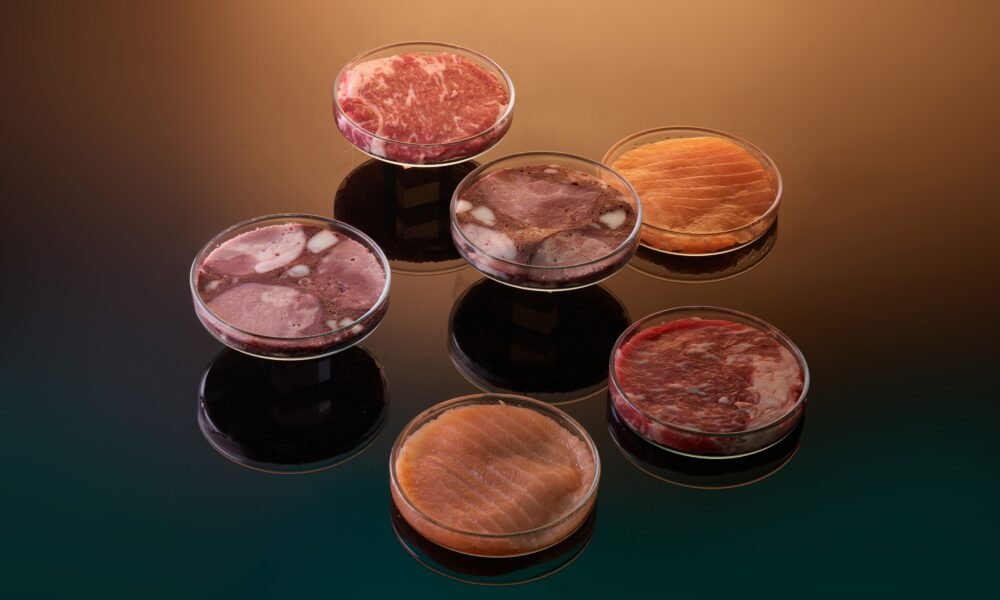
For novel products like these, education matters. Wildtype co-founders Justin Kolbeck and Aryé Elfenbein invited chefs to their headquarters in San Francisco and then went to the restaurants during early days of service, providing FAQ sheets that informed how chefs label the product on menus. For Kolbeck and Elfenbein, restaurants were the ideal space to start a dialogue.. At Robin, every guest is asked if they’d like to try cultivated salmon during their omakase meal. While some diners explicitly request Wildtype salmon in advance, about 50% opt in after learning what it is. The overarching reaction is positive, with curious diners trying a riff on bagels and lox made with cold-smoked cultivated salmon with confit cherry tomatoes and green onions.. At Kingfisher Bar & Grill, a higher-volume restaurant with slightly older clientele, setting expectations is important. The menu includes a description explaining why they chose to serve cultivated salmon and highlights the kitchen’s environmental motivation by calling it “Wildtype Sustainable Salmon Crudo.” Diners also receive the FAQ sheet to fully explain what the product is once they order either the cultivated salmon crudo, full of crunchy green apple and a citrusy sauce, or choose it as an add-on for poke, a decade-long staple on the menu.. How Healthy Are Fake Meats Like Impossible and Beyond, Really?. Beef-less beef is everywhere. Here’s how it stacks up nutritionally.. “People just want the story behind it,” Kuder says. “I’ve had mostly positive feedback and I’ve received a couple of hand-written cards thanking us for having a sustainable option and that’s really important to me.” Given this reaction, Kuder plans to debut another dish at Kingfisher this year with Wildtype’s next iteration of their cultivated salmon.. Beyond standalone cuts of meat or seafood, chefs are serving cultivated products in different ways to help bring novel ingredients to the plate faster.. At five dinner events at Fiorella in San Francisco, chef and co-owner Brandon Gillis served Mission Barns’ cultivated bacon and meatballs, which are hybrid products made with cultivated pork fat and plant proteins. Gillis served the meatballs in two ways: seared and braised in a pomodoro sauce with cavatelli and deconstructed, mixed with pine nuts, currants, a fennel-onion-garlic sofrito, in a tomato agrodolce over polenta.. “The fat was really flavorful and had a great mouthfeel to it,” Gillis said. “Cooking was fairly seamless but there’s less forgiveness with it. You have to be very on top of the timing.”. “I saw a lot of potential in the product, especially if [Mission Barns] can get to scale,” he says, noting that the level of adoption is what matters in order to have a real impact. Cultivated fat may be easier to produce in larger quantities and may sidestep the sensory expectations that come with whole cuts of meat.. Getting cultivated products onto the plate is still not easy.. While