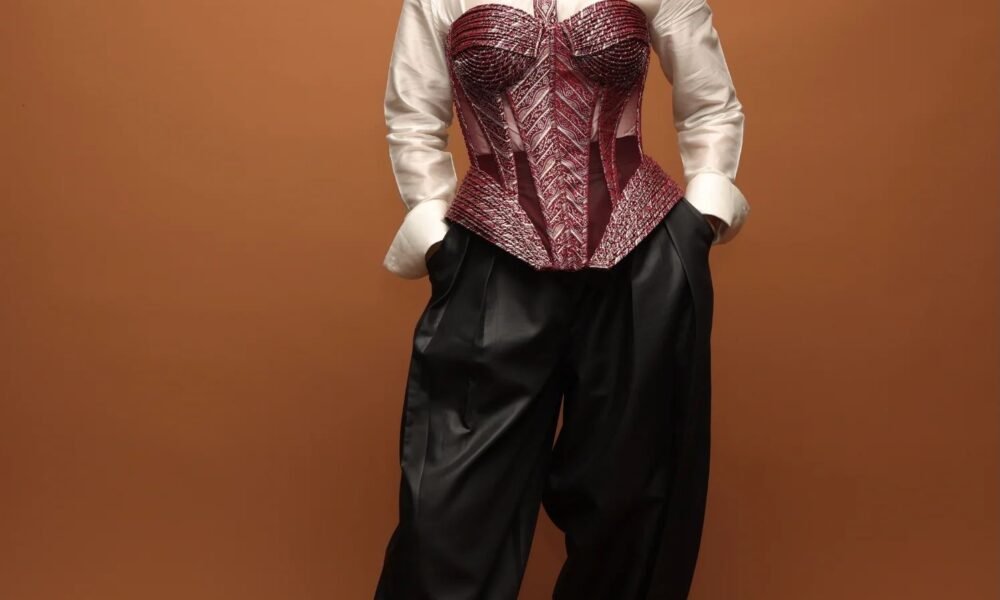
Banarasi weaves are among India’s most enduring textile traditions, their history shaped by centuries of craftsmanship, patronage and technical refinement. If the sari remains their most familiar expression, it is no longer their only one. Today, as India’s fashion landscape shifts, designers in Varanasi and beyond are taking Banarasi textiles beyond the traditional sari, reworking them through new drapes, silhouettes, lighter constructions and colour palettes.. This weaving legacy stretches back centuries. Varanasi has long been associated with textile production, while the Banarasi brocade tradition, as we know it today, flourished under Mughal patronage. Over time, motifs such as kalga, bel and jaal came to define the visual language of the weave, along with intricate zari work and richly patterned silk textiles that became closely associated with ceremonial dressing and heirloom saris.. Each technique on the loom offers its own refinement. From the labour-intensive Kadhwa which stands as the gold standard, each motif is woven individually into the fabric. In contrast, Fekwa introduces a lighter and more fluid structure through continuous weft work. Tanchoi, with Chinese roots that came to India by Parsi traders, favours intricately patterned silk over zari, creating an almost embossed texture. On the other hand, Jangla unveils in sweeping floral vines, while delicate Booti scatters motifs across the surface.. What has changed in recent years is not the value of the weave, but the forms in which it appears. As India grows into a global fashion powerhouse, the looms of Varanasi have begun to hum to a slightly different rhythm. While tradition still shapes the craft, a new generation of designers and weavers are reimagining this textile.. Designers are keeping their textile language intact while expanding where and how Banarasi can be worn. While the classic vermilion, rani pink and emerald green palette remains, the same silk and zari craftsmanship has newer interpretations which have introduced muted ivories, pistachios and metallic charcoals. Think Raw Mango’s tailored jackets, Ekaya’s breezy kaftans or Tasuvure’s relaxed Banarasi co-ord sets.