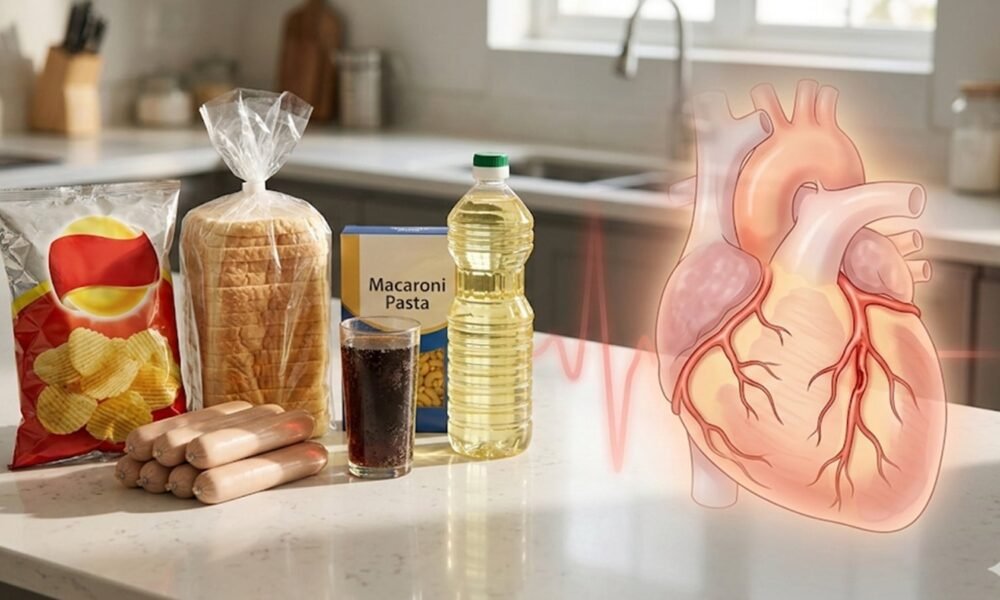
Can seed oils, refined grains, and processed foods really trigger heart attacks? (Source: AI Generated). Heart disease has become increasingly common in India. According to a 2020 study published in the National Library of Medicine, “Cardiovascular diseases (CVDs) strike Indians a decade earlier than the Western population.2 For us Indians, particular causes of concern in CVD are early age of onset, rapid progression and high mortality rate. Indians are known to have the highest coronary artery disease (CAD) rates, and the conventional risk factors fail to explain this increased risk.”. The roots are planted years earlier, often through daily dietary habits. Small, repeated food choices can gradually influence inflammation, insulin resistance, visceral fat accumulation, and arterial health, sometimes without obvious warning signs. As such, Dr Brijmohan Arora, a diabetologist from New Delhi, recently highlighted five major dietary mistakes that may silently increase the risk of heart attacks. In an Instagram video, he stated, “If you want to never have a sudden heart attack, you must remove these five mistakes from your diet. These five mistakes silently damage your heart from within, and symptoms often appear only at the time of a heart attack.”. In the caption accompanying his post, he wrote:. “Most heart attacks don’t start in the heart.. They start in your kitchen.. ❌ Seed oils. ❌ Ultra-processed / packet food. ❌ Sugary drinks. ❌ Refined grains (bread, pasta, white flour). ❌ Processed meats. These silently drive insulin resistance, inflammation, visceral fat and arterial damage.. If you fix metabolism, you reduce risk.”. While the message is direct and urgent, it also raises important questions about nutritional nuance, portion size, overall dietary patterns, and individual risk factors.. So, how strong is the scientific evidence linking the listed foods directly to heart attack risk?. Dr Jagadish Hiremath, a public health intellectual, tells indianexpress.com, “The scientific evidence linking diet to cardiovascular disease is strong, but it is important to understand that risk comes from overall dietary patterns rather than single foods in isolation. Large population studies and meta-analyses consistently show that high intake of processed meats and refined carbohydrates is associated with increased risk of heart disease due to higher levels of saturated fats, sodium, preservatives, and rapid blood sugar spikes that promote metabolic dysfunction.”. View this post on Instagram. When it comes to seed oils, he notes that the evidence is more nuanced. “Most clinical data suggest that replacing saturated fats with unsaturated fats, including those found in commonly used vegetable oils, can actually reduce LDL cholesterol and cardiovascular risk when consumed in moderation. Problems arise when these oils are repeatedly reheated or consumed primarily through ultra-processed foods.”. Quantity, cooking method, and overa