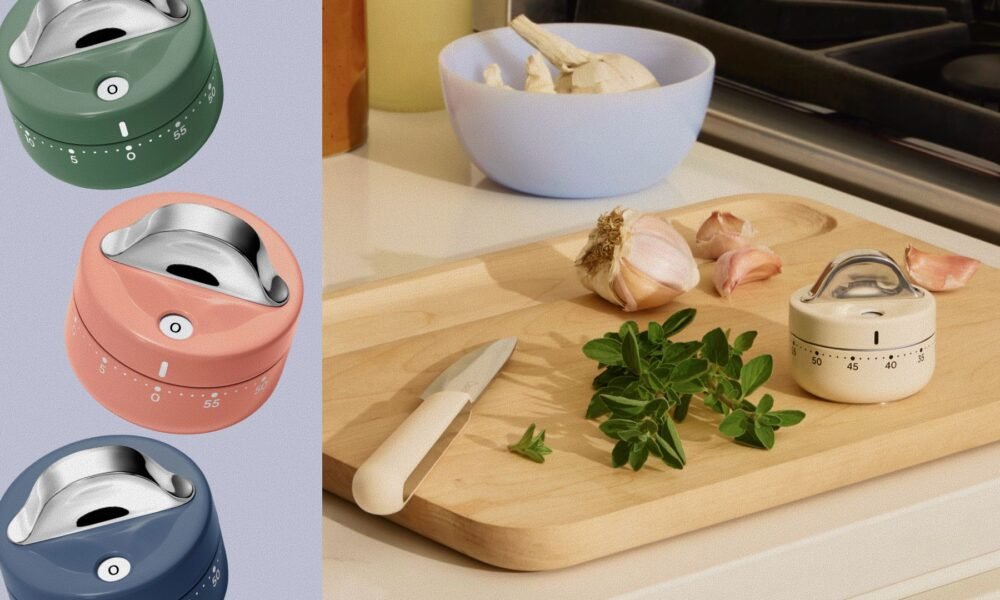
My life is full of screens. Most of my screen time comes from the typical tech trifecta: my phone, laptop, and television. But it creeps in from elsewhere: If I want to queue up a song in my car, I do it on the infotainment system. Going somewhere? I’ll plug the address into my GPS, and if that doesn’t work, Waze and Google Maps are back up. Even things that used to require a brief in-person conversation with a human being—signing in at the doctor’s office or ordering a coffee—require tapping, swiping, and scanning.. My kitchen, once a retreat from all that, has followed suit. I’ve always been a recipe-follower, but now instead of opening a cookbook, I pull up recipes on my computer. I’ll scroll through Apple’s podcast library to find something to listen to while I prep. Then, I’ll tell Siri to set a timer, then move on to texting or scrolling Instagram while I wait. What used to be a totally analog activity has gone almost entirely digital.. So when I got a pitch about a new mechanical kitchen timer from Caraway, I was interested for reasons that had nothing to do with timing. The tiny timer looked so simple: No screen. No Bluetooth. No app. Just a solid, weighty dial to twist, and a ticking sound that gently marks the passing time.. Caraway. Mechanical Kitchen Timer. $45. Caraway. Now, the five seconds it takes to set a timer on my phone is not the core issue behind my screen dependency. But I got one to try anyway out of curiosity. Baby steps, you know?. The design is clean but very old-school, like something you’d see in Mad Men: a smooth circular shape, easy-to-read numbers, and a satisfying resistance when you turn the dial. The stainless steel timer comes in Caraway’s core colors, including a classic cream, sage green, and mustard yellow. I chose the navy to match my favorite teapot (which also happens to be Caraway). It’s heavy enough that it doesn’t slide around the counter, or in my case, on the top lip of the kitchen stove, and small enough that it takes up barely any space at all.. Francesca Krempa