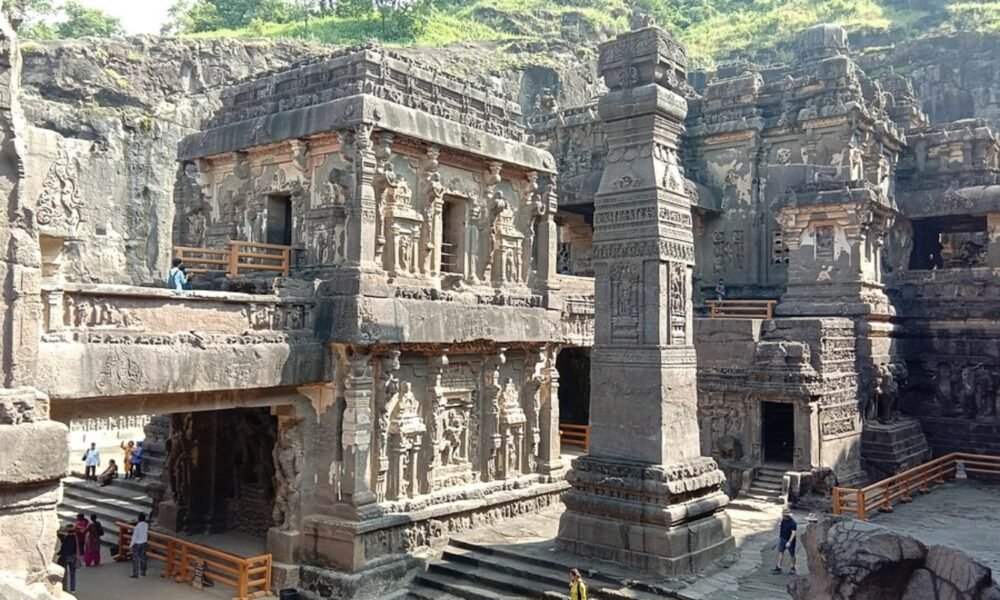
Maharashtra is a cultural powerhouse, rich in ancient dynasties, colonial legacies, spiritual traditions, and stunning scenic landscapes. The state proudly hosts several UNESCO-recognised sites that showcase India’s artistic prowess and engineering excellence across centuries. Here’s a closer look at five of them.. 1) Ajanta Caves. Ajanta caves, Maharashtra (Photo: Wikipedia). Carved between the 2nd century BCE and 6th century CE, the Ajanta Caves are among the finest surviving examples of ancient Buddhist art in the world. Nestled in a horseshoe-shaped cliff overlooking the Waghora River, the 30 rock-cut caves include monasteries (viharas) and prayer halls (chaityas).. What makes Ajanta exceptional are its murals and frescoes, which depict Jataka tales — stories of Buddha’s previous lives. The paintings demonstrate remarkable sophistication in colour, composition, and emotional expression, offering insights into ancient Indian society, clothing, and courtly life.. 2) Ellora Caves. Located about 100 km from Ajanta, Ellora represents religious harmony carved in stone. Built between the 6th and 10th centuries, the site features 34 caves dedicated to Buddhism, Hinduism, and Jainism.. The crown jewel is the Kailasa Temple (Cave 16), a monolithic structure carved from a single rock. Dedicated to Lord Shiva, it is considered one of the world’s largest rock-cut temples. The scale, symmetry, and sculptural detailing at Ellora reflect both artistic genius and extraordinary engineering precision.. 3) Elephanta Caves. Elephanta caves (Photo: Wikipedia). Situated on Elephanta Island in Mumbai Harbour, these 5th–8th century cave temples are primarily dedicated to Lord Shiva. The most iconic sculpture here is the three-faced Maheshmurti, representing Shiva as Creator, Preserver, and Destroyer.. Despite damage during colonial times, the site remains a significant example of early medieval Indian rock-cut architecture. The caves reflect the spiritual depth and sculptural mastery of the period.. Story continues below this ad. 4) Chhatrapati Shivaji Terminus. Formerly known as Victoria Terminus, this late 19th-century railway station is a masterpiece of Victorian Gothic Revival architecture with Indian influences. Designed by British architect Frederick William Stevens, it became a UNESCO World Heritage Site in 2004.. The structure features stained glass windows, pointed arches, turrets, and intricate stone carvings. Beyond its aesthetic appeal, it remains one of India’s busiest railway stations — a living heritage building that seamlessly blends history with daily life. ALSO READ | Your Anti-Valentine guide to 5 must-visit Bollywood breakup locations is here. 5) Western Ghats (Maharashtra region). While the Western Ghats extend across several states, a significant portion lies within Maharashtra. Recognised for their exceptional biodiversity, these mountains are among the world’s eight “hottest hotspots” of biological diversity.. The region