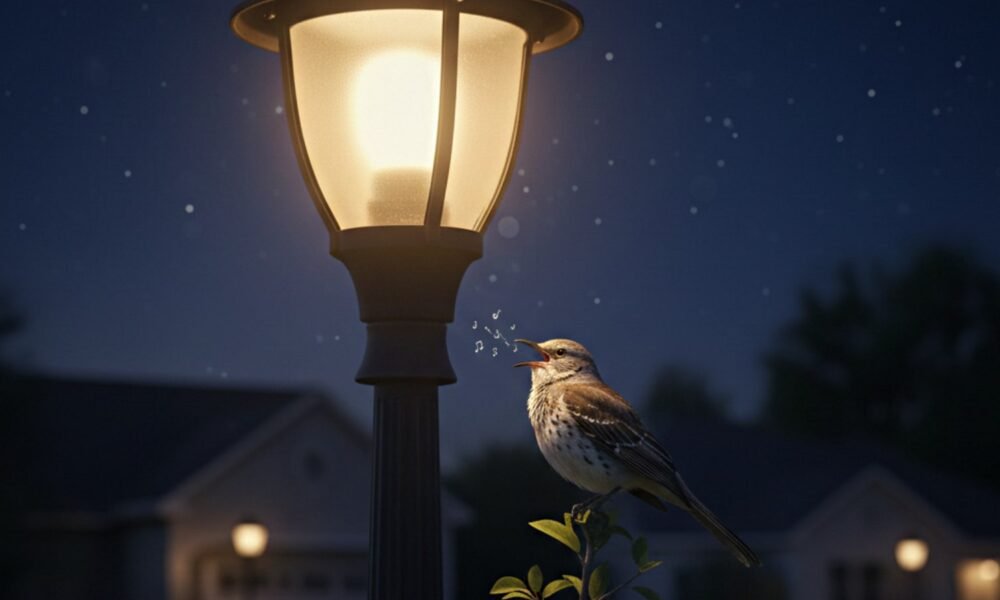
Artificial Light At Night (ALAN) significantly impacts avian biology, as per Aksheeta Mahapatra from Ataavi Bird Foundation (Image: Gemini generated). It’s past midnight. The traffic has thinned, the city is quieter — and then you hear it: a sharp bird going all Shreya Ghoshal through the dark. But aren’t birds supposed to be asleep?. Even science says that most birds are diurnal, meaning they are biologically programmed to be active during the day and rest at night. Why then this occasional late-night chirping isn’t unusual, especially in cities?. “As diurnal creatures, most birds are biologically programmed to rest at night. However, occasional late-night chirping is not unusual, especially in urban environments,” explains Aksheeta Mahapatra of Ataavi Bird Foundation, an organisation that aims to foster a deeper connection between people and nature by promoting bird watching as a sustainable activity.. What triggers midnight calls?. One common reason, according to the avid birdwatcher, is disturbance. Sudden noises — vehicle horns, fireworks, predators, or even stray animals — can startle resting birds into brief alarm calls. This is known as disturbance-triggered vocalisation.. Artificial lighting is another key factor. In cities, bright streetlights and illuminated buildings can trick birds into sensing extended daylight. This exposure to artificial light at night disrupts natural light cycles that regulate sleep, hormones, breeding timing, and even migration readiness. “Hormonal triggers during breeding season may stimulate sporadic calling even outside normal hours,” Mahapatra notes.. “In cities, bright streetlights and building illumination can confuse birds into perceiving extended daylight”: Aksheeta Mahapatra, Ataavi Bird Foundation (Image: Unsplash). Also Read | Meet the bird that eats bones for breakfast. Mating, territory — or stress?. “It can be linked to mating, territorial behaviour, or stress — depending on context,” she says.. During breeding season, male birds sing to attract mates and defend territory. In noisy urban areas, some species extend their singing hours to avoid daytime interference, choosing quieter nighttime hours so their songs carry farther.. Story continues below this ad. At the same time, sudden artificial disturbances — loud construction, bright light bursts, unexpected noise — can trigger alarm or stress calls. Mahapatra further tells indianexpress.com that when birds are exposed to constant illumination, they have a host of unusual patterns:. They may wake earlier or sleep later. The dawn chorus may begin prematurely. Energy expenditure increases. Stress hormones may rise over time. From a conservation lens, prolonged disruption of circadian rhythms may affect breeding success and long-term fitness.. Which birds are more likely to chirp?. Mahapatra notes that species that are highly adaptable to urban ecosystems, naturally vocal, territorial during breeding season, and com