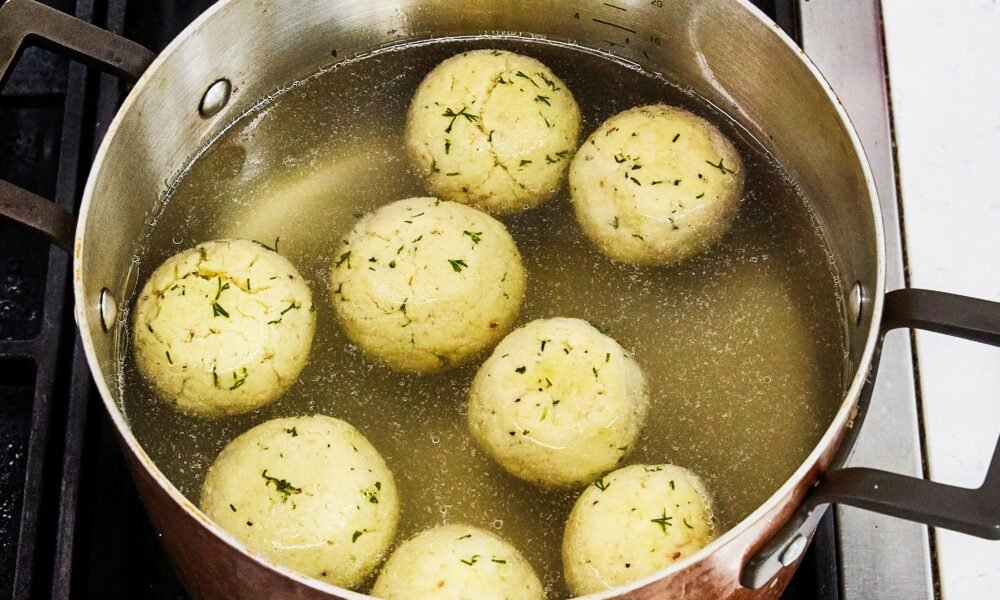
This matzo ball recipe proves you don’t need seltzer, baking powder, egg whites, or even a delicate touch to get great results. Eggs, matzo meal, broth, and schmaltz come together to produce tender, reliably fluffy dumplings.. Schmaltz (chicken fat) adds rich savoriness and that familiar comforting flavor, while dill and black pepper bring freshness and bite. When cookbook author Molly Baz was developing the recipe, she learned that giving the matzo ball mixture an adequate rest in the fridge and gently simmering the shaped dumplings were the keys to light, perfectly puffed matzo balls—no gimmicks, no tricks. Don’t worry about handling the mixture too much either; rolling the balls firmly into smooth spheres won’t make them dense.. This recipe was developed to go with BA’s Best Matzo Ball Soup.. Why do I need to chill the mixture? Resting the mixture for at least 35 minutes allows the matzo meal to absorb the liquid. The mixture will seem loose at first, but will firm up as it hydrates, helping the balls hold their shape and cook up light rather than dense.. Why cook matzo balls in salted water instead of soup? Matzo balls absorb the liquid they cook in like sponges. Simmering them in well-seasoned water gives them flavor while keeping your soup broth clear.. How salty should the cooking water be? Think pasta water: salty but not briny. If you’re sensitive to salt, you can reduce the amount slightly.. Why didn’t my matzo balls puff up? They need a gentle simmer and enough time to cook through. A rolling boil can toughen them—or worse, cause them to disintegrate. Keep the pot covered and cook for the full 30–40 minutes; removing the matzo balls early can leave the centers dense.. Can I substitute schmaltz? Yes. Neutral oil or light olive oil works if you don’t have schmaltz, though you’ll lose some of the classic chicken-y flavor. You could also swap in beef tallow for a meatier-tasting dumpling (best with beef broth).