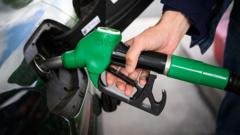
Oil prices plummet as Iran declares Strait of Hormuz “open” during ceasefire3 Hours agoArchie MitchellBusiness reporterGetty ImagesOil Prices have plummeted since Iran announced that the Strait of Hormuz will be “completely opened” to commercial vessels for the remainder of ceasefire. The S&P 500 index, which represents the largest US-listed companies, closed up 1.2% on the back of this announcement. The Cac in Paris and Dax index in Frankfurt both closed the day around 2% higher, while London’s FTSE 100 ended the day 0.7% higher. Since the US and Israel launched their military strikes on Iran in late February, the Strait of Hormuz is effectively closed by Iran. Tanker traffic has slowed down to a trickle. This has led to a drastic reduction in the amount of oil, gas and other commodities available to global markets, causing prices spikes. It rose above $100, reaching a high of $119 per barrel by March. Later, on Friday, the price rose to $92. BIMCO’s chief safety and security officer Jakob Larsen said that the status of mine threats within the traffic separation scheme was unclear. BIMCO believes shipping firms should avoid the area. This means that the Traffic Separation Scheme has not been declared safe for transit as of yet. The IMO’s Secretary General Arsenio Dominguez stated on social media that they are verifying the recent announcement regarding the reopening of Strait of Hormuz in terms of its compliance to freedom of navigation for merchant vessels and secure transit using the IMO established Traffic Separation Scheme. The RAC motoring group said that petrol and diesel prices in the UK had dropped slightly for the first since the US-Israeli war with Iran began. Pump prices began to fall on Thursday and continued through Friday, the RAC said. However, the price of filling up a tank remains higher than it was in February. THANK YOU! “Trump added Iran had agreed to “never close the Strait of Hormuz Again… It will no longer be a weapon against a world”. The BBC reported that despite Iran’s announcement it “doesn’t change anything”. The operator, who didn’t want to be identified, said that they did not feel the need to take unnecessary risks. Their company’s approach is to not be the first through the Strait. Another company, Stena Bulk which operates oil tanks in the region said it was “monitoring the developments closely”. The company said that “the safety of our crews and vessels governs all routing decisions, and we won’t transit until we are confident it is safe”. Kieran Tompkins of Capital Economics, a senior climate and commodities analyst, said that the ceasefire due to end in 9 days “offers a very narrow window of time for oil tankers” to navigate the Strait and load up before leaving. The Bayes Business School’s ManMohan Sodhi said that consumers would continue to feel the pressure, even if there is a long-term peace agreement. “Supply chain will take months to clear,” said he. The drop in oil prices came as the US extended the waiver on its Russian oil sanctions, despite initially saying it wouldn’t.