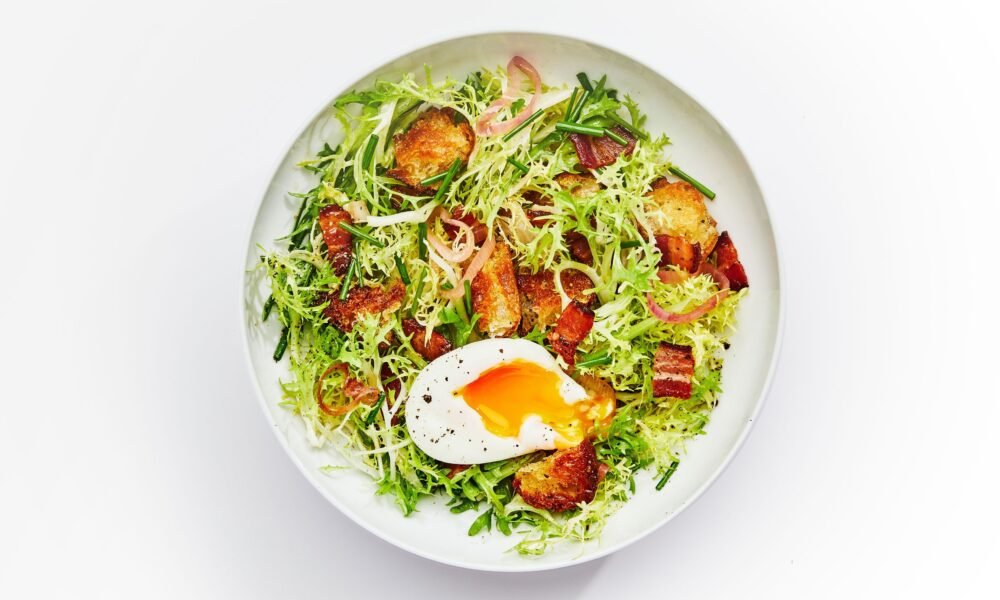
Perfect poached eggs are easier than they look. With fresh eggs, barely simmering water, and one simple trick, you can achieve tender whites and runny yolks every time.. The key to the BA test kitchen’s preferred method is straining the egg through a fine-mesh sieve to remove loose, watery whites. This simple step yields a smooth, compact poached egg. Then, gently lower the egg into the water and create a subtle whirlpool to help the whites wrap around the yolk—no vinegar required. For multiple eggs, add them one at a time, staggering by 20–30 seconds so they hold their shape.. Cook for about 2½ minutes for set whites and a soft, runny center, or a few minutes longer for a jammy yolk. Once you’ve got the technique down, poached eggs instantly upgrade avocado toast, grain bowls, and more; or anchor classics like Eggs Benedict or a bistro-style frisée salad.. Poached Egg FAQ. Do I need vinegar to poach eggs?. No. Fresh eggs and straining off loose whites are more effective for clean, well-shaped poached eggs—and won’t affect flavor.. How do I keep poached eggs from getting wispy?. Start with very fresh eggs—older whites are looser and won’t cling as well to the yolk. Crack the egg into a fine-mesh strainer set over a bowl and let excess whites drip off before cooking.. What’s the best water temperature?. A bare simmer (around 180°F), not a rolling boil. Too much movement in the water can break the egg apart.. How long should I poach eggs?. About 2½ minutes for runny yolks; 4–5 minutes for firmer, jammy centers.. Can I make poached eggs ahead of time?. Yes. If holding for less than an hour, keep the eggs in a bowl of warm water. For longer storage, transfer cooked eggs to an ice bath and refrigerate for up to 1 day. Reheat chilled eggs in barely simmering water for 1–2 minutes, or cover them with hot tap water and let sit about 30 minutes until warmed through.. More egg tricks →. Extra-Creamy Deviled Eggs. View Recipe