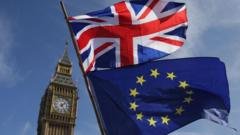
PM embraces Brexit divisions as he seeks closer ties with Europe. 19 hours ago. Henry ZeffmanChief political correspondent. Getty Images. Sir Keir Starmer has said plenty of times that he wants a closer relationship with the EU. It was part of his 2024 general election platform, albeit in fairly unspecific terms.. It was announced at the first annual UK-EU summit 11 months ago that the UK is negotiating deals with the EU on food and drink standards, carbon emissions and electricity.. Where it gets more complicated is that the government wants “dynamic” alignment: which means not only following EU rules as they stand now in those three areas, but continuing to follow them over time as they change.. There will be a vote on all this in Parliament when the government introduces legislation later this year.. But as the government updates UK rules to match European rules over time, there may not necessarily be further votes – that process is known as secondary legislation.. Secondary legislation was also used in various ways when Conservative governments pursued divergence from EU rules.. The government acknowledging today that this will be the parliamentary process has provoked anger from the Conservatives and Reform UK.. But the real meat of the disagreement here is not about parliamentary process. It is about much more profound questions of Britain’s sovereignty, economy and place in the world which have been animating our politics for more than a decade now.. And what is so striking is the prime minister’s relatively newfound enthusiasm for embracing this debate.. UK could adopt EU single market rules under new legislation. UK will seek closer ties with EU in light of Iran war, Starmer says. Andrew Griffith, the Conservatives’ shadow business secretary, said the government’s plans would mean “Parliament reduced to a spectator while Brussels sets the terms”, and that this was “exactly what the country rejected” in 2016.. Reform UK’s Nigel Farage made a similar argument. “Accepting their rules without a vote is a direct betrayal of the Brexit referendum,” he said.. In other words, the UK accepting EU rules without being able to shape those rules as part of the bloc would be wrong.. Sir Keir does not directly put it in these terms, but the government’s position in response is essentially: being a rule-taker in specific areas is worth it for the economic benefits.. The prime minister has been pursuing alignment with EU rules in these areas since well before his break with President Trump on Iran, but it is striking how global instability (in part a code for this unique and capricious president) now forms a plank of his argument for the policy.. Speaking to BBC Radio 5 Live earlier, he said: “We’re in a world where there’s massive conflict, great uncertainty, and I strongly believe the UK’s best interests are in a stronger, closer relationship with Europe.”. And in a press conference at the start of this month called to discuss the economic fallout of t