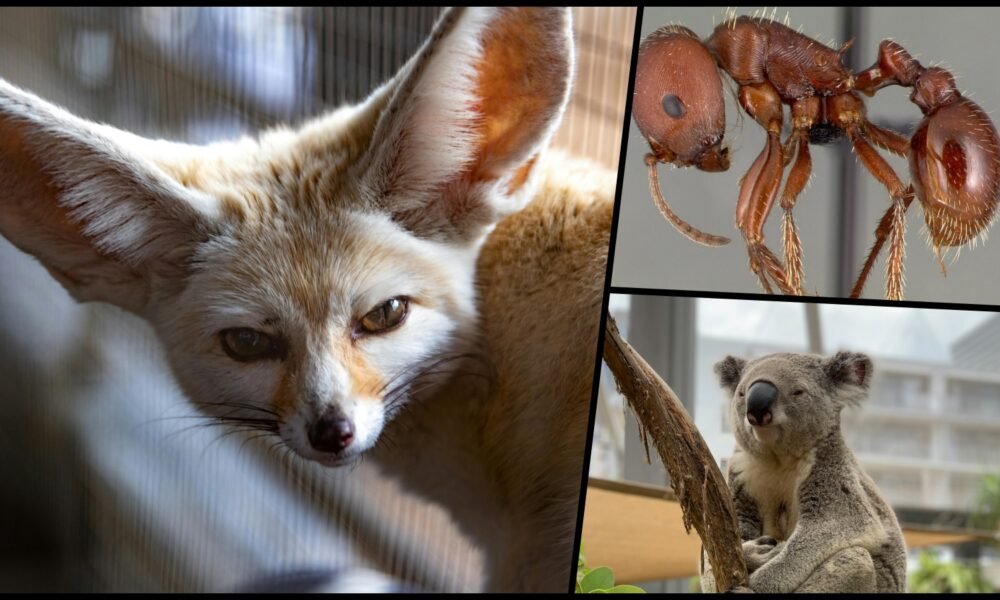
Did you know some animals don’t drink water at all? (Images: Wikimedia commons, Pexels). Water is one of the basic necessities of sustaining life. However, some animals have strangely evolved to live entirely without drinking it, relying instead on moisture from food, metabolic processes, or even their skin. These survival masters can live perfectly in arid deserts, extreme climates, and harsh terrain by extracting every drop of hydration from seeds, leaves, prey, or dew. Many even have highly efficient kidneys, nocturnal habits to reduce water loss, and unique adaptations that let them survive where others would perish. Here’s more about six such animals that do not drink water at all!. 1. Kangaroo rats – Dry seeds and a nocturnal lifestyle. Kangaroo rats of North American deserts never drink water. They survive entirely on dry seeds and generate metabolic water during digestion, which is conserved in the kidneys. Their urine is thicker than syrup, and their faeces are completely dry. Moreover, these smart heads avoid any sweating or panting during the day by staying snuggled up in cool burrows, following a nocturnal lifestyle.. Fennec foxes have adopted a nocturnal lifestyle to avoid the desert’s heat and moisture loss via sweating (Image: wikimedia commons). 2. Fennec and Sand Foxes – Seek moisture from food. Fennec foxes of the Sahara and sand foxes in other arid regions rarely, if ever, drink water. They hit all their moisture goals from the prey and desert plants they eat. Their efficient kidneys produce highly concentrated urine, and large ears help release heat and reduce water loss. They are also nocturnal and often lick the dew that forms inside their dens for moisture.. Koalas eat up to 1 kg of eucalyptus leaves daily, which provides the necessary moisture (Image: Pexels). 3. Koalas – Depend on Eucalyptus leaves for hydration goals. Koalas almost never drink water, getting nearly all their hydration from eucalyptus leaves, which are naturally moisture-rich. However, in extreme heat, drought, or bushfires, they can be seen looking for water in tree hollows or puddles. Lately, as climate change has made its grip tighter on the planet, koalas are also exhibiting a new behaviour of licking water that runs down tree trunks (stemflow) after rain.. 4. Harvester Ants – Food, nest and eating habits. Harvester ants obtain almost all necessary hydration by metabolizing fats found within the dry seeds they consume (Image: wikimedia commons). Harvester ants thrive in arid deserts by metabolising water from seed fats, absorbing nest humidity, and regulating foraging to minimise evaporative loss on dry days. Their small size reduces individual water demands, while colony-level decisions balance food gain against the risk of dehydration. However, they are also known to drink free-standing water from sources such as dew, puddles, and specialised water feeders in captive environments.. Also Read | 7 animal species that punish rule-breakers.