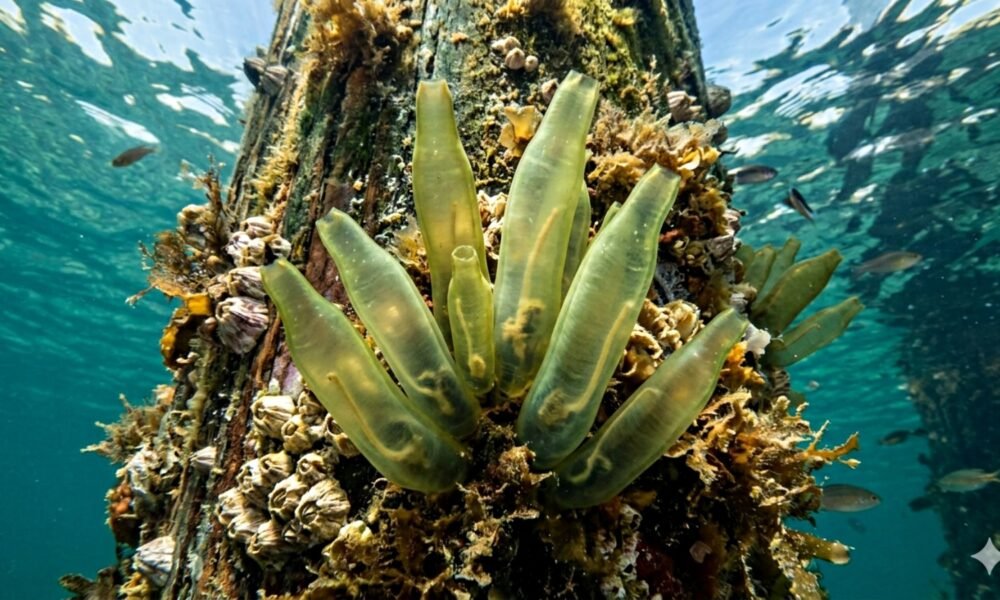
Losing your brain may seem like the end of the world. For one small marine animal, it’s part of growing up. The tiny sea creature known as the Sea Squirt replaces its brain over and over again throughout its life. This marine animal is a member of the genus Ciona. It looks like a soft blob that’s attached to rocks. Sea squirts are not born as stationary blobs. Ciona intestinalis is a sea squirt that lives in temperate coastal water and is known as the sea vase. It’s a solitary, transparent, filter-feeding seasquirt. As larvae they look like tiny tadpoles, measuring between 1-2 mm in length. They have a simple cerebral organ (also known as a. The larval brain contains 200 neurons involved in sensory processing, according to electron microscopy studies. Studies using electron microscopy show that the larval brain contains ~200 neurons involved in sensory processing.Then, something bizarre happens: upon settling headfirst via adhesive papillae, metamorphosis triggers autophagy–self-digestion of ~80% of the central nervous system, including most of the brain, tail, and notochord tissues within hours.Why would an animal do that?Also Read | The frog that breaks its own bones to grow clawsAs an adult, it becomes a stationary filter feeder, staying fixed in one place and feeding by pulling in water. It uses tiny openings called gills to filter out nutrients and plankton. It can actually pump more than 100 times its body volume of water each day. It is expensive to maintain a brain, as they can consume a lot of energy. Scientists have discovered that genes that are linked to brain development are much less active when the animal settles. The body also produces enzymes to help break down the unused brain tissues. Continue reading below this ad. It retains only a small number of nerve cells, just enough to perform basic reflexes like closing its eyes when something touches it. So is the brain really replaced? The sea squirt develops a simple, free-swimming brain, and then absorbs the entire thing once it settles. It sheds traits that it briefly shared with chordates, from which it diverged around 550,000,000 years ago. This unusual life cycle challenges that brains are preserved in all closely related species. In a sense, the sea squirt is a lesson in efficiency. Intelligence is not always needed, but it depends on the situation. Scientists have found that the brain resorption can be delayed if an animal is prevented from settling down, proving it is an adaptive response and not a set timeline. In nature, survival doesn’t mean holding on to complexity. It’s about keeping what you need.