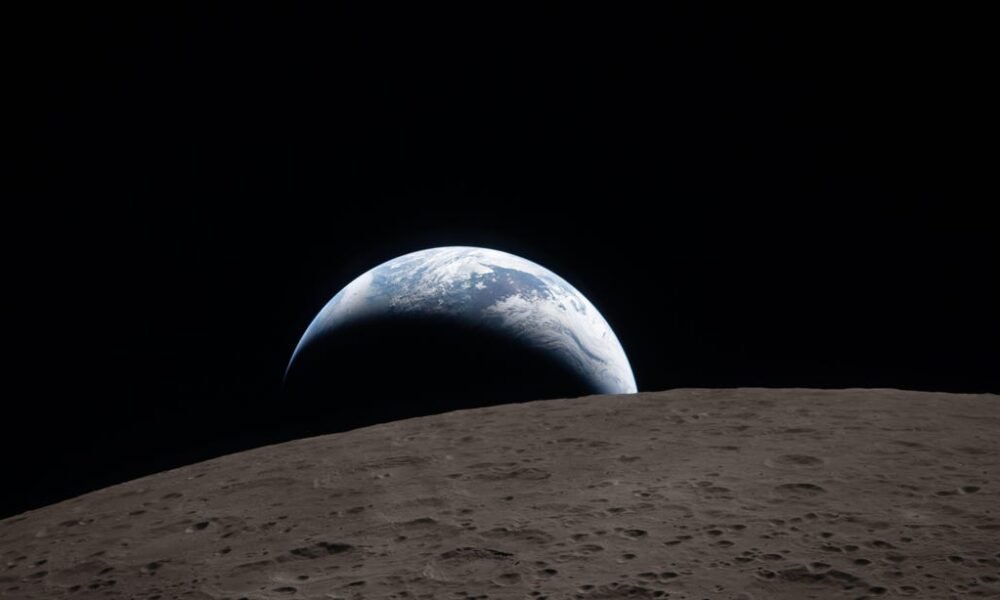
Travel to space has become commonplace. In the past three decades, nearly 300 people have flown to and from the International Space Station, some of them residing there for months at a time. Over the past several years, the rocket startup Blue Origin launched a series of day trips just over the threshold into space — high-end carnival rides for celebrities including Katy Perry, Gayle King and William Shatner.. The Artemis II lunar mission was different.. NASA’s spaceflight, which splashed back down Friday evening, carried four astronauts on a round trip all the way to the moon and beyond – a thousand times farther away than the space station – and they had to break free from Earth’s gravity to do so. It’s a trip that only two dozen humans before them had ever taken, and the last time it happened was in 1972.. Artemis II’s Orion spacecraft also took its four astronauts farther than any humans had ever traveled into space, on a long arc reaching a record 252,756 miles from Earth, giving them a full view of the far side of the moon. By contrast, the Apollo astronauts 50-plus years ago were snuggled into a lunar orbit just 70 or so miles from the surface.. This was a massive achievement for NASA in its own right. It’s also a harbinger of a new and disruptive era in the still-unfolding Space Age.. Watch this: NASA’s Artemis II Spashes Down in the Pacific Ocean. Yet in the weeks leading up to launch day it hardly seemed to have made a dent in the national conversation.. For sure, there’s a lot going on here on Earth that’s on the front of many people’s minds. Military conflict. Government gridlock. Political protests. Anxiety about the cost of living and adequate health care. But that was true back in the ’60s and early ’70s as well, and perhaps never more so than in the years right around the first moon landing in July 1969, Apollo 11’s one giant leap for mankind.. I was a kid when Neil Armstrong and Buzz Aldrin put their bootprints into the dusty lunar terrain, and I vividly remember the nonstop TV coverage. I eagerly tuned in to see the splashdowns as the astronauts from all the Apollo spaceflights returned to Earth. It was a gripping, heroic narrative.. Those Apollo moon missions were the culmination of the first wave of space exploration, a decade and a half filled with remarkable feats, one after another.. The Artemis missions mark the start of a whole new era of space exploitation.. A view of Earth, with the moon’s cratered surface in the foreground, from the Orion spacecraft window on April 6, 2026, during the Artemis II crew’s flyby of the moon. NASA. The ultimate goal for NASA: A moon base. Artemis II didn’t put astronauts on the lunar surface. Like the historic Apollo 8 mission in December 1968 – the first to send humans beyond Earth’s orbit, the one that gave us our first view of our planet as a blue orb against a sea of deep black – it was a flyby in preparation for an eventual landing. That touchdown by astronauts will happen in