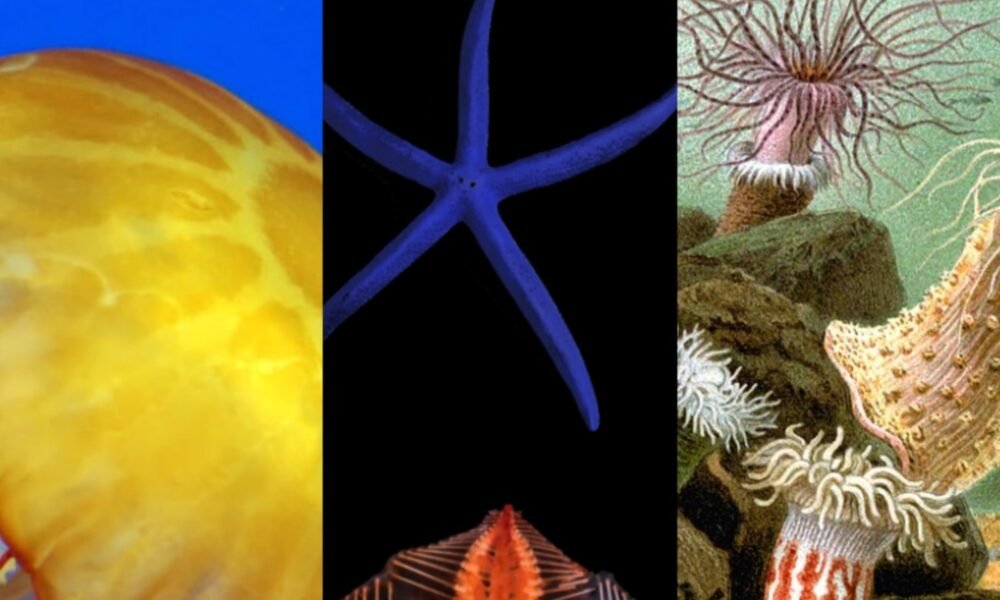
In humans and most vertebrates, the heart is essential. It works constantly to keep us alive. But nature has some surprising exceptions. Some animals get by just fine without a heart, using simpler or different ways to move nutrients, oxygen, and waste. These creatures show that life can take many forms. Here are five animals that live perfectly well without a heart.. 1. Jellyfish. Cauliflower jellyfish (Photo: Wikipedia). Perhaps the most heartless animals, jellyfish don’t just lack a heart—they also have no brain, blood, or lungs. Their bodies are over 95 per cent water, and oxygen diffuses directly through their thin tissues. Nutrients are distributed via a simple gastrovascular cavity as the jellyfish pulses through the water. Despite their simplicity, jellyfish have survived for over 500 million years.. 2. Starfish. Starfish have no heart and no blood. Instead, they rely on a water vascular system, a network of fluid-filled canals that helps circulate nutrients and oxygen throughout their bodies. Seawater enters through a sieve-like structure and is moved internally to power their tube feet. This unusual system also allows starfish to regenerate lost limbs — an ability that continues to fascinate scientists.. 3. Sea Anemones. Sea anemone (Photo: Wikipedia). Closely related to jellyfish, sea anemones also lack a heart, brain, and circulatory system. Their bodies are structured around a central cavity that functions for both digestion and internal transport. Oxygen enters the body directly through its surfaces, while nutrients are distributed internally without the need for a pump. Their slow, stationary lifestyle makes this simple system sufficient.. 4. Flatworms. Flatworms are among the simplest animals with bilateral symmetry — and they have no heart or circulatory system. Their extremely flat bodies allow oxygen and nutrients to diffuse directly through their skin. This design limits their size but supports remarkable abilities, such as regeneration, in which a flatworm can regrow an entire body from a fragment.. ALSO READ | How to choose the right pet for your lifestyle. 5. Sponges. Sponges represent one of the earliest forms of animal life and lack not only a heart but also true tissues and organs. Water flows through their porous bodies, delivering oxygen and food particles directly to cells. Specialised cells handle waste removal, all without any centralised system. Their survival strategy is entirely passive — and astonishingly effective.. How do they survive without a heart?. These animals share key traits: simple body structures, slow metabolisms, and reliance on diffusion or water flow rather than active circulation. Without the energy demands of complex organs, a heart becomes unnecessary.. 📣 For more lifestyle news, click here to join our WhatsApp Channel and also follow us on Instagram. © IE Online Media Services Pvt Ltd