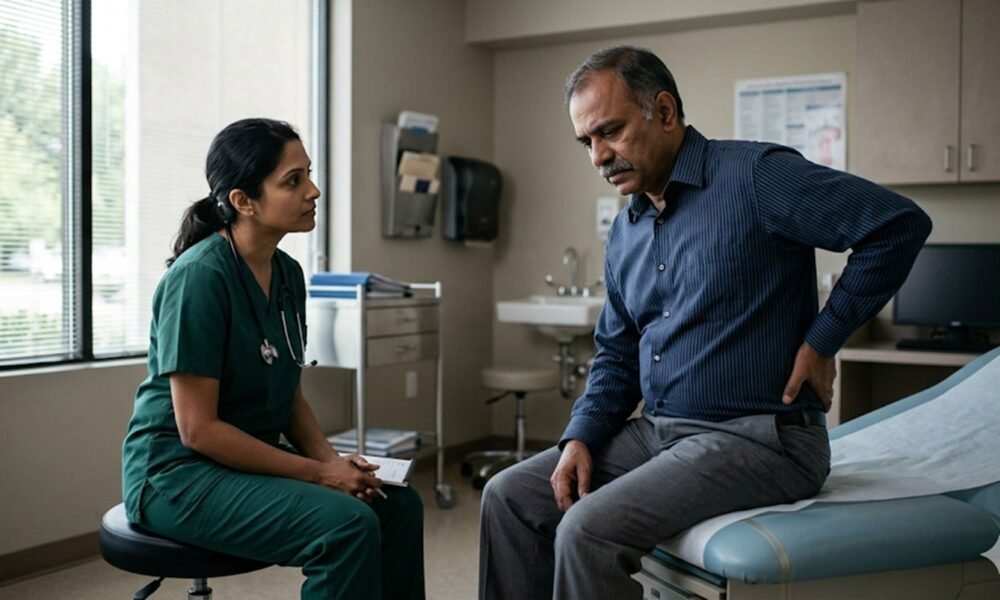
A recent case shared by Hyderabad-based neurologist Dr Sudhir Kumar highlights how easily critical clues can be overlooked in health care, and why careful listening still plays a central role in diagnosis. Detailing the case on X, Dr Kumar described a 55-year-old man who had been struggling with severe back pain for four months despite undergoing multiple tests and treatments.. He mentioned, “The diagnosis that was missed, until history spoke.” The patient had already consulted several doctors and followed prescribed protocols, but without relief. “He consulted local doctors. Blood tests, Nerve conduction studies and MRI (neck and lower back) were normal. Yet, his pain did not go away. He was treated with painkillers, muscle relaxants and advised rest. Still, he had no relief,” Dr Kumar shared. He added that cases like this are often labelled prematurely: “This is where many cases get labelled as ‘chronic back pain’. But this one wasn’t.”. DISCLAIMER: This article is based on information from the public domain and/or the experts we spoke to. Always consult your health practitioner before starting any routine.. What changed the course of diagnosis was not another routine test, but a closer look at the specifics of the patient’s symptoms. “When he consulted me online (from another city), one detail changed everything: pain was in the mid-back (not neck or lower back),” Dr Kumar explained. Another key observation further shifted the direction of investigation: “And there was one more crucial clue: pain increased on coughing and deep breathing. That is not a random symptom. Pain that increases with coughing is suggestive of spinal nerve root irritation or compression. This immediately shifts thinking from ‘muscle pain’ to spine pathology.”. Recognising that earlier imaging had missed the affected area, Dr Kumar ordered a targeted scan. “So instead of repeating the same tests, I asked a better question: Has he been imaged in the right location? Though it would put additional financial burden, I still ordered an MRI of the dorsal (thoracic) spine, as it was needed for diagnosis.” The results revealed spinal tuberculosis, even though the patient had none of the typical symptoms. “Here is the twist: he had no fever, weight loss, or ‘typical TB symptoms’. He just had persistent back pain. This is why spinal tuberculosis is dangerous. It can be silent and slow, and the diagnosis can be easily missed, until it causes paralysis and spinal deformity.”. Reflecting on the case, Dr Kumar emphasised the importance of clinical reasoning over blind reliance on tests. “The real lesson here is that tests don’t make diagnoses. Diagnosis needs critical thinking and analysis of symptoms,” he said, adding, “If you scan the wrong area, you will get the wrong answer, even with the best machines.” He further advised, “Key takeaways for doctors: localise pain carefully, listen for ‘red flag’ triggers (like cough pai