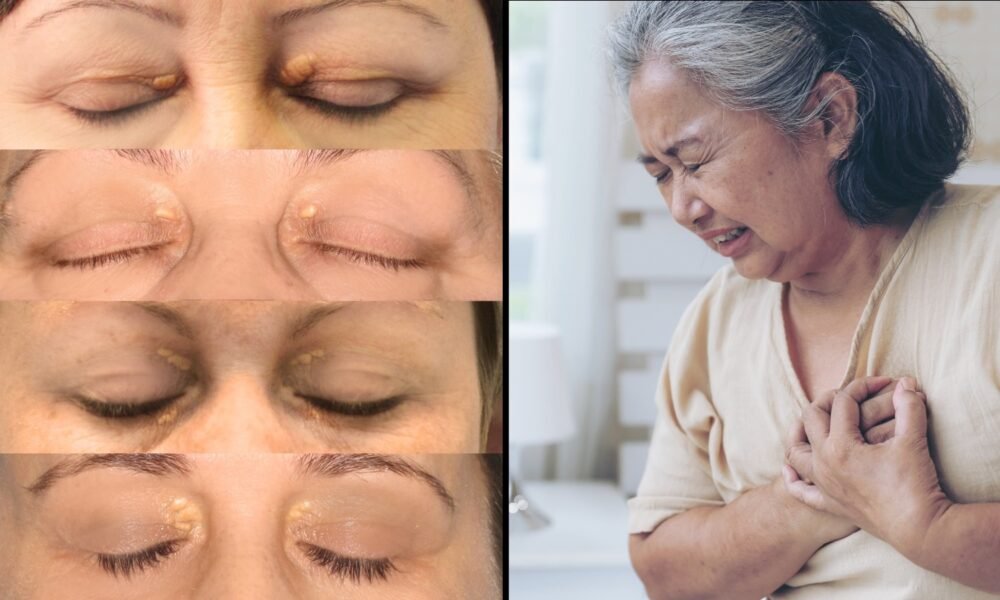
The human body is complex and can show what’s going on inside it in unusual ways. One such rather unexpected connection is that small yellow patches near the inner corners of your eyelids may be related to the cardiovascular system. Even though they seem harmless, according to Dr G Dimpu Edwin Jonathan, Consultant – Interventional Cardiologist, these deposits, called xanthelasma or xanthelasma palpebrarum (XP), are more than just a skin concern.. Xanthelasma: A visible clue to heart disease. “Cholesterol deposits build up under your skin to form a xanthelasma,” explains Dr Jonathan. They appear as soft, yellowish plaques on or around the eyelids, usually near the nose. Because the eyelids have very thin skin and a rich blood supply, they are often one of the first places where excess lipids become visible.. DISCLAIMER: This article is based on information from the public domain and/or the experts we spoke to. Always consult your health practitioner before starting any routine.. “In many cases, xanthelasma acts as a visible marker of systemic cholesterol imbalance or early atherosclerosis, rather than an isolated skin condition,” he tells indianexpress.com.. Can it really signal heart attack risk?. Yes — and that’s where it becomes important. “Xanthelasma can serve as an early warning sign of increased heart attack and cardiovascular disease risk, especially when they appear at a younger age or progress over time,” Dr Jonathan notes.. In fact, several studies have shown that individuals with xanthelasma have a significantly higher likelihood of developing coronary artery disease, myocardial infarction, and stroke — sometimes even before symptoms like chest pain begin. “In that sense, xanthelasma can be viewed as the body’s external signal pointing toward internal vascular risk,” the cardiologist adds.. “In many cases, xanthelasma acts as a visible marker of systemic cholesterol imbalance or early atherosclerosis, rather than an isolated skin condition” : Dr G Dimpu Edwin Jonathan,. How strong is the link? Does one patch mean danger?. The association is clinically meaningful and well-documented, as per the cardiologist. Importantly, the increased cardiovascular risk appears to be independent of traditional risk factors such as age, smoking, or even measured cholesterol levels.. Story continues below this ad. “Xanthelasma is believed to reflect cholesterol deposition within blood vessel walls, similar to plaque buildup in coronary arteries,” Dr Jonathan explains. “When we see xanthelasma, we consider it a red flag for accelerated vascular ageing.”. In other words, plaque may already be forming silently.. What if cholesterol levels are normal?. Surprisingly, xanthelasma can appear even when routine cholesterol tests look normal. This may indicate hidden or residual risks such as:. Abnormal cholesterol particle size or function (not detected in basic tests). Genetic lipid disorders. Reduced HDL efficiency. Incre